Silent Vowels Worksheets for Ages 6-9
5 filtered results
-
From - To
Unlock the mysteries of silent vowels with our engaging worksheets designed for children ages 6-9! These carefully crafted activities promote essential literacy skills by helping young learners recognize and practice words featuring silent vowels. Each worksheet offers a variety of fun exercises, including filling in the blanks, matching, and word sorting, tailored to enhance vocabulary and phonetic understanding. Our resources not only support classroom learning but also provide an enjoyable way for kids to reinforce their reading skills at home. Empower your child’s language development today with our comprehensive collection of silent vowels worksheets—and watch their confidence soar!
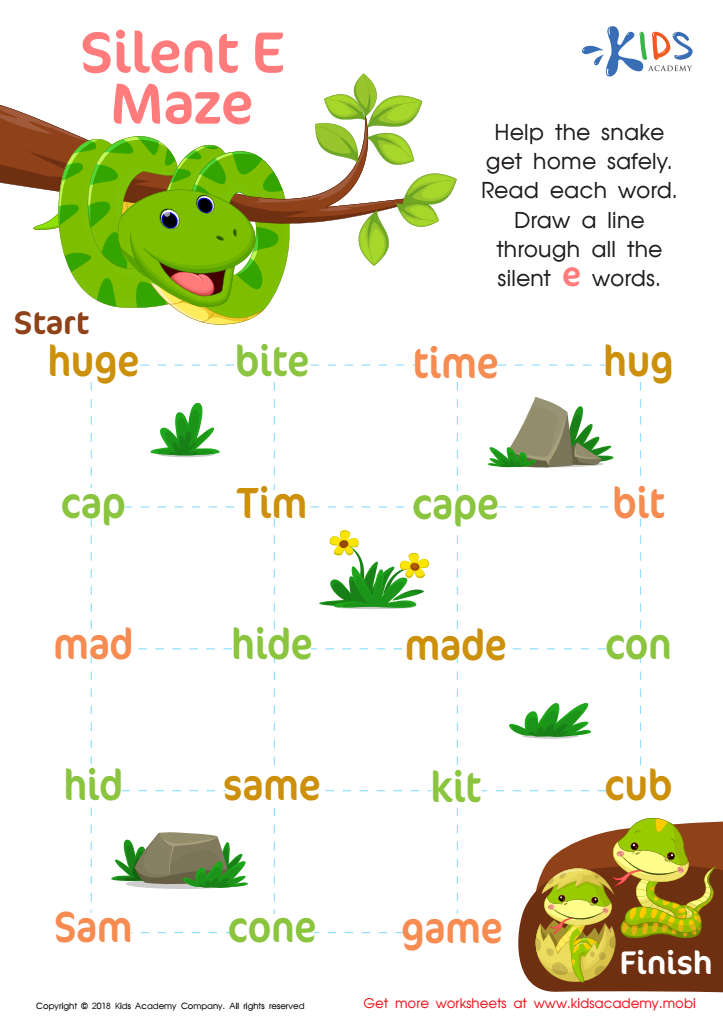
Silent E Maze Worksheet
 Assign to My Students
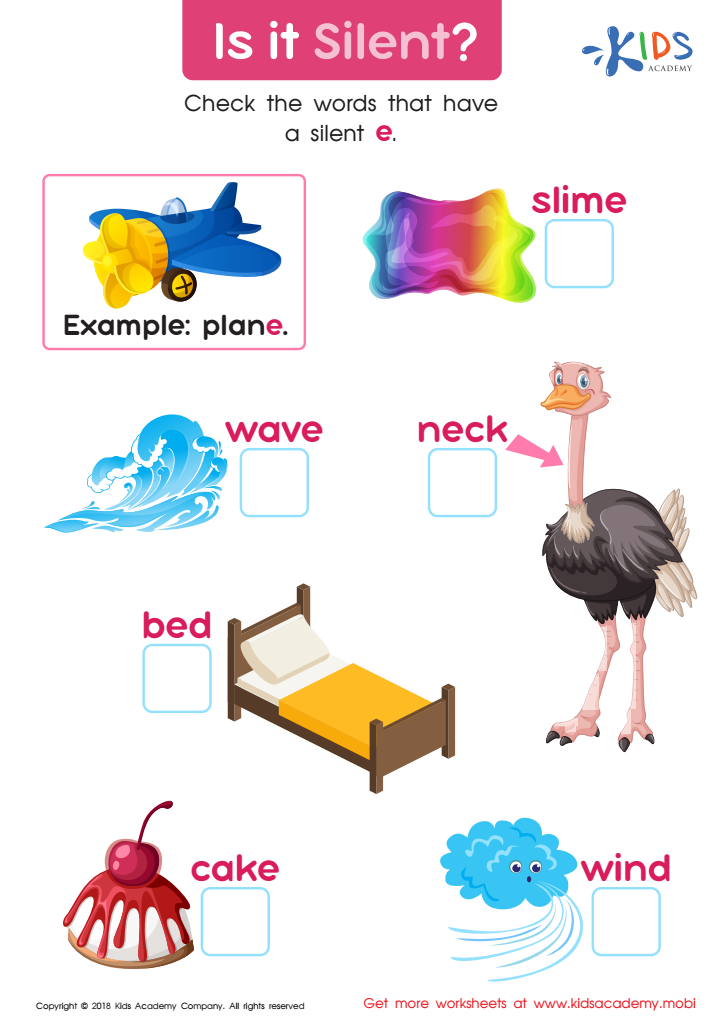
Is It Silent? Worksheet
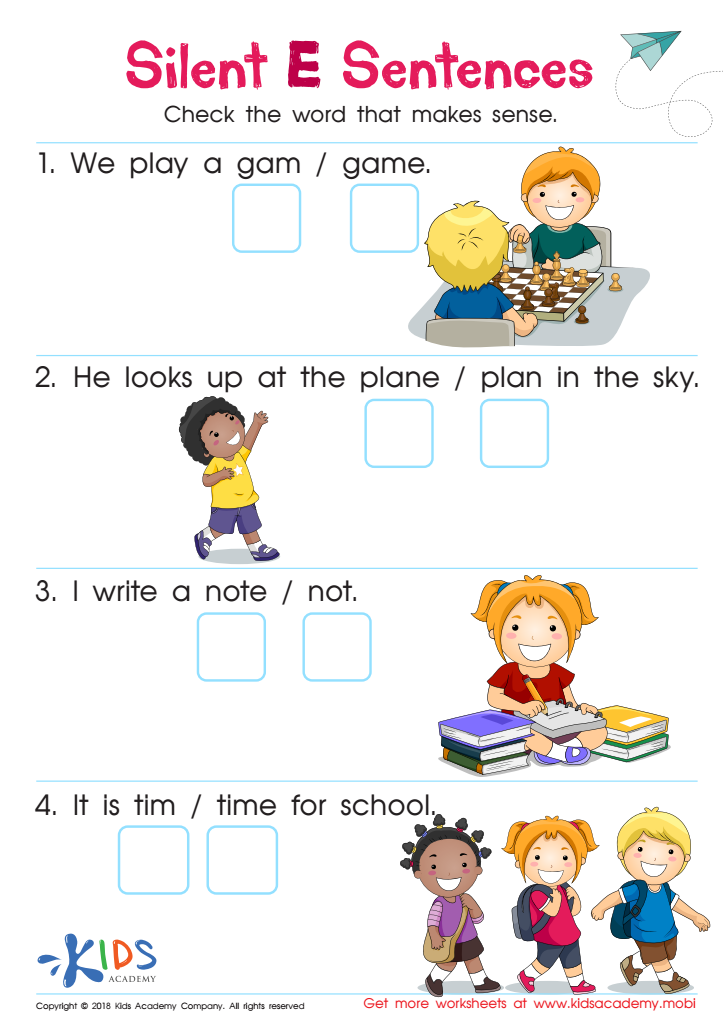
Silent E Sentences Worksheet
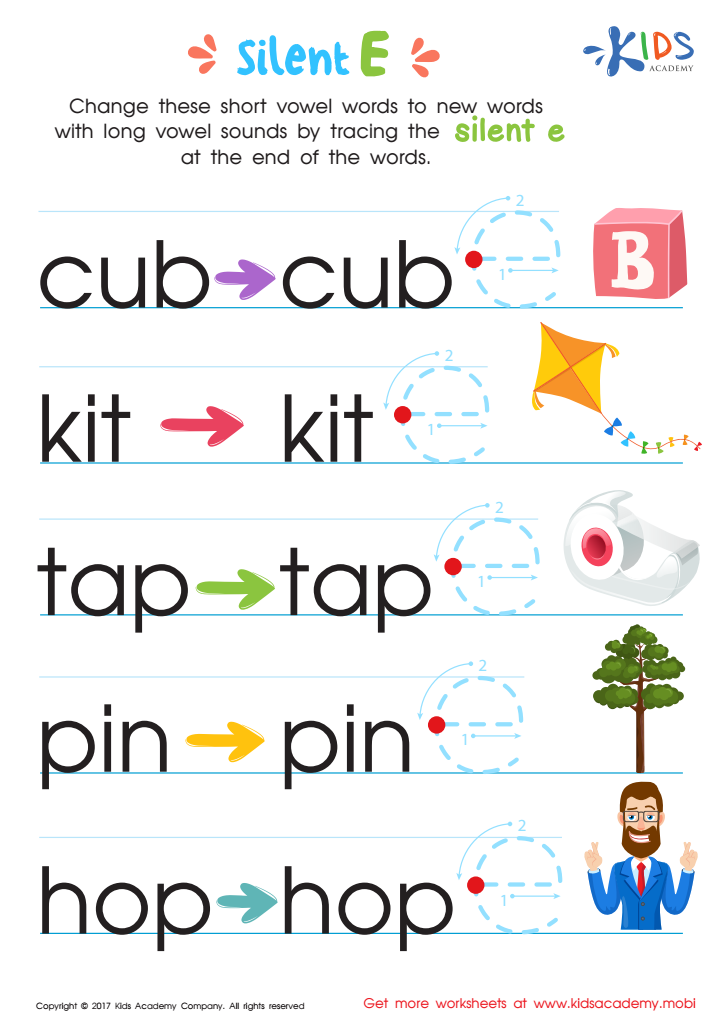
Silent E Words Worksheet
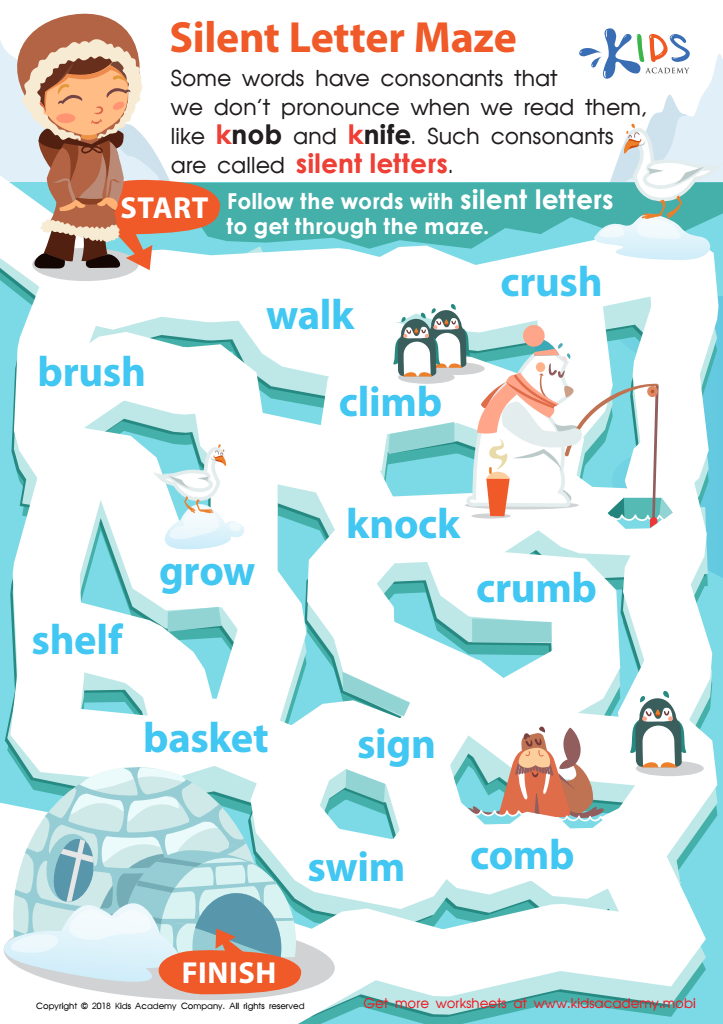
Silent Letter Maze Worksheet


Silent vowels, though easy to overlook, play a crucial role in the literacy development of children aged 6-9. At this early stage, children are developing foundational reading and writing skills, and understanding silent vowels is essential for decoding words accurately. For example, words like "know," "ballet," and "island" illustrate how silent vowels can alter pronunciation and meaning.
Recognizing patterns of silent vowels encourages phonemic awareness, helping children decipher unfamiliar words and foster their overall vocabulary. Parents and teachers should emphasize the importance of these patterns to minimize frustrations with reading, as mispronunciation can hinder comprehension.
Additionally, grasping silent vowel usage aids children in speller rules, enhancing their writing and orthographic skills. Engaging activities - like word games and phonics exercises - can make learning about silent vowels fun, boosting motivation and confidence.
Ultimately, instilling an understanding of silent vowels lays a strong foundation for more advanced literacy skills, equipping children for future academic success. Focusing on these subtle, yet impactful components of language can enrich a child's reading experience, foster a love for reading, and promote lifelong learning.