Vowel Diphthongs Worksheets for Ages 6-9 - Page 2
27 filtered results
-
From - To
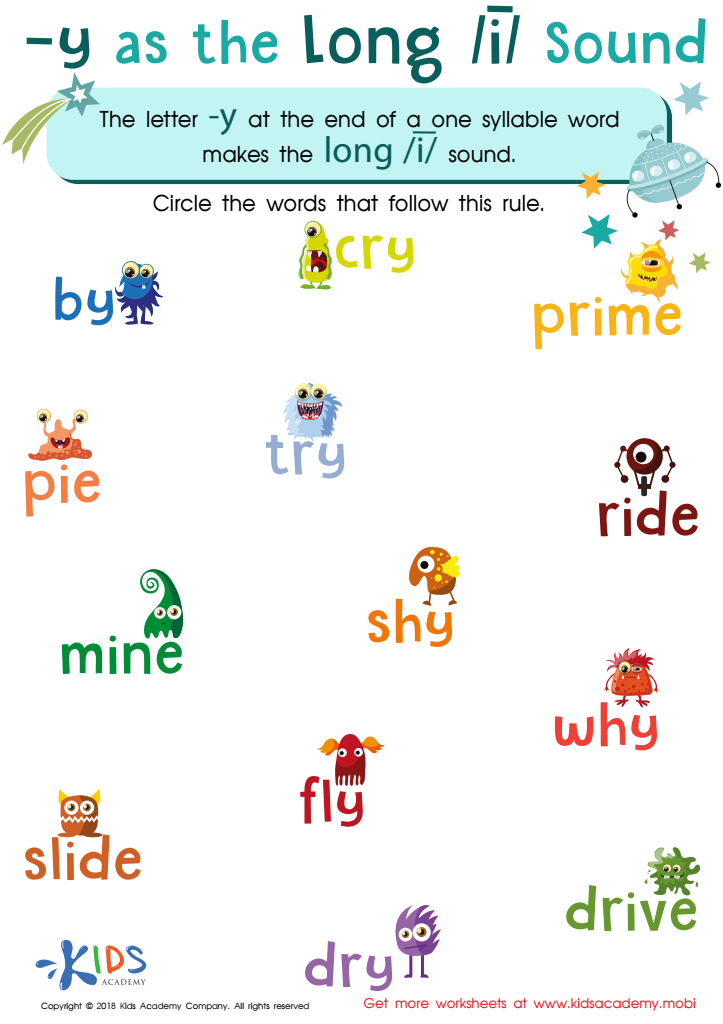
Reading: Y as Long I Worksheet
 Assign to My Students
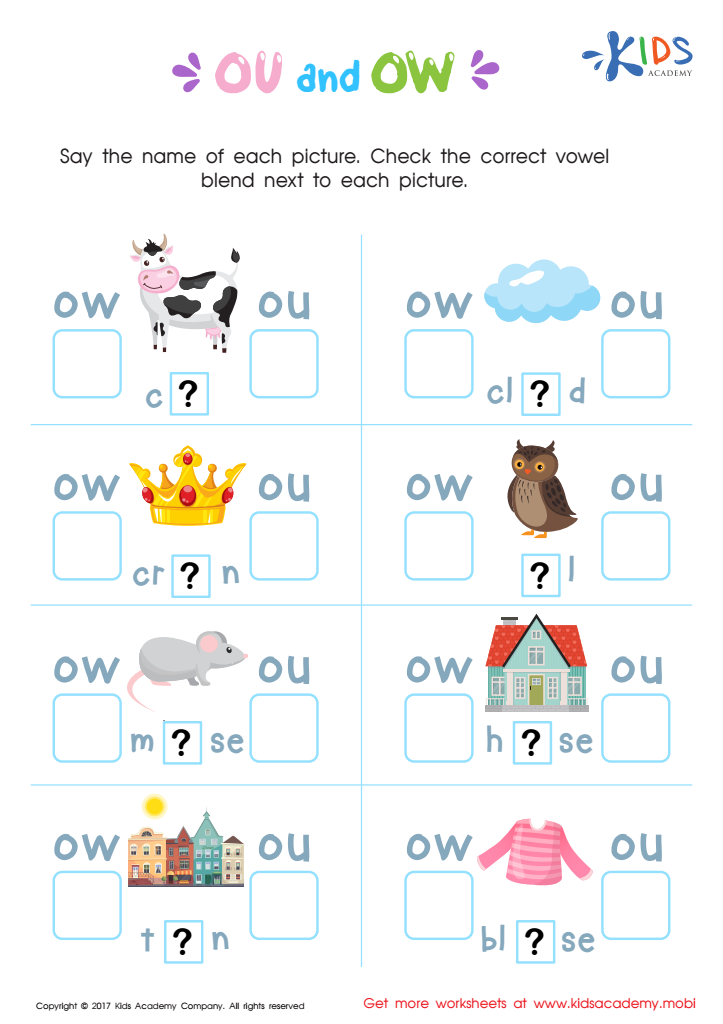
OU and OW Words Worksheet
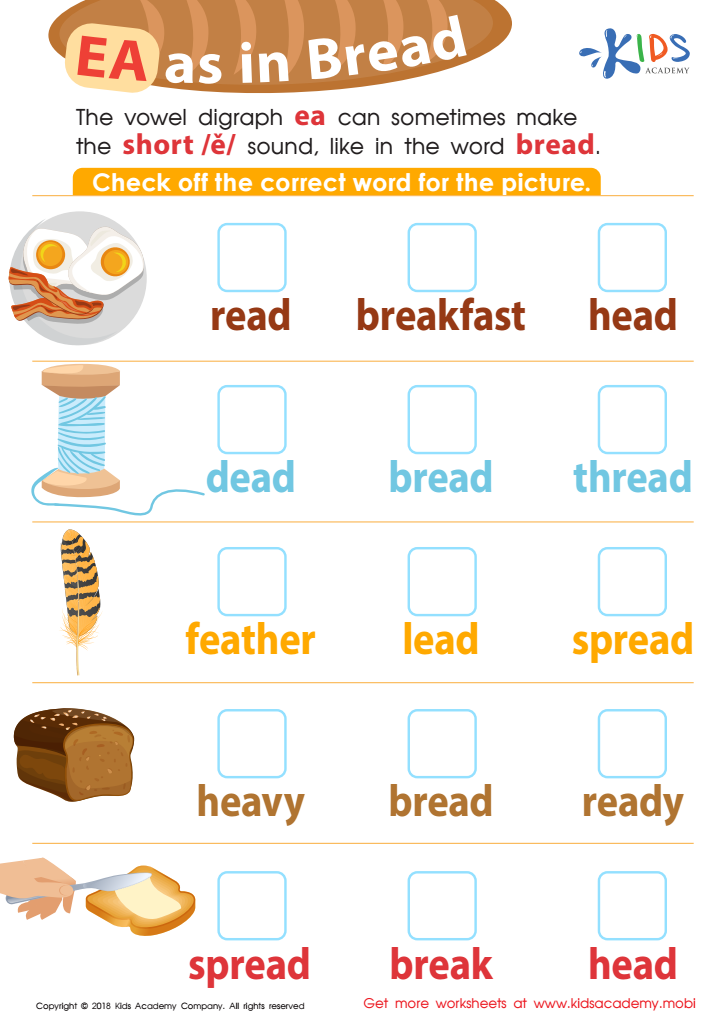
Reading: EA as in Bread Worksheet


Vowel diphthongs play a crucial role in early literacy skills for children aged 6-9. These complex vowel sounds blend two vowel sounds within a single syllable, such as in words like "coin," "clown," and "out." Understanding vowel diphthongs is essential because they enhance children's phonetic awareness, which is foundational for reading and writing. When teachers and parents prioritize diphthongs in literacy instruction, they equip children with the tools needed to decode unfamiliar words, which boosts their confidence as readers.
Moreover, mastering vowel diphthongs improves students' spelling skills as they begin to understand sound-letter relationships. This knowledge helps them make educated guesses when encountering new vocabulary, ultimately expanding their expressive language abilities. Engaging with vowel diphthongs also aids in listening and speaking skills. Children learn to articulate these sounds more clearly, contributing to effective communication.
In addition, recognizing vowel diphthongs in texts makes reading more enjoyable and rhythmical, fostering a lifelong love for literature. Therefore, integrating activities and teaching related to vowel diphthongs in both home and classroom environments supports holistic language development and prepares children extensively for subsequent academic challenges. Teachers and parents should actively embrace this aspect of phonics for enhanced educational growth.








