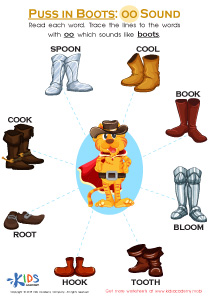
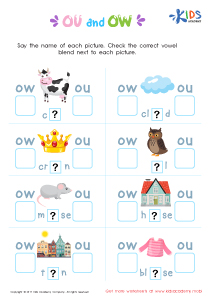
Short Vowels Worksheets for Ages 7-8
8 filtered results
-
From - To
Discover the perfect tool to strengthen your child's reading and spelling skills with our Short Vowels Worksheets, specifically designed for Ages 7-8. These engaging worksheets provide a comprehensive approach to mastering short vowel sounds, ensuring a solid foundation in reading proficiency. Through a variety of fun and educational activities, your child will explore the world of short vowels in an interactive and enjoyable way. Ideal for both classroom use and at-home learning, our worksheets are tailored to captivate young learners' interests while effectively reinforcing essential reading skills. Dive into the adventure of short vowels and watch your child's confidence and abilities soar!
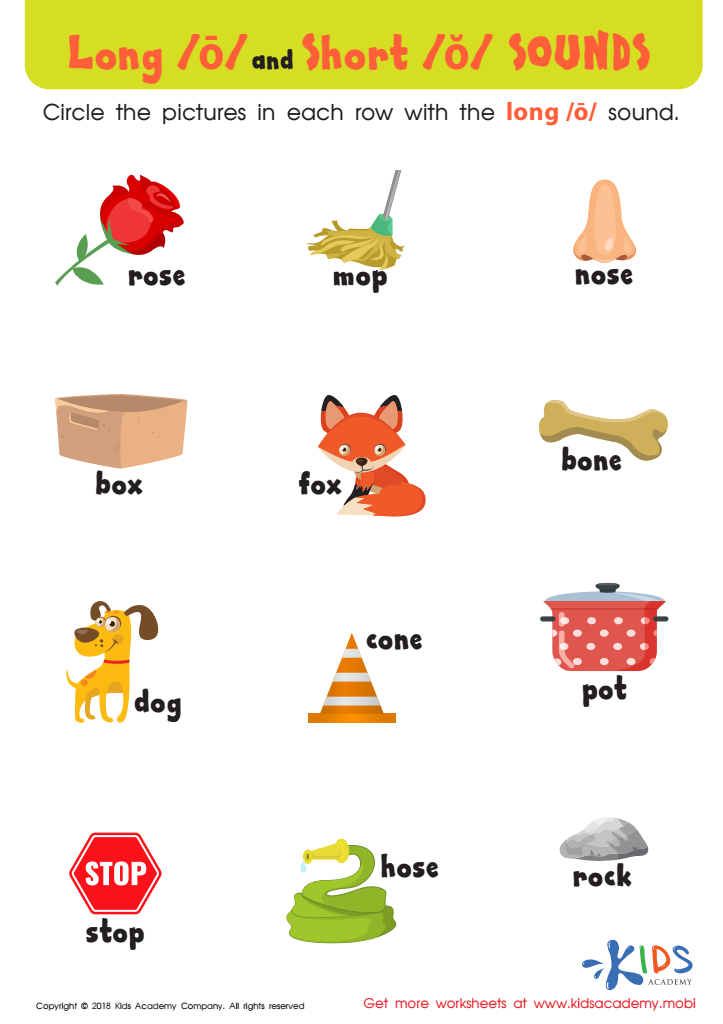
Reading: Long O and Short O Sounds Worksheet
 Assign to My Students
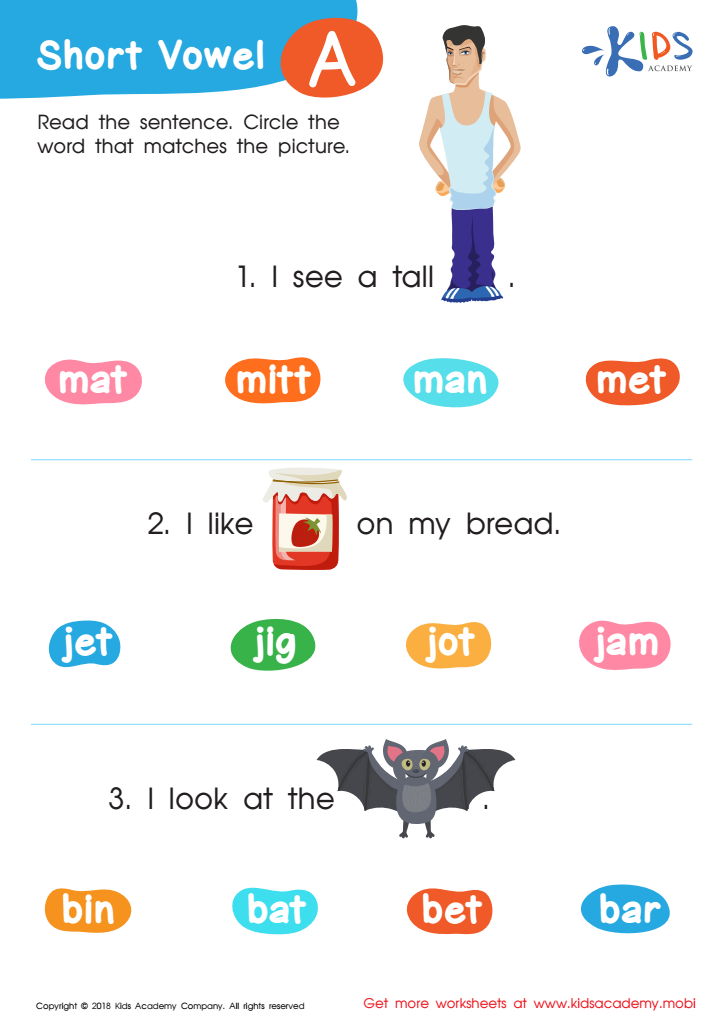
Short Vowel /a/ Worksheet
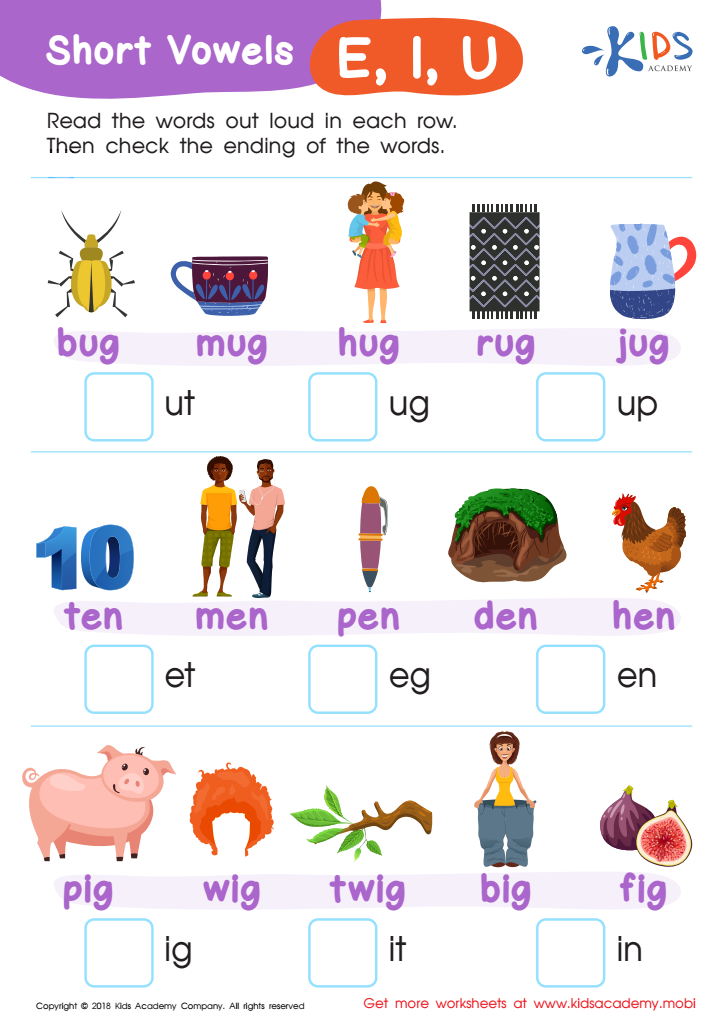
Short Vowels /e/, /i/, and /u/ Worksheet
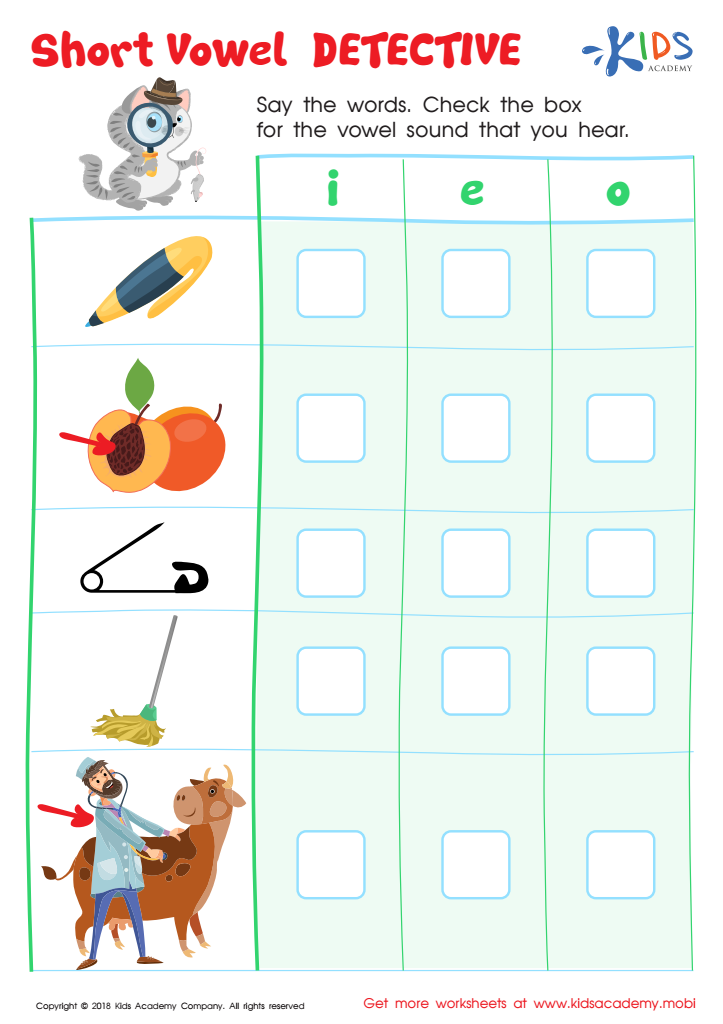
Short Vowel Detective Worksheet
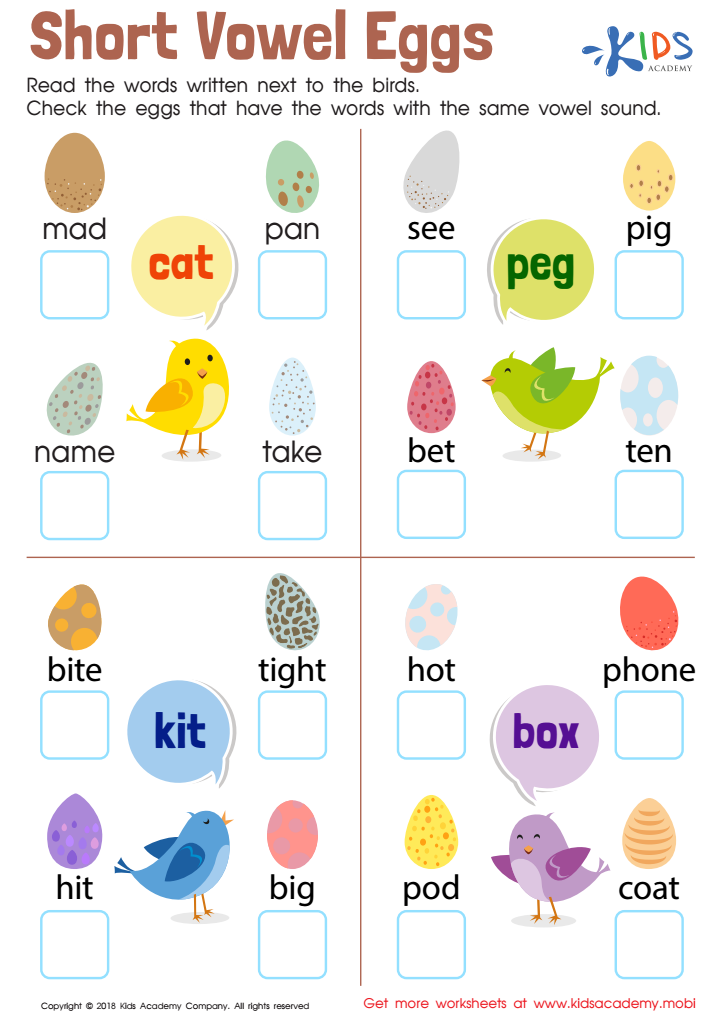
Short Vowel Eggs Worksheet
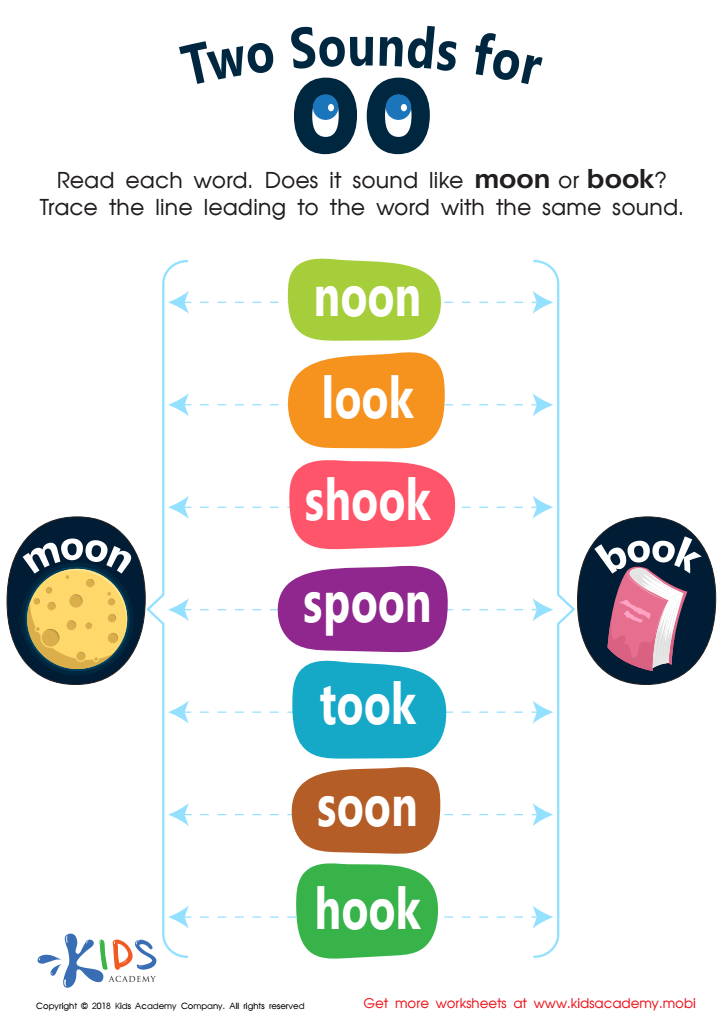
Two Sounds for OO Worksheet
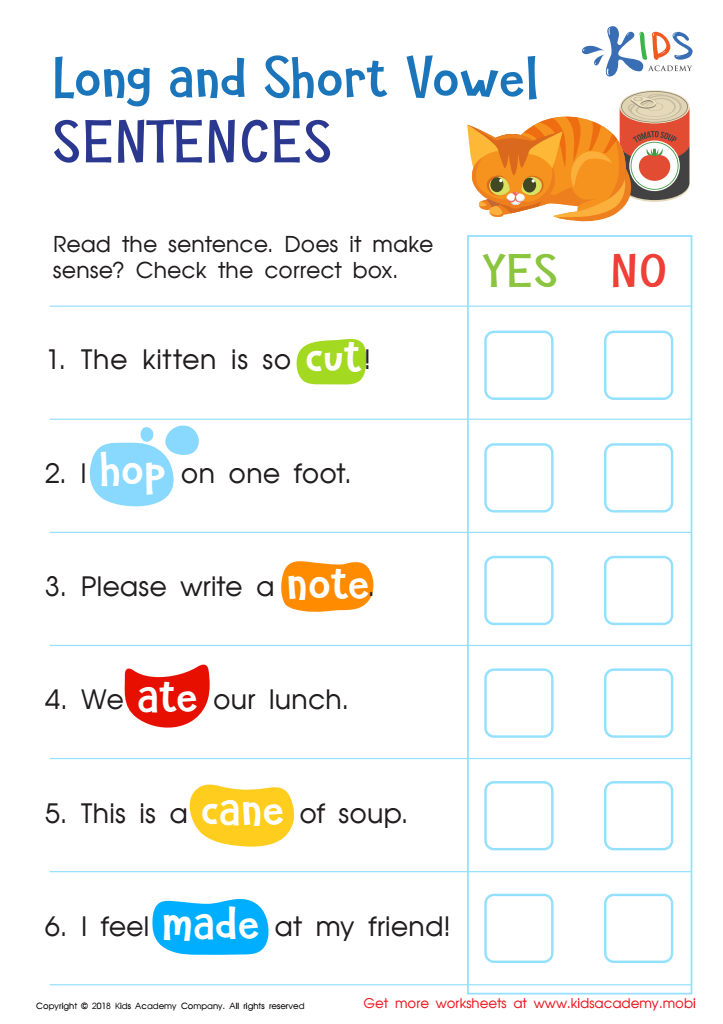
Long and Short Vowel Sentences: Assessment Worksheet
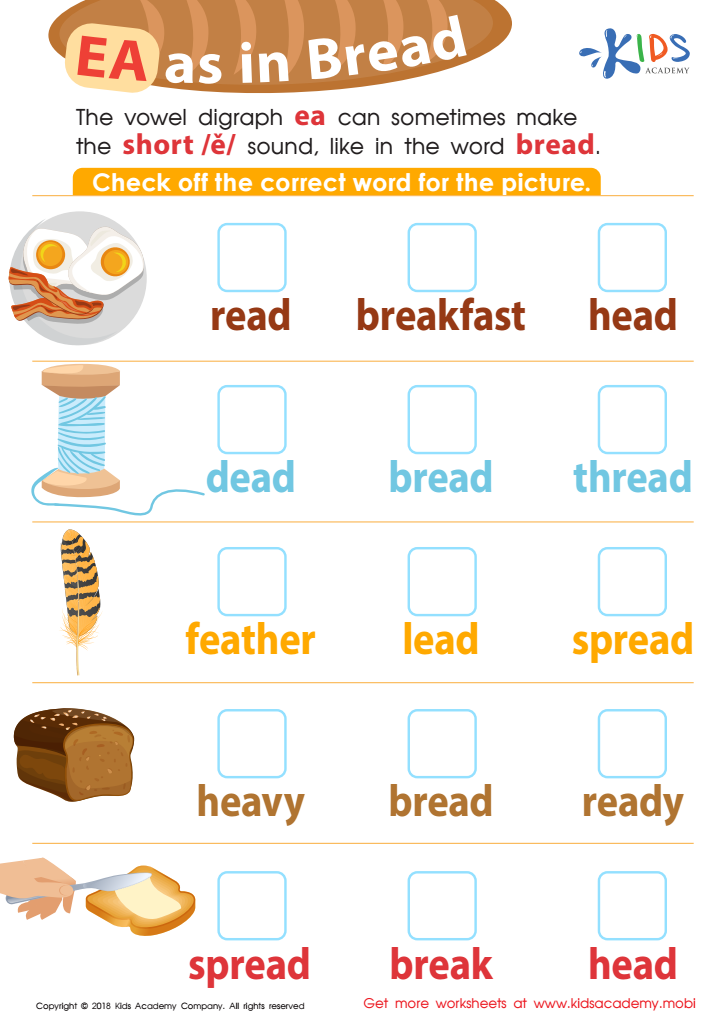
Reading: EA as in Bread Worksheet



Short Vowels worksheets designed for Ages 7-8 are an incredibly useful tool for young learners. At this critical stage of linguistic development, mastering the sounds and applications of short vowels is essential. These worksheets provide a structured, engaging way for children to practice and internalize these fundamental aspects of reading and writing.
For children aged 7 to 8, understanding short vowels is crucial for developing reading fluency and comprehension. Short vowel sounds are often among the first phonemic elements that children learn, serving as building blocks for more complex word structures. Worksheets focused on short vowels offer targeted practice, helping learners distinguish between similar sounds and spell words correctly.
Moreover, these worksheets are crafted with age-appropriate content that captivates the interests of 7- to 8-year-olds, ensuring that learning remains a fun and interactive experience. Through a variety of exercises such as matching games, fill-in-the-blanks, and word puzzles, children are encouraged to repeatedly practice these phonetic principles, reinforcing their learning in a playful manner.
In essence, Short Vowels worksheets for Ages 7-8 are a valuable resource for parents and educators alike. They not only aid in the development of essential reading and writing skills but also foster a positive attitude towards learning in young students, setting a strong foundation for their future academic success.