Filters

30 filtered results

Clear all filters
Favorites
With answer key
Interactive

30 filtered results

Difficulty Level

Grade


Check out this FREE Grade 1 Reading: Literature Trial Lesson!

Folktales

Favorites
With answer key
Interactive
  • Reading: Literature
  • With answer key
Take a Look - Part 1 Worksheet

Take a Look - Part 1 Worksheet

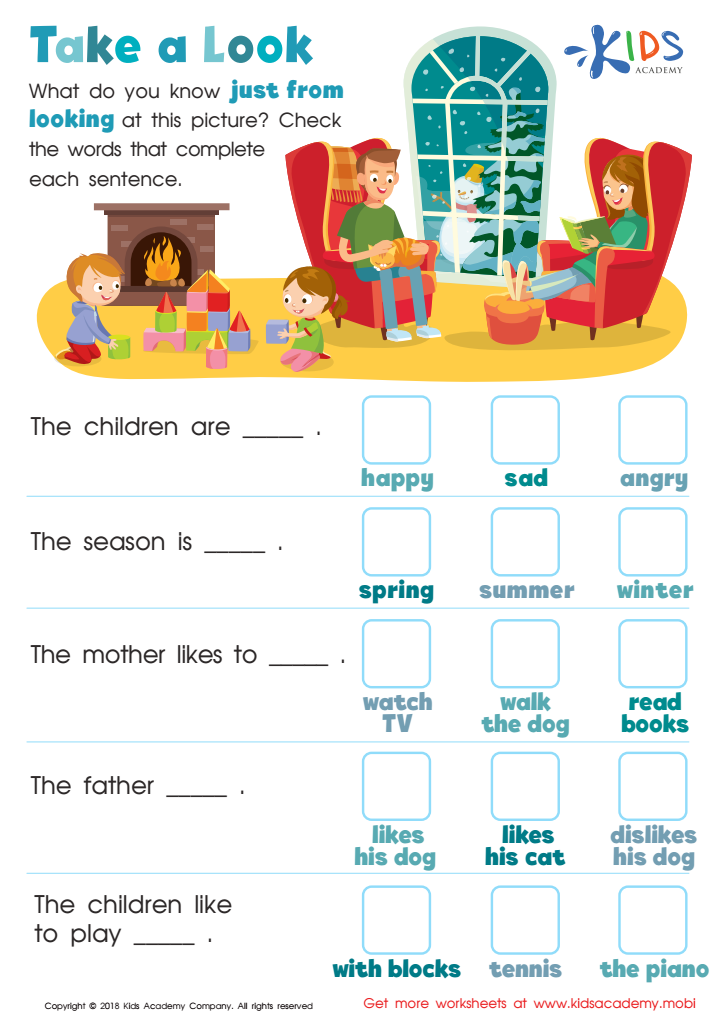
Young learners gain understanding when using picture clues when reading. Looking at illustrations can help students learn the meaning of key vocabulary when reading fiction or informational text. Ask your students to look at the worksheet and observe what they can learn from the picture. It's a great comprehension strategy for early readers.
Take a Look - Part 1 Worksheet
Worksheet
A Day at the Park Worksheet

A Day at the Park Worksheet

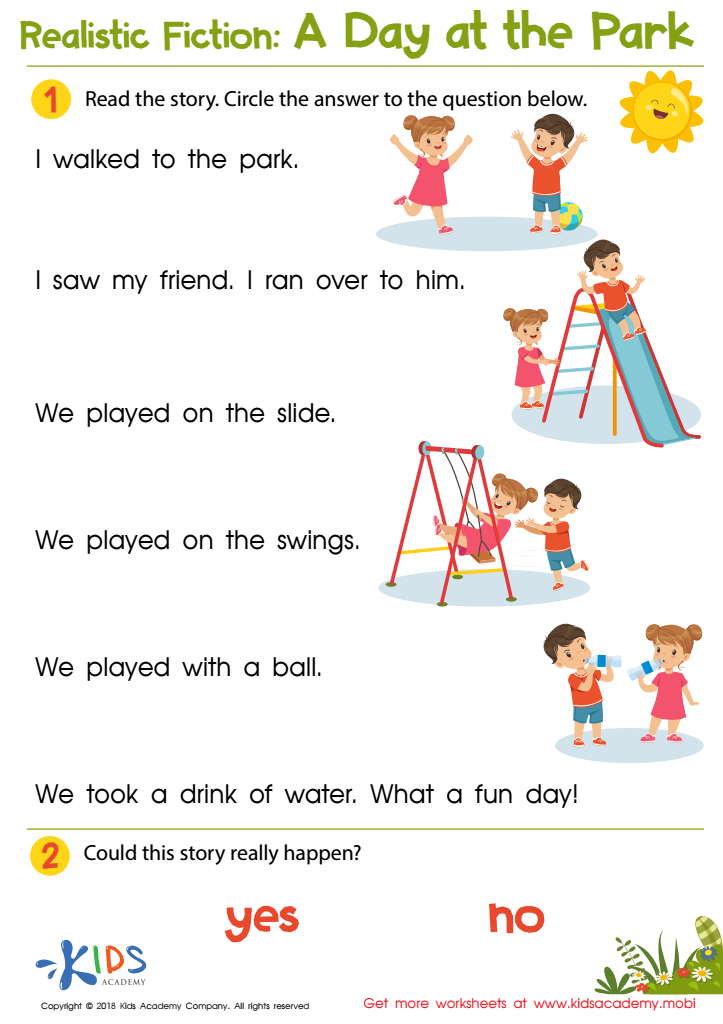
Kids as young as preschool-age can be taught to evaluate stories! Use this fun worksheet about a day at the park. Read each sentence aloud, looking at the pictures. Ask your child if the events in the story could happen in real life - if yes, circle yes, otherwise circle no. When finished, discuss with them the genre, realistic fiction.
A Day at the Park Worksheet
Worksheet
The Tortoise and the Hare Worksheet

The Tortoise and the Hare Worksheet

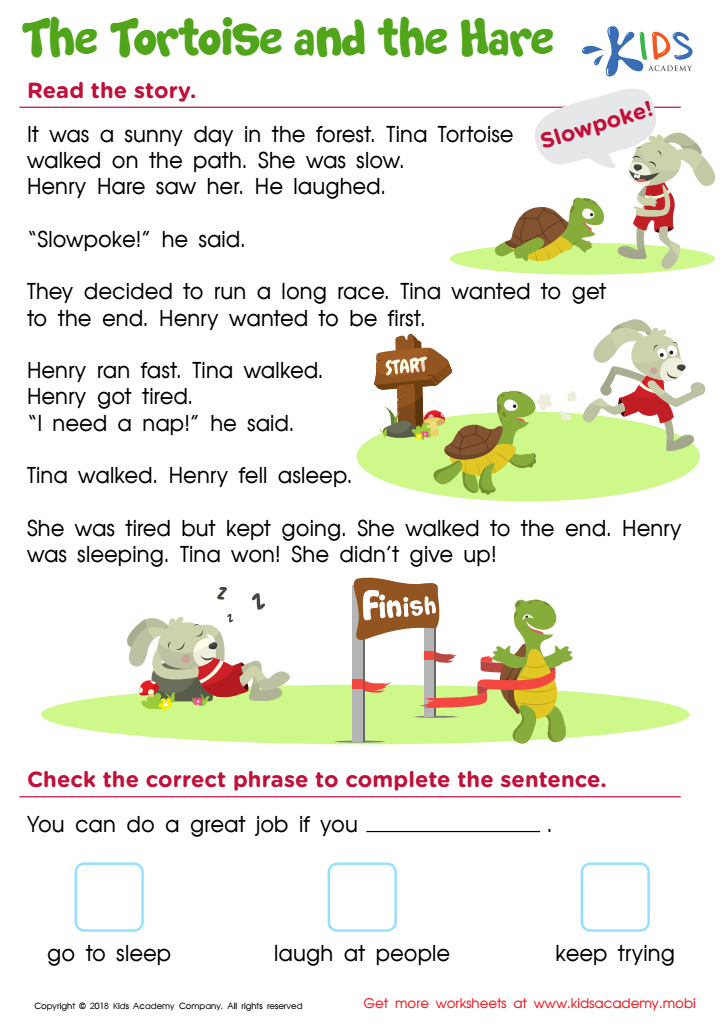
Help your child uncover the hidden moral in a classic children's tale with this free downloadable worksheet. Joyful illustrations bring the story to life and help young readers visualize the events. With your help, they can answer the question and fill in the blank with the phrase that serves as the story's lesson. Check the box to complete the worksheet!
The Tortoise and the Hare Worksheet
Worksheet
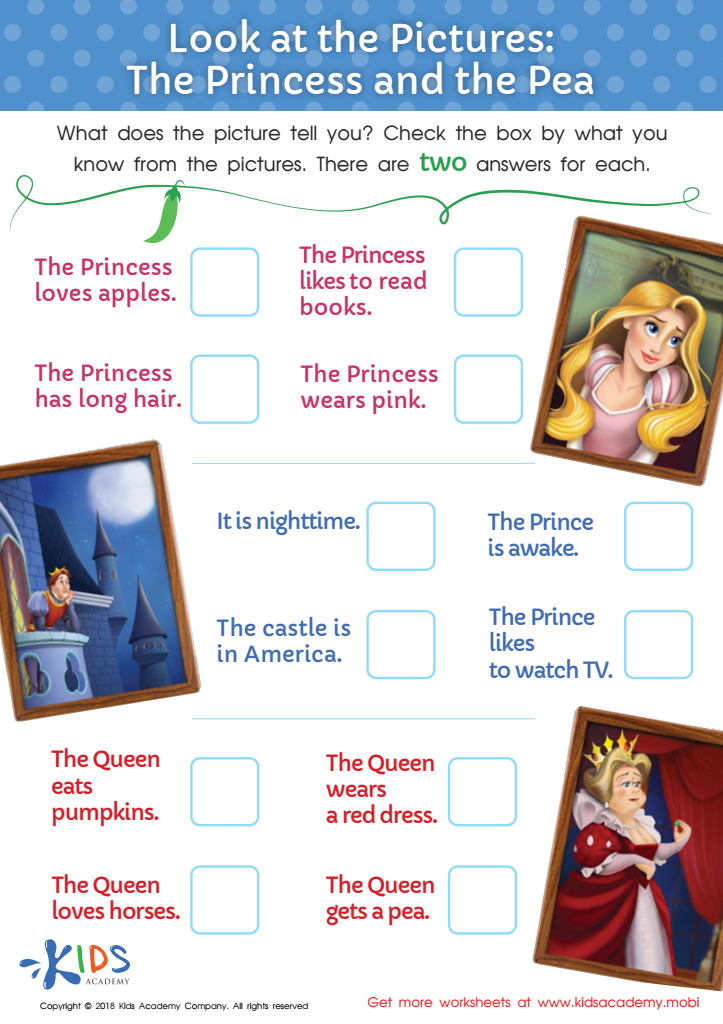
Look at the Pictures: The Princess and the Pea Worksheet

Look at the Pictures: The Princess and the Pea Worksheet

Early readers can benefit from picture clues to understand stories and text. Looking at images helps them learn the meaning of words and comprehend events. Use this worksheet on The Princess and the Pea to let students observe and learn from the pictures. It's a great way to help them comprehend early reading materials.
Look at the Pictures: The Princess and the Pea Worksheet
Worksheet
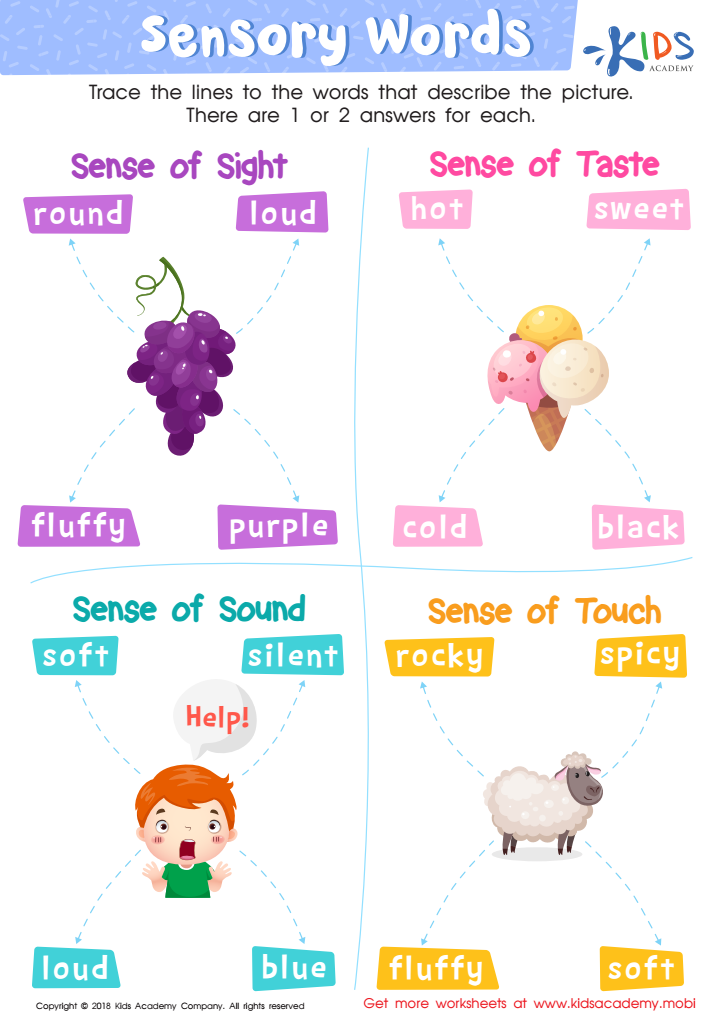
Sensory Words Worksheet

Sensory Words Worksheet

This worksheet helps students explore sensory words by looking at pictures and selecting one or two words to describe how it looks, feels, tastes, smells or sounds. Adding sensory words to texts makes them more interesting and helps students comprehend stories and articles better.
Sensory Words Worksheet
Worksheet
Setting up the Chessboard: Part 1 Worksheet


Setting up the Chessboard: Part 1 Worksheet

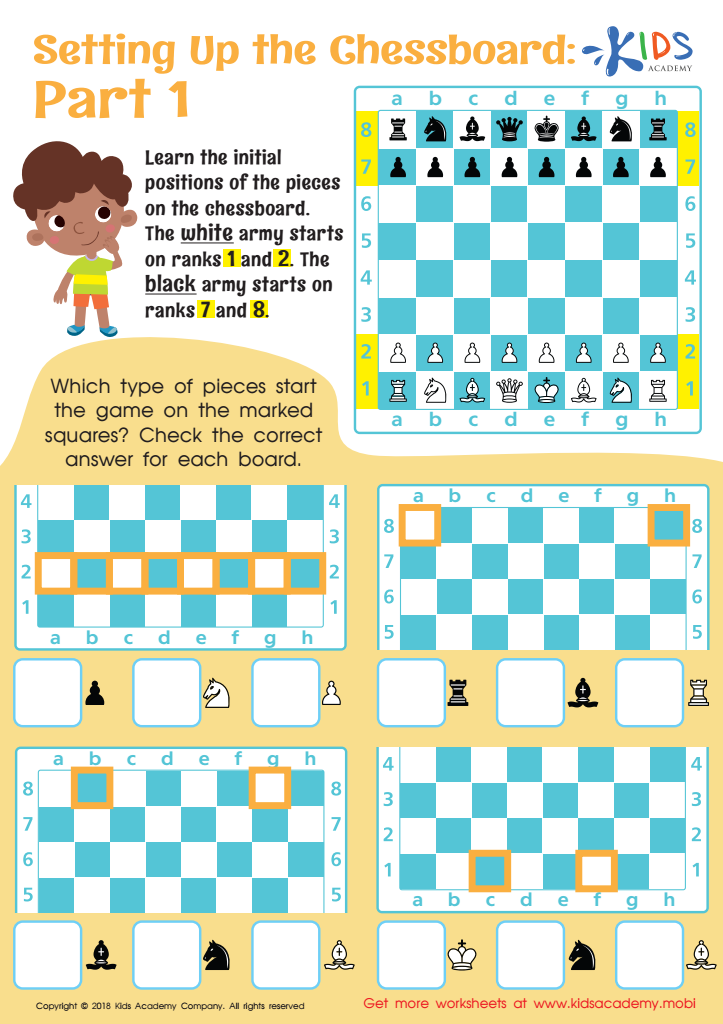
Teach your child the starting positions of the black and white armies on the chessboard. Black pieces are placed on ranks 7 and 8, and white pieces on ranks 1 and 2. Have them check the highlighted boxes on the chessboard to make sure they know the correct pieces to start with.
Setting up the Chessboard: Part 1 Worksheet

Worksheet


Reading literature is essential for Grade 1 students as it lays the foundation for their literacy development and overall learning. At this stage, children are beginning to understand the joy of storytelling, which not only stimulates their imagination but also enhances their vocabulary and comprehension skills. By engaging with literature, students learn to recognize letters and sound out words, facilitating their ability to read independently.

Furthermore, reading literature exposes young learners to various themes and ideas, fostering empathy and understanding of different perspectives. It encourages critical thinking as they make predictions, ask questions, and draw conclusions about the stories they encounter. Teachers and parents play a crucial role in guiding these discussions, helping children connect the stories to their own experiences.

Additionally, literature can serve as an effective tool for teaching core subjects like math and science when integrated into stories. By reading diverse texts, children are also exposed to different cultures and experiences, enhancing their social studies curriculum.

Ultimately, fostering a love for reading at a young age equips children not only with essential academic skills but also with the ability to navigate complex emotions and worldviews, setting them up for success in school and beyond.