
Easy Reading Non-Fiction Worksheets for Ages 3-6
11 filtered results
Difficulty Level
Grade
Age
-
From - To
Subject
Activity
Standards
Discover our engaging "Easy Reading Non-Fiction Worksheets for Ages 3-6," designed to spark curiosity and motivate young learners. These worksheets offer simple, captivating content that introduces children to informational text, nurturing their love for reading and helping develop essential literacy skills. Each worksheet is tailored to promote comprehension, vocabulary enhancement, and critical thinking. With a variety of fun themes and activities, young readers will explore fascinating facts about animals, nature, and other exciting topics. Ideal for home or classroom use, these worksheets support early education and foster a lifelong passion for learning. Get started on the reading adventure today!
Favorites
With answer key
Interactive
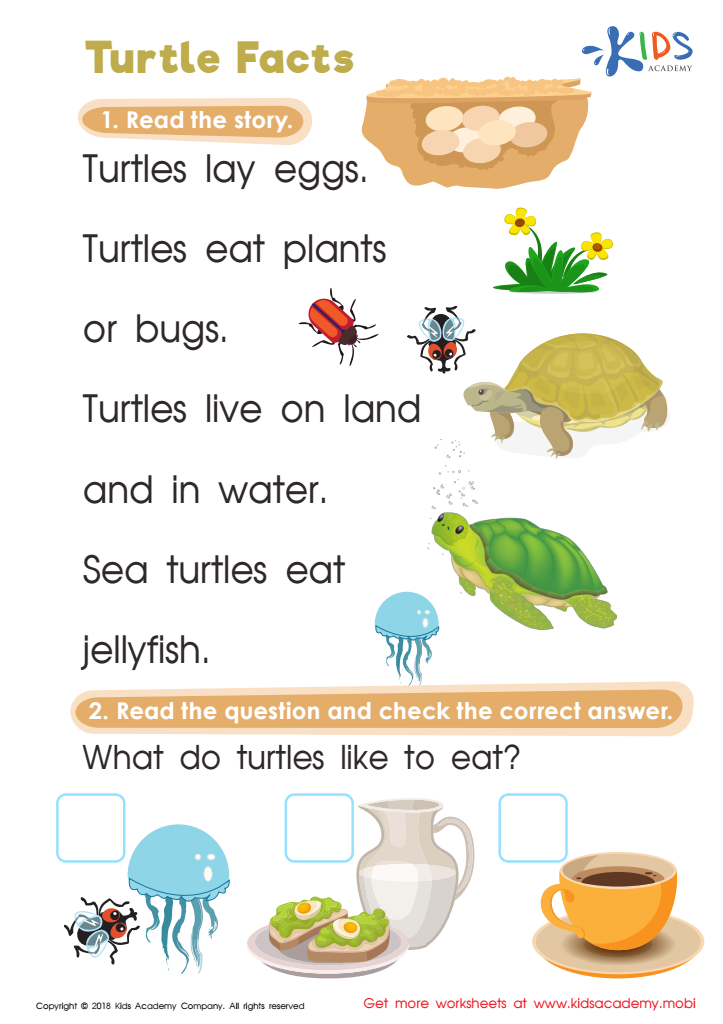
Turtle Facts Worksheet
Reading has many advantages, like being able to learn from informational texts! This worksheet teaches kids about turtles using a fun paragraph with pictures! Encourage students to read the text and use the visuals as a guide. Then, answer the question at the bottom by checking the image that matches the info they just read.
 Assign to My Students
Turtle Facts Worksheet
Worksheet
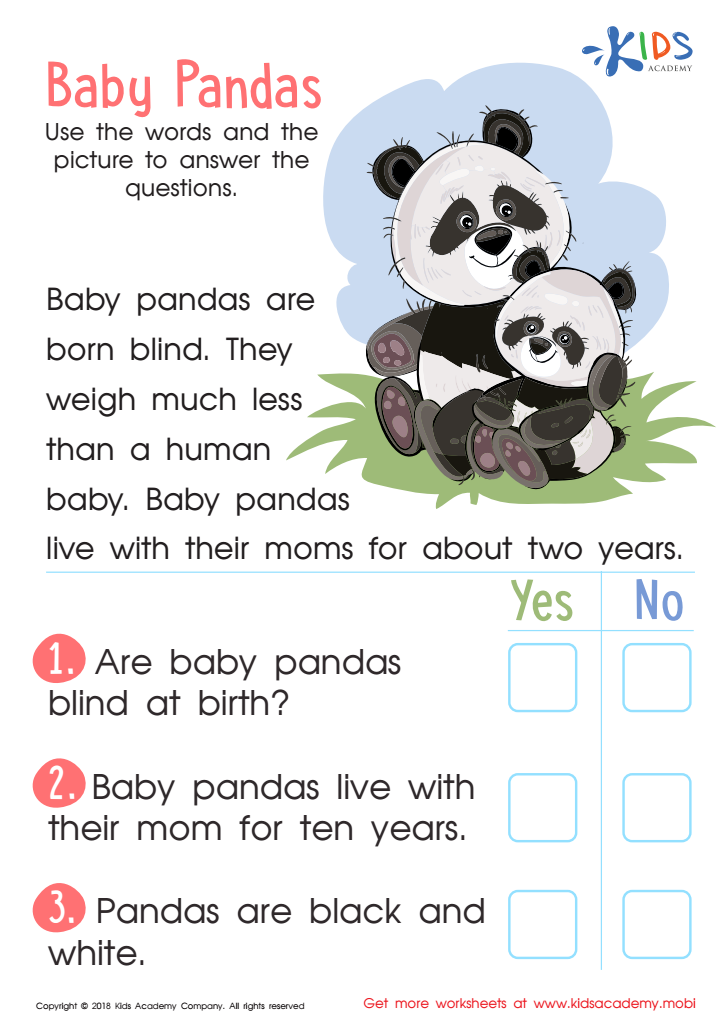
Baby Pandas Worksheet
Kids can't usually see pandas in person, but they can learn more about them with this fun worksheet! It includes a passage and picture, plus questions at the end to check kids' reading comprehension. Just ask them to read the text, check the "yes" and "no" boxes, and enjoy the fascinating facts about baby pandas!
Baby Pandas Worksheet
Worksheet
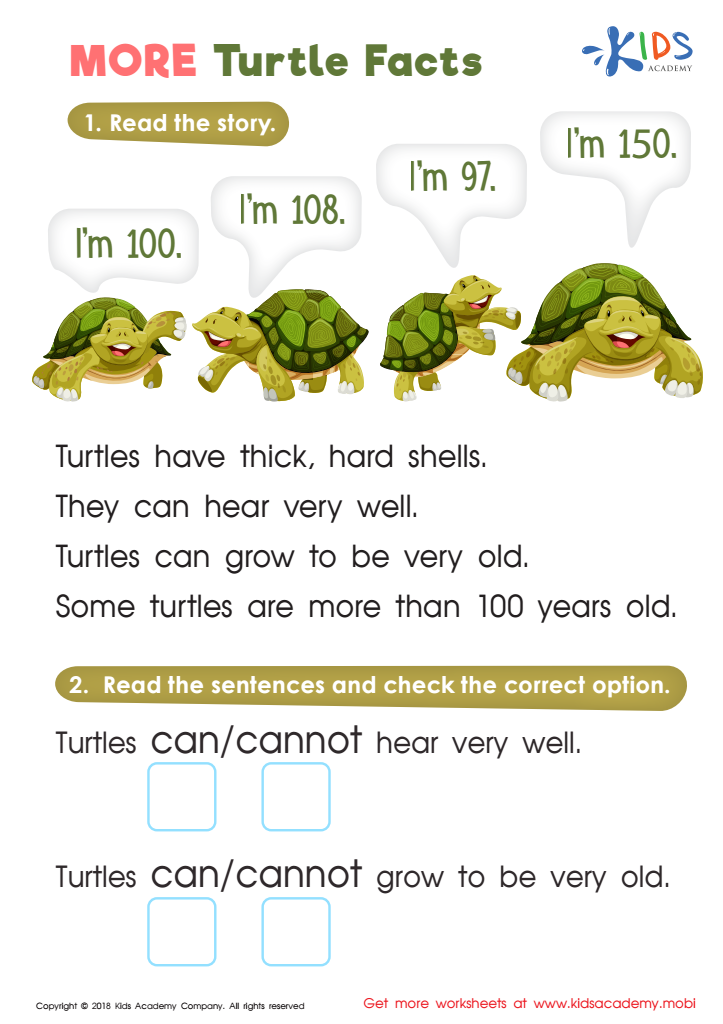
More Turtle Facts Worksheet
Discover more fun facts about turtles with this reading worksheet! Read through the paragraph, check out the pictures, then answer the questions at the bottom to see how well your child remembers what they learned. Find out what turtles can and can't do by ticking the boxes. Let the turtle-filled learning begin!
More Turtle Facts Worksheet
Worksheet
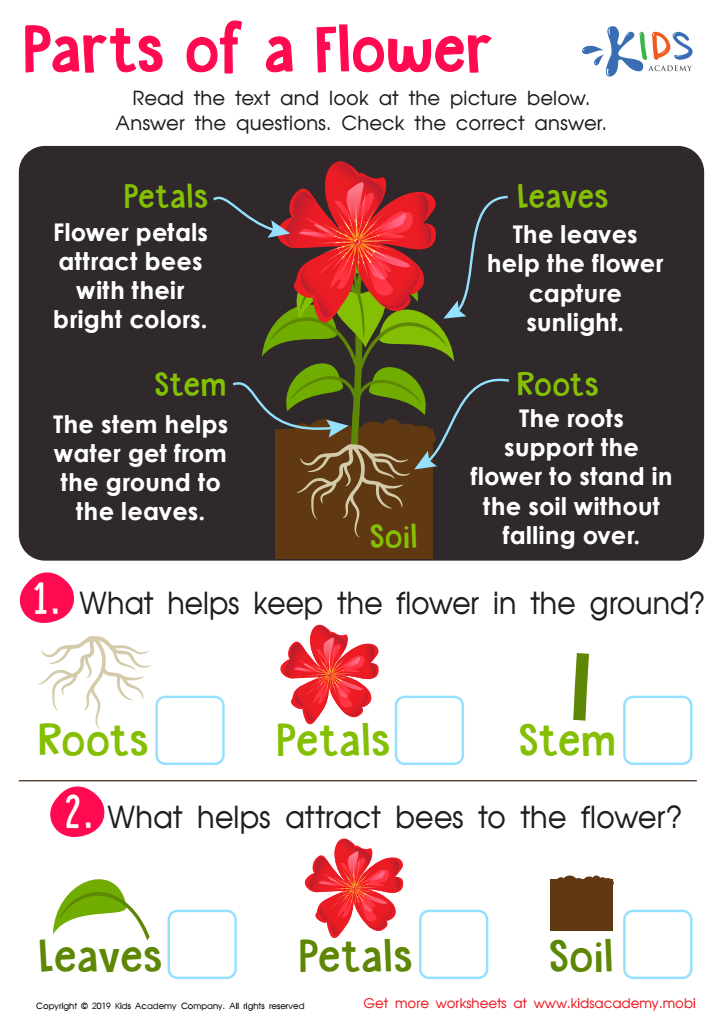
Parts of Flower Worksheet
Learning how to dissect info from graphics is essential. This free worksheet on the parts of a flower is a great learning tool for kids. It offers info, picture clues and comprehension questions. Plus, it gives them a visual reference for building on their knowledge of plants.
Parts of Flower Worksheet
Worksheet
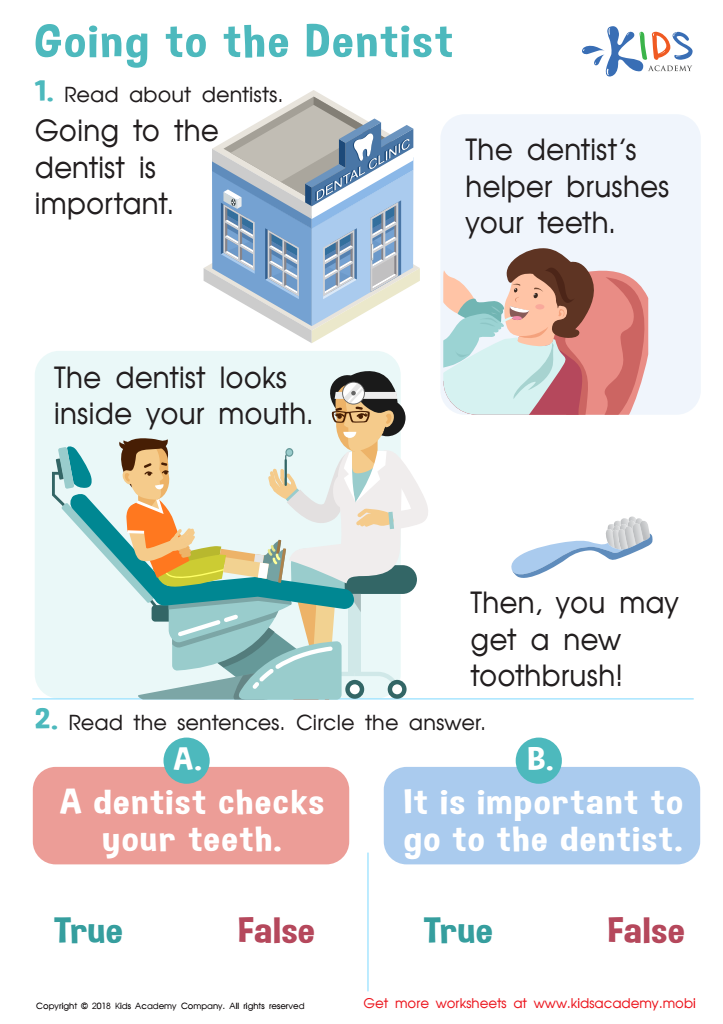
Going to the Dentist Part 2 Worksheet
Visiting the dentist can be nerve-wracking for children. This informative PDF will not only explain what the dentist does, but also use pictures to assure children. They'll learn why seeing the dentist is important and be able to verify their understanding through true/false questions.
Going to the Dentist Part 2 Worksheet
Worksheet
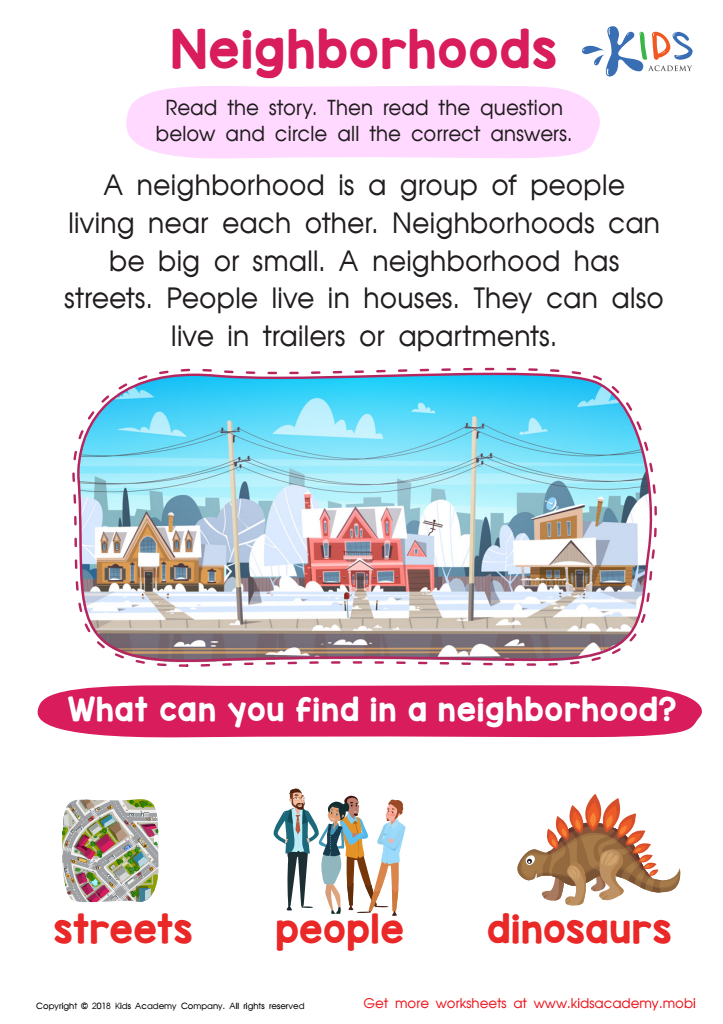
Neighborhoods Worksheet
Readin' is excitin'! This free worksheet helps your child practice by reading basic info about neighborhoods, plus a pic of what one looks like. With this, they can answer "What can you find in a neighborhood?" It's a great way to practice reading comprehension and social studies for better citizenship.
Neighborhoods Worksheet
Worksheet
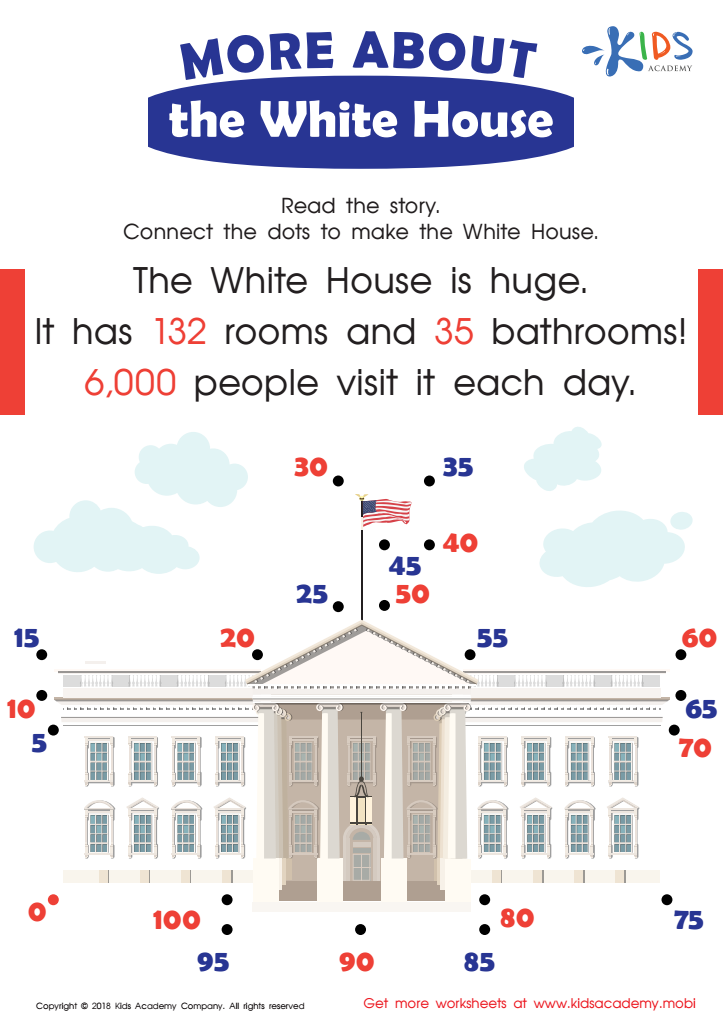
More About the White House Worksheet
The President of the United States lives in the White House, a huge building with 132 rooms and 35 bathrooms. It's home to the President's family, plus 6,000 visitors every day, and full of interesting stories. Teach your kids about it with this printout; help them connect the dots and learn more about this famous home. Learning never ends!
More About the White House Worksheet
Worksheet
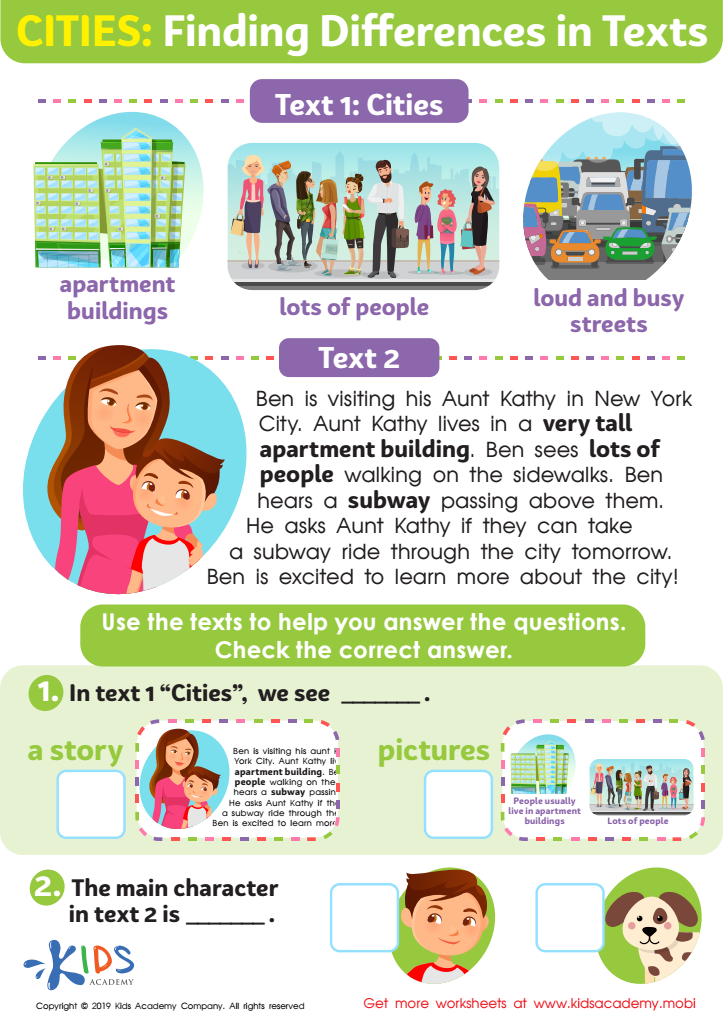
Cities: Finding Differences Worksheet
Critical thinking is essential for reading comprehension. New readers must be able to identify the key information in different text formats. This worksheet helps children learn what they might find in cities and how to differentiate between stories and pictures.
Cities: Finding Differences Worksheet
Worksheet
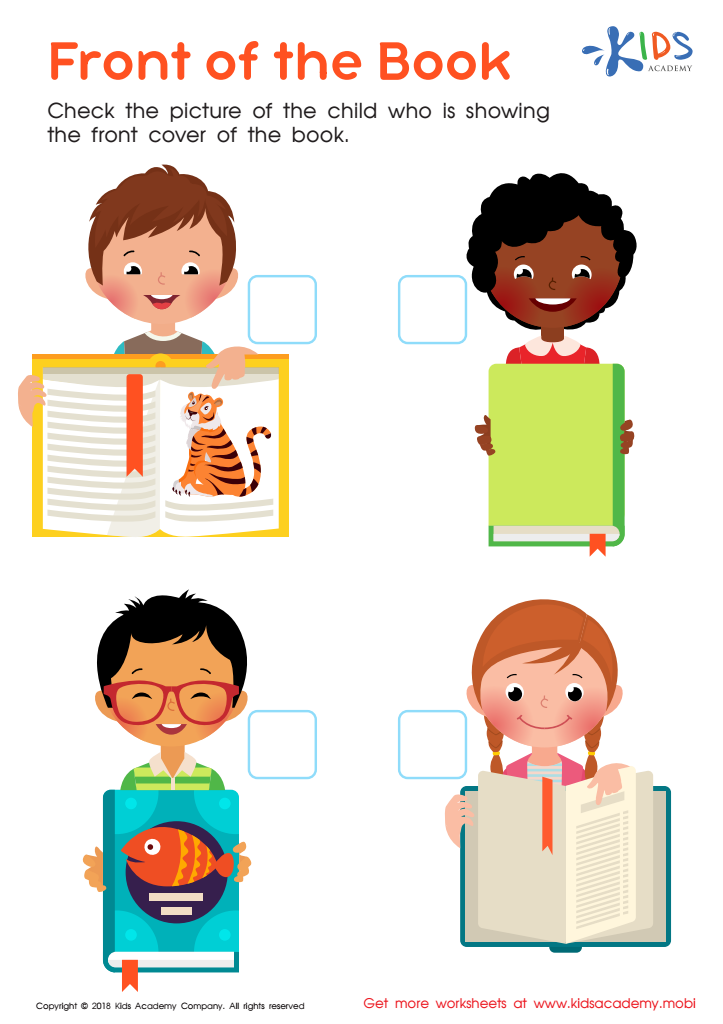
Front of the Book Worksheet
Help your child become a reader with this free worksheet! It's full of fun new friends and is designed to help kids understand concepts about the front of a book. They'll look at each picture and decide which friend is holding the book with the front cover, and check off the correct answer in the given boxes. Get your little one ready to be a reader!
Front of the Book Worksheet
Worksheet
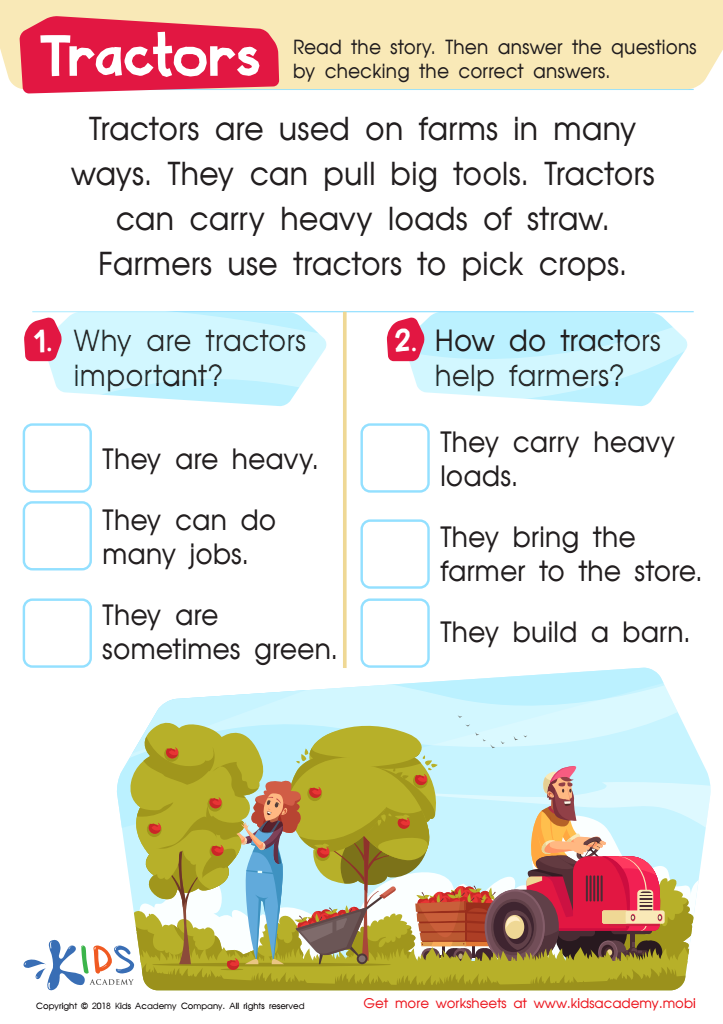
Tractors Worksheet
Kids love tractors! Let them read about what they do, what they use, and who uses them with this free worksheet. After reading, they can answer reading comprehension questions to test their knowledge; multiple choices make it easy! Little do they know, they're boosting their literacy skills along the way!
Tractors Worksheet
Worksheet
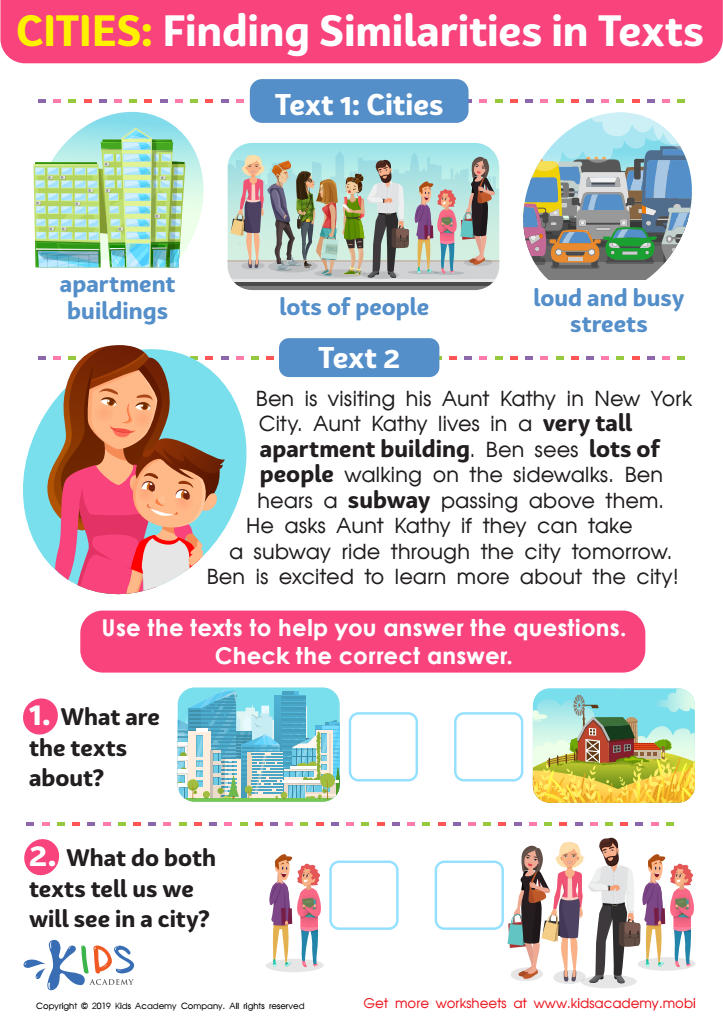
Cities: Finding Similarities Worksheet
This worksheet offers kids a chance to explore how information can be presented differently but still contain similar facts. They'll compare two texts and look for similarities, honing their reading comprehension and critical thinking skills.
Cities: Finding Similarities Worksheet
Worksheet
Join Kids Academy for Free
Who is primarily going to use this learning content?








Parents and teachers should care about Easy Reading Non-Fiction for Ages 3-6 because it plays a crucial role in early childhood literacy and learning. At this stage, children are naturally curious and eager to explore the world around them. Easy reading non-fiction books provide age-appropriate content that caters to their inquisitive minds, offering insights into various subjects such as nature, animals, science, and culture.
These books foster a love for reading by using engaging visuals and simple language, making comprehension easier for young learners. They promote vocabulary development, enhancing language skills, and introducing children to new concepts in an accessible manner. Moreover, reading non-fiction cultivates critical thinking, encouraging children to ask questions and discover answers, which is vital for cognitive growth.
Additionally, such books support parents and teachers in introducing educational topics in an enjoyable format, making learning feel less like a chore. By incorporating Easy Reading Non-Fiction into literacy routines, caregivers can instill confidence in young readers and create a foundation for a lifelong love of learning. Ultimately, these resources enrich children's understanding and appreciation of the world, laying the groundwork for more advanced learning in the future.







