Filters

7 filtered results

Clear all filters
Favorites
With answer key
Interactive

7 filtered results

Difficulty Level

Grade


Introduce your young learners to the wonders of life science with our Easy Life Science Worksheets for Ages 4-7! Specially designed for early grade students, these printable worksheets cover fundamental topics such as plants, animals, and the human body. Each worksheet simplifies complex concepts through engaging activities, colorful illustrations, and age-appropriate questions. Kids will explore and understand basic life science principles while developing critical thinking and observation skills. Make learning fun and interactive with our easy-to-follow worksheets, perfect for homeschooling or classroom use. Download today and spark a love for science in your little ones!

Check out this FREE Trial Lesson on Life Science for age 4-7!

Plant Structures and their Functions

Favorites
With answer key
Interactive
  • 4-7
  • With answer key
  • Life Science
  • Easy
Parts Flower Printable

Parts Flower Printable

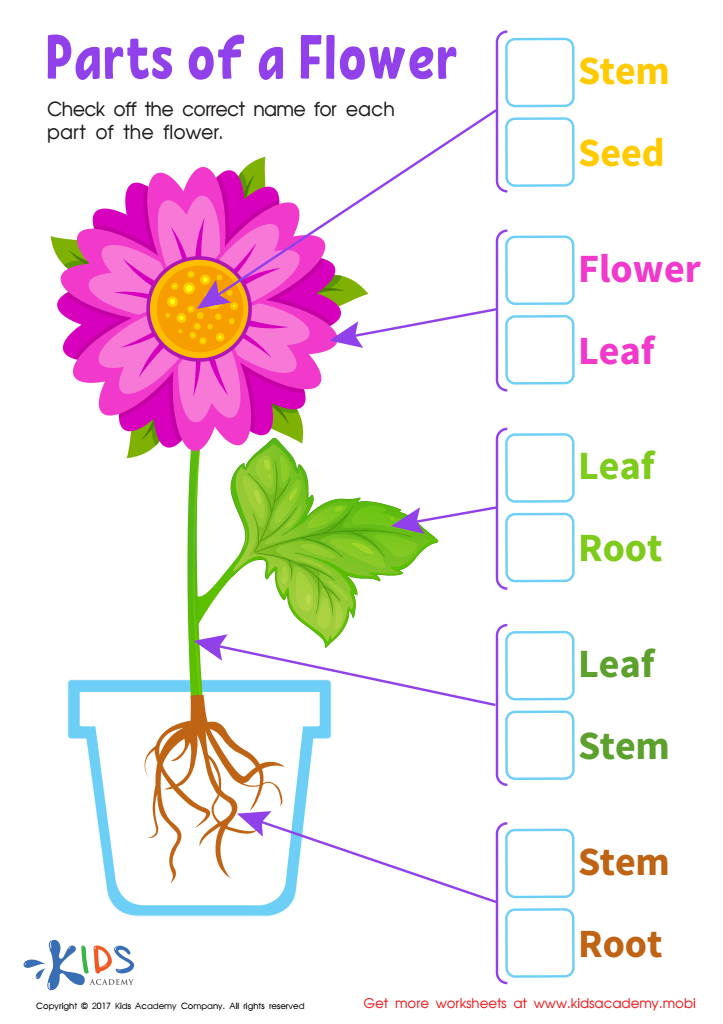
Introduce your child to life science with this vivid parts of a flower worksheet! They'll learn basic flower structures while building biology vocabulary and discovering plants are living creatures too! Perfect for budding little scientists!
Parts Flower Printable
Worksheet
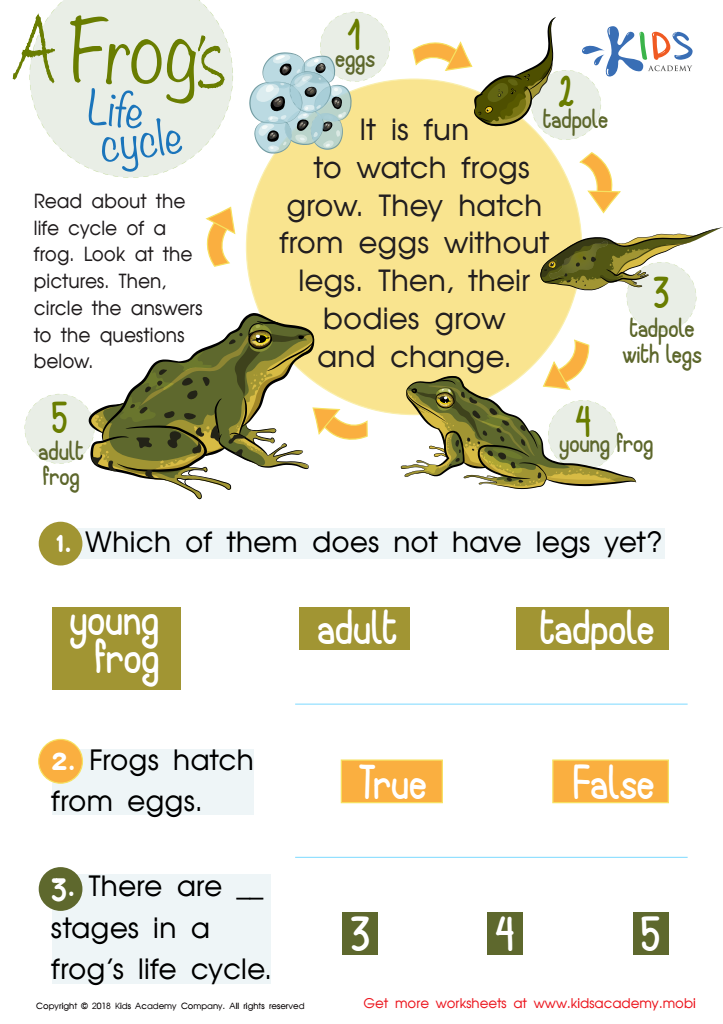
A Frog’s Life Cycle Worksheet

A Frog’s Life Cycle Worksheet

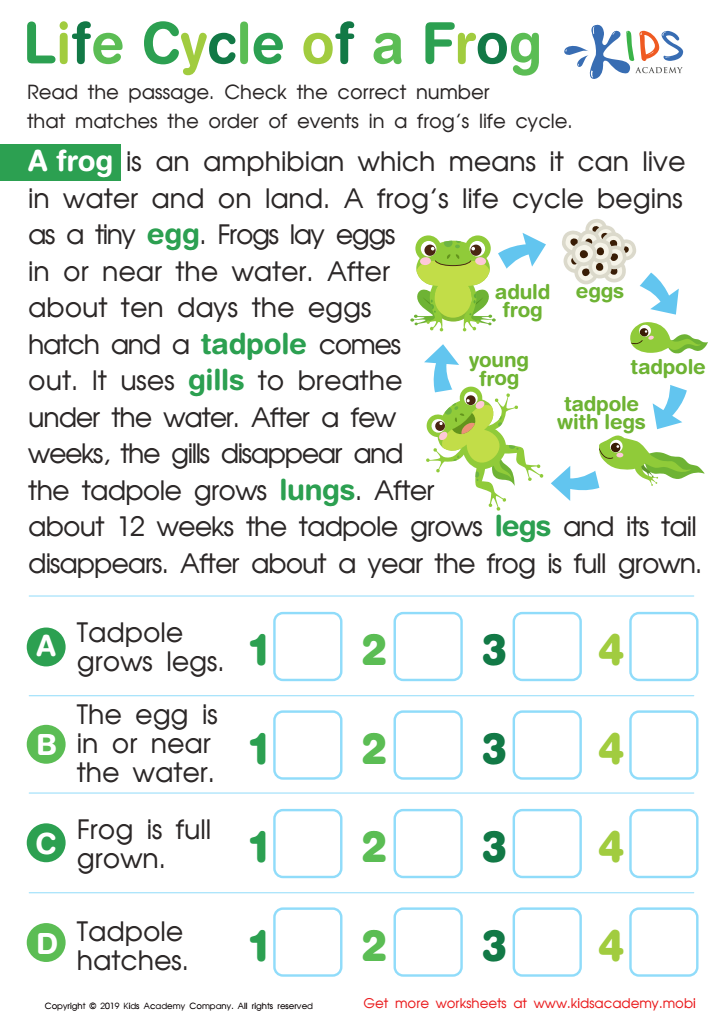
Encourage your kids to learn about frogs! Ask them to tell you some features, then read and discuss the text that explains the frog's life cycle. Show them the pictures to help them visualize it. Finish by helping them answer the questions at the bottom of the worksheet.
A Frog’s Life Cycle Worksheet
Worksheet
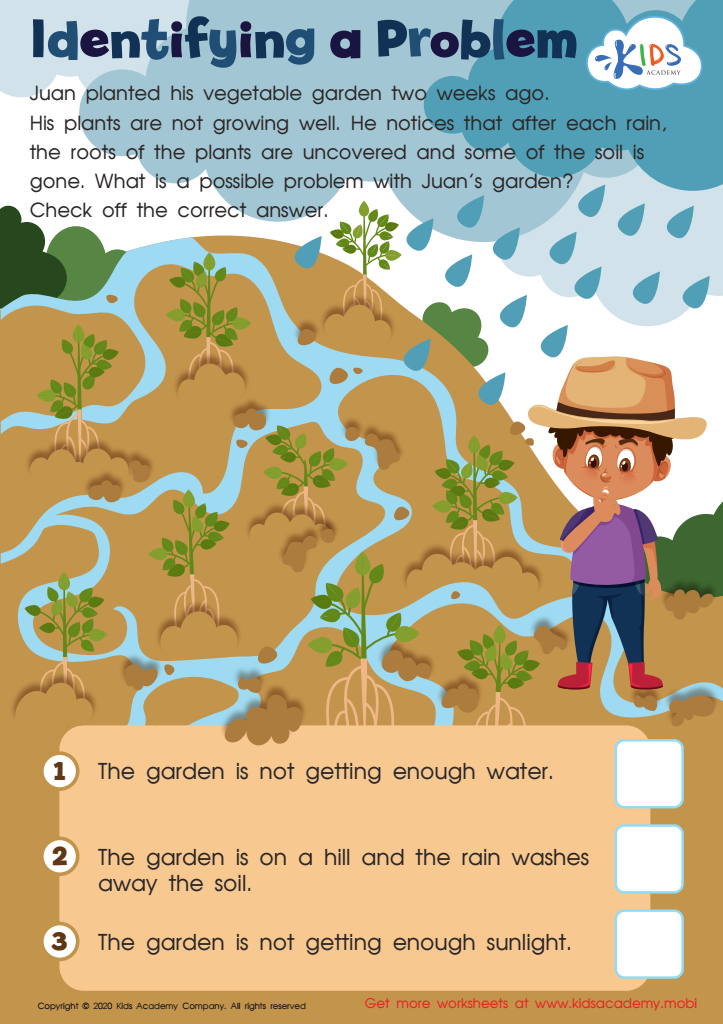
Identifying a Problem  Worksheet

Identifying a Problem Worksheet

Help Juan figure out why his vegetable garden isn't doing well! Print this PDF science worksheet. Read the explanation and observe the scene. What could be causing the problem? Check off the correct answer to complete the challenge. Weather or soil conditions may be the cause – analyze to find out!
Identifying a Problem Worksheet
Worksheet
Life Cycle of a Frog Worksheet

Life Cycle of a Frog Worksheet

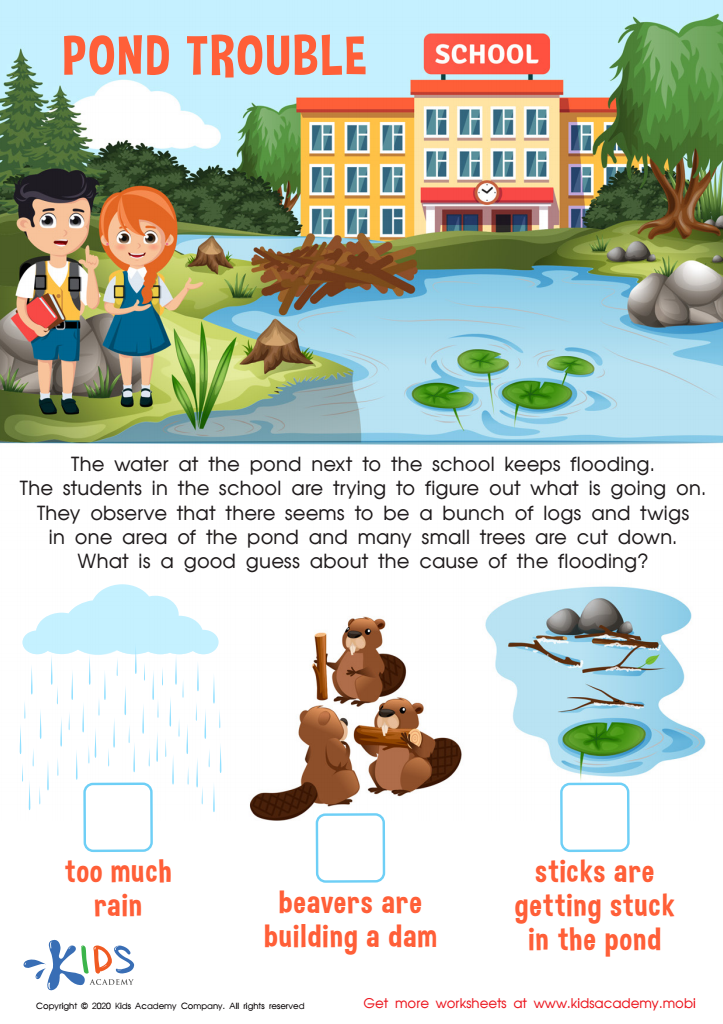
Teach your kids to read and open their eyes to new knowledge. Frogs have fascinating life cycles. Show them the worksheet with pictures and guide them as they read the passage about it. Encourage them to check the number that matches the frog's life cycle order.
Life Cycle of a Frog Worksheet
Worksheet
Pond Trouble Worksheet

Pond Trouble Worksheet

This fun worksheet will get your child's brain buzzing! They must help the characters solve the mystery of a flooding pond by reading the explanation and carefully considering each answer choice. Encourage them to think deeply about the possible cause before picking the most likely one.
Pond Trouble Worksheet
Worksheet
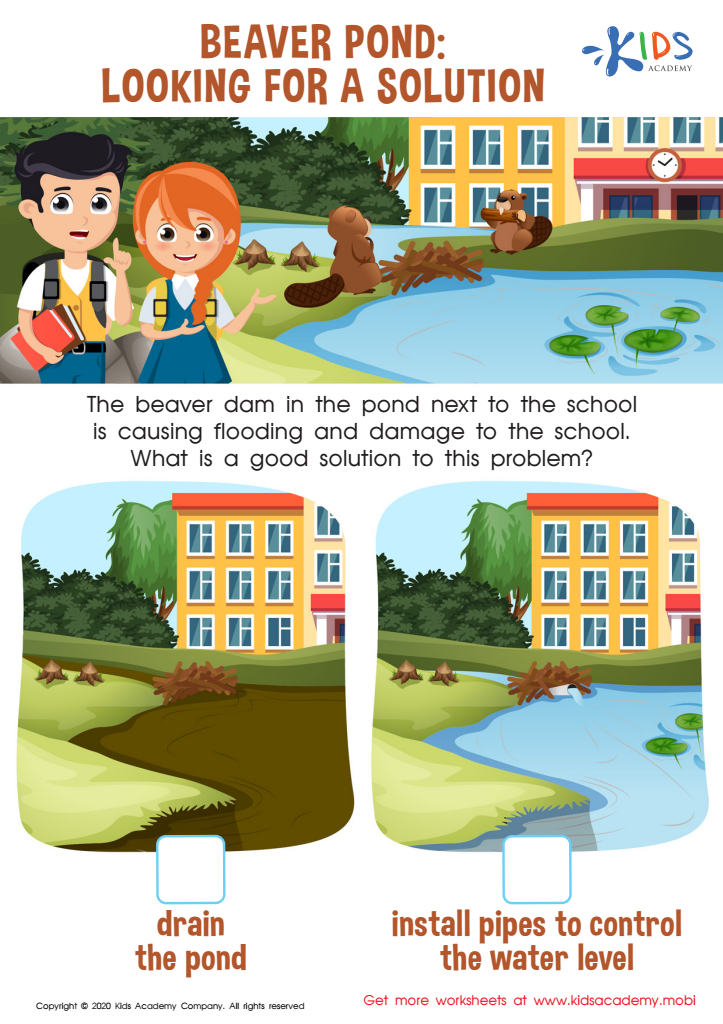
Beaver Pond: Looking for a Solution Worksheet

Beaver Pond: Looking for a Solution Worksheet

Beavers are building dams and flooding the local pond! Help your child practice problem-solving skills by reading through and selecting from possible solutions, with this fun PDF worksheet. See how your child's skills are improved!
Beaver Pond: Looking for a Solution Worksheet
Worksheet
Developing Solution Worksheet


Developing Solution Worksheet

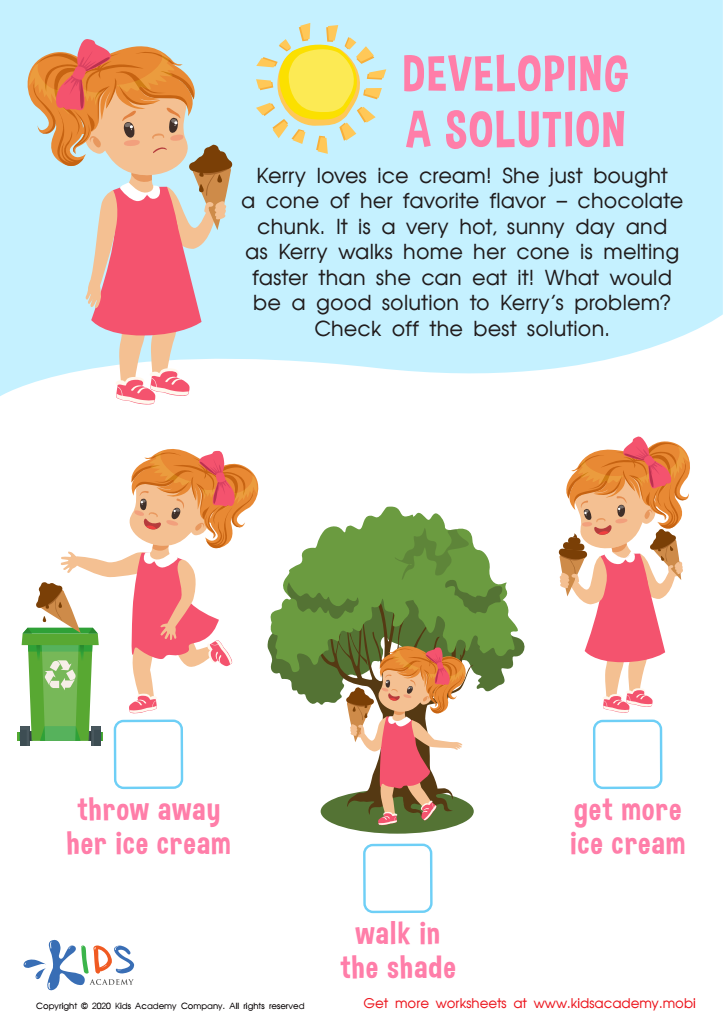
Facing a challenge? Boost your child's problem-solving skills with this science worksheet from Kids Academy! Kerry is eating an ice cream cone and it's melting too fast. Read through the suggested solutions and help your child pick the best one! With this activity, your child will understand the cause of the problem and learn to act accordingly.
Developing Solution Worksheet
Worksheet


Parents and teachers should care about Easy Life Science for ages 4-7 because it lays a critical foundation for early learning, curiosity, and critical thinking skills. At this tender age, children are naturally inquisitive and eager to explore the world around them. Introducing them to basic life science concepts taps into this curiosity, fostering a love for learning that can extend throughout their academic years and beyond.

Life Science encourages children to observe, question, and make sense of natural phenomena, from plant growth to animal behavior, nurturing their analytical and observational skills. By understanding simple yet fundamental concepts such as the life cycles of plants and animals, weather patterns, or the basics of habitats and ecosystems, young learners can better appreciate the complexity and beauty of the natural world.

Moreover, teaching life science at a young age helps build essential vocabulary, problem-solving abilities, and a conceptual understanding of scientific principles that are essential in various fields. It can also instill a sense of responsibility and stewardship for the environment. Lessons are often hands-on, involving exploration and experimentation, which makes learning fun and engaging for young minds. Early exposure to life science thus promotes cognitive development, environmental awareness, and a lifelong passion for discovery and science.