Easy Reading Comprehension Worksheets for Ages 6-8 - Page 3
50 filtered results
-
From - To
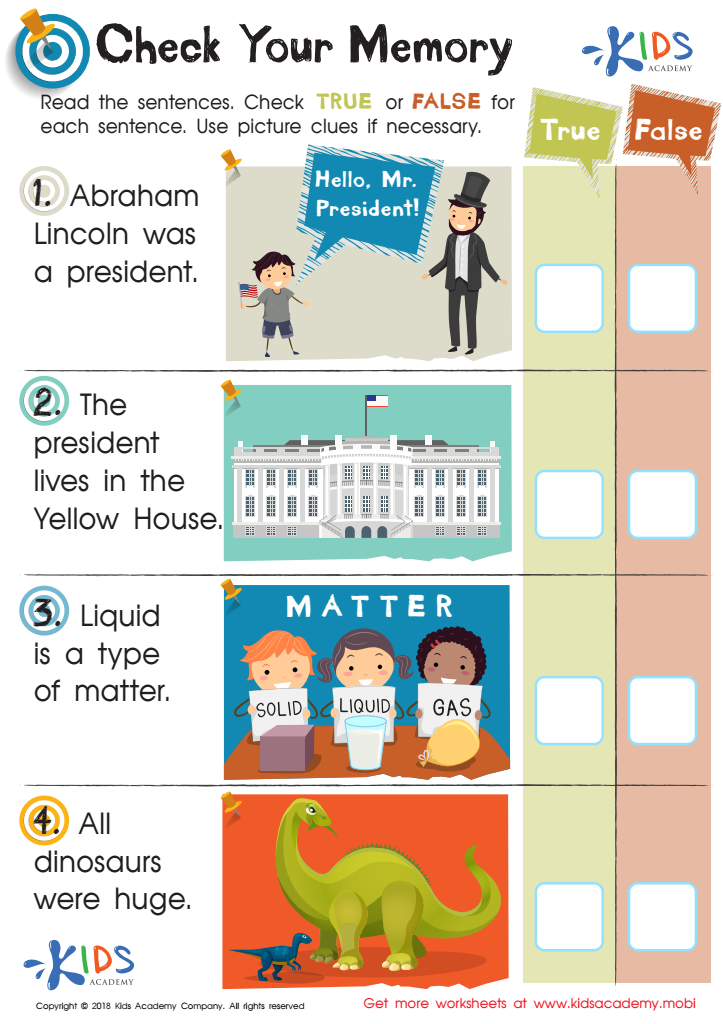
Check Memory Worksheet
 Assign to My Students
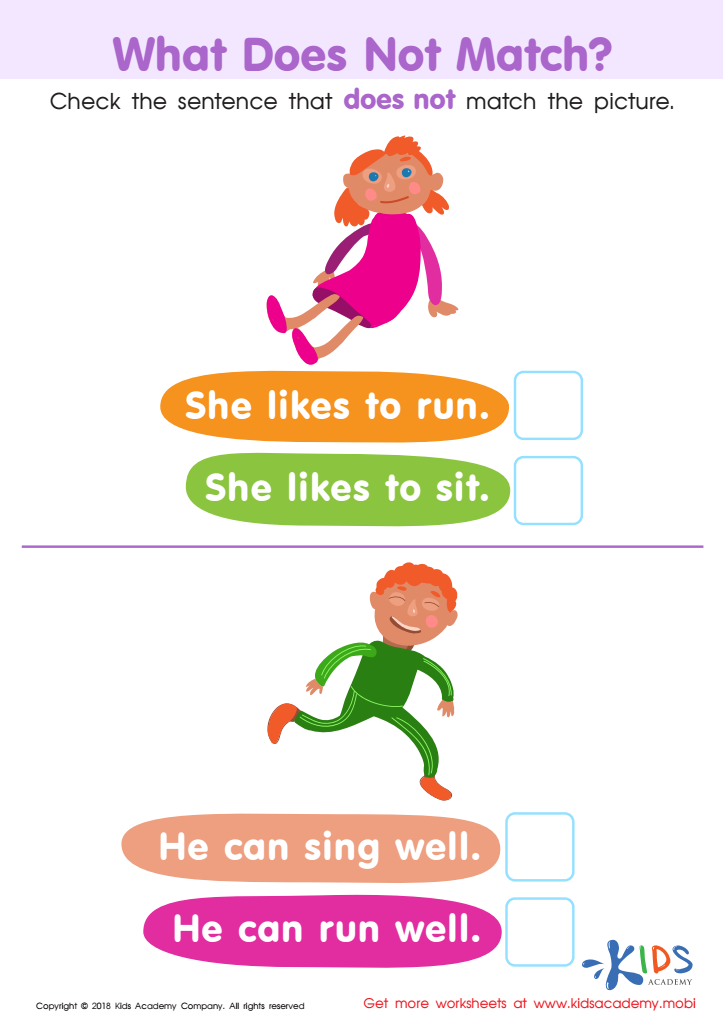
What Does Not Match? Worksheet







Reading comprehension is a foundational skill that significantly impacts a child's academic journey and overall development. For children aged 6-8, comprehension is not merely about reading words aloud; it involves understanding, interpreting, and analyzing text.
Parents and teachers should prioritize easy reading comprehension activities for several reasons. Firstly, children in this age group are developing critical thinking and analytical skills. Engaging with texts helps them make connections with their experiences and the world around them. This cognitive engagement promotes a love for reading, fostering lifelong learners.
Secondly, strong comprehension skills enhance academic performance across subjects. Children who understand what they read can better grasp concepts in math, science, and social studies, increasing their confidence and performance in school.
Thirdly, early reading comprehension supports language development. Through discussions about texts, children expand their vocabulary and learn to express their thoughts clearly.
Lastly, fostering comprehension at an early age helps identify learning challenges or disabilities, allowing for timely interventions. By focusing on easy reading comprehension, parents and teachers equip children with essential skills for success both inside and outside the classroom, paving the way for future achievements.