Easy Graphs Worksheets for Ages 6-9
6 filtered results
-
From - To
Discover our collection of Easy Graphs Worksheets tailored for children aged 6-9, designed to make learning about graphs fun and engaging! These printable resources help young learners understand basic graph concepts, including bar graphs, pictographs, and line graphs. Each worksheet features colorful illustrations and age-appropriate exercises, fostering creativity while enhancing critical thinking skills. Perfect for home or classroom use, our worksheets support early math learning with clear instructions and interactive questions. Encourage your child to explore data visualization and develop essential math skills in a fun way. Start your graphs adventure today with our easy-to-use worksheets!
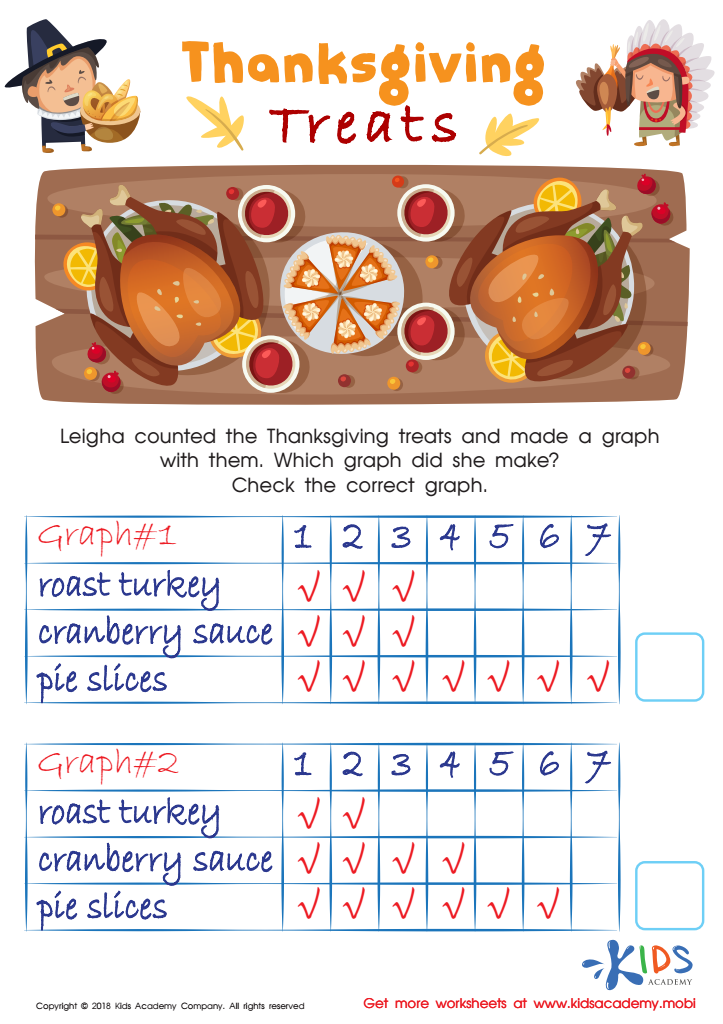
Graphs: Thanksgiving Treats Worksheet
 Assign to My Students
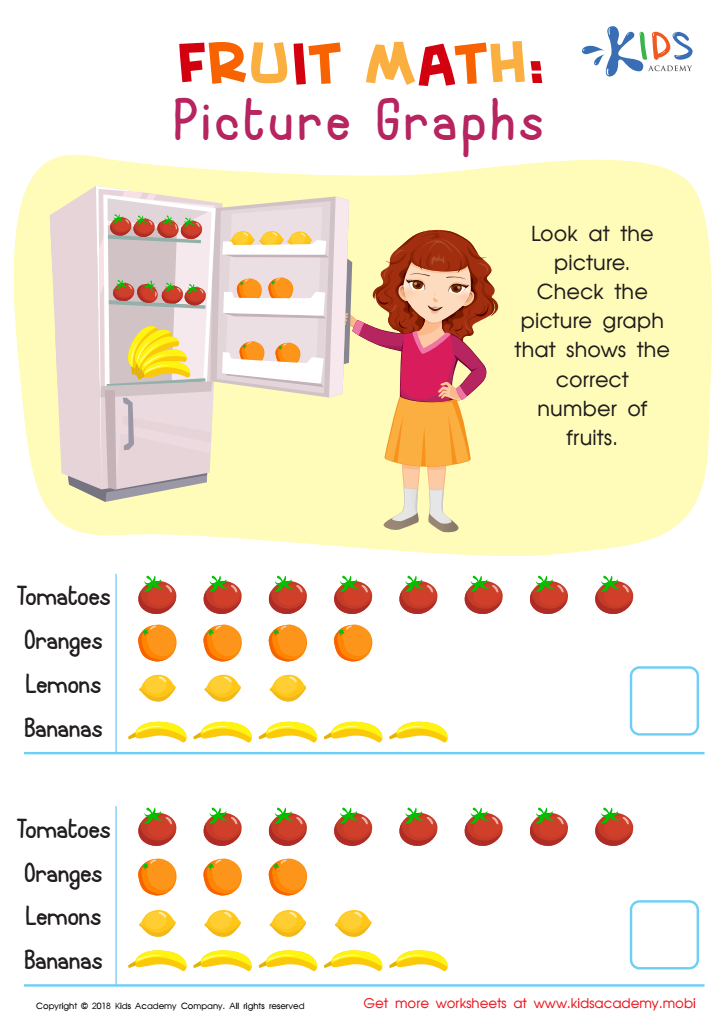
Fruit Math: Picture Graphs Worksheet
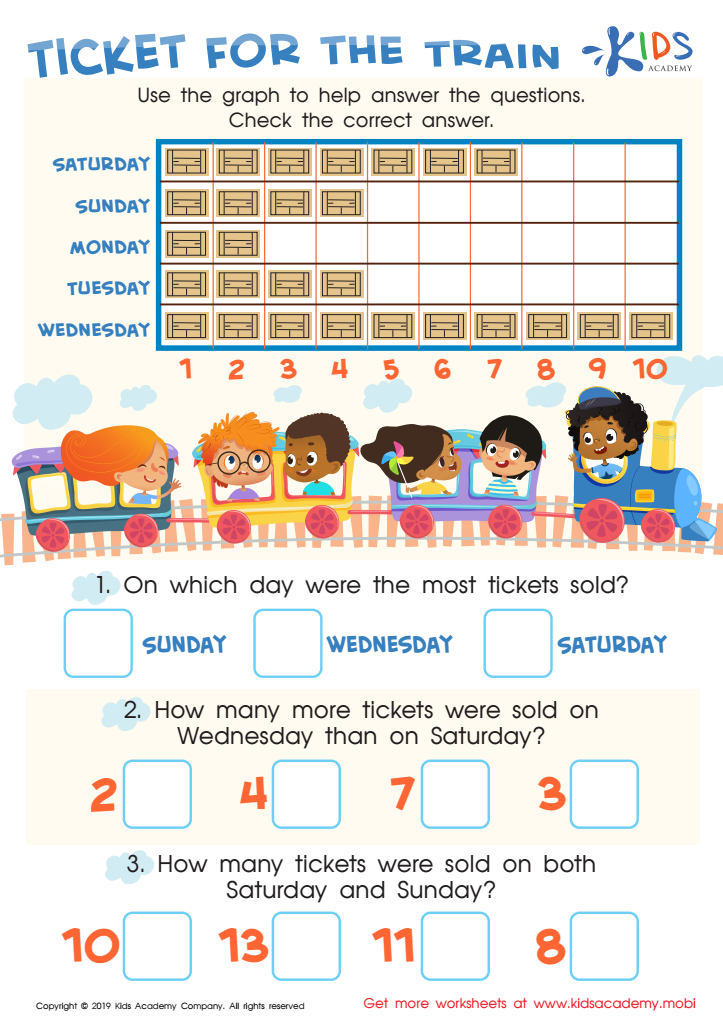
Ticket for the Train Worksheet
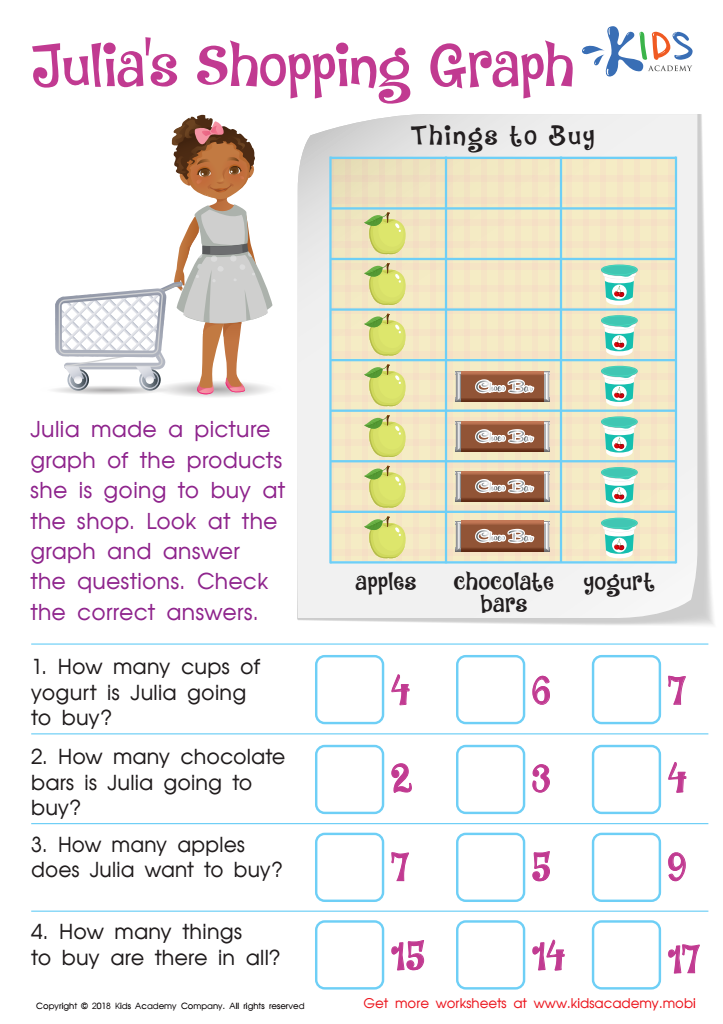
Julia's Shopping Graph Worksheet
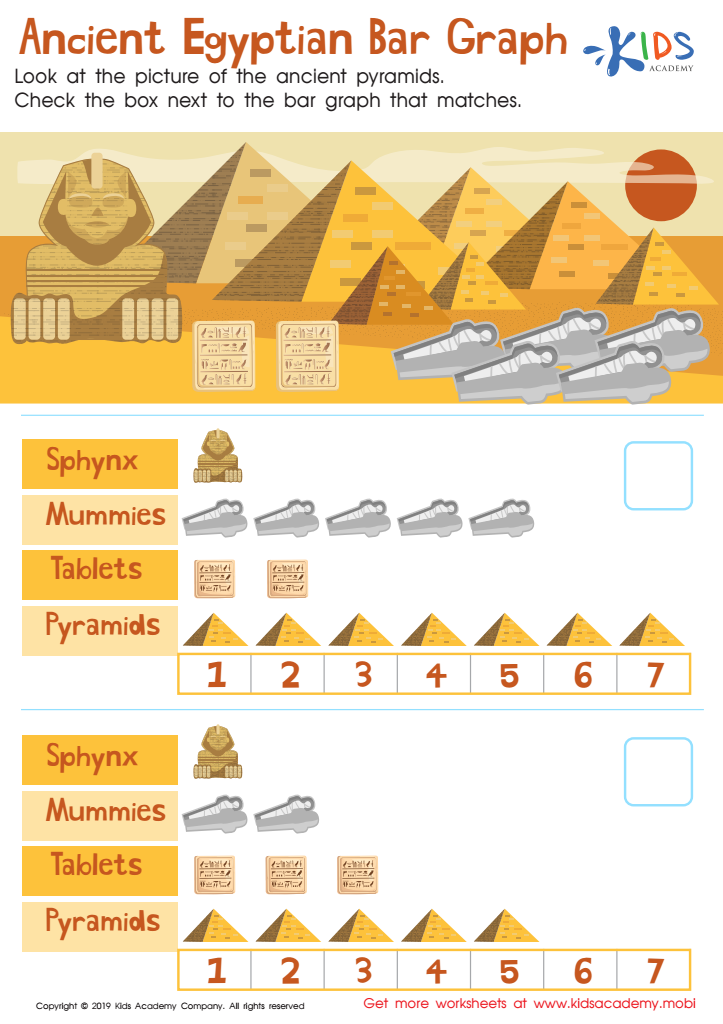
Egyptian Bar Graph Worksheet

Aircraft Carrier Picture Graphs Worksheet








Easy Graphs for Ages 6-9 is an invaluable educational resource that engages young students in foundational math concepts through visual learning. At this age, children are naturally curious and geared toward hands-on exploration. By incorporating graphs into their early learning, we foster crucial data interpretation skills in an accessible manner.
Parents and teachers should prioritize these resources because they reinforce essential mathematical principles in a fun and interactive way. Easy Graphs simplify complex ideas, making them relatable for young learners. They tap into various learning styles, catering to visual learners by presenting data clearly, thereby enhancing comprehension.
Additionally, mastering graph reading and interpretation early lays a solid groundwork for future academic success. Skills developed through Easy Graphs extend beyond math; they promote critical thinking, organizational skills, and vocabulary enhancement as students learn to express data verbally and through symbols.
Moreover, using graphing tools encourages collaboration and discussion among peers and parents, cultivating a supportive learning environment. By embracing resources like Easy Graphs, adults can actively engage with children’s education, preparing them for a world where data literacy is becoming increasingly crucial. Ultimately, the benefits extend beyond immediate academic growth, fostering a lifelong love for learning and analytical thinking.








