Easy Arrays Worksheets for Ages 7-9
8 filtered results
-
From - To
Discover "Easy Arrays Worksheets for Ages 7-9" at Kids Academy! Our array worksheets simplify the concept of multiplication, making it fun and engaging for young learners. Designed for kids aged 7-9, these worksheets help build a strong foundation in math through visually appealing exercises. Each sheet is crafted to enhance problem-solving skills and boost confidence in arrays. Perfect for home or classroom use, our printable resources offer a step-by-step approach, ensuring grasp and retention of content. Visit Kids Academy for high-quality educational worksheets to support your child's learning journey today!
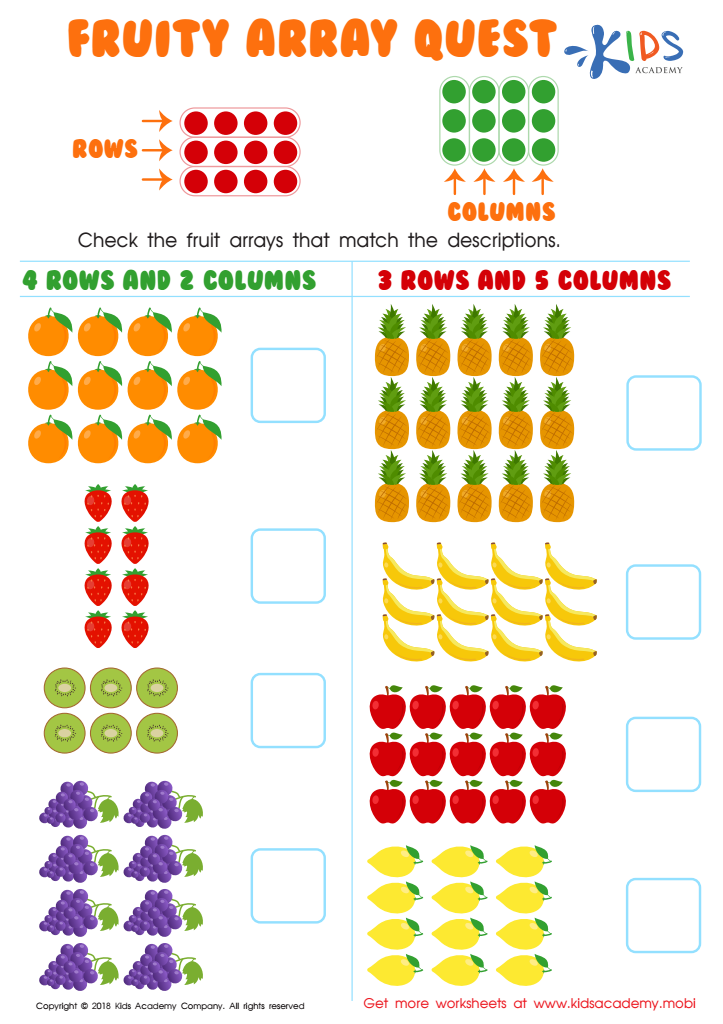
Fruity Array Quest Worksheet
 Assign to My Students
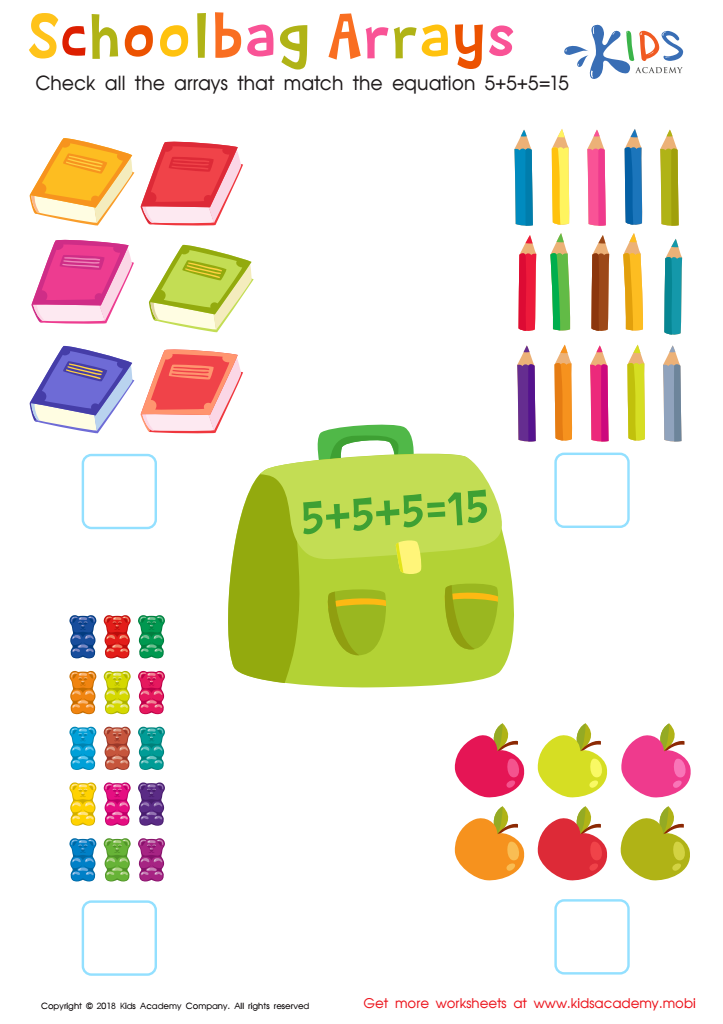
Schoolbag Arrays Worksheet
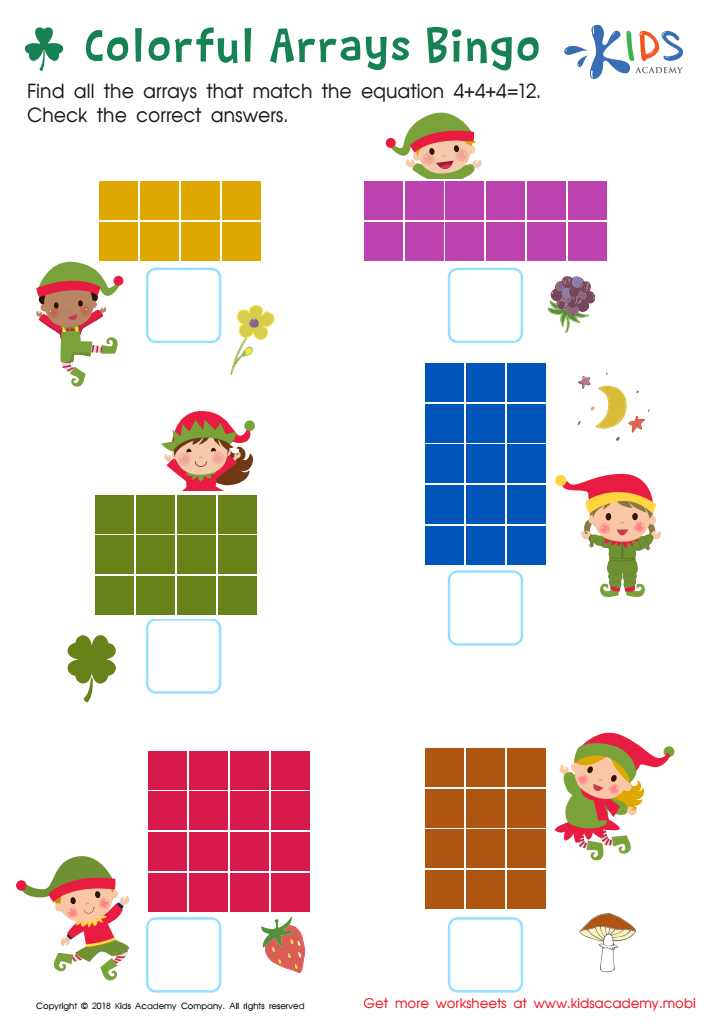
Colorful Arrays Bingo Worksheet
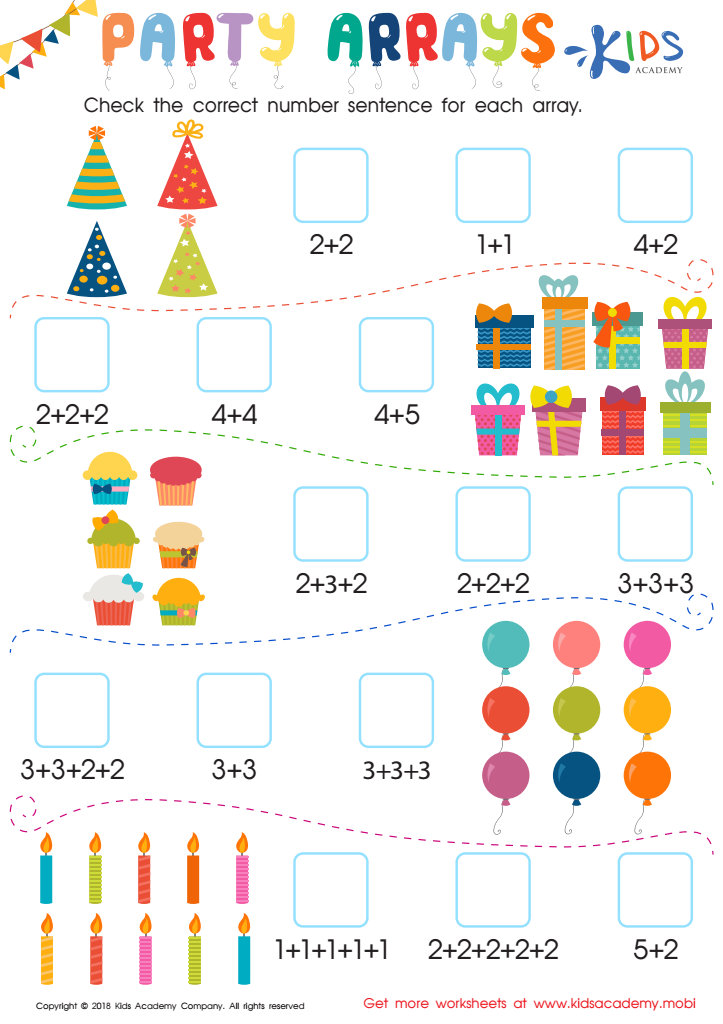
Party Arrays Worksheet
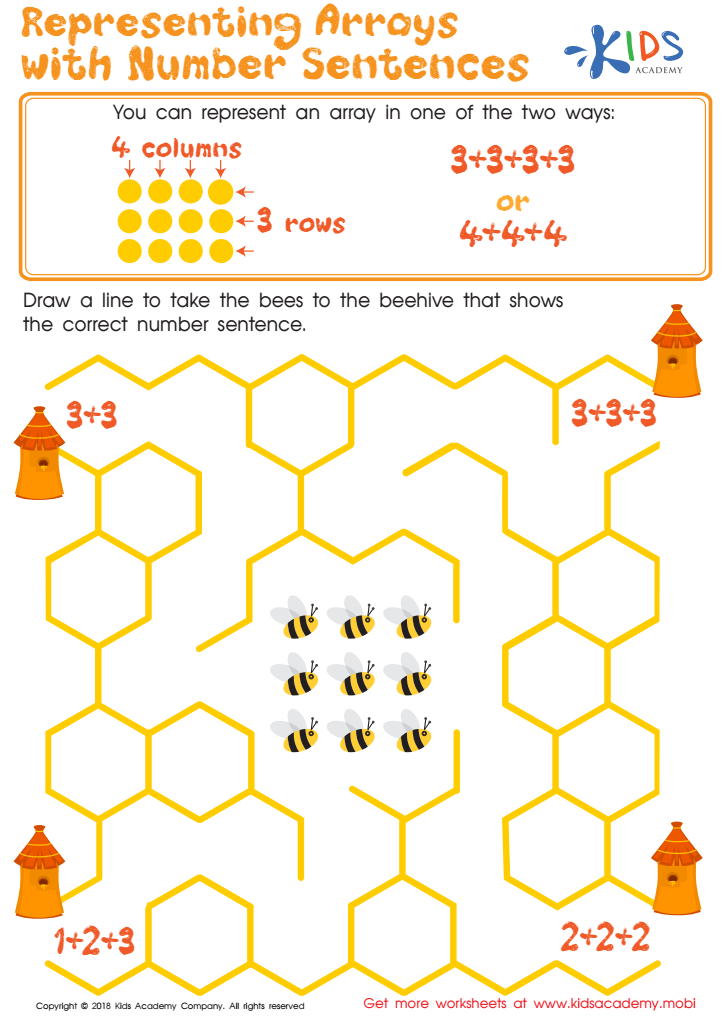
Representing Arrays with Number Sentences Worksheet
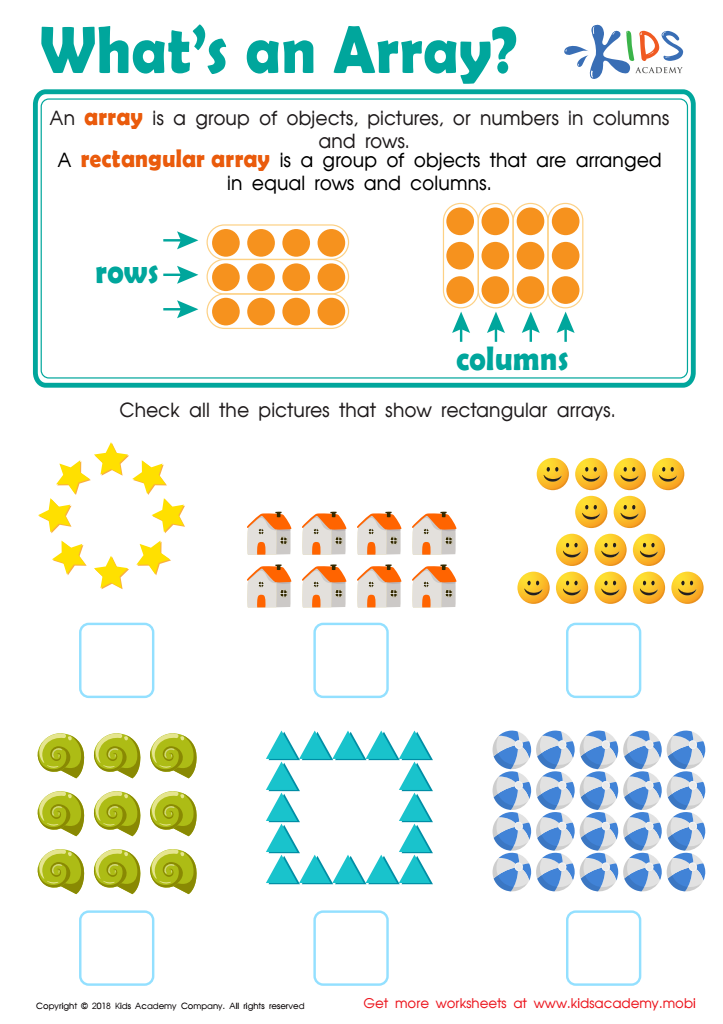
What's an Array? Worksheet
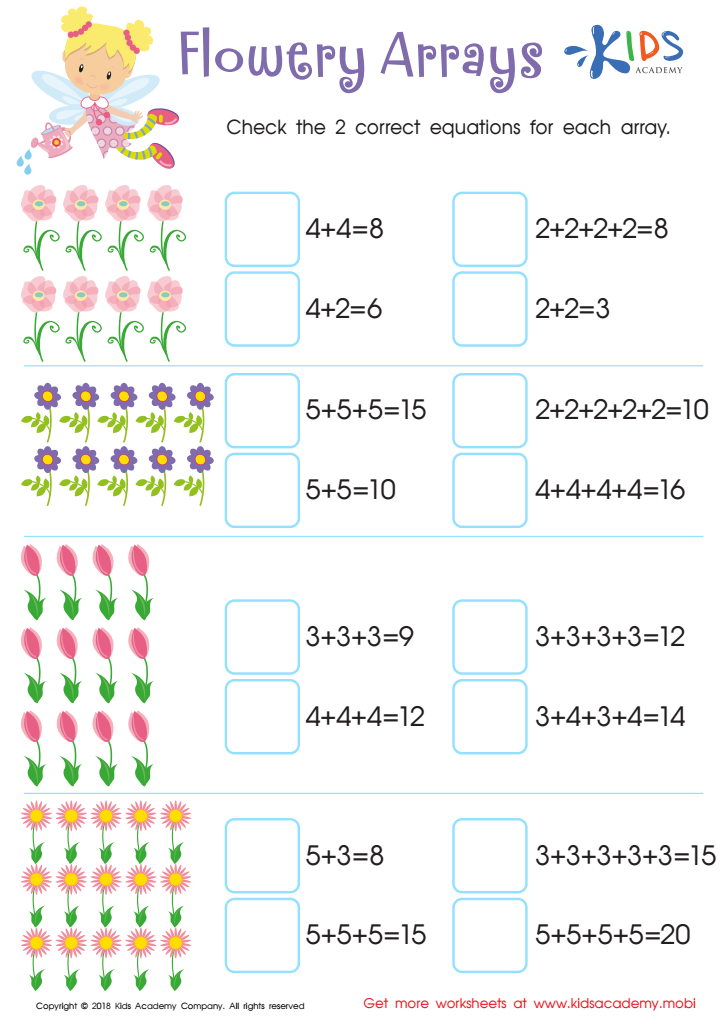
Flowery Arrays Worksheet
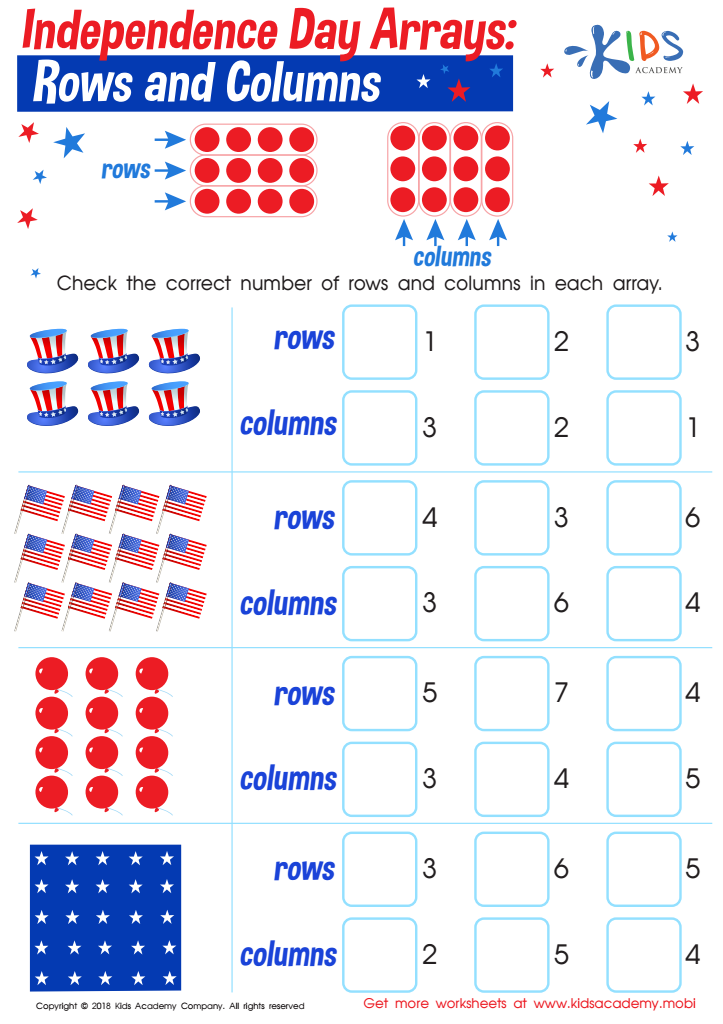
Independence Day Arrays: Rows and Columns Worksheet








Easy Arrays are an essential mathematical concept for children ages 7-9, as they provide a foundation for understanding multiplication and division. Parents and teachers should care about this learning tool because it fosters early mathematical reasoning, critical thinking, and problem-solving skills.
Arrays simplify complex ideas by visually organizing objects into rows and columns, making it easier for children to grasp multiplication’s repeated addition nature. For instance, seeing a grid of 3 rows with 4 objects each directly demonstrates that 3 times 4 equals 12. This visual aid helps break down abstract concepts into more manageable parts, facilitating better comprehension. Moreover, arrays are a stepping stone to more advanced math topics, such as area and geometry.
Understanding arrays also promotes mathematical confidence and reduces anxiety. When children successfully solve problems using arrays, they feel more capable and are encouraged to take on more challenging tasks. Parents and teachers witnessing this progress can support extended learning through real-life applications, further reinforcing concepts.
Furthermore, the collaborative aspect of working with arrays in a classroom setting encourages teamwork and communication among peers, enhancing social skills and the learning environment's dynamics. Overall, valuing Easy Arrays ensures children lay down strong mathematical foundations, benefit academically, and develop positive attitudes towards learning math.








