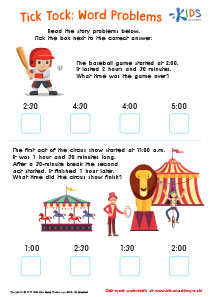
Extra Challenge Two-step Word Problems Worksheets for 3-Year-Olds
3 filtered results
Difficulty Level
Grade
Age
-
From - To
Subject
Activity
Standards
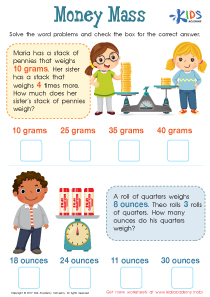
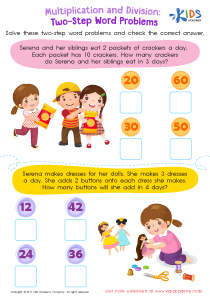
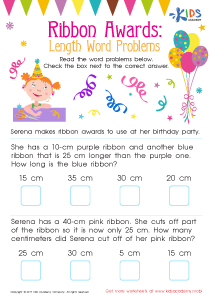
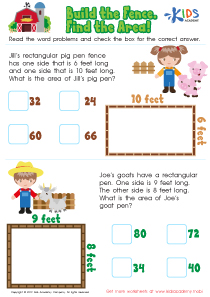
Introducing our Extra Challenge Two-step Word Problems worksheets, expertly designed for curious three-year-olds ready to embark on their math journey! Ideal for little learners, these engaging worksheets are a part of our learning online printables collection, crafted to develop early problem-solving skills. Each sheet presents fun, age-appropriate challenges that require children to think through two sequential steps to find the solution. Watch your child’s confidence grow as they navigate through each problem, developing critical thinking and foundational math skills. Perfect for at-home learning, our printables are a great educational tool that makes learning both fun and rewarding.
Favorites
With answer key
Interactive
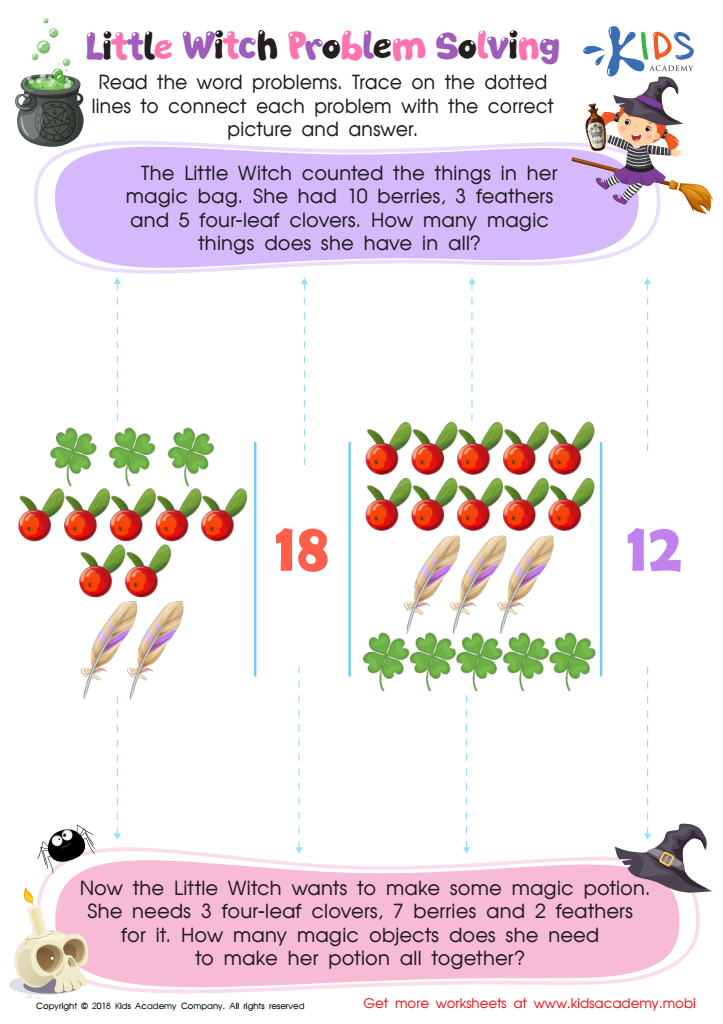
Little Witch Problem Solving Worksheet
Help this sweet little witch! Download this worksheet and use traceable lines to connect the problems with the correct answers. Practise basic addition involving three addends and have fun doing it!
 Assign to My Students
Little Witch Problem Solving Worksheet
Worksheet
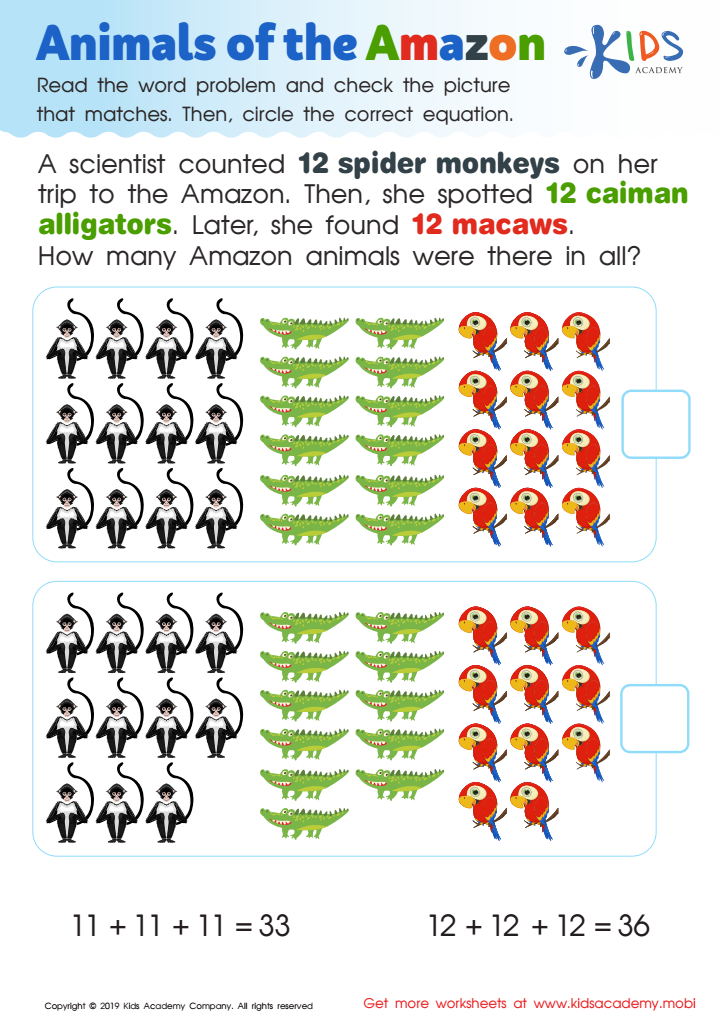
Animals of Amazon Worksheet
Kids will love exploring the Amazon while solving addition problems on this colorful PDF worksheet. They need to pay attention to the bolded info in each word problem to figure out the equation picture that matches. It's an exciting way to learn about the Amazon and practice adding multiple numbers!
Animals of Amazon Worksheet
Worksheet
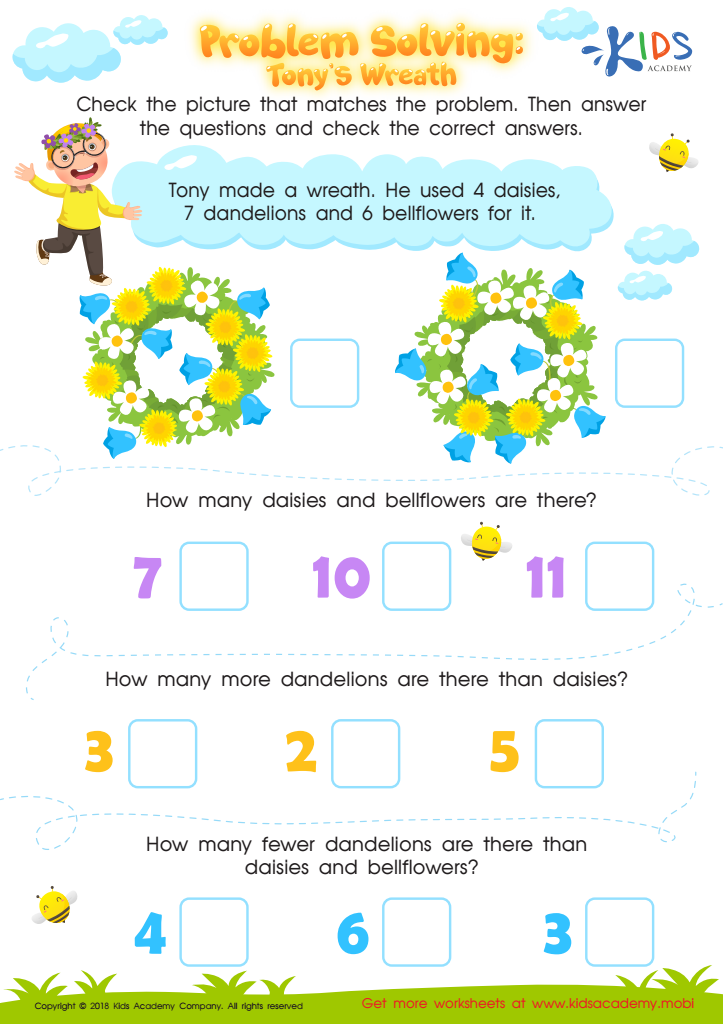
Problem Solving: Tony's Wreath Worksheet
Tony needs help! He's made a beautiful, colorful wreath and needs help counting the flowers. Your math student can read the word problems, match answers to the problems and solve basic addition and subtraction. They'll practice with two and three addends, minuends and subtrahends to find sums and differences and help Tony and his bee friends.
Problem Solving: Tony's Wreath Worksheet
Worksheet
Join Kids Academy for Free
Who is primarily going to use this learning content?



Understanding the Significance of Extra Challenge Worksheets on Two-step Word Problems for Three-Year-Olds
From the moment they begin to grasp basic concepts, children embark on a lifelong journey of learning and discovery. At the tender age of three, their minds are incredibly receptive, making early childhood an ideal time to introduce foundational skills that will benefit them throughout their education. This is where learning interactive worksheets, specifically designed for young learners, play a crucial role. Among these, extra challenge worksheets focusing on two-step word problems are particularly beneficial.
Building Cognitive Skills Through Enhanced Engagement
Two-step word problems are exercises that require a child to make two sequential mental steps to arrive at a solution. For three-year-olds, these problems are simplified to fit their understanding yet are designed to challenge them slightly more than single-step problems. By integrating these into learning interactive worksheets, children are not only learning to solve mathematical problems but are also developing critical thinking and reasoning skills from an early age.
Why Focus on Two-step Word Problems?
-
Enhanced Problem-Solving Skills: Engaging with two-step word problems helps children understand the concept of sequence and order in solving tasks. This early introduction to problem-solving encourages a mindset that is adept at breaking down complex tasks into manageable parts, a skill valuable in all areas of life.
-
Improved Comprehension and Logical Thinking: These worksheets require a child to comprehend the problem, think of the steps needed to solve it, and execute them in order. This process enhances logical thinking, which is essential in math and other scientific disciplines.
-
Language Development: As these problems are word-based, children also improve their language skills. They learn new words and phrases, and how to use language to describe quantitative concepts, which is crucial for literacy and communication skills.
-
Adaptability and Flexibility: By working through varied problems, children learn that there can be multiple ways to approach and solve a problem, which fosters adaptability and flexibility in thinking.
The Role of Learning Interactive Worksheets
Learning interactive worksheets are designed to make the learning experience more engaging and effective for young children. These worksheets often include colorful illustrations, interactive elements such as drag-and-drop or matching pairs, and instant feedback mechanisms that help keep children motivated and interested. For three-year-olds, whose attention spans are still developing, these interactive features are crucial in maintaining engagement.
Practical Application
In practical terms, using extra challenge worksheets like those focusing on two-step word problems prepares children for the more complex academic tasks they will encounter as they progress through their educational journey. Early exposure to these types of challenges not only builds a solid foundation in math but also integrates the skills learned into everyday situations. For instance, solving a problem that involves counting apples and then dividing them among friends directly relates to real-life scenarios, making abstract concepts more tangible for young minds.
Tailored Learning Experience
It's important to note that these worksheets are designed with the developmental stage of three-year-olds in mind. They are not about pushing the child too hard but rather about providing the right amount of challenge to stimulate growth. Carefully crafted problems and the interactive nature of these worksheets ensure that learning remains fun and not frustrating. This tailored approach helps in nurturing a love for learning and curiosity, which are critical at this formative stage of life.
The Social Aspect of Learning
Moreover, learning interactive worksheets often encourage a form of social interaction, either between the child and the educator or among peers. This could be in the form of discussing the problem, working together to find a solution, or sharing insights. Such interactions are invaluable as they build social skills and teach the importance of collaboration and communication from a young age.
Creating a Supportive Learning Environment
To maximize the benefits of extra challenge worksheets on two-step word problems, it is essential for parents, caregivers, and educators to create a supportive learning environment. This includes providing encouragement, celebrating achievements, no matter how small, and allowing children the space and time to explore concepts at their own pace. Positive reinforcement helps children associate learning with positive emotions, which can influence their enthusiasm and confidence in facing challenges.
Conclusion
In conclusion, extra challenge worksheets on two-step word problems are more than just an academic exercise. They are a comprehensive tool that aids in the cognitive, linguistic, and social development of three-year-olds. Learning interactive worksheets make this process engaging and adapted to young learners' needs, fostering an environment where early learners can thrive. Embracing such educational tools can significantly contribute to a child's ability to navigate more complex challenges in the future, setting a strong foundation for lifelong learning and problem-solving.