Extra Challenge Science Worksheets for Ages 5-8 - Page 2
25 filtered results
-
From - To
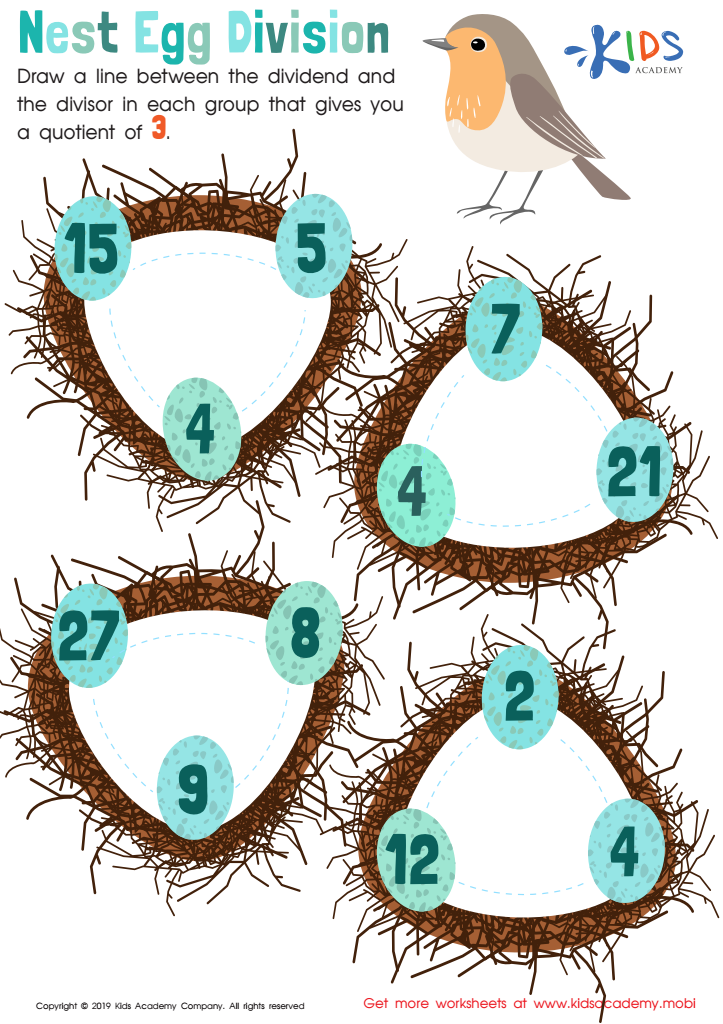
Nest Egg Division Worksheet
 Assign to My Students








Extra Challenge Science for Ages 5-8 is essential for fostering a love of learning and critical thinking skills in young children. At this developmental stage, children are naturally curious, asking questions about their environment and seeking explanations. By engaging them in extra challenge science activities, parents and teachers can enhance this curiosity, encouraging exploration, experimentation, and problem-solving.
These programs often offer hands-on experiences that make complex concepts accessible and fun. They introduce children to foundational scientific principles while promoting cognitive skills such as observation, analysis, and reasoning. This early engagement helps create a strong base for lifelong STEM (Science, Technology, Engineering, and Mathematics) learning.
Moreover, extra challenge science curricula can cater to diverse learning styles, allowing for differentiated instruction. They provide opportunities for advanced learners to dive deeper while supporting those who may need additional assistance in grasping concepts.
Ultimately, investing in extra challenge science not only enriches academic understanding but also nurtures important life skills. It equips children with confidence in their abilities to ask questions and seek answers, laying the groundwork for future academic success and fostering an informed, scientifically literate society.