Extra Challenge Building Vocabulary Worksheets for Ages 6-9 - Page 2
27 filtered results
-
From - To
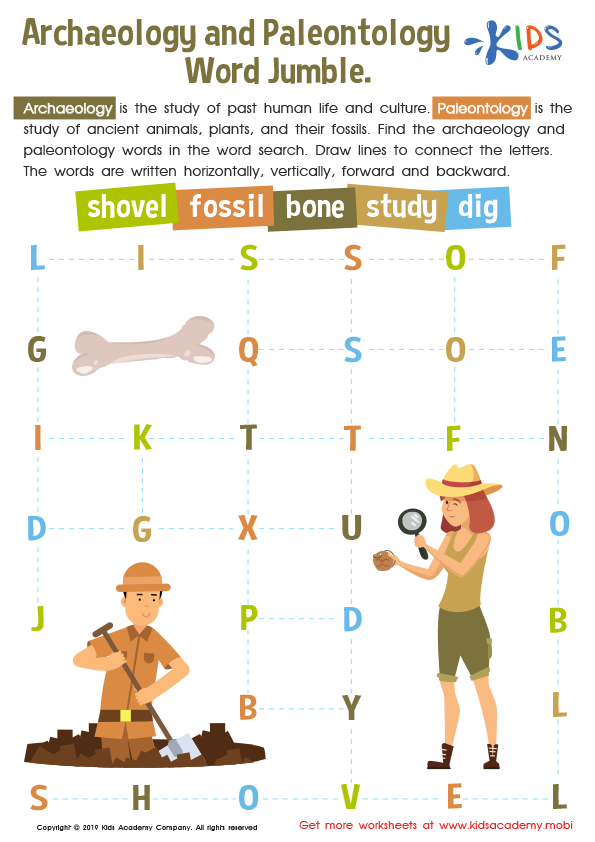
Archaeology and Paleontology Word Jumble Worksheet
 Assign to My Students











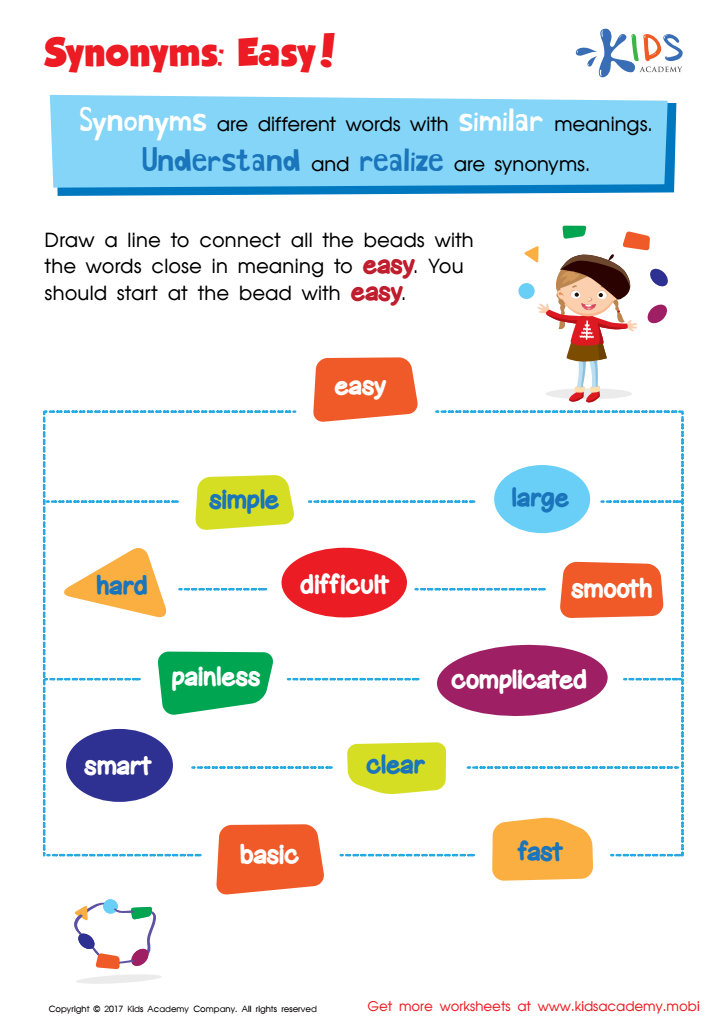
Free Synonym Worksheet
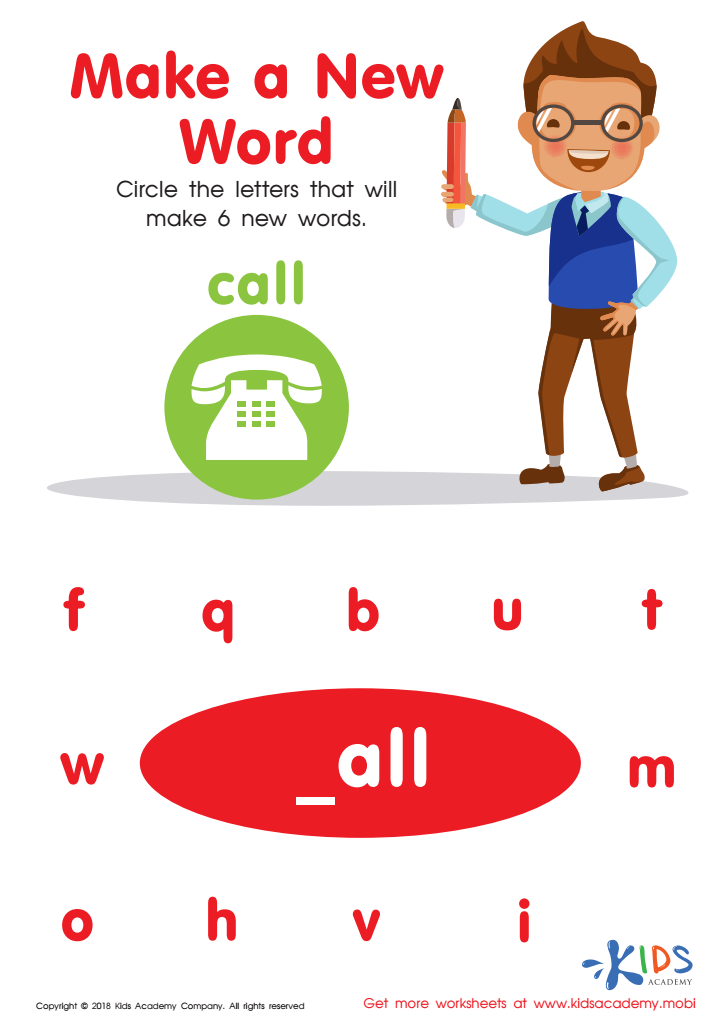
Make a New Word Worksheet








Building vocabulary for children aged 6-9 is crucial for their academic and intellectual development. During these formative years, children are expanding their language skills, which are fundamental for effective communication and comprehension across all subjects. An extensive vocabulary enhances reading comprehension, enabling children to understand more complex texts and instructions. This sets a strong foundation for future learning and academic success.
Parents and teachers play a significant role in this process. By actively participating in vocabulary-building activities, such as reading together, engaging in conversations, and introducing new and varied words, they can significantly influence a child's linguistic growth. This also helps in developing critical thinking skills, as children learn to understand nuances, context, and different meanings of words.
Moreover, a rich vocabulary boosts a child's confidence in expressing their thoughts and ideas clearly, which is essential for social interactions and emotional development. It opens up a wider world for children to explore, enhancing their curiosity and love for learning. By placing a strong emphasis on vocabulary challenges, parents and teachers can ensure children are better equipped to succeed academically and socially, providing them with tools for lifelong learning and effective communication.