Science worksheets With Answers - Page 8
169 filtered results
-
From - To
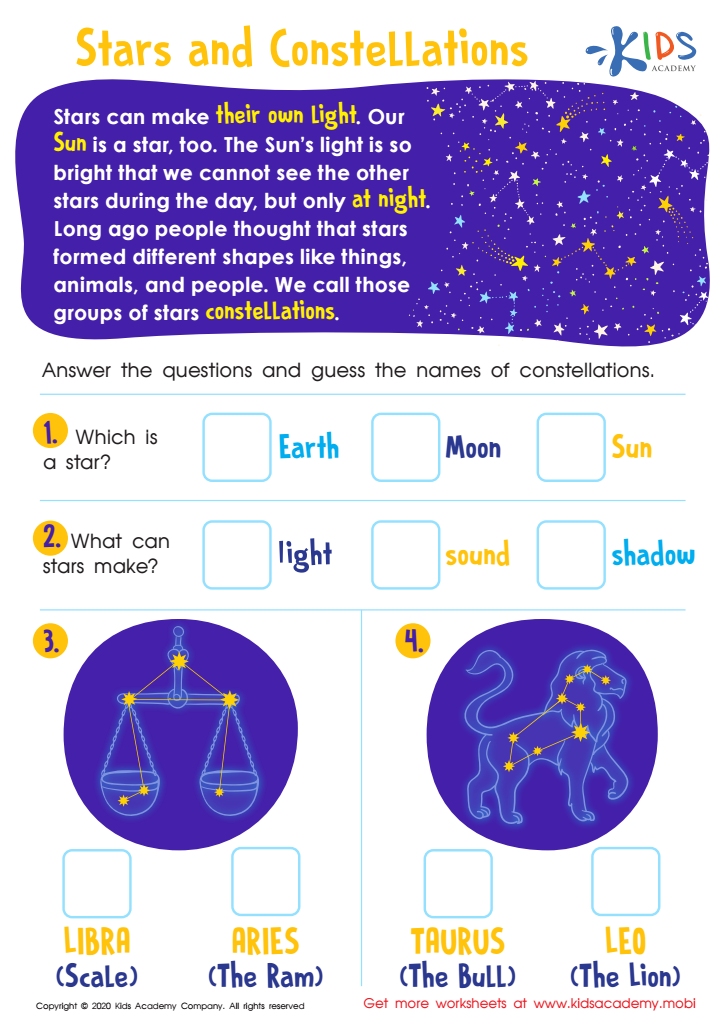
Stars and Constellations Worksheet
 Assign to My Students







Parents and teachers should care about science for several compelling reasons. Firstly, science fosters critical thinking skills. Through hands-on experiments and inquiry-based learning, students learn how to analyze data, ask questions, and develop evidence-based conclusions. These skills are essential not only in science-related fields but also in everyday decision-making and problem solving.
Secondly, understanding scientific principles is crucial in our increasingly technology-driven world. The ability to engage with scientific concepts empowers students to navigate various modern issues, from health and environment to engineering and technology. It's important that they develop a scientific literacy to discern fact from misinformation in a digital age heavily influenced by social media.
Additionally, science education promotes curiosity and a love for learning. By encouraging exploration and experimentation, we can ignite a passion for discovery in children and inspire them to pursue careers in STEM fields.
Finally, science contributes to informed citizenship. As society faces global challenges—such as climate change and public health crises—an educated populace is better equipped to make informed decisions and advocate for evidence-based solutions.
In summary, prioritizing science in education cultivates critical thinkers, informed citizens, and the next generation of innovators, benefitting individuals and society as a whole.








