Filters

5 filtered results

Clear all filters
Favorites
With answer key
Interactive

5 filtered results

Difficulty Level

Grade


Subject

    Explore our engaging normal long and short vowel worksheets designed specifically for children ages 3-4. These worksheets provide vibrant activities that nurture early literacy skills, helping youngsters differentiate between long and short vowel sounds. Through fun exercises such as tracing, matching, and coloring, kids will build phonemic awareness and improve their reading abilities. Perfect for both at-home practice and classroom use, our worksheets encourage interactive learning while sparking a love for language. Join us on this exciting educational journey and give your little ones the tools they need for successful communication and reading success! Check out our comprehensive collection today!

    Check out this FREE Trial Lesson on Long And Short Vowel for age 3-4!

    The Short I Sound

    Favorites
    With answer key
    Interactive
    • 3-4
    • With answer key
    • Long And Short Vowel
    • Normal
    The Short I Words Reading Worksheet
    The Short I Words Reading Worksheet

    The Short I Words Reading Worksheet

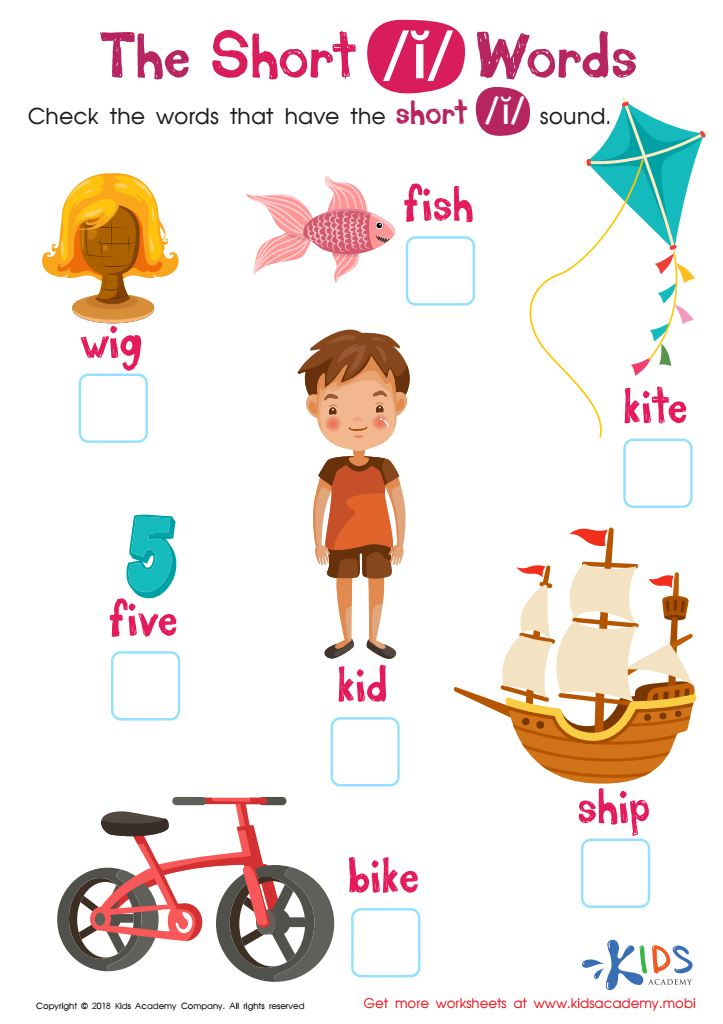
    Teach your kindergartner phonics with this printout worksheet! It introduces the short «i» sound and helps them differentiate and articulate sounds and letters of the alphabet. With practice, your child will soon find it easy to classify sounds into long and short vowels.
    The Short I Words Reading Worksheet
    Worksheet
    Phonics Long O Reading Worksheet
    Phonics Long O Reading Worksheet

    Phonics Long O Reading Worksheet

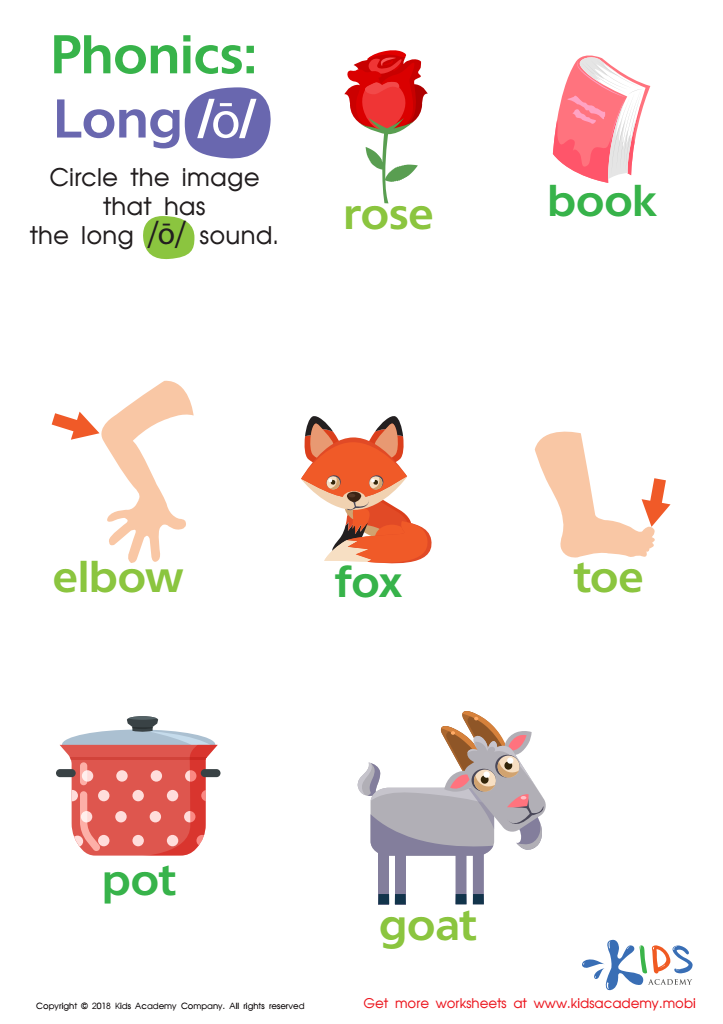
    Are you ready to help your child learn the phonics long «o» sound? This worksheet is designed to aid them in getting familiar with the sound. After completing the exercise, your child should be able to differentiate letters, and recognize words with the long «o» sound. Encourage them to circle the images that have the sound.
    Phonics Long O Reading Worksheet
    Worksheet
    short vowels Worksheet
    short vowels Worksheet

    short vowels Worksheet

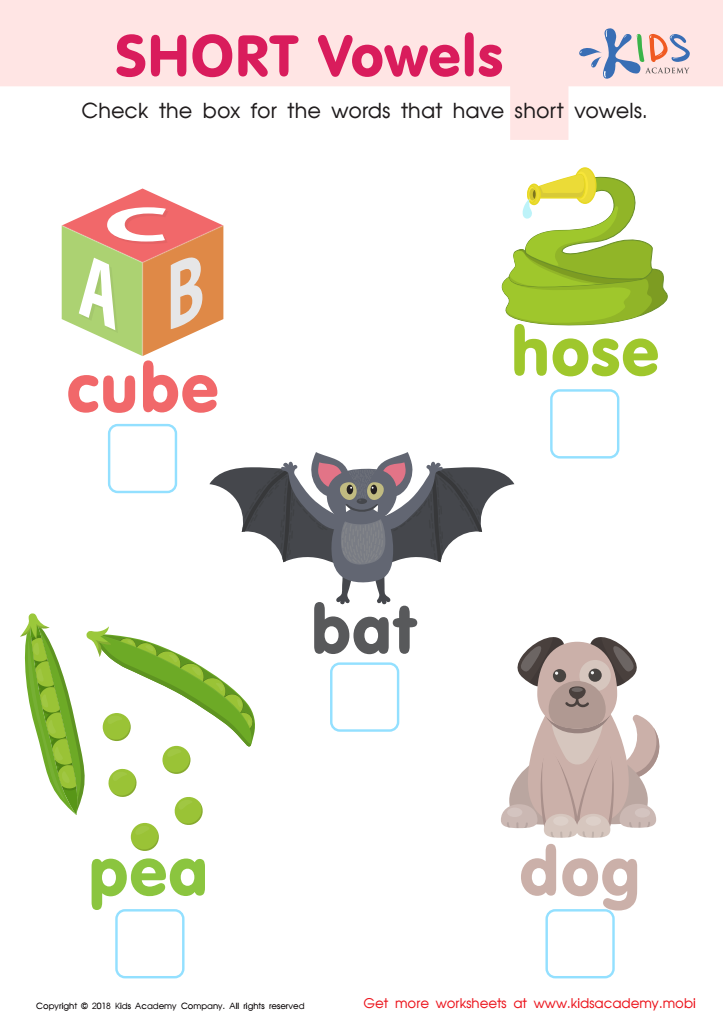
    Say "dog" and notice how long it takes to pronounce the vowel. Is it short or long? Compare it to "pea" and use this worksheet to quickly assess your child's mastery. Have them name each picture and listen for the vowel sounds. Only check the boxes for words with short vowel sounds.
    short vowels Worksheet
    Worksheet
    Why Vowels? Reading Worksheet
    Why Vowels? Reading Worksheet

    Why Vowels? Reading Worksheet

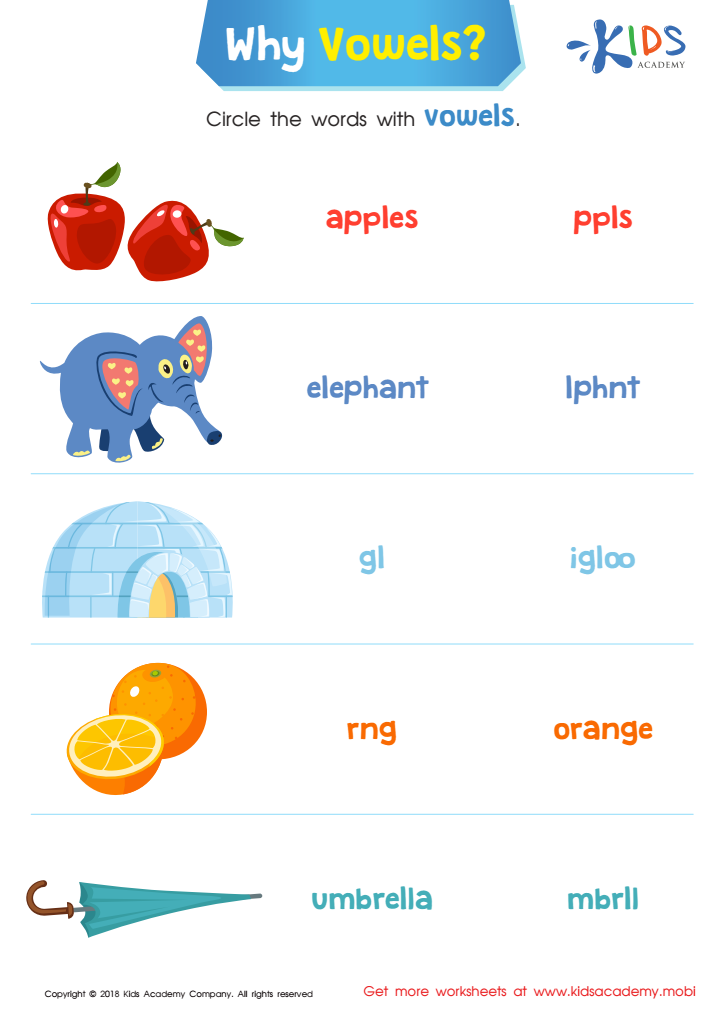
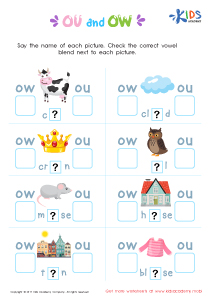
    This worksheet teaches kids to spell words with vowels. It features familiar pics for them to recognize, and they practice fine motor skills by circling the correct spelling. It's an enjoyable way for kids to learn how to spell and promote reading skills.
    Why Vowels? Reading Worksheet
    Worksheet
    Words with Long U Reading Worksheet

    Words with Long U Reading Worksheet

    Words with Long U Reading Worksheet

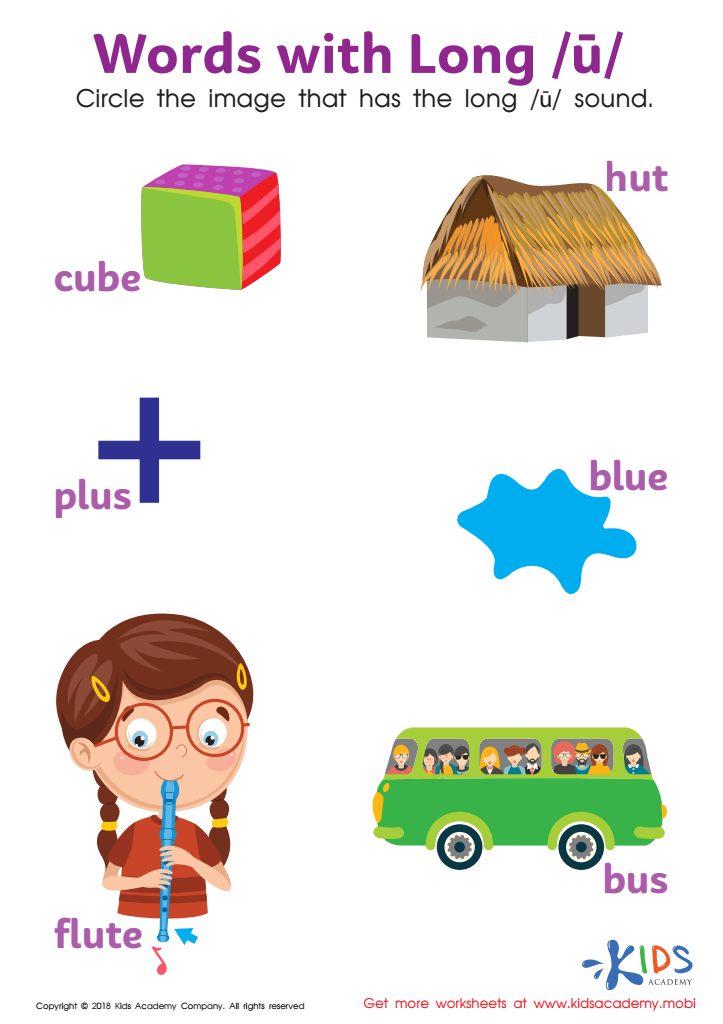
    Help your new reader master vowel recognition with this fun worksheet. By using picture clues and practicing fine motor skills, they'll learn to differentiate between words with the long and short «u» sound. Your learner will also get to practice vowel discrimination in high-frequency words. It's a great way to learn the importance of vowels in reading!
    Words with Long U Reading Worksheet

    Worksheet


    Understanding normal long and short vowels is crucial for children aged 3-4, as it lays a foundation for their literacy development. During these early years, children are naturally inclined to mimic sounds, and distinguishing between long and short vowels helps them develop phonemic awareness—a skill essential for reading and writing.

    When parents and teachers focus on vowel pronunciation, it fosters a child's ability to decode words effectively. For instance, distinguishing "cap" (short vowel) from "cape" (long vowel) sharpens their understanding of how differences in sounds can change meanings. This is particularly important as children begin to sound out words independently.

    Moreover, early exposure to concept strategies aligned with vowel sounds can cultivate better spelling habits as they progress. By engaging them with playful activities, songs, and stories that emphasize long and short vowels, adults can create a rich literacy environment that enables children to explore language joyfully.

    Ultimately, skillful phonetic recognition not only boosts reading readiness but also builds confidence. As a result, nurturing this aspect of early literacy serves both the immediate benefits in language acquisition and sets the stage for lifelong learning and literacy success. Therefore, parents and teachers should prioritize this essential aspect of phonics.