Normal Short Vowels Worksheets for Ages 3-4
4 filtered results
-
From - To
Introduce your little ones to the world of short vowels with our engaging "Normal Short Vowels Worksheets for Ages 3-4." Designed to provide a fun and educational experience, these worksheets help young learners recognize and practice short vowel sounds. Each activity is crafted to be simple and enjoyable, keeping toddlers intrigued while they build foundational language skills. Featuring vibrant illustrations and captivating exercises, our worksheets make learning short vowels a delightful adventure. Perfect for preschoolers, they are an excellent addition to any early literacy curriculum. Unlock your child's potential with our expertly designed resources today!
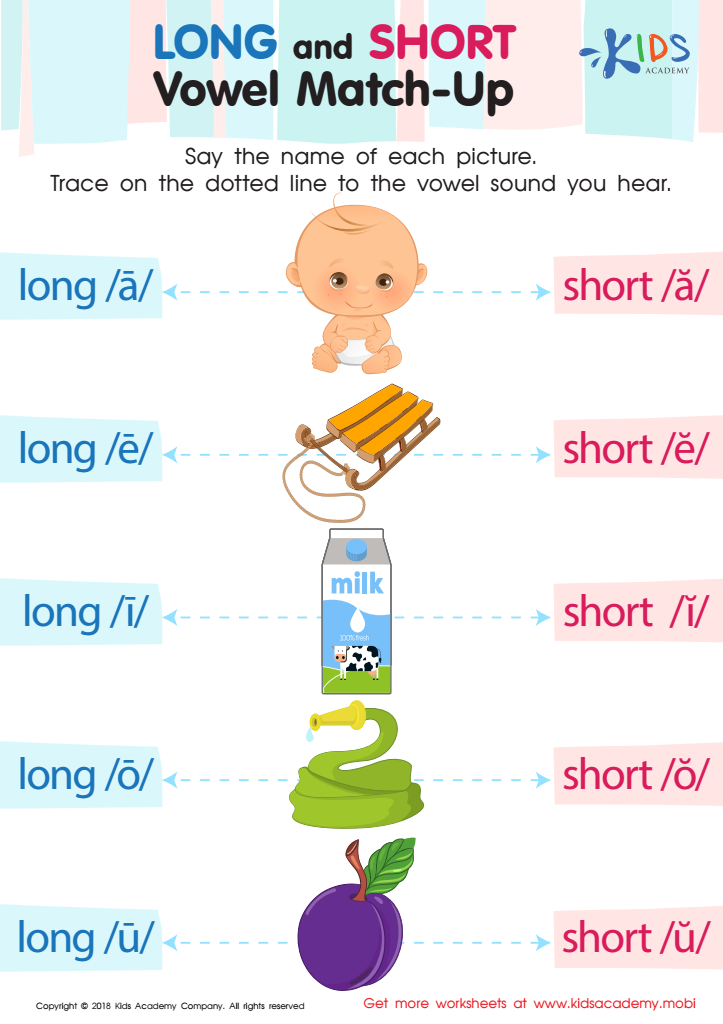
Long and Short Vowel Match up Reading Worksheet
 Assign to My Students
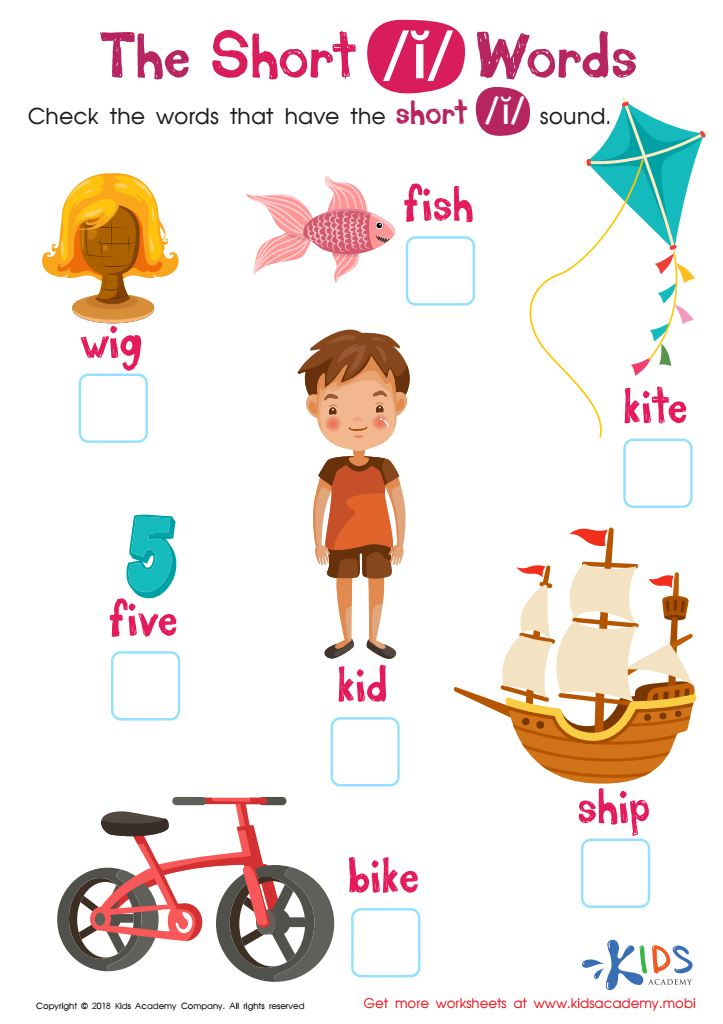
The Short I Words Reading Worksheet
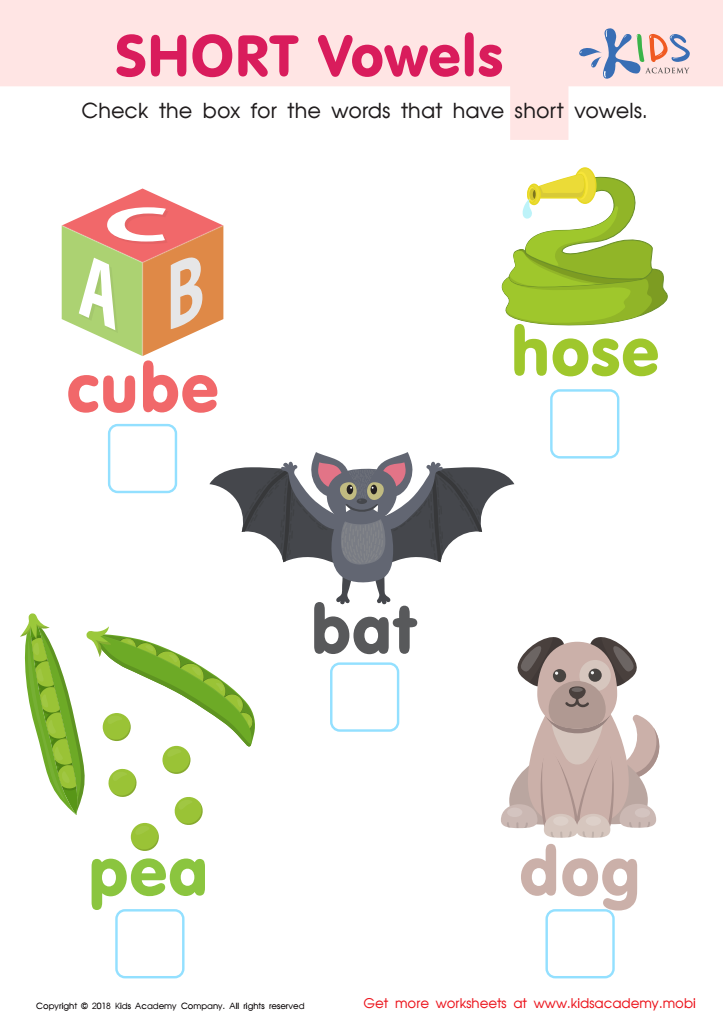
short vowels Worksheet
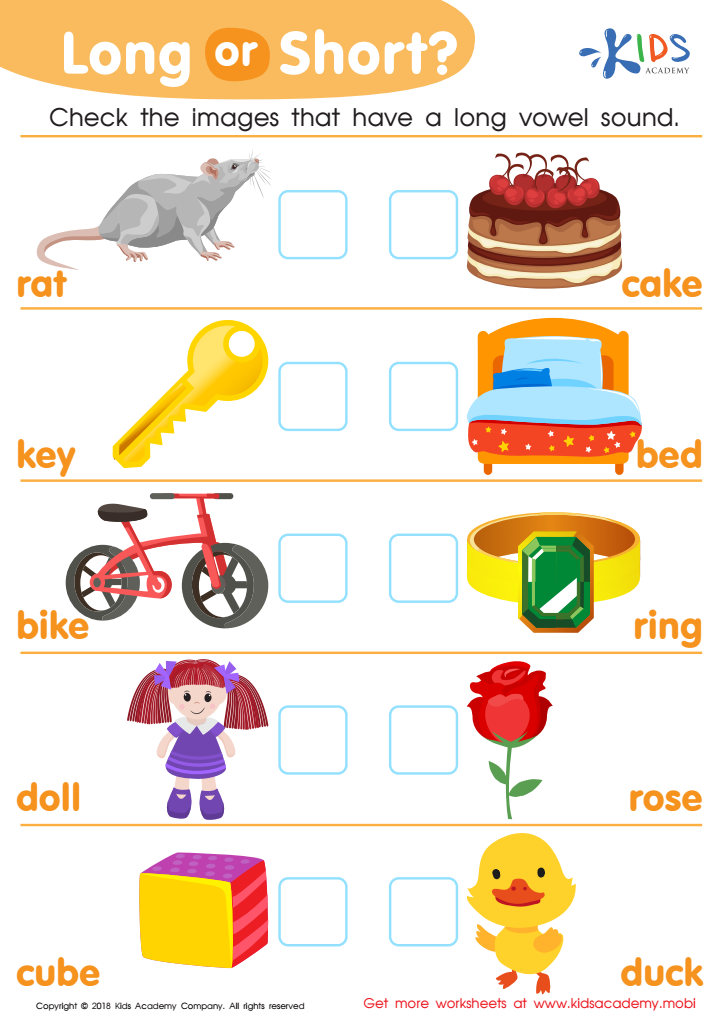
Long or Short Reading Worksheet



Understanding normal short vowels is crucial for young children, particularly those aged 3-4, as it lays the foundation for their reading and speaking skills. Short vowels, such as 'a' in "cat," 'e' in "bed," 'i' in "sit," 'o' in "cot," and 'u' in "cup," are fundamental sounds in the English language. Grasping these early enables children to decode words more easily, aiding in the development of reading fluency and comprehension.
Parents and teachers should care because proficiency in short vowel sounds fosters phonemic awareness, which is the ability to recognize and manipulate sounds in words. This skill is a strong predictor of later reading success. Ensuring that children correctly pronounce and identify short vowels helps to avoid future confusion between similarly spelled words, supports clearer communication, and boosts confidence in language use.
Furthermore, engaging young learners with fun and interactive activities focused on vowel sounds not only reinforces learning but also sparks an early interest in literacy. Whether through songs, games, or reading aloud, these practices make learning enjoyable and stress-free. Therefore, investing time and effort in teaching short vowels equips children with essential tools for their educational journey and lifelong communication abilities.