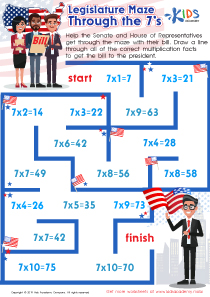
Normal Good Citizenship Worksheets for Ages 3-4
5 filtered results
-
From - To
Introducing our "Normal Good Citizenship Worksheets for Ages 3-4," designed to foster essential skills and values in young learners. These engaging worksheets aim to teach toddlers the foundations of good citizenship, including sharing, kindness, and respecting others. Filled with colorful illustrations and age-appropriate activities, children will learn through fun exercises that promote teamwork and community. Parents and educators can easily incorporate these worksheets into daily routines to enhance social skills and empathy. Ideal for early education settings, our resources support the development of responsible and caring individuals from a young age. Start nurturing future good citizens today!
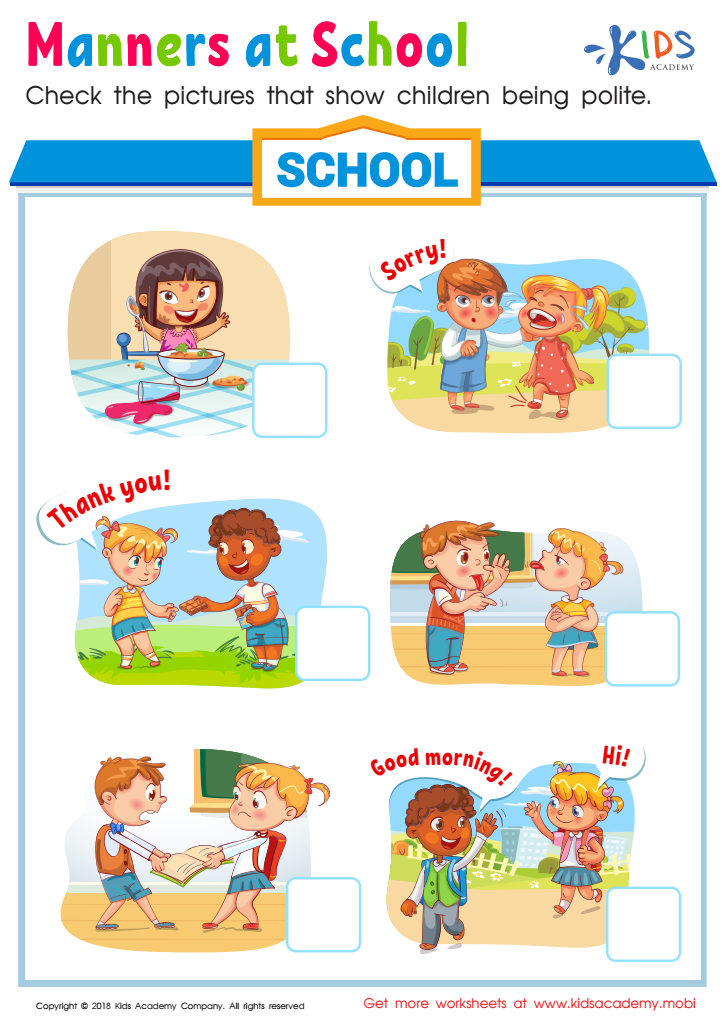
Manners at School Worksheet
 Assign to My Students
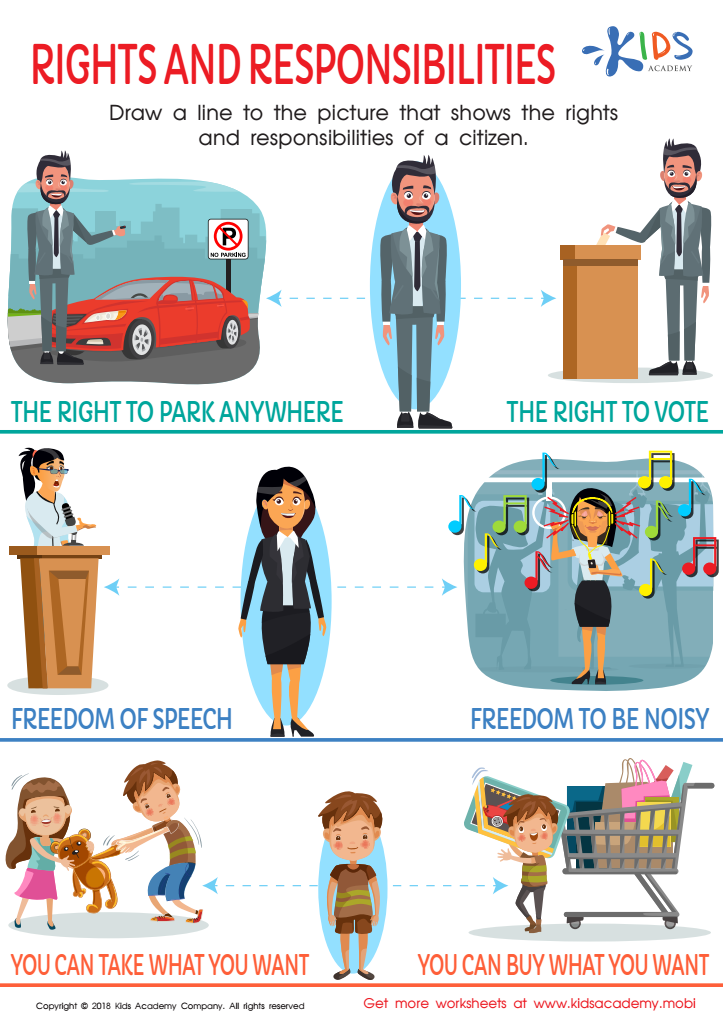
Rights and Responsibilities Worksheet
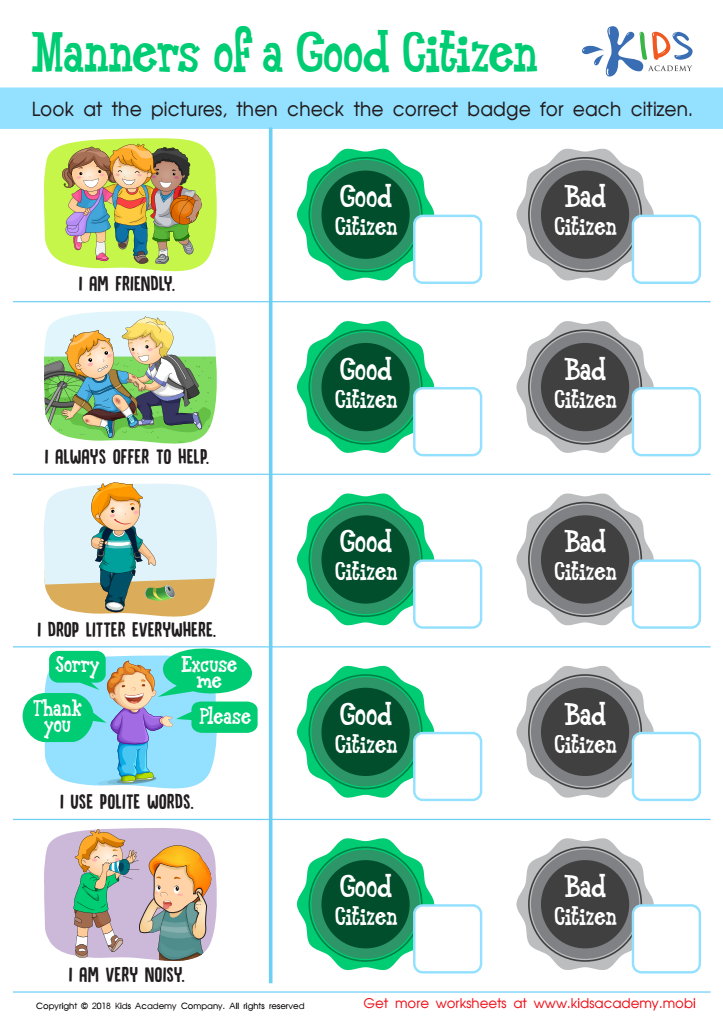
Manners of a Good Citizen Worksheet
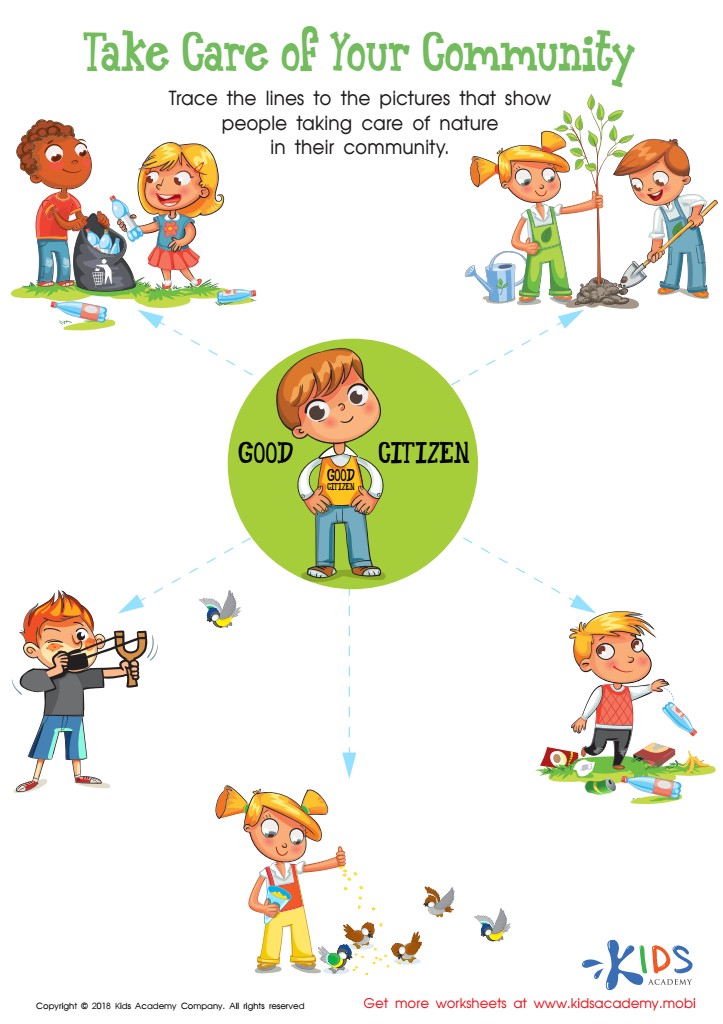
Take Care of your Community Worksheet
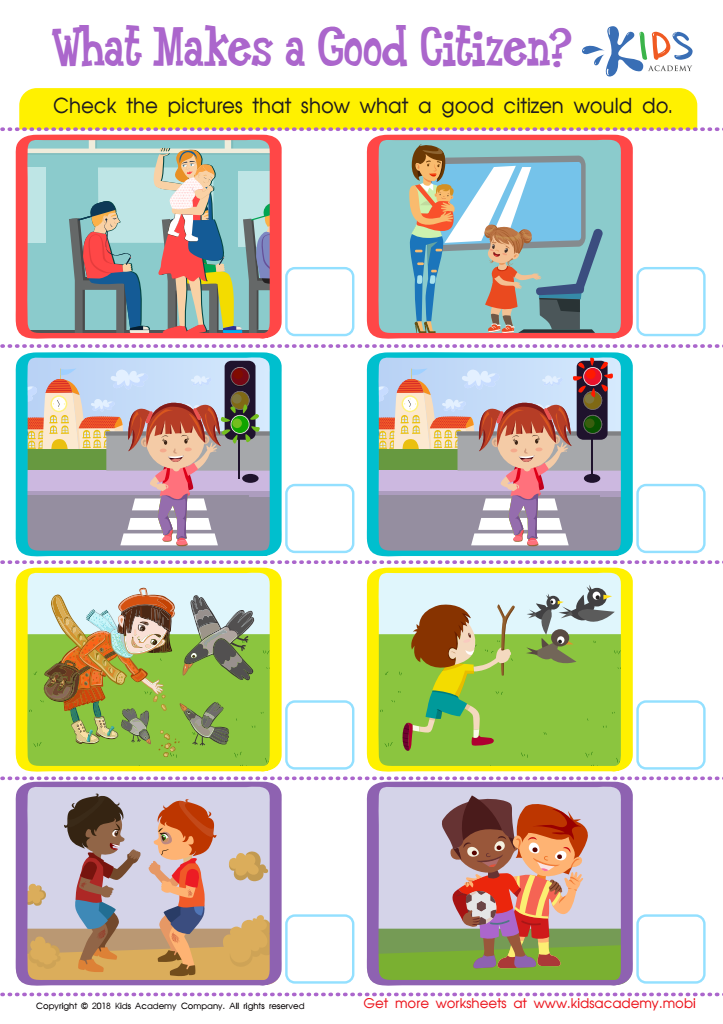
What Makes a Good Citizen? Worksheet




Teaching Normal Good Citizenship to children ages 3-4 is crucial for their social and emotional development. At this tender age, children are beginning to understand and navigate their social environment. By instilling values of respect, empathy, and cooperation, parents and teachers can help children form positive relationships with their peers and adults, laying the groundwork for future social interactions.
When children engage in normal good citizenship behaviors, such as sharing, helping others, and following simple rules, they learn the importance of being part of a community. These early experiences contribute to a sense of belonging and help establish a foundation for crucial social skills, including effective communication and conflict resolution.
Furthermore, fostering good citizenship behaviors can create a positive classroom and home environment, where respect and kindness are modeled and reinforced. Parents and teachers who prioritize these principles also encourage responsibility, making children aware of their contributions to the well-being of others.
Ultimately, nurturing normal good citizenship in young children has significant long-term benefits, encouraging them to grow into socially responsible, engaged, and caring individuals. Investing in these principles now not only benefits the children but also reinforces a cohesive and supportive community for everyone involved.