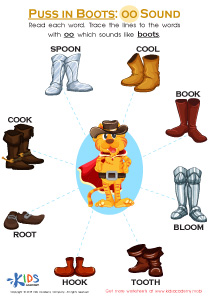
Normal Middle Vowel Worksheets for Ages 3-7
4 filtered results
-
From - To
Welcome to our "Normal Middle Vowel Worksheets" designed specifically for children aged 3-7! These engaging worksheets focus on helping young learners identify and practice middle vowel sounds in a fun and interactive way. Our activities include fill-in-the-blank exercises, matching games, and letter recognition tasks that reinforce essential phonetic skills. By emphasizing middle vowel sounds, we aim to build a strong foundational understanding of language and enhance reading readiness. Perfect for home or classroom use, these worksheets provide various challenging activities that ensure your child’s learning experience is both enjoyable and effective. Explore our collection and support your child's literacy journey today!
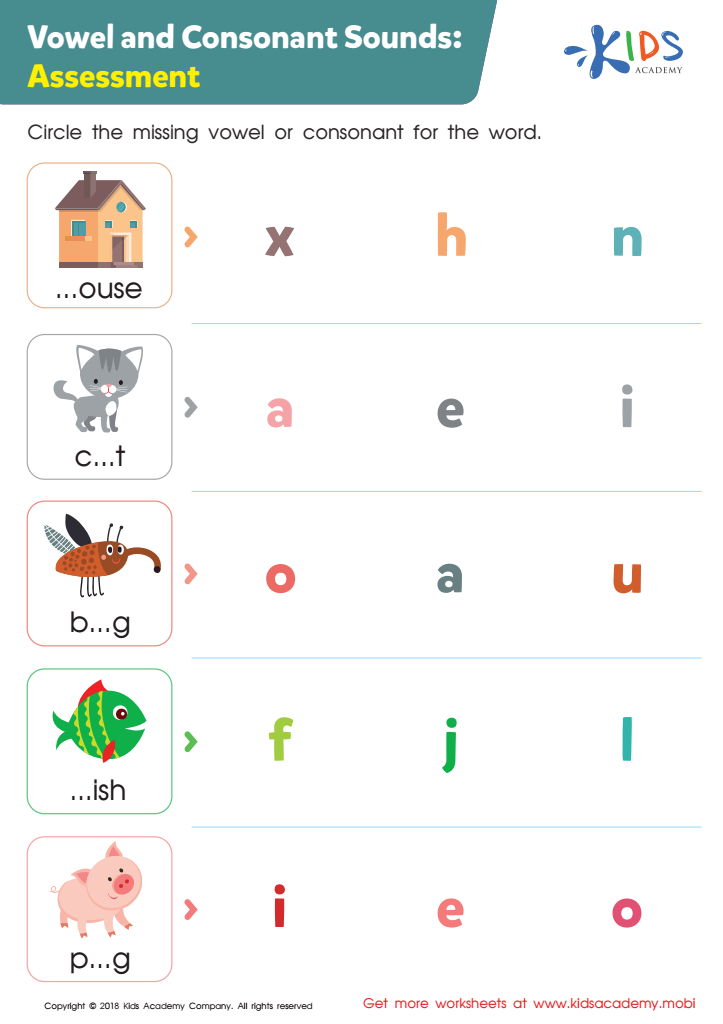
Vowel and Consonant Sounds: Assessment Worksheet
 Assign to My Students
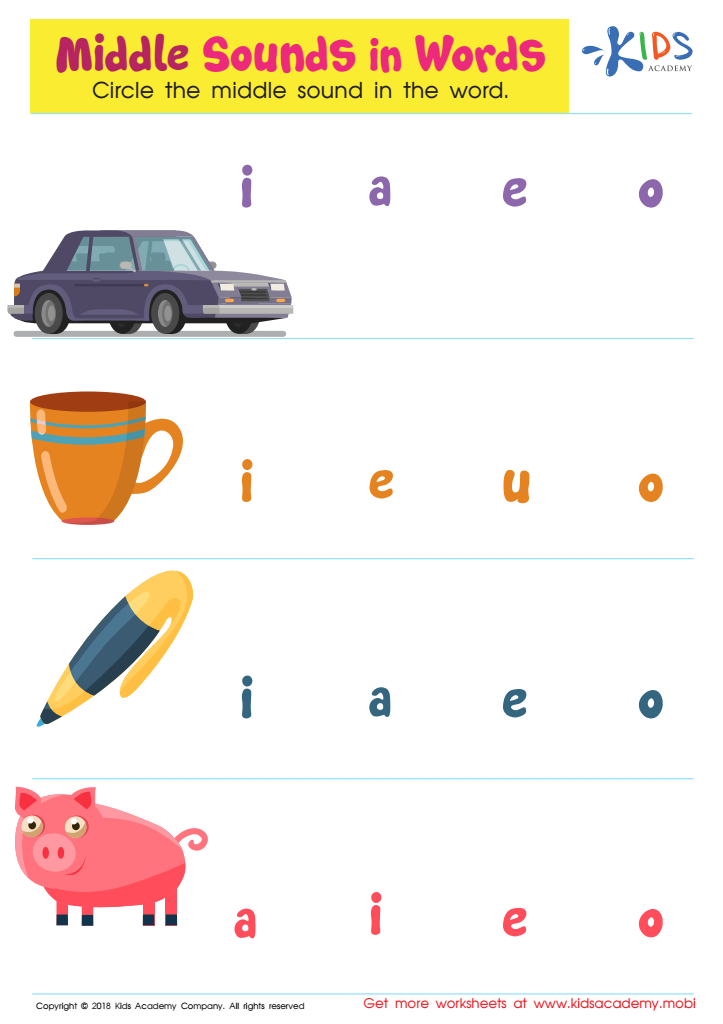
Middle Sounds in Words Worksheet
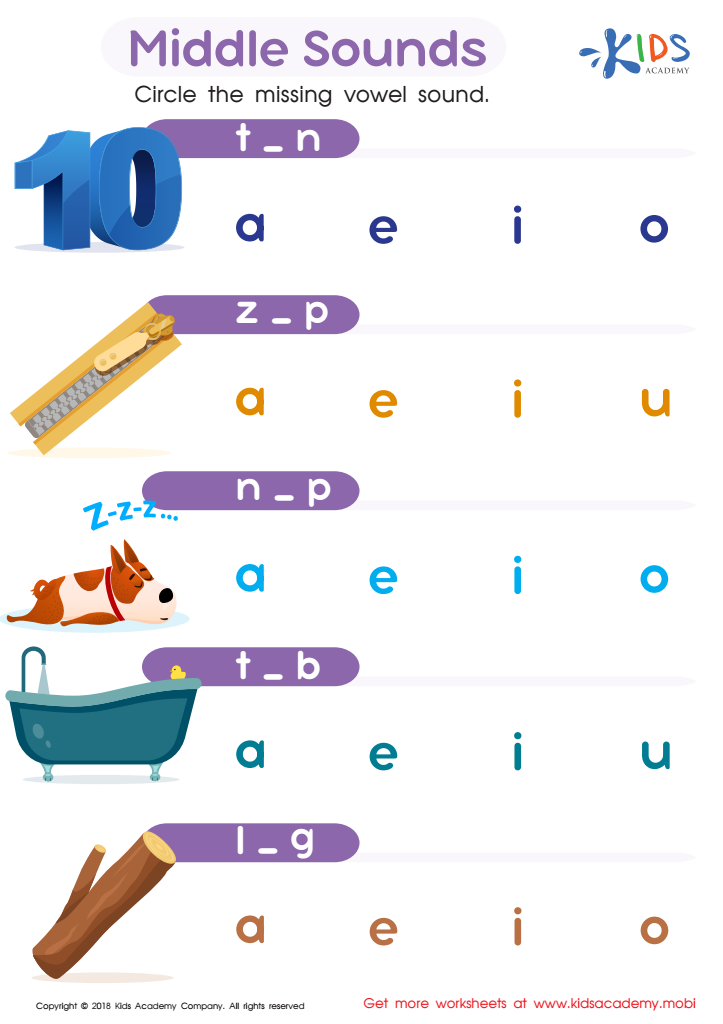
Middle Sounds Worksheet
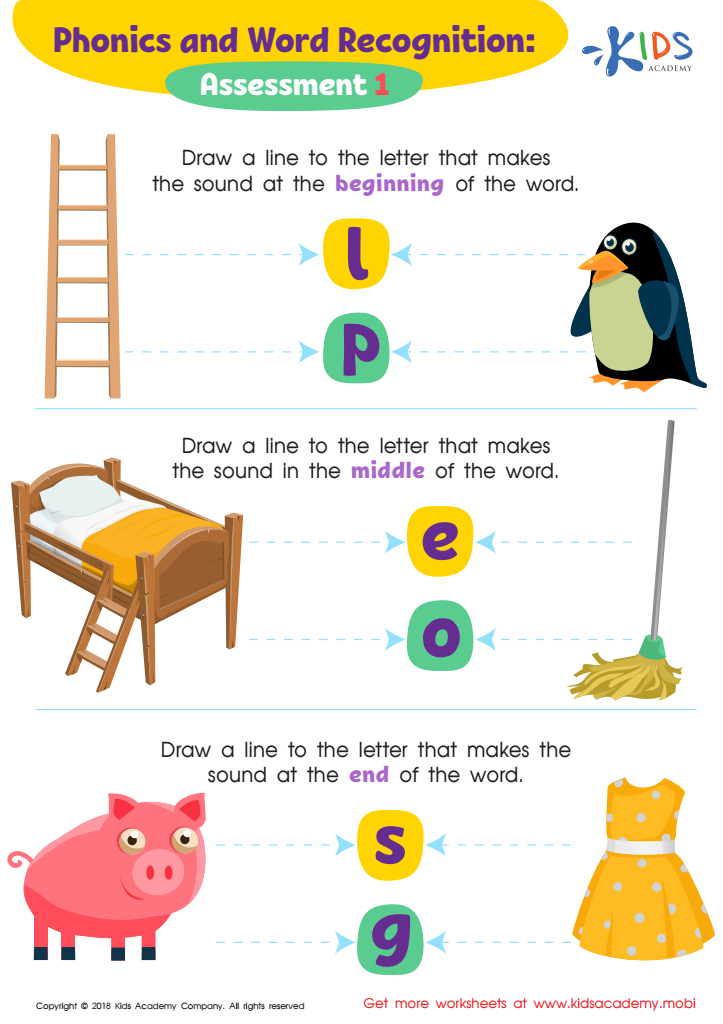
Phonics and Word Recognition: Assessment 1 ELA Worksheet



Parents and teachers should care about developing normal middle vowel sounds in children aged 3-7 because these sounds are foundational for effective communication and literacy skills. Mastering middle vowels, such as in words like "cat," "bed," and "dog," helps children understand the structure of words, facilitating spelling, reading, and pronunciation.
Strong comprehension of vowel sounds also boosts phonemic awareness, enabling children to blend and segment sounds, which are critical skills for reading development. This early mastery contributes to better reading fluency and comprehension as they progress in their academic journey.
Moreover, focusing on normal middle vowel sounds can foster confidence in language use and learning. Children who feel competent in phonetic skills are more likely to engage with books, participate verbally, and share ideas, laying the groundwork for a lifelong love of learning.
Furthermore, in a social context, strong verbal skills promote better interactions with peers and adults, encouraging collaboration and socialization. Therefore, prioritizing middle vowel sound development in early education can significantly impact children's communication abilities, academic success, and social-emotional growth. This investment in their phonetic foundation pays off in their future learning endeavors and overall development.