Normal Vowels and Consonants Worksheets for Ages 3-7 - Page 2
25 filtered results
-
From - To
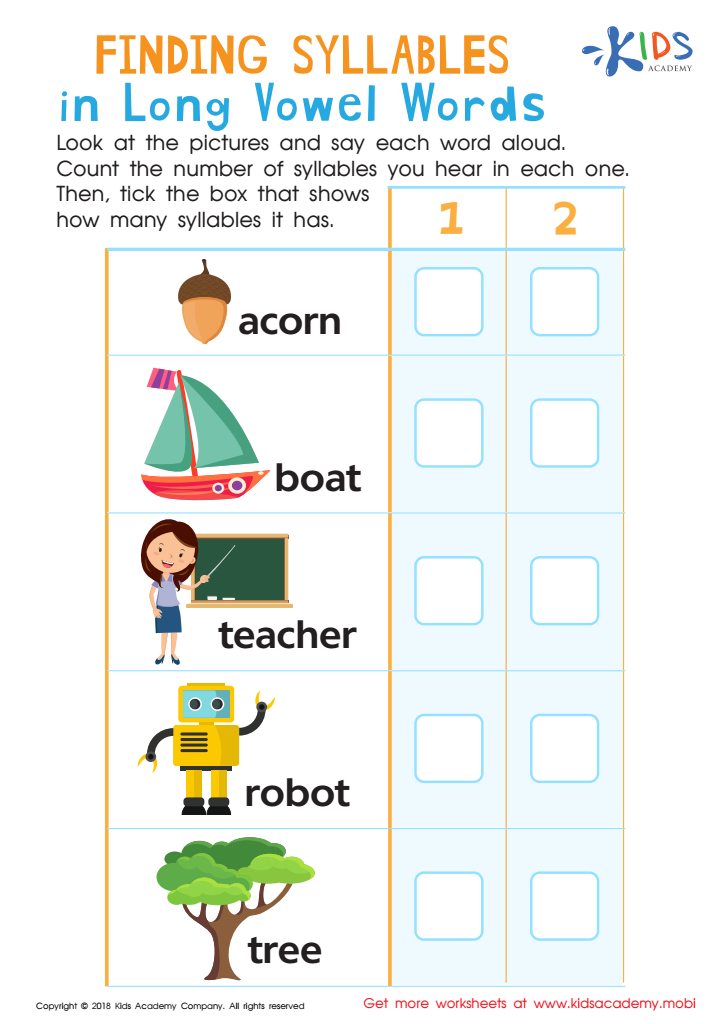
Finding Syllables in Long Vowel Words Worksheet
 Assign to My Students



Understanding normal vowels and consonants is essential for children aged 3-7 as it lays the foundation for language development, reading, and writing skills. At this age, children are rapidly acquiring language, and familiarity with vowel and consonant sounds aids in their ability to communicate effectively. Recognizing these sounds supports phonemic awareness—a critical skill for reading.
Parents and teachers play a crucial role by integrating fun activities and games involving vowels and consonants into daily routines. This not only makes learning enjoyable but also encourages verbal interaction, which enhances auditory discrimination. Early phonics education helps children decode words, allowing them to become confident readers and writers.
Furthermore, understanding vowel and consonant sounds helps bridge connections between spoken and written language, promoting literacy. As children learn to manipulate these sounds through rhymes and songs, they enhance their cognitive and linguistic abilities. Additionally, this foundation contributes to academic success in later years, making it a worthy investment for parents and educators alike.
In summary, fostering an understanding of normal vowels and consonants in early childhood is vital for developing essential literacy skills, boosting confidence, and paving the way for lifelong learning and communication.