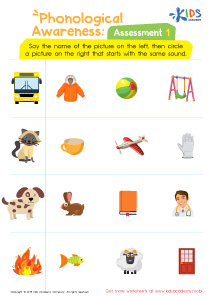
Normal Consonants Worksheets for Ages 3-9 - Page 2
26 filtered results
-
From - To
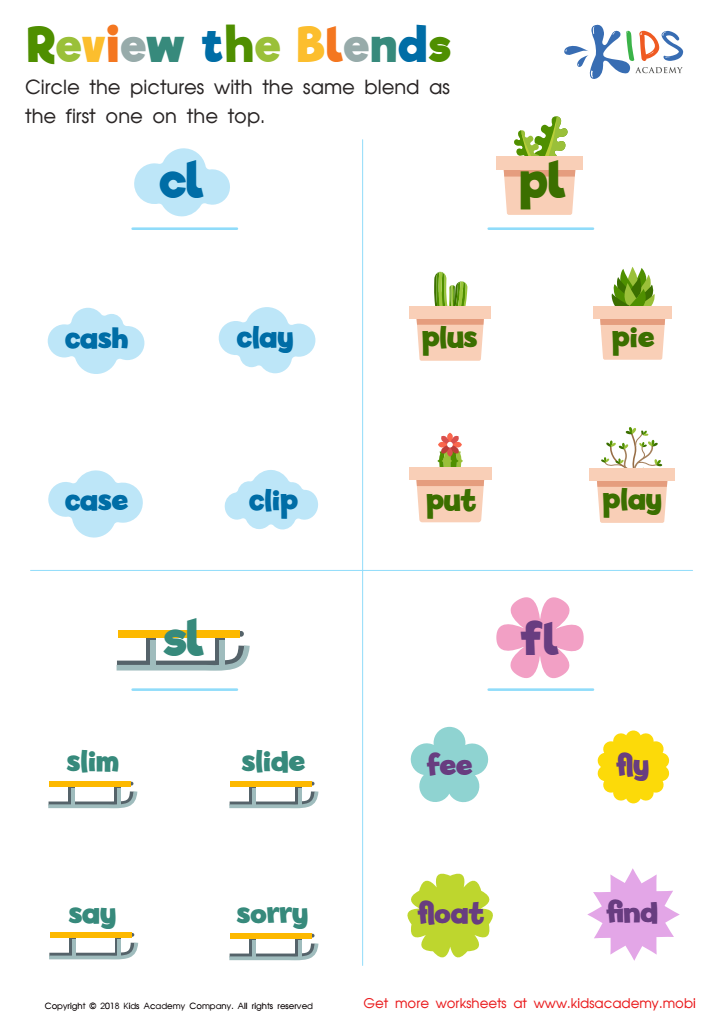
Review the Blends Worksheet
 Assign to My Students
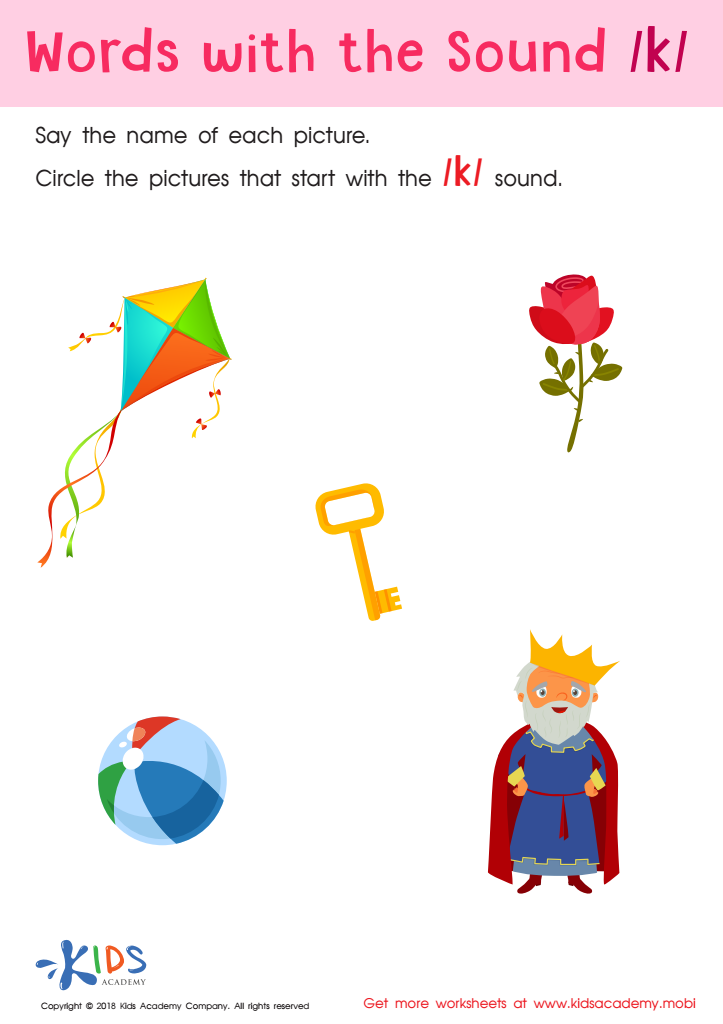
Words with sound k Reading Worksheet



Understanding normal consonants is crucial for parents and teachers of children aged 3-9 because these foundational sounds play a vital role in early literacy and language development. By focusing on normal consonants—those that children are typically expected to master during these early years—adults can better support children's communication skills.
Normal consonants facilitate clearer speech, enhancing a child's ability to be understood by others. This clarity is important for social interactions and building relationships with peers. As children engage in conversations and storytelling, mastery of consonants also fosters vocabulary growth and improves pronunciation, enabling them to express their thoughts and emotions more effectively.
Moreover, phonemic awareness, which includes recognizing and manipulating consonants, is closely linked to reading skills. Familiarity with consonant sounds supports the development of decoding skills crucial for learning to read. When parents and teachers focus on consonants, they lay the groundwork for successful literacy experiences as children progress through grade levels.
Additionally, an awareness of normal consonant development allows for early identification of potential speech or language delays. By addressing these concerns promptly, parents and teachers can implement interventions that aid in a child’s overall communication confidence and educational success, setting them on a positive learning trajectory.