Normal Vowel Diphthongs Worksheets for Ages 4-8 - Page 2
25 filtered results
-
From - To
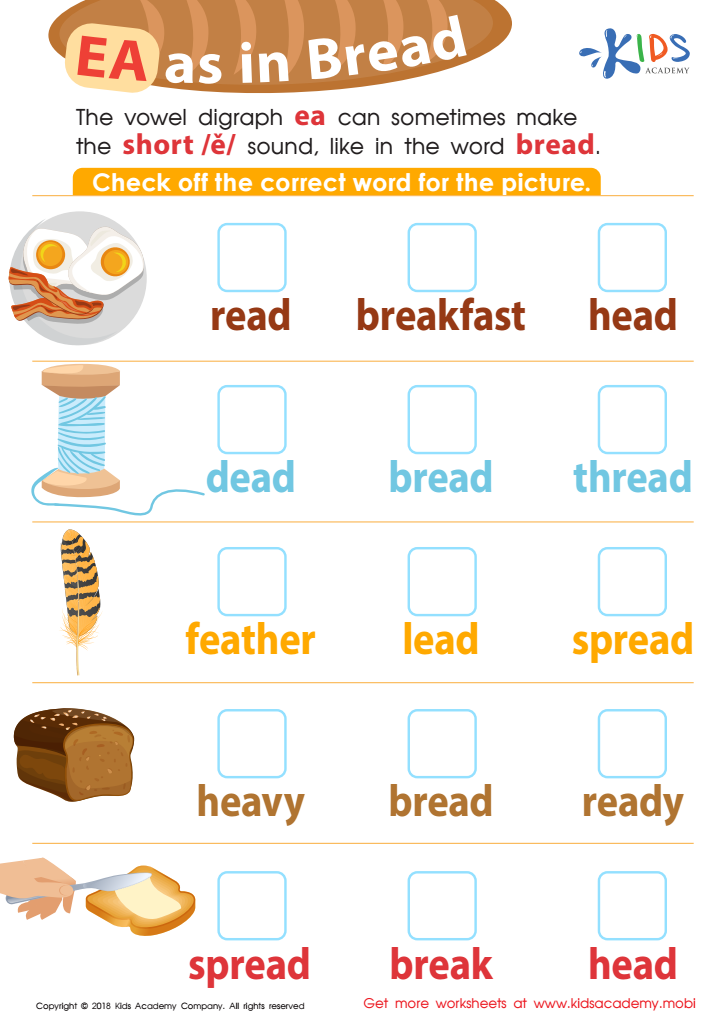
Reading: EA as in Bread Worksheet
 Assign to My Students


Normal vowel diphthongs, such as "ou" in "sound" and "oy" in "toy," play a crucial role in early literacy development for children aged 4-8. These complex vowel sounds combine two distinct vowel sounds into one syllable, facilitating smoother speech patterns and enhancing phonetic awareness. By understanding and recognizing diphthongs, young learners improve their reading fluency, spelling capabilities, and overall language comprehension.
Parents and teachers should prioritize the teaching of normal vowel diphthongs for several reasons. First, mastering these sounds can strengthen children’s decoding skills, allowing them to tackle more complex words as their reading progresses. Second, exposure to diphthongs enriches vocabulary acquisition, as children encounter a wider range of words in everyday language.
Moreover, a focus on pronunciation and word patterns fosters confidence in young readers, encouraging them to engage more with books and learning activities. When children are comfortable with these sounds, it can ignite a lifelong love for reading. Ultimately, investing time in teaching normal vowel diphthongs is essential for laying a solid foundation in literacy, which is critical for academic success and communication skills later in life.