Normal Addition & Subtraction Worksheets for Ages 4-8 - Page 8
171 filtered results
-
From - To
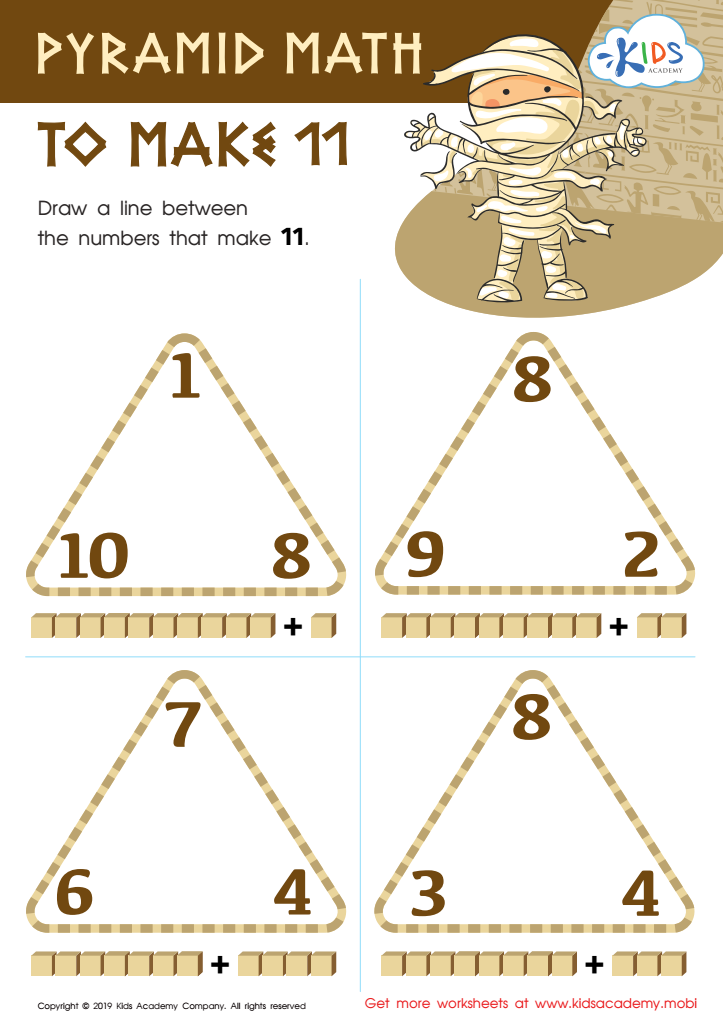
Pyramid Math to Make 11 Worksheet
 Assign to My Students
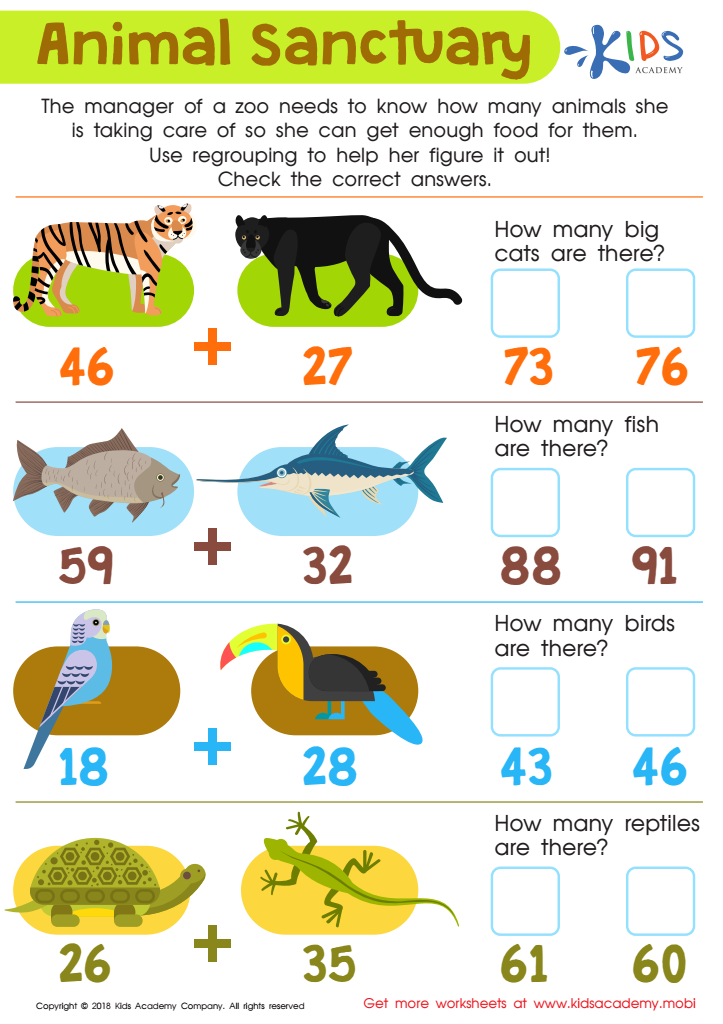
Animal Sanctuary Worksheet
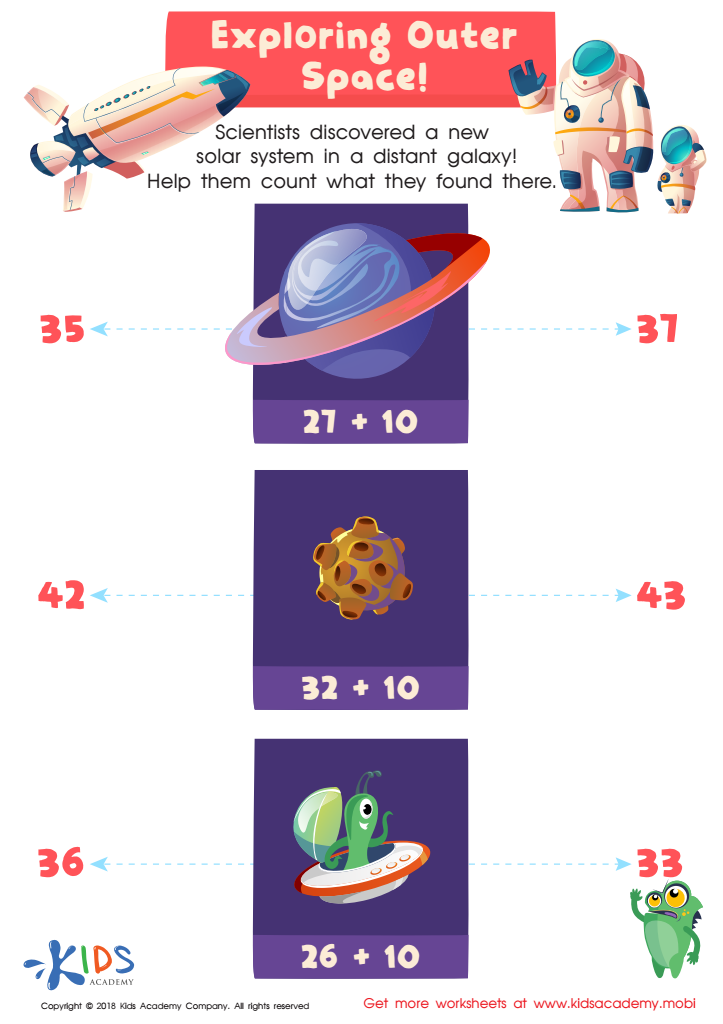
Exploring Outer Space Worksheet








Parents and teachers should care about normal addition and subtraction for ages 4-8 because these skills form the foundation of early math literacy, essential for a child's academic success and everyday functioning. At this crucial developmental stage, children begin to grasp the concept of numbers and how they relate to one another. Mastery of basic addition and subtraction nurtures critical thinking, problem-solving skills, and logical reasoning. Moreover, these operations are the building blocks for more advanced math concepts such as multiplication, division, and fractions, which children will encounter in higher grades.
Early proficiency in addition and subtraction boosts children's confidence in their abilities, fostering a positive attitude towards learning. As children frequently encounter scenarios requiring these skills—like sharing toys fairly or counting change—practical understanding becomes essential. Furthermore, these math skills are often interconnected with other subjects, enhancing overall academic performance and contributing to a well-rounded education.
Attention and support from parents and teachers, achieved through engaging activities, games, and real-life applications, can make learning math a joyful and integrated part of a child's experience. This holistic approach helps to develop not only strong math skills but also a love for learning that can endure throughout their academic journey and beyond.








