Normal Good Citizenship Worksheets for 4-Year-Olds
5 filtered results
-
From - To
Engage your 4-year-olds with our "Normal Good Citizenship Worksheets" designed to introduce the concept of good citizenship in a fun and interactive way. These worksheets encourage young learners to explore important values such as kindness, respect, and sharing within their communities. Each activity is tailored to develop social skills, enhance critical thinking, and promote personal responsibility. With colorful illustrations and simple instructions, kids will enjoy learning how to be good citizens while developing essential literacy and fine motor skills. Perfect for home or classroom use, our worksheets make learning about social studies enjoyable and accessible for early learners. Start fostering citizenship today!
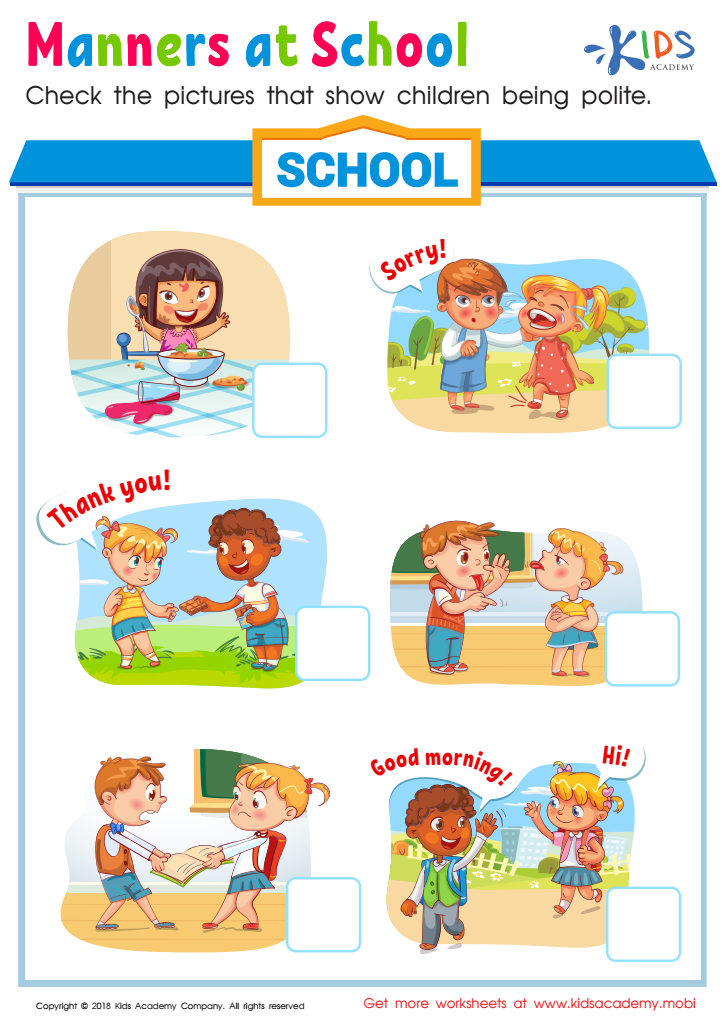
Manners at School Worksheet
 Assign to My Students
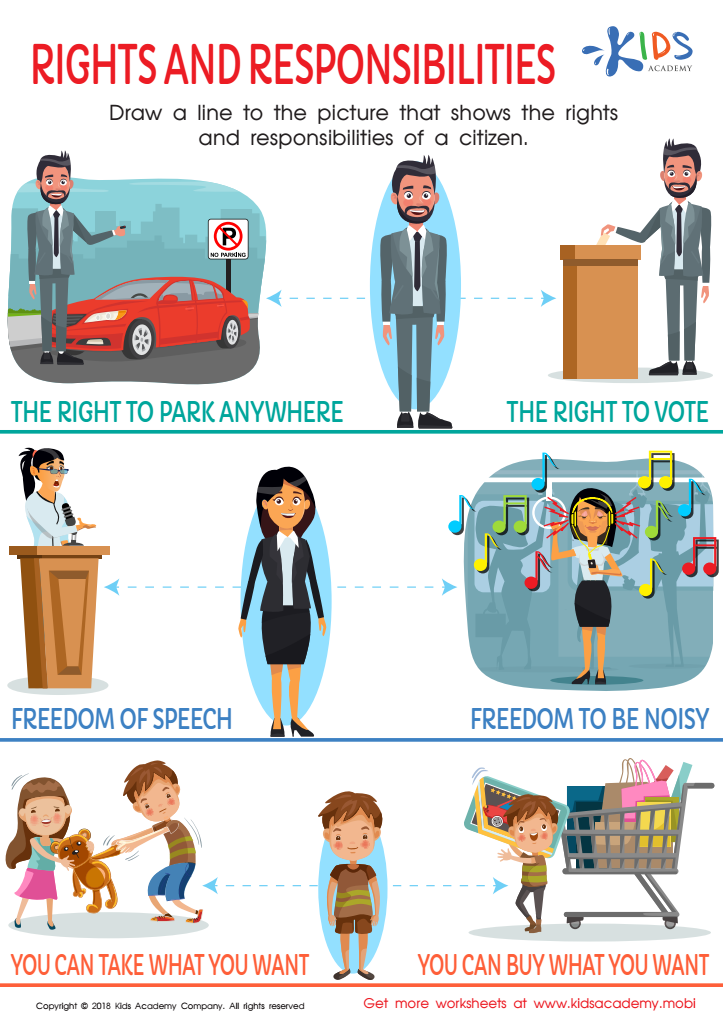
Rights and Responsibilities Worksheet
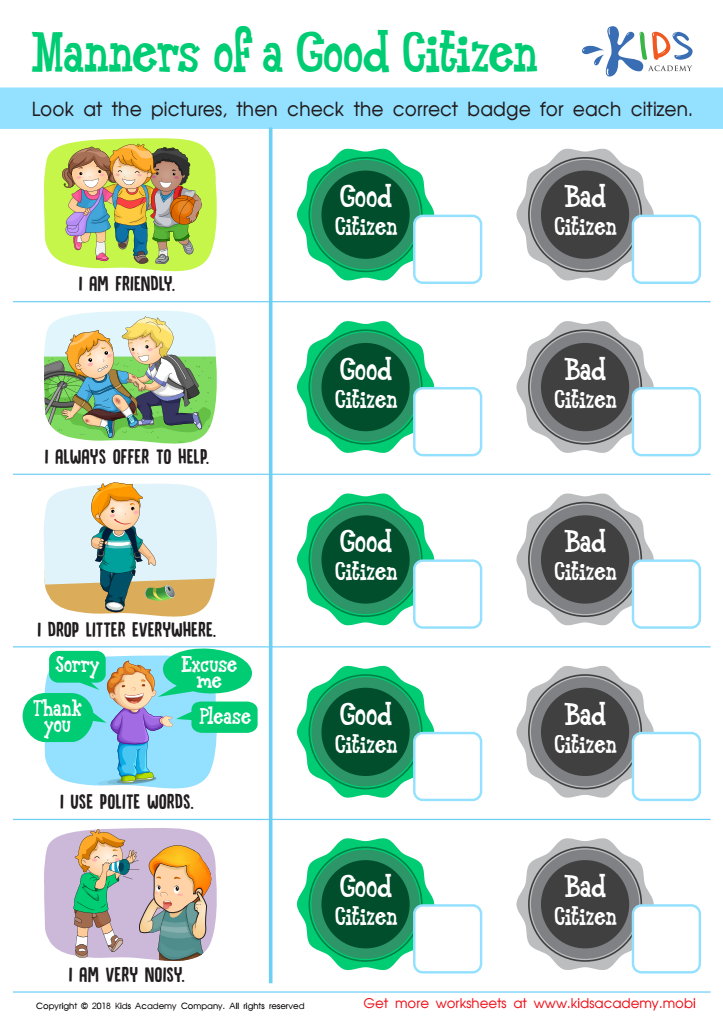
Manners of a Good Citizen Worksheet
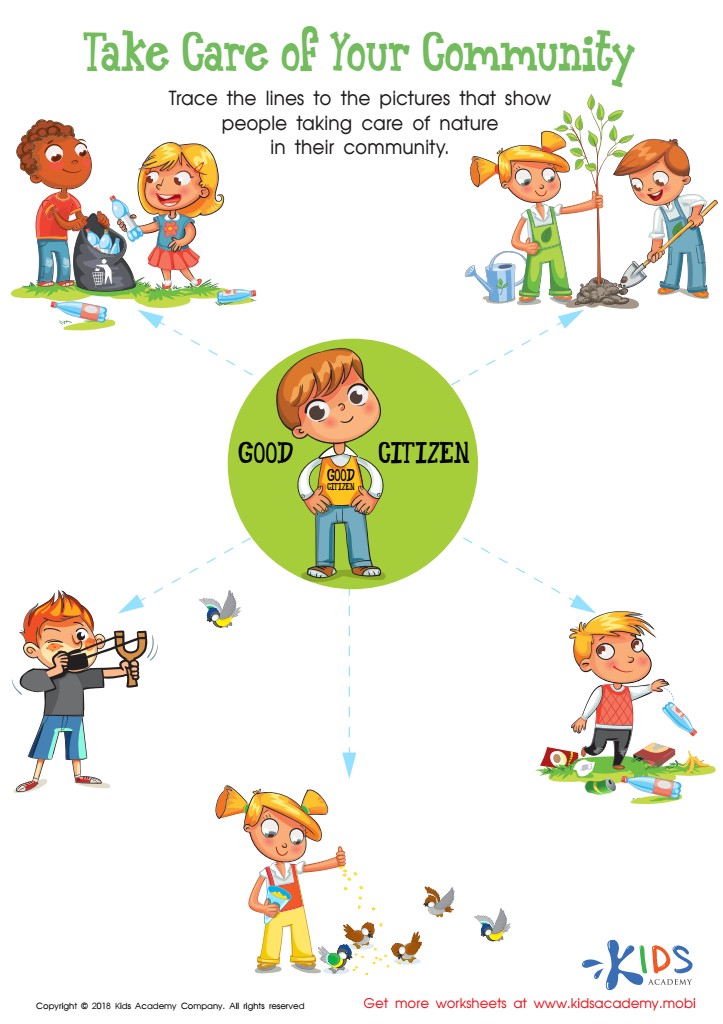
Take Care of your Community Worksheet
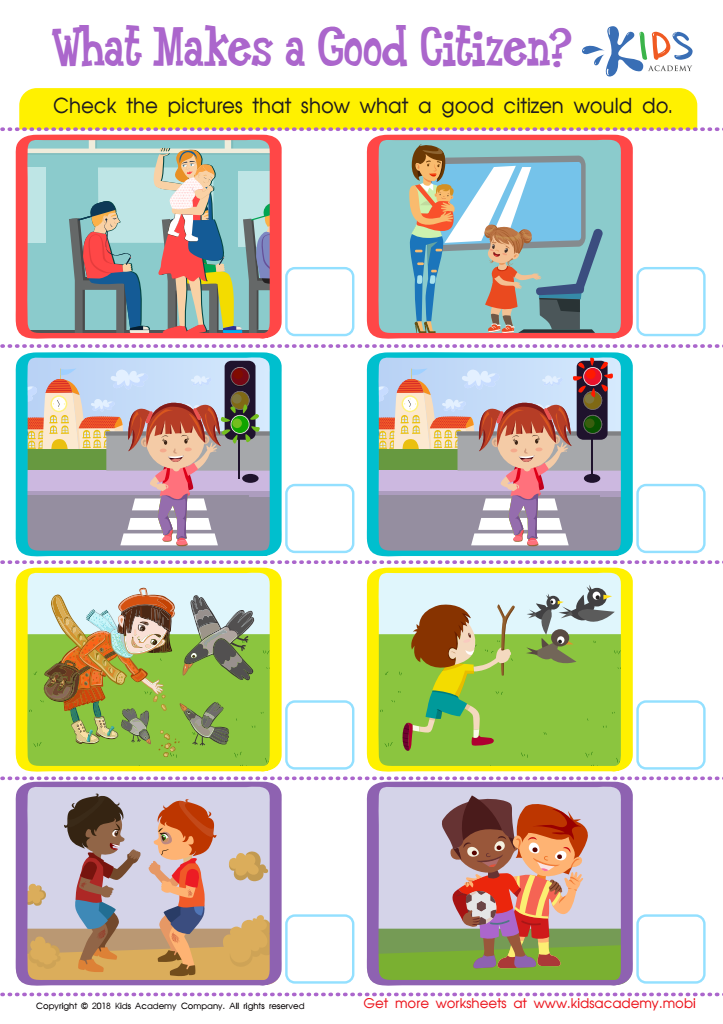
What Makes a Good Citizen? Worksheet



Teaching Normal Good Citizenship to 4-year-olds is vital for laying the foundation of responsible, kind, and engaged individuals. During early childhood, children are like sponges, absorbing values and habits that shape their behavior and outlook on the world. Instilling the concepts of good citizenship at this young age fosters social skills such as sharing, taking turns, and being respectful toward others.
Parents and teachers play a crucial role in modeling and encouraging positive behaviors. By emphasizing traits like empathy, cooperation, and responsibility, educators and caregivers can help children understand the importance of their actions and how they can positively impact their community. Engaging children in activities such as group play or community service teaches them the value of teamwork and caring for others.
Moreover, introducing good citizenship early helps reduce instances of bullying and promotes inclusivity. Children learn that diversity is a strength and that everyone deserves respect, regardless of differences. Teaching these principles can create a more harmonious environment both in the classroom and at home. In summary, nurturing Normal Good Citizenship in young children is essential for developing compassionate and responsible future citizens, ultimately benefiting society as a whole.