Reading comprehension Normal Worksheets for Ages 5-8 - Page 8
390 filtered results
Difficulty Level
Grade
Age
-
From - To
Subject
Activity
Standards
Favorites
With answer key
Interactive
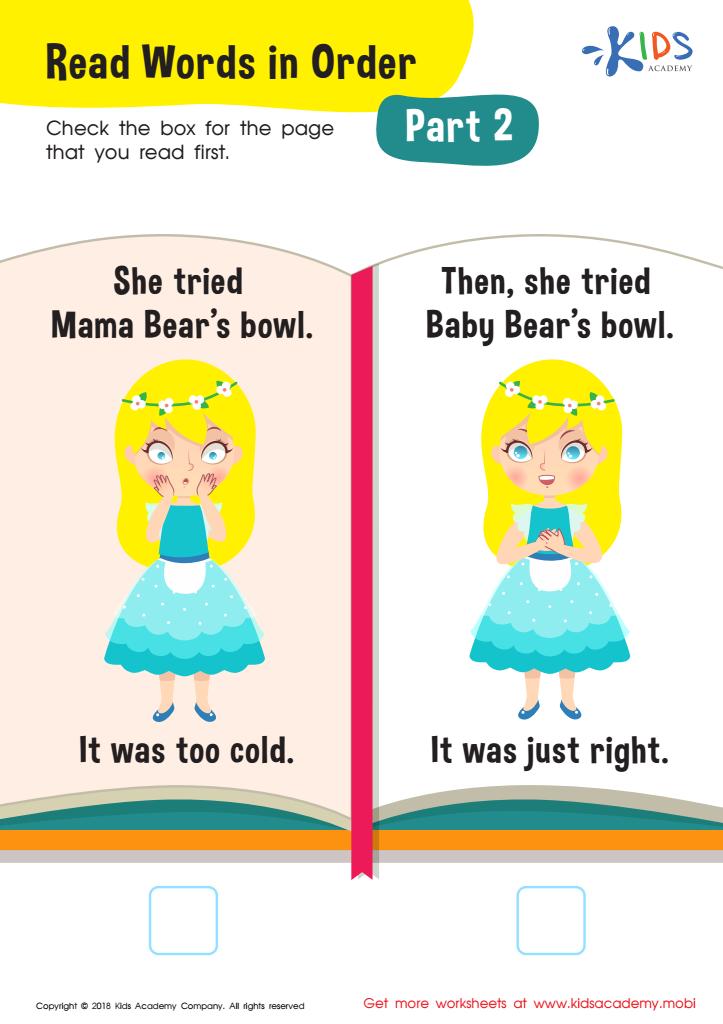
Read Words Order Part 2 Worksheet
Help your students make progress with reading by using this easy worksheet. It includes two pictures with short sentences your child should be able to read. Ask them to read these out loud, and if they're struggling, help them. Then, they should check the box that shows the page they'd read first.
 Assign to My Students
Read Words Order Part 2 Worksheet
Worksheet
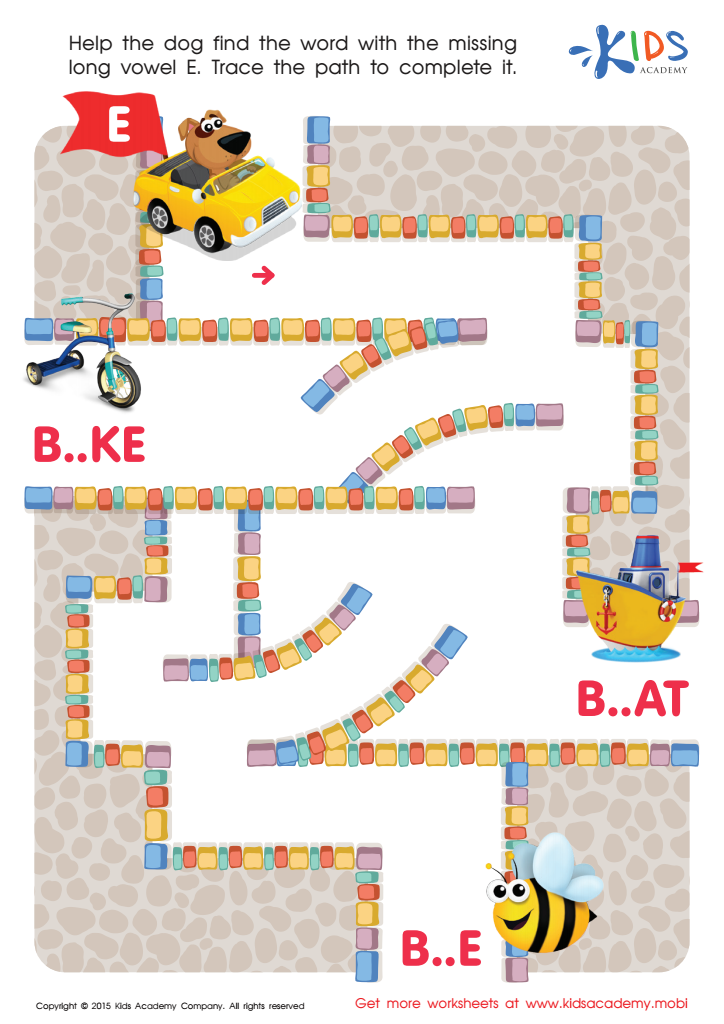
Long Vowel Sound E Worksheet
Practice distinguishing long and short vowel sound E with this free printable! Kids must complete the word “bee” by tracing the maze and adding the missing letter E. Remind them to say the word aloud to help sharpen their phonics ear. Get more phonics fun with the vowel sound E here.
Long Vowel Sound E Worksheet
Worksheet
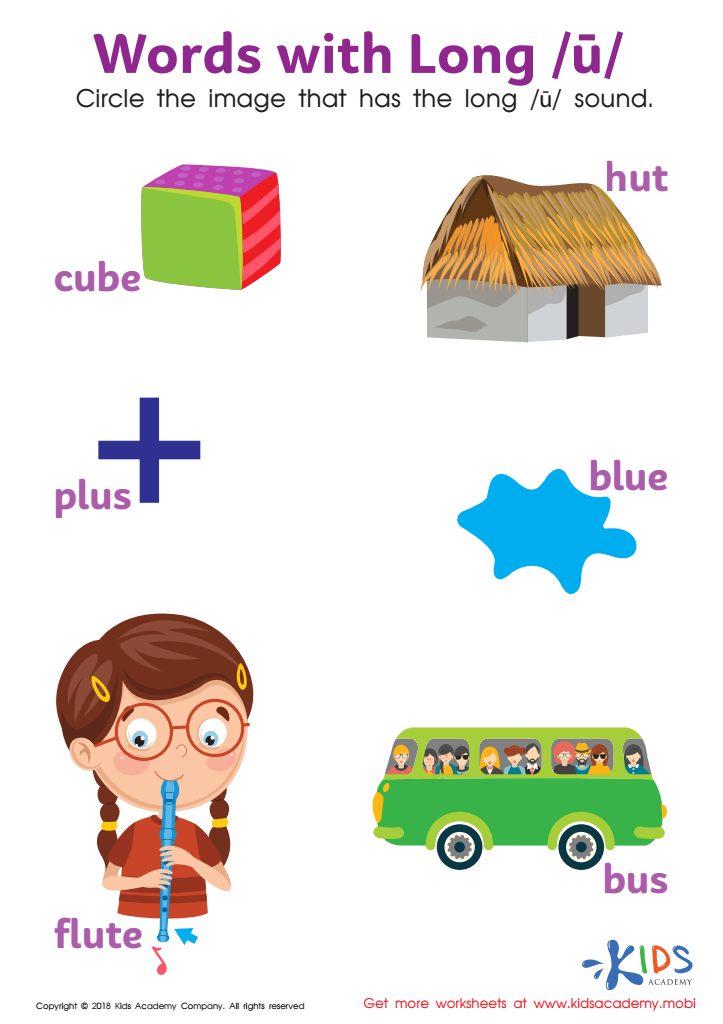
Words with Long U Reading Worksheet
Help your new reader master vowel recognition with this fun worksheet. By using picture clues and practicing fine motor skills, they'll learn to differentiate between words with the long and short «u» sound. Your learner will also get to practice vowel discrimination in high-frequency words. It's a great way to learn the importance of vowels in reading!
Words with Long U Reading Worksheet
Worksheet
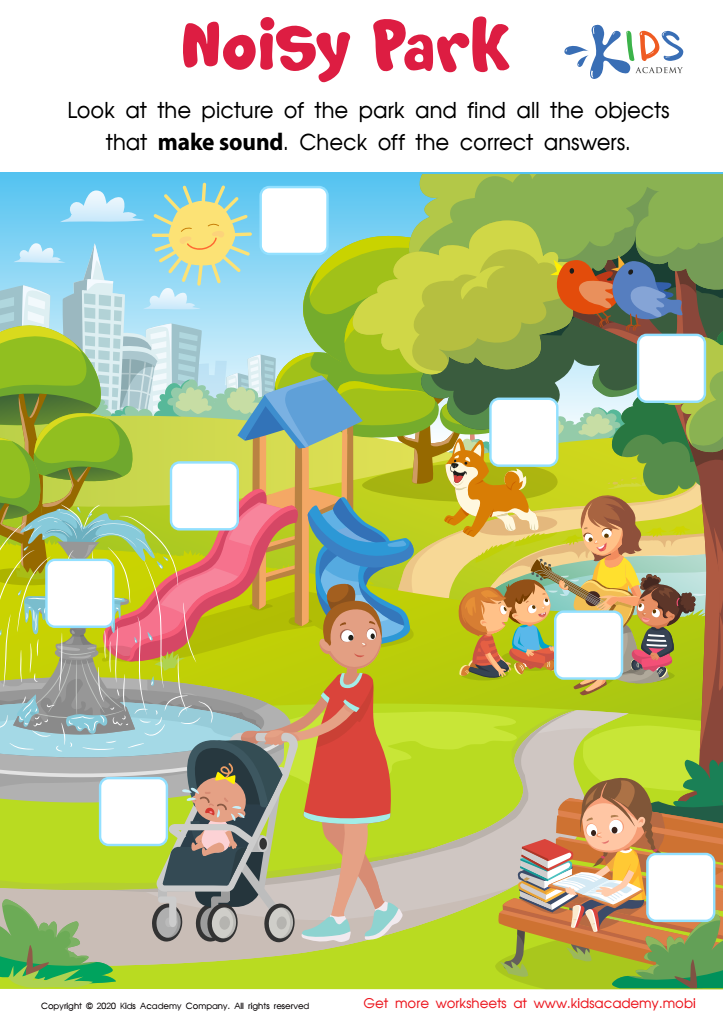
Noisy Park Worksheet
Get your students ready for the exercise by asking them to name things they see and do at the park. Then, have them identify the things in the picture, look for objects that make sounds, and verify the answers.
Noisy Park Worksheet
Worksheet
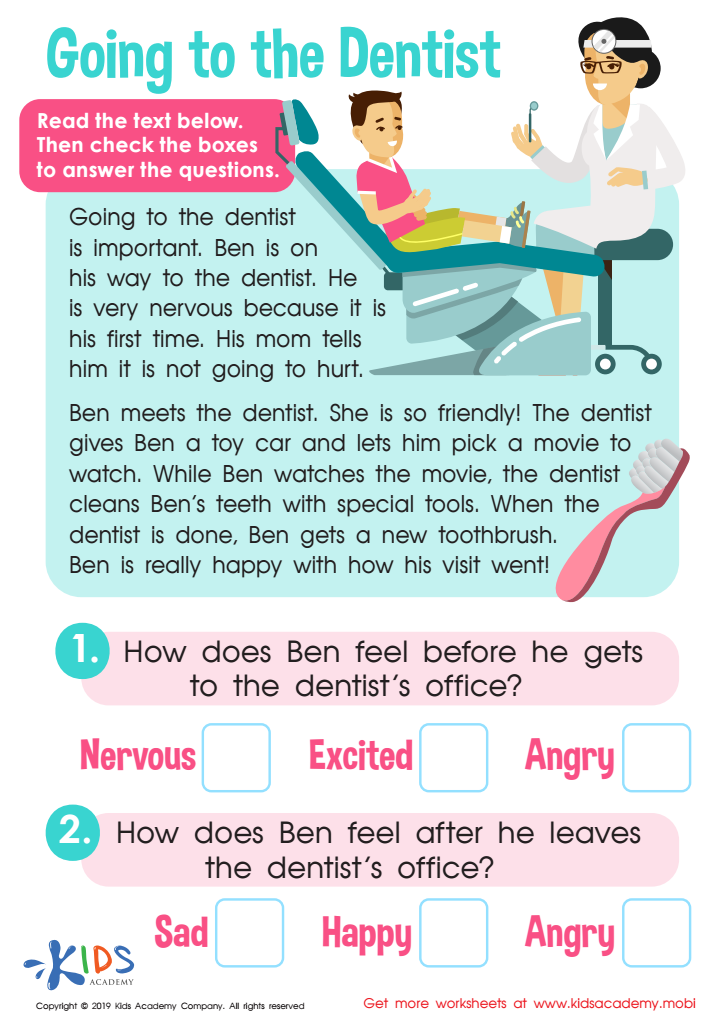
Going to the Dentist Worksheet
Kids can feel anxious when going to the dentist, but understanding why they go helps them cope. This free text helps them learn, as they read and answer questions about Ben's visit. They'll gain insight into Ben's emotions, while honing their critical thinking skills.
Going to the Dentist Worksheet
Worksheet
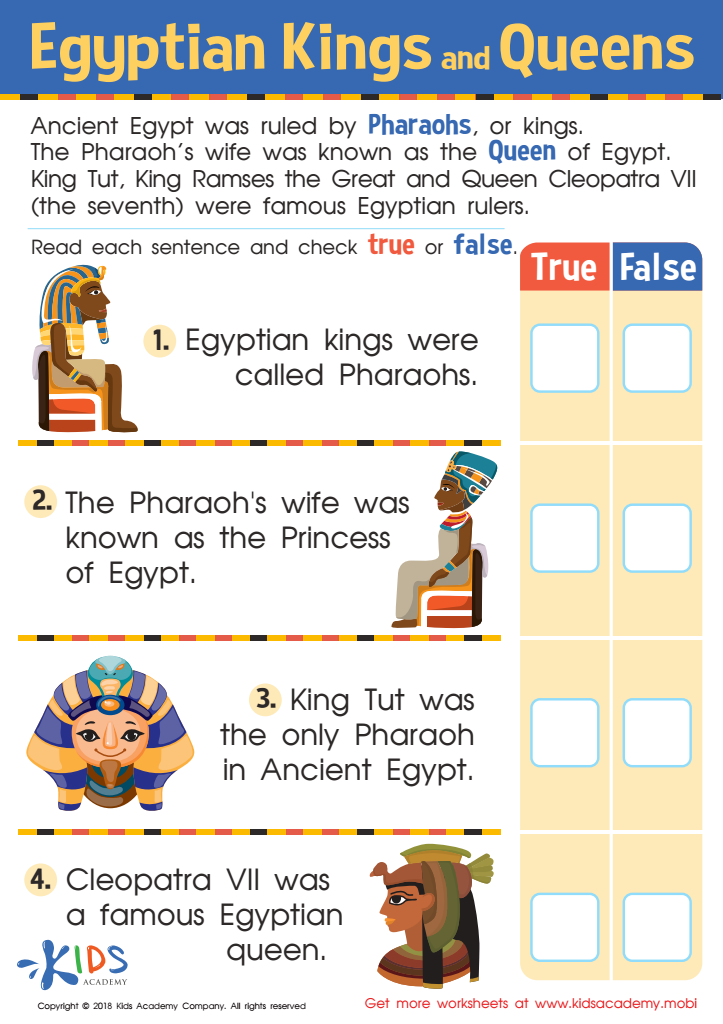
Egyptian Kings and Queens Worksheet
Want to help your child brush up on world history lessons? Kids Academy offers a fun social studies worksheet on Ancient Egyptian rulers. From King Tut to Queen Cleopatra, they'll learn about famous Egyptian rulers not found in modern times. The activity includes a brief description followed by true/false questions. Give it a try and see just how much your child knows!
Egyptian Kings and Queens Worksheet
Worksheet
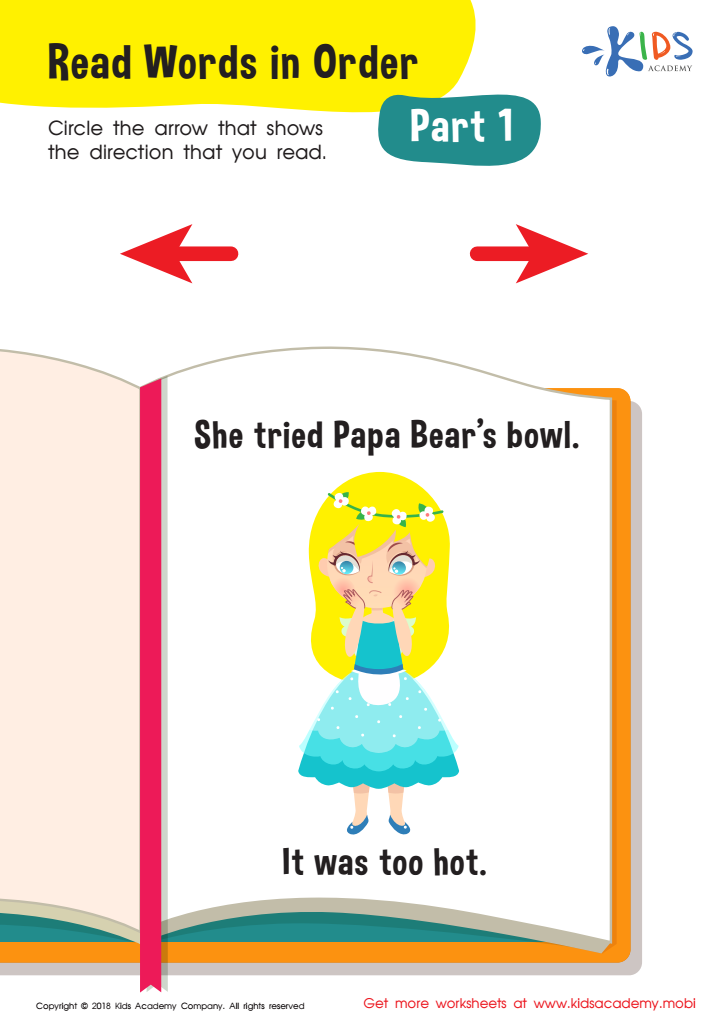
Read Words Order Part 1 Worksheet
Is your child just starting out with reading or having trouble? This worksheet is perfect! It'll help them learn the right way to read. Ask them to circle the arrow that shows the right direction to read. With this exercise, your child can overcome some of their reading challenges.
Read Words Order Part 1 Worksheet
Worksheet
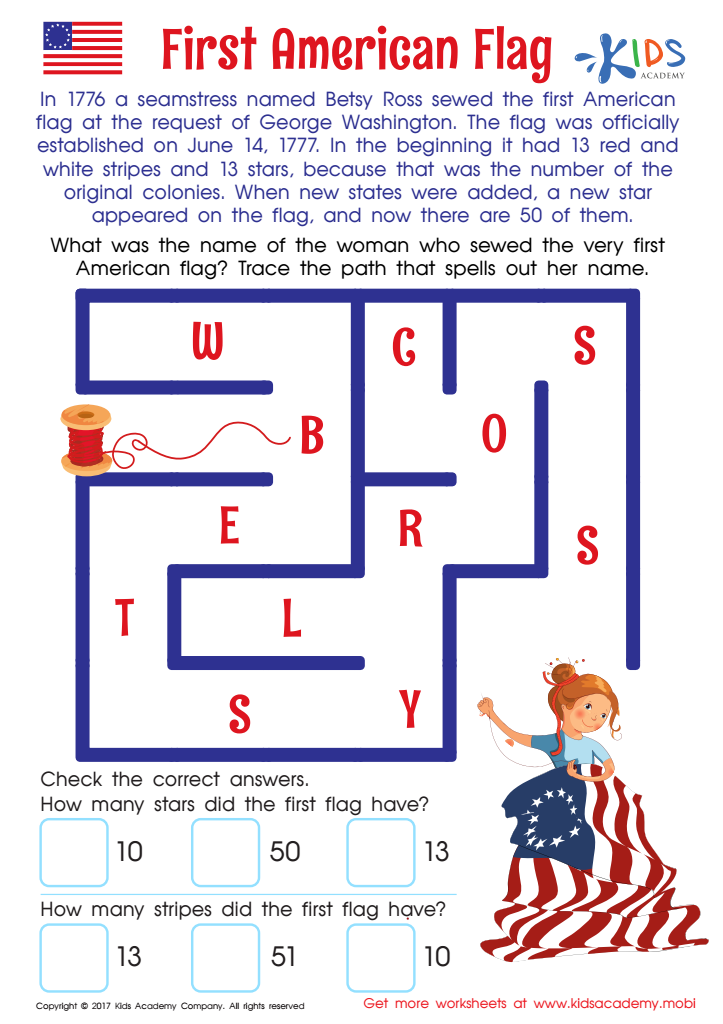
First American Flag Worksheet
Betsy Ross sewed the first American flag at the request of George Washington. This worksheet helps kids learn about this milestone in U.S. history, plus the design and origins of the flag.
First American Flag Worksheet
Worksheet
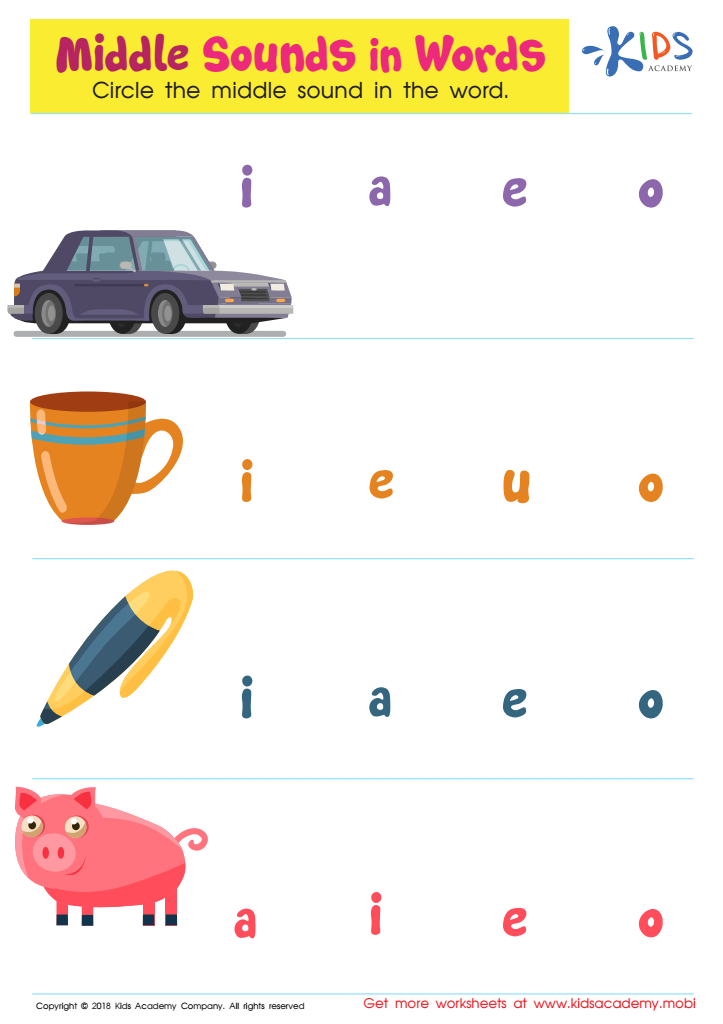
Middle Sounds in Words Worksheet
This worksheet helps emerging readers use picture clues to identify familiar words and practice tracing and fine-motor abilities. It also reinforces spelling by helping them distinguish middle sounds in words. A great way to build listening and literacy skills!
Middle Sounds in Words Worksheet
Worksheet
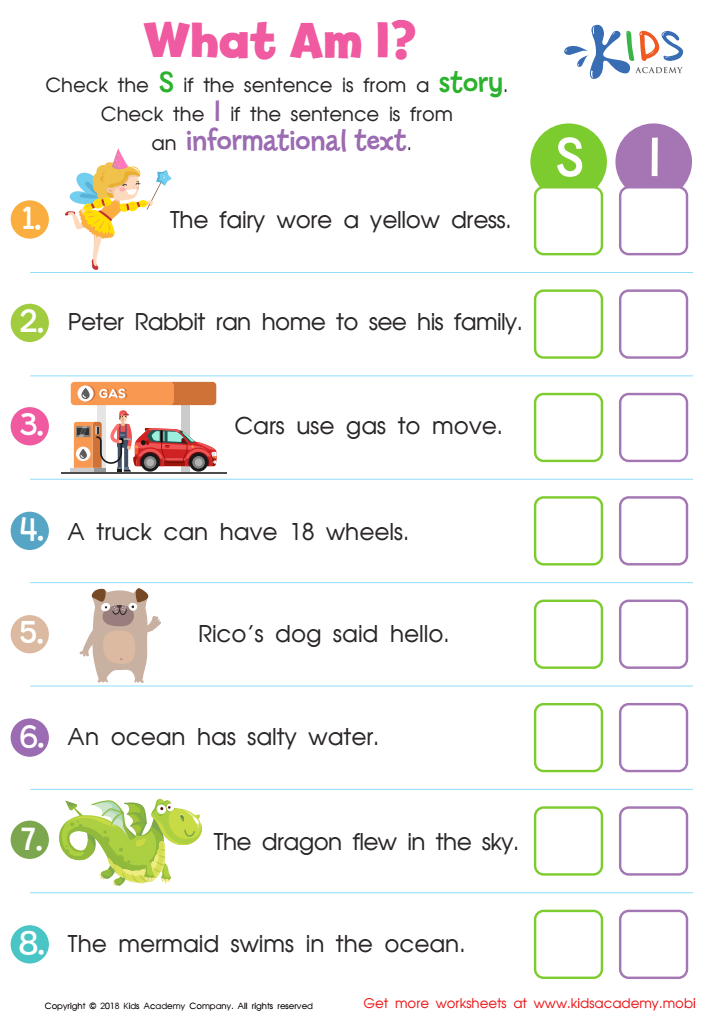
What Am I? Worksheet
This worksheet assesses students' ability to differentiate between stories and texts they read for facts. Students learn to distinguish between reading for pleasure and reading for information. It includes statements from both a story and an informational text, and students must decide what type of text it is.
What Am I? Worksheet
Worksheet
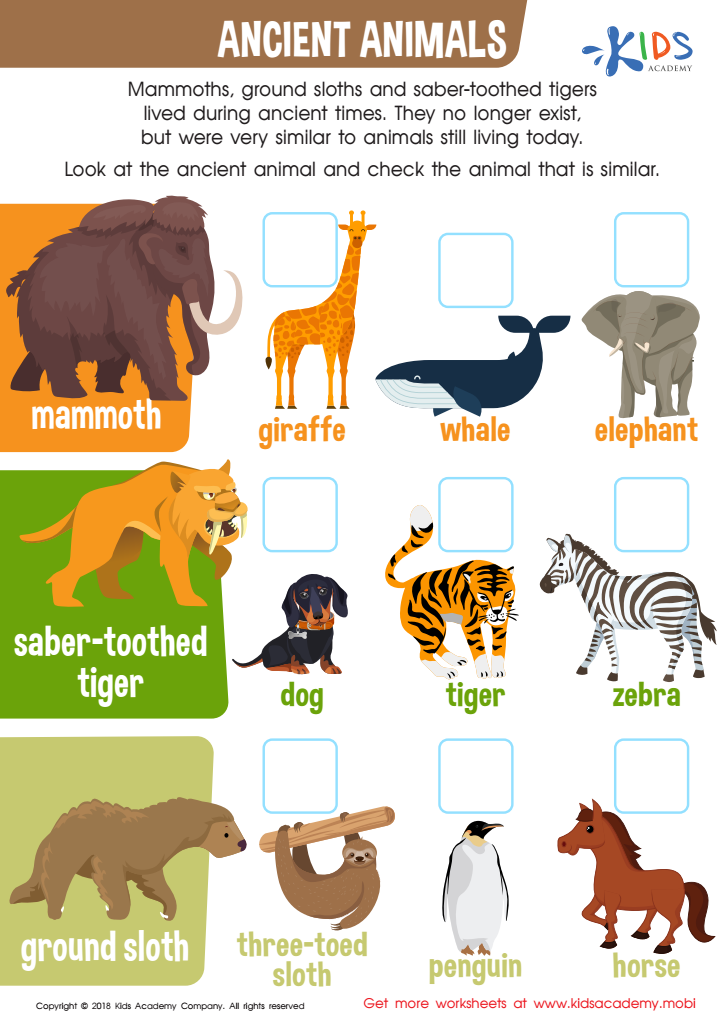
Ancient Animals Worksheet
Kids can explore prehistoric days with a fun, downloadable worksheet. They'll look at pictures of ancient animals like mammoths, ground sloths and saber-toothed tigers and then choose the animal of today that most closely resembles their ancestor. Through this sheet, they can make connections between today's animals and the past.
Ancient Animals Worksheet
Worksheet
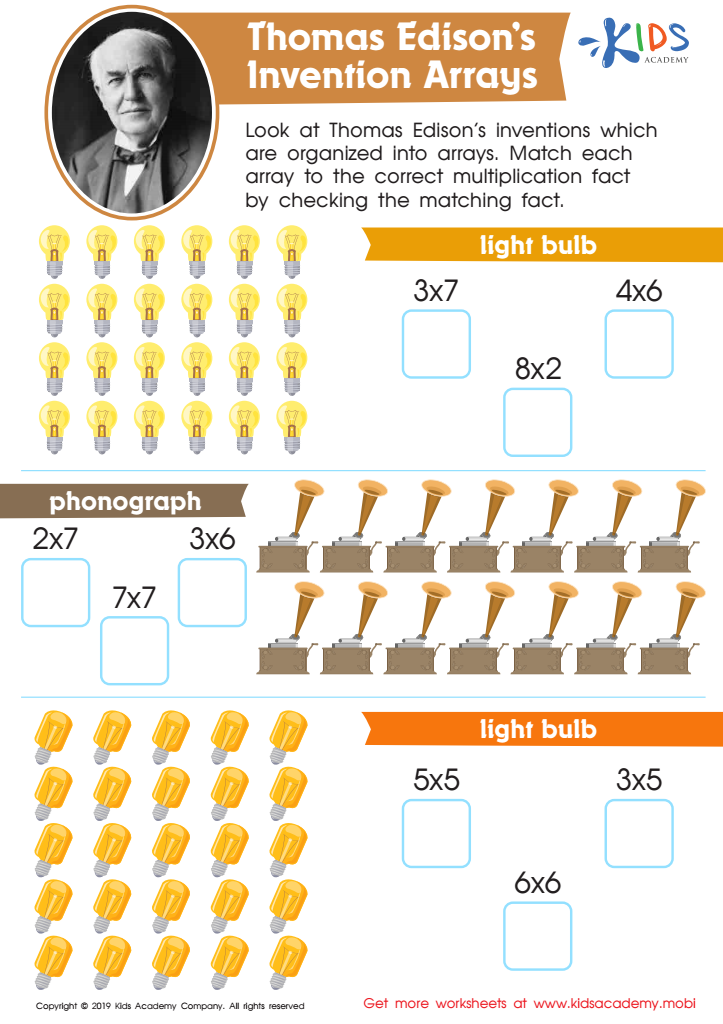
Thomas Edison’s Invention Arrays Worksheet
Test your students' knowledge on history by asking them what Thomas Edison invented. If they get the right answer, provide more information on other inventors. Check out this printout of Edison's light bulb inventions laid out in arrays. Get them to match each array to the correct multiplication fact.
Thomas Edison’s Invention Arrays Worksheet
Worksheet
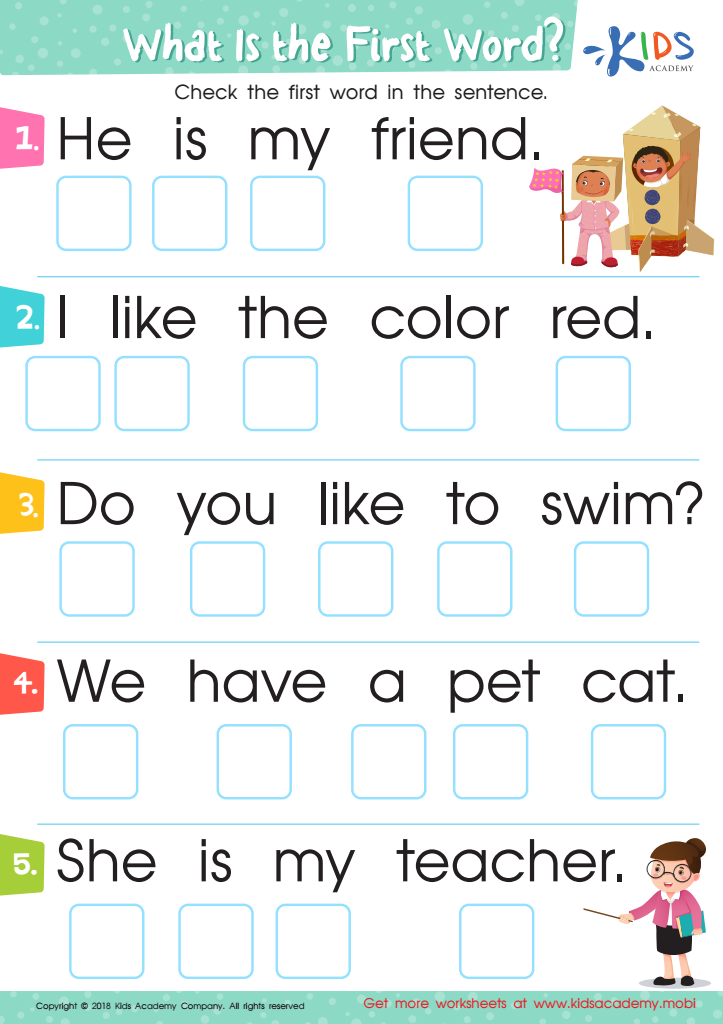
What is the First Word? Worksheet
Help your students test their sentence-reading skills with this printout! After teaching the alphabet, have them identify and write the first word in each sentence. With this exercise, they'll gain reading proficiency and be better prepared to write their own sentences.
What is the First Word? Worksheet
Worksheet
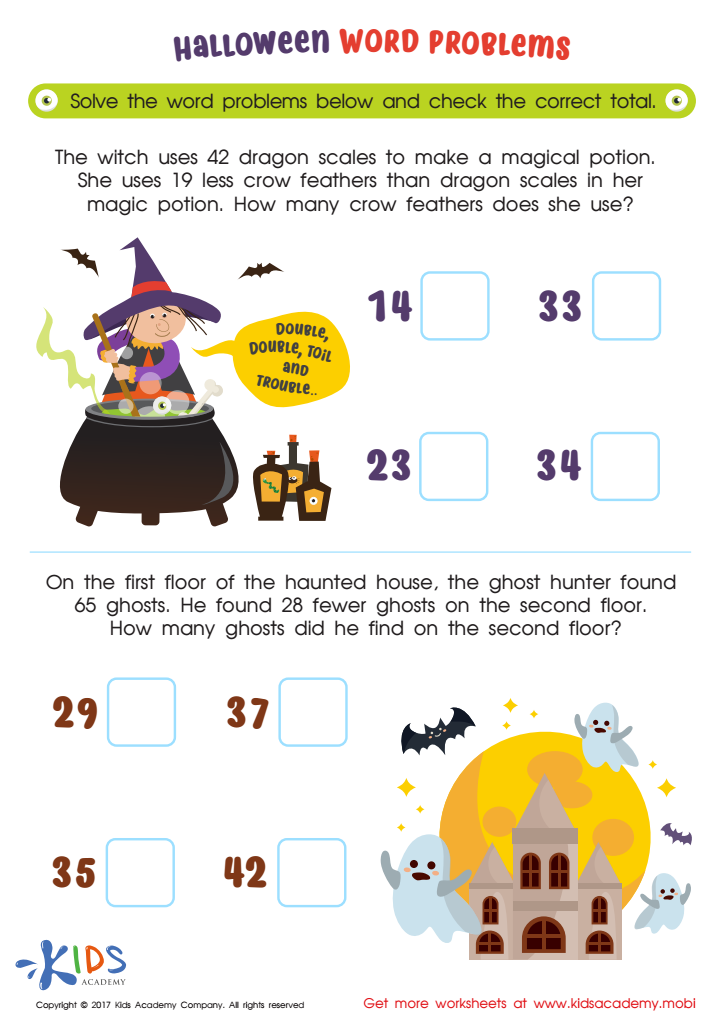
Halloween Word Problems Printable
Ghosts, witches, and other spooky characters make these problems exciting and interactive. Get ready to have some math fun!
Halloween Word Problems Printable
Worksheet
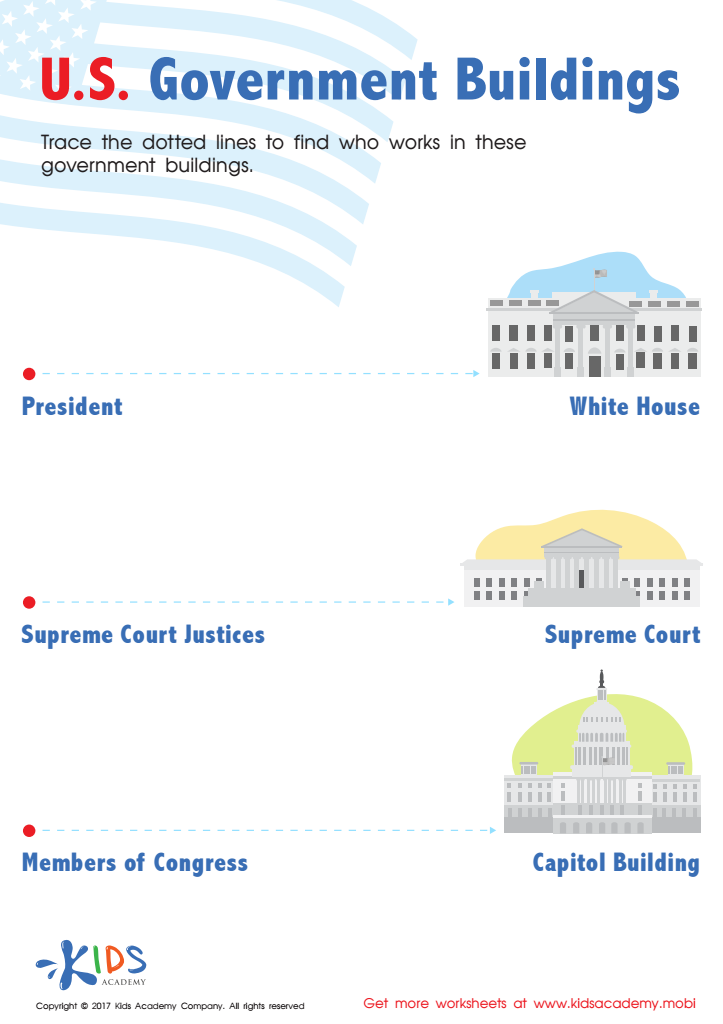
US Government Buildings Printable
Help your child learn about US government with this worksheet! They'll remember all the buildings and governing bodies with ease.
US Government Buildings Printable
Worksheet
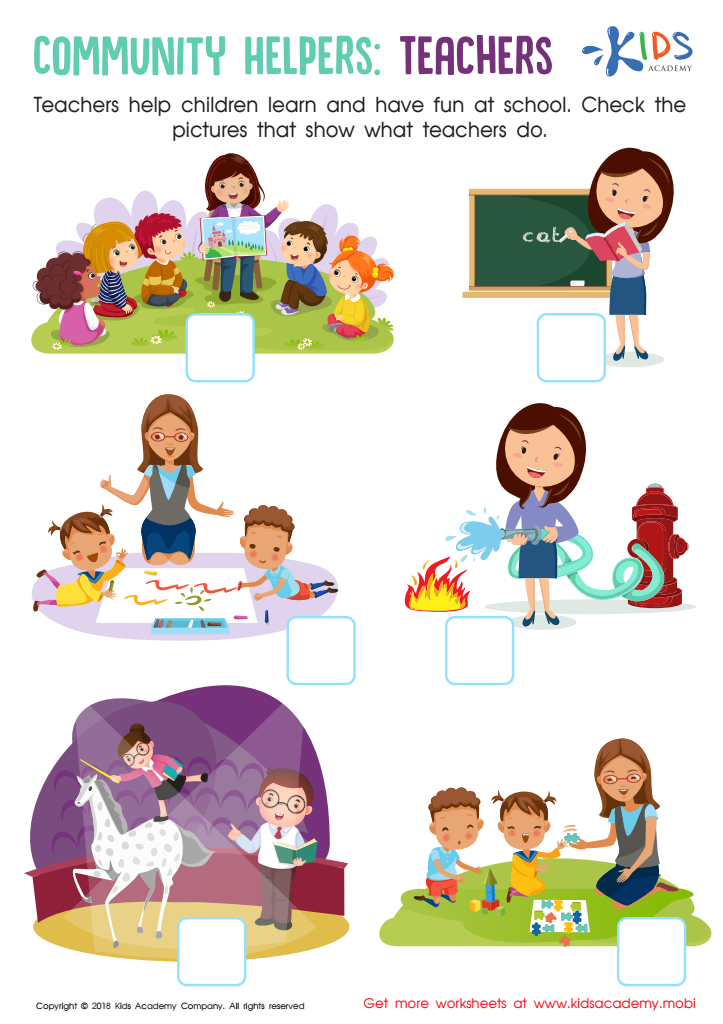
Teachers Community Helpers Worksheet
Ask your students to name some of the ways a teacher helps. Then, use this worksheet to show the right ways teachers can help. Have them check the boxes of the pictures that accurately depict what a teacher does. This is a great exercise to show your students how you help them learn and contribute to their community.
Teachers Community Helpers Worksheet
Worksheet
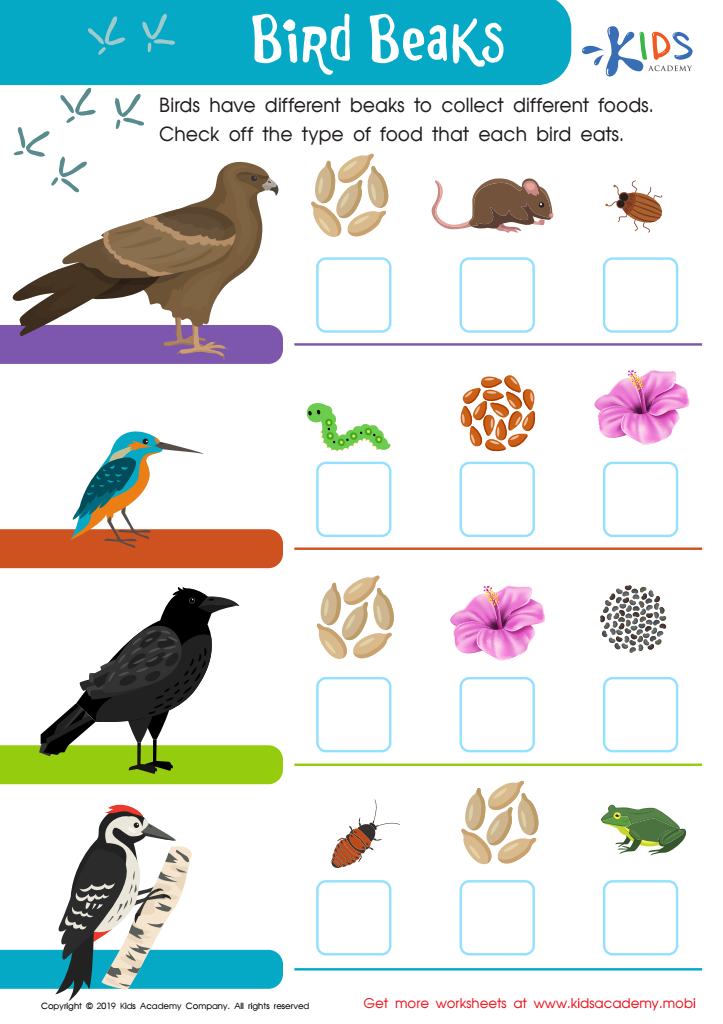
Bird Beaks Worksheet
Birds have beaks to eat different types of food. Let your little nature lover explore why with this free worksheet! They'll learn about different beak shapes and match them to the food that's best for them. Be an adorable bird watcher together!
Bird Beaks Worksheet
Worksheet
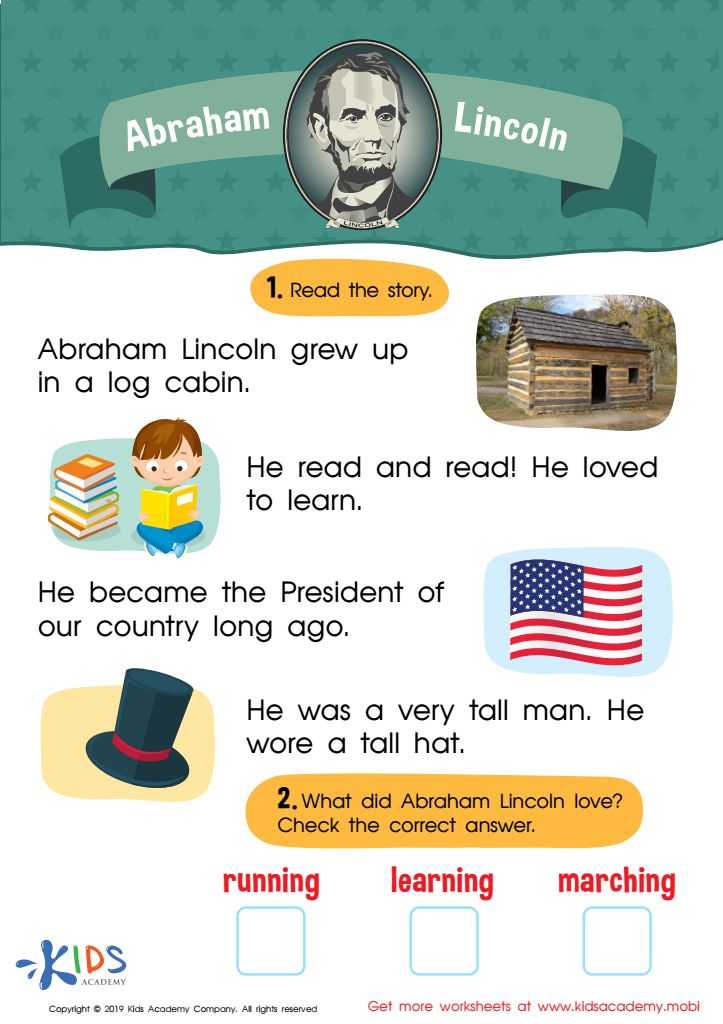
Abraham Lincoln Worksheet
Let your kids listen to interesting stories while having fun! Read the short story in this worksheet, point to the picture representing each sentence, then ask the questions and check the answers. Doing this will help your children learn new things and build their vocabulary.
Abraham Lincoln Worksheet
Worksheet
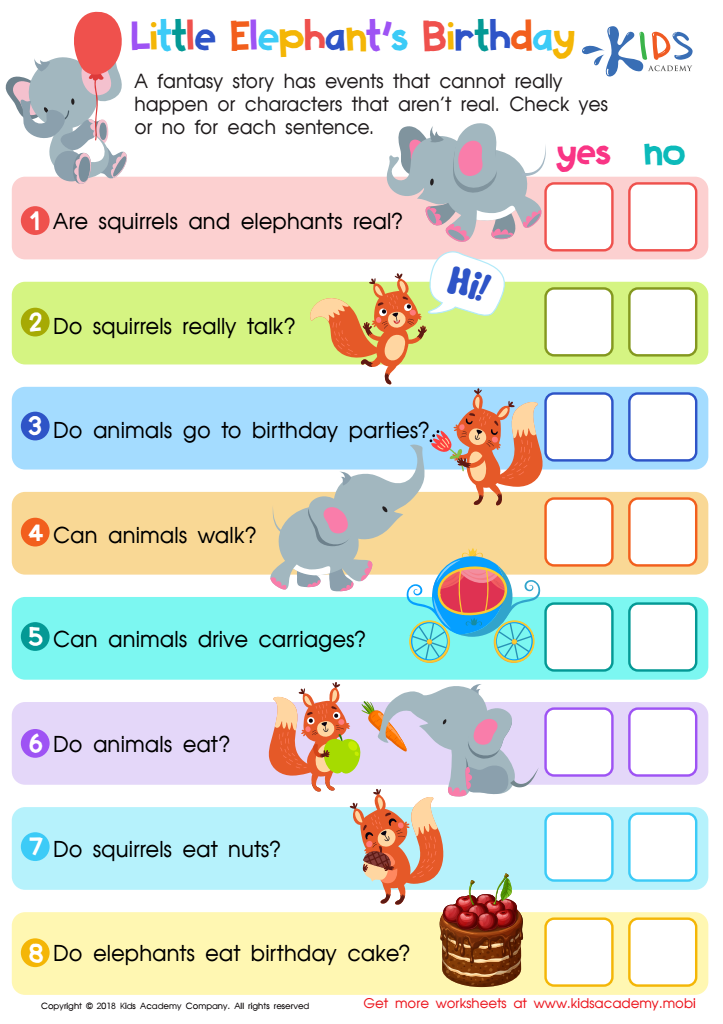
Little Elephant's Birthday Worksheet
It's Little Elephant's birthday! Help your students celebrate with this fun worksheet full of colors and pictures. Deciding which questions are facts and which are fiction will help them differentiate between fantasy stories and reality. Let them have fun learning why certain elements of fantasy can't be true!
Little Elephant's Birthday Worksheet
Worksheet
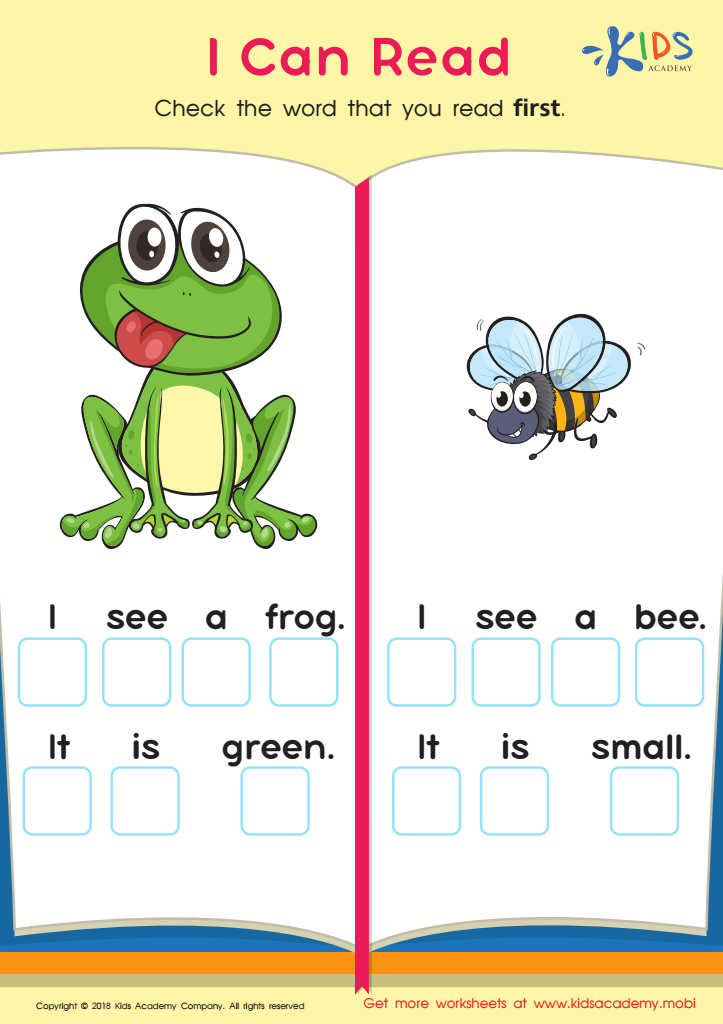
I Can Read Worksheet
Test your child's reading skills with this fun worksheet. See how well they know one-letter, two-letter, and five-letter words. Ask your little one to read the sentences and tick the word they identify first. It's a great way to track their progress and help them become more confident readers.
I Can Read Worksheet
Worksheet
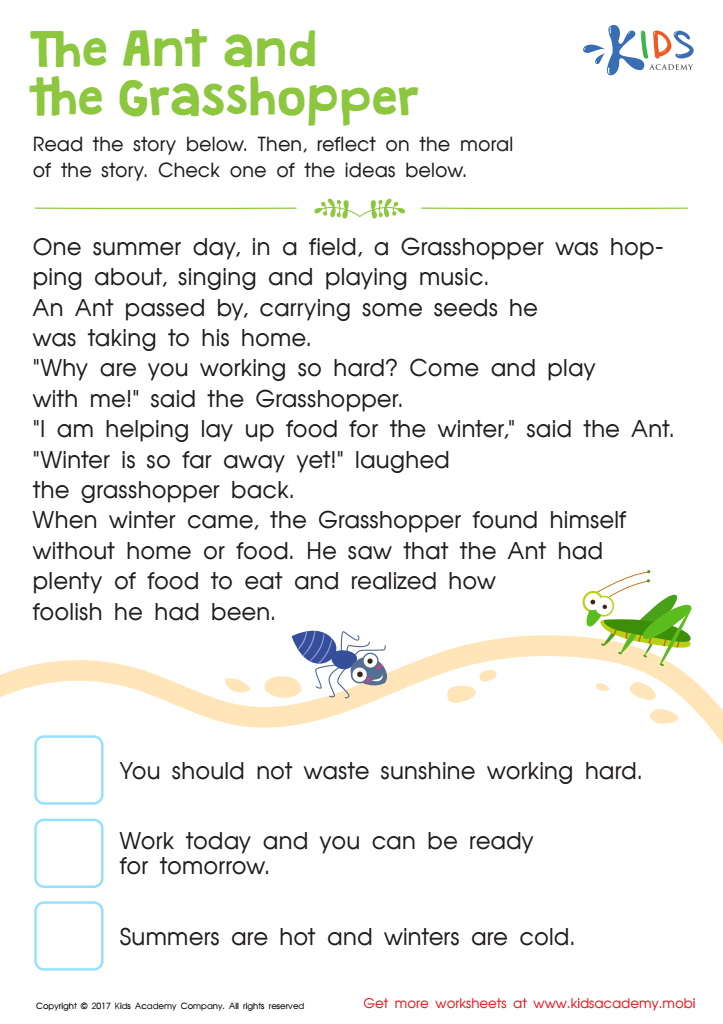
The Ant and The Grasshopper Printable
Aesop's fables have clear messages, which make them memorable and loved by children and adults. Use Kids Academy's ant and grasshopper worksheet to help your child reflect on stories and discover the life lesson.
The Ant and The Grasshopper Printable
Worksheet
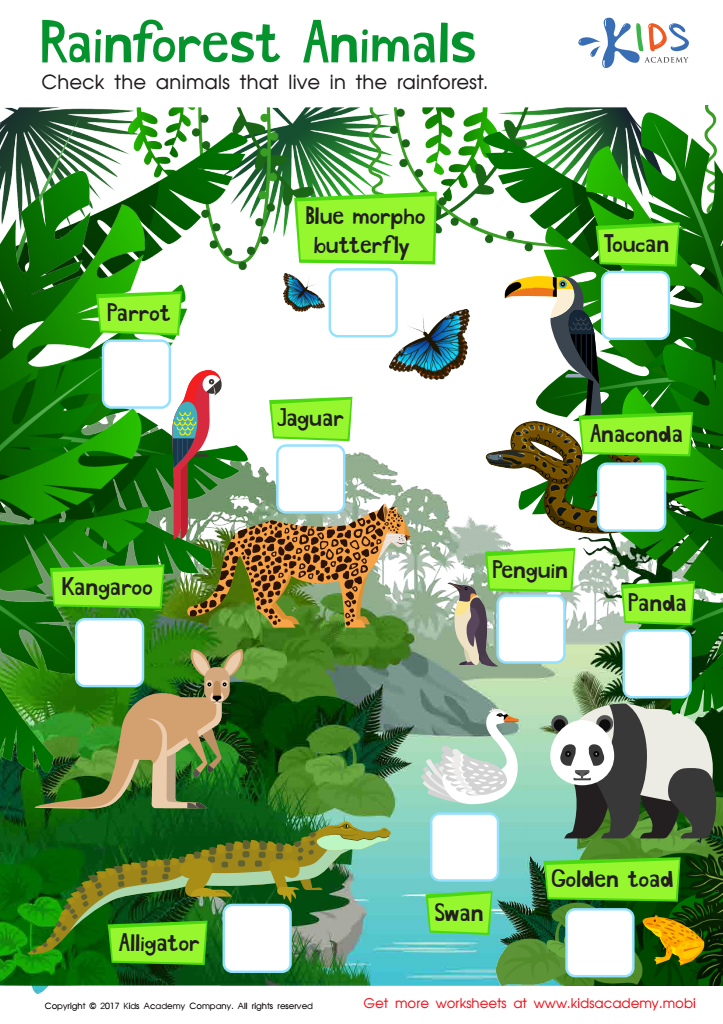
Rainforest Animals Worksheet
Kids love the bright, vivid pics of rainforest animals in this worksheet. It fuels their interest in life science and brings joy to their learning. It encourages them to study these animals in detail.
Rainforest Animals Worksheet
Worksheet
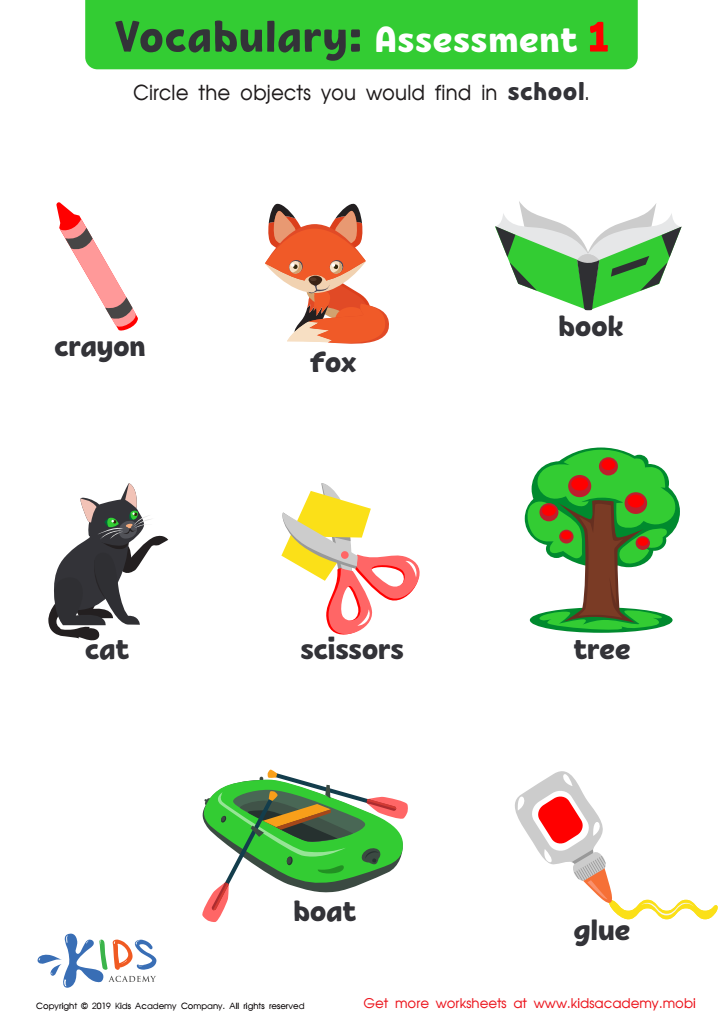
Vocabulary: Assessment 1 Worksheet
Want to check your child's vocabulary? This worksheet has kids identify objects from school through picture clues. It reinforces reading and fine motor skills, while providing an assessment of their reading growth and needs.
Vocabulary: Assessment 1 Worksheet
Worksheet
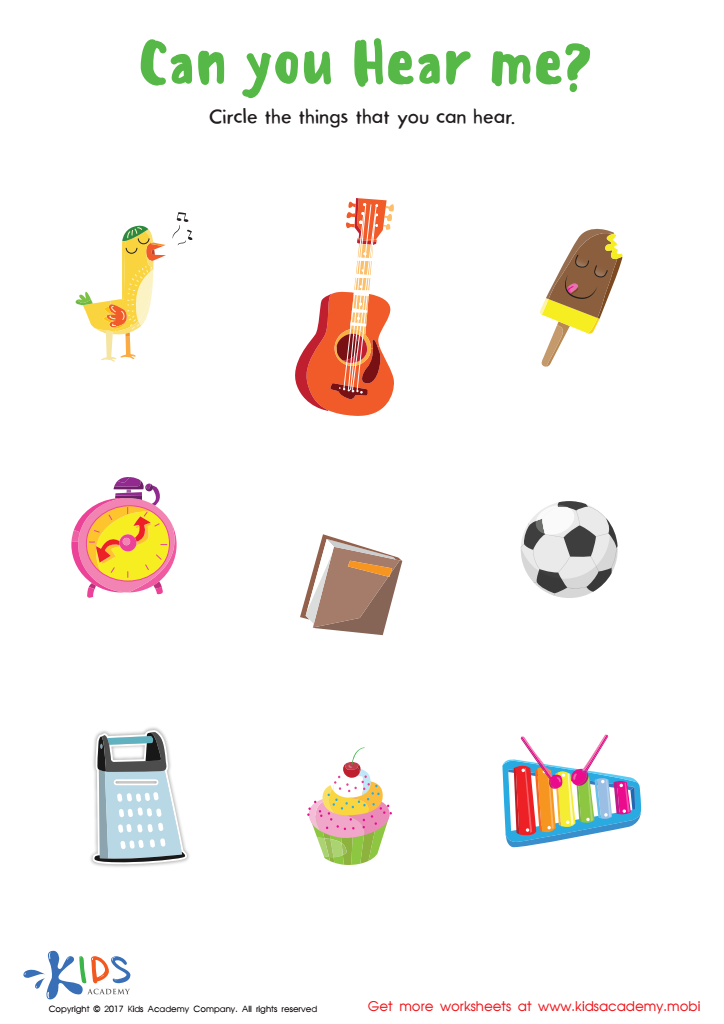
Can You Hear Me Worksheet
Challenge your child's thinking and help them learn by using this cute "Can You Hear Me?" worksheet. It encourages use of prior knowledge to identify objects that make sounds, developing critical thinking skills. As they imagine balls and cupcakes making sounds, your child will have plenty of laughs. Extend learning by talking about the sounds and why certain objects make them.
Can You Hear Me Worksheet
Worksheet
Join Kids Academy for Free
Who is primarily going to use this learning content?