Filters

173 filtered results

Clear all filters
Favorites
With answer key
Interactive

173 filtered results

Difficulty Level

Grade


Check out this FREE Trial Lesson on Building Vocabulary for age 5-8!

Answer Questions About Key Details in a Story

Favorites
With answer key
Interactive
  • 5-8
  • With answer key
  • Building Vocabulary
  • Normal
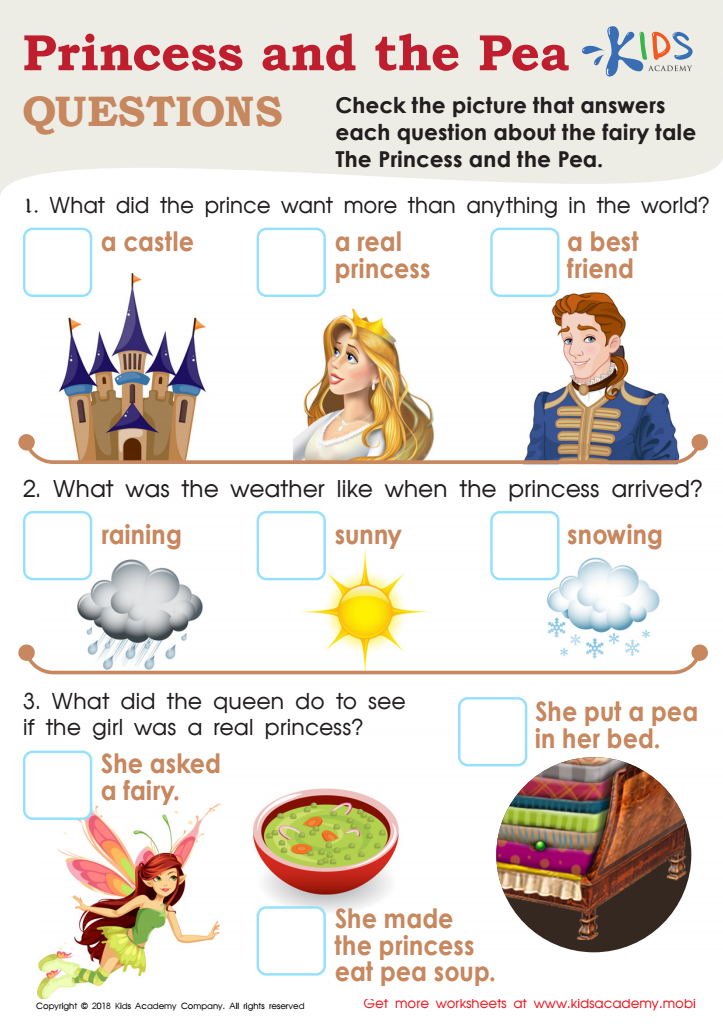
Princess and the Pea Questions Worksheet

Princess and the Pea Questions Worksheet

Your kid knows The Princess and the Pea inside-out? Test their knowledge with this worksheet. Ask your little one to read the questions and match each one to the picture. It's a fun way to see just how much attention they've paid to their bedtime story.
Princess and the Pea Questions Worksheet
Worksheet
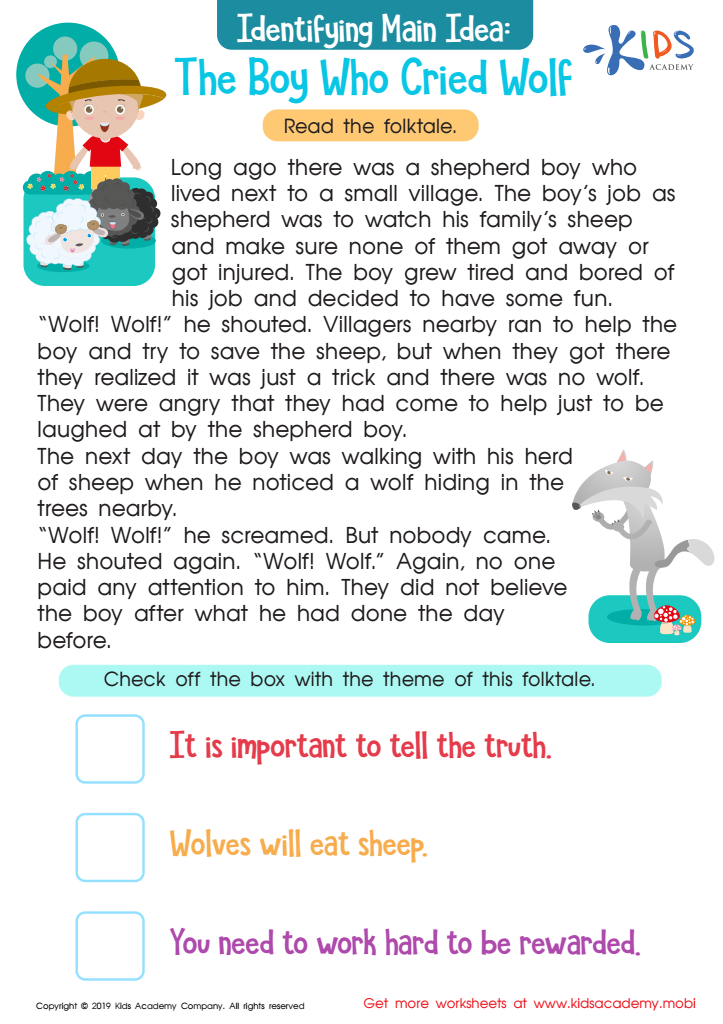
The Boy Who Cried Wolf Part 2 Worksheet

The Boy Who Cried Wolf Part 2 Worksheet

Kids love story time - no doubt they know their favorites! This worksheet tells a story with a theme or main idea. Read it carefully with your kids and ensure they understand every word. Then, help them answer the simple questions at the bottom of the page.
The Boy Who Cried Wolf Part 2 Worksheet
Worksheet
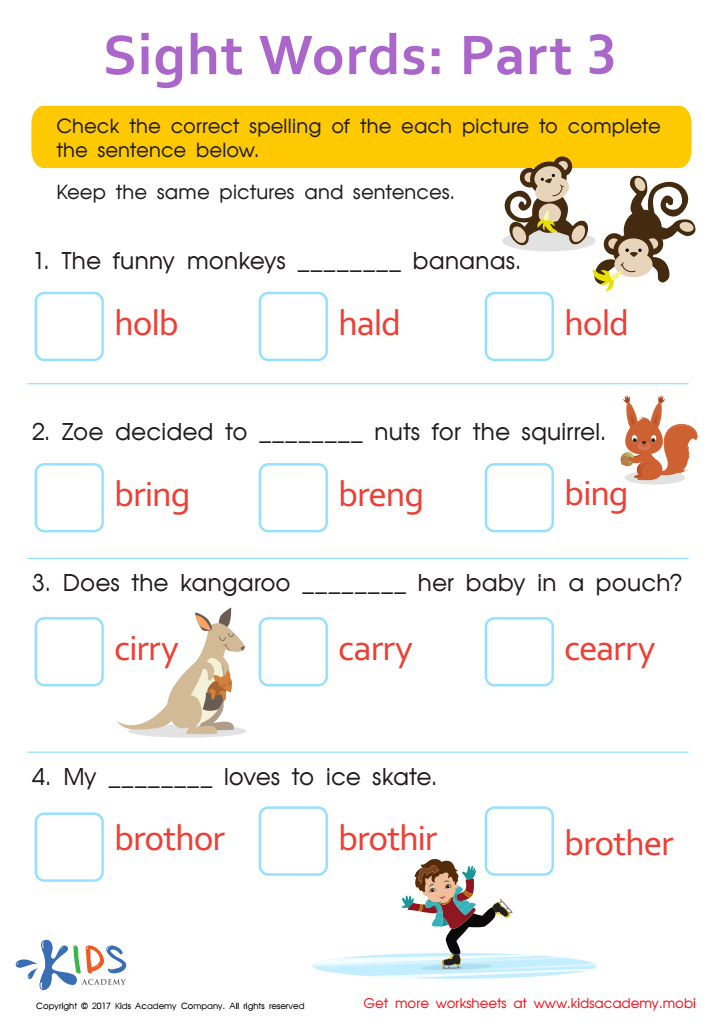
Sight Words Worksheet: Hold, Bring, Carry, Brother

Hold, Bring, Carry, Brother Sight Words Worksheet
This sight words worksheet has fun illustrations to engage kids. They must read each sentence, then fill in the missing word, selecting from: hold, bring, carry, brother!
Hold, Bring, Carry, Brother Sight Words Worksheet
Worksheet
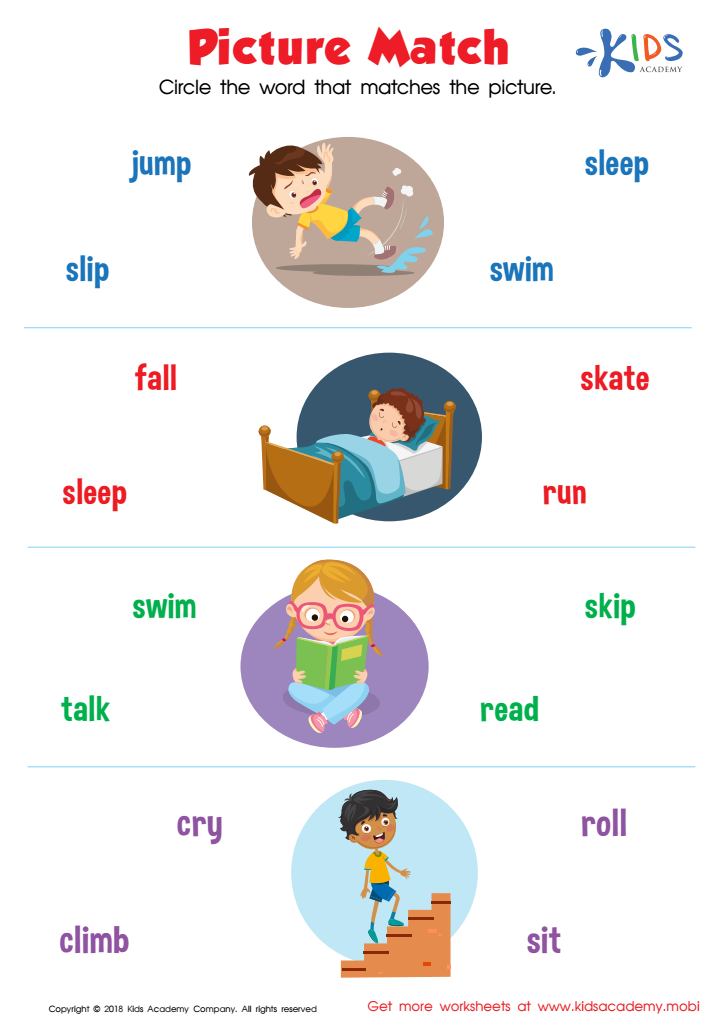
Picture Match Worksheet

Picture Match Worksheet

If your kids can read, this exercise will be a breeze. Show the pictures and ask them what's happening. Read the words and see if they can identify any of them and help them circle the word that matches the picture. Simple!
Picture Match Worksheet
Worksheet
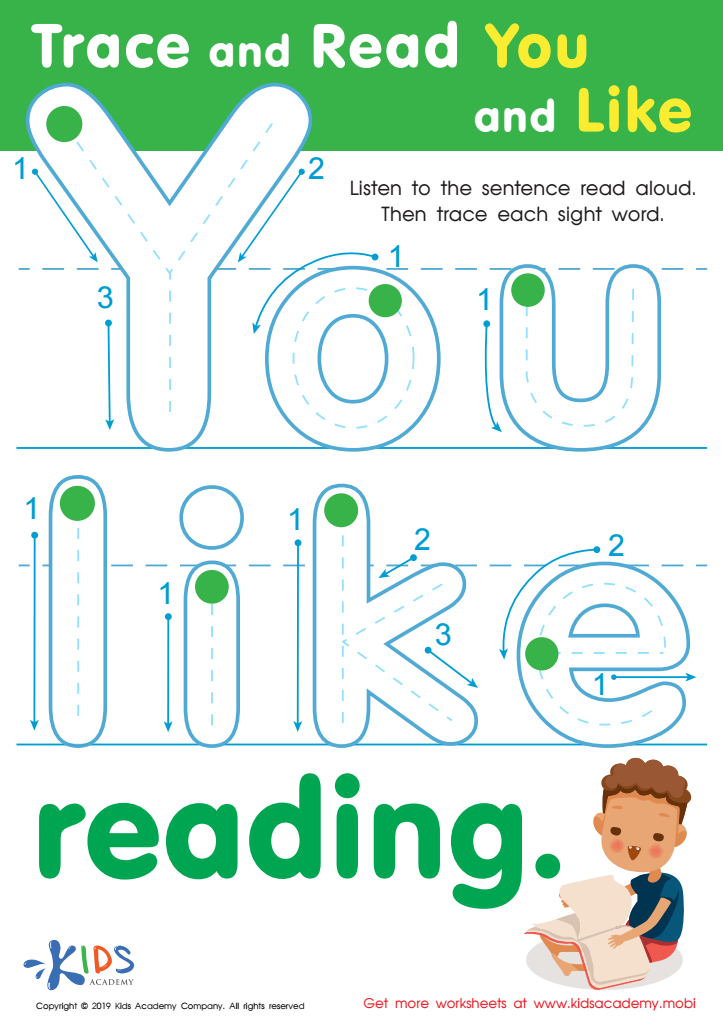
Trace Read You Like Worksheet


Trace Read You Like Worksheet

Sight words help children become confident and fluent readers. This free worksheet encourages success with basic 'you' and 'like' words. Writing them with traceable lines and green dots shows motion and builds sight word vocabulary. Help your child master the basics and boost their reading progress!
Trace Read You Like Worksheet
Worksheet


... 7 8

Parents and teachers should deeply care about normal building vocabulary for ages 5-8 because it forms the foundation of a child's language development and academic success. During these critical early years, children are exceptionally receptive to learning new words and concepts. A rich vocabulary helps them understand and express thoughts, needs, and ideas more clearly. Additionally, it enhances their comprehension skills, making reading and learning more engaging and effective.

Having a strong vocabulary sets the stage for improved reading skills. The more words a child knows, the better they can decode and understand the text they encounter, fostering a love for reading and learning. This impacts their overall educational trajectory, including success in subjects beyond language arts, as vocabulary is crucial for understanding instructions, questions, and problem-solving in areas like mathematics and science.

Furthermore, a robust vocabulary boosts a child’s confidence and social skills. It allows them to communicate more effectively with peers and adults, navigate social situations better, and engage more fully in classroom activities. This confidence can translate into a more active participation and a generally more positive attitude toward school.

Investing in vocabulary development early on can also help identify and assist those who may be at risk for language delays or learning disabilities, ensuring timely support and interventions. Thus, nurturing vocabulary growth between ages 5 and 8 is pivotal for a child's educational and personal development.