Filters

157 filtered results

Clear all filters
Favorites
With answer key
Interactive

157 filtered results

Difficulty Level

Grade


Check out this FREE Trial Lesson on Building Vocabulary for age 6-8!

Distinguish Between Similarly Spelled Words

Favorites
With answer key
Interactive
  • 6-8
  • With answer key
  • Building Vocabulary
  • Normal
Pair Pears Worksheet

Pair Pears Worksheet

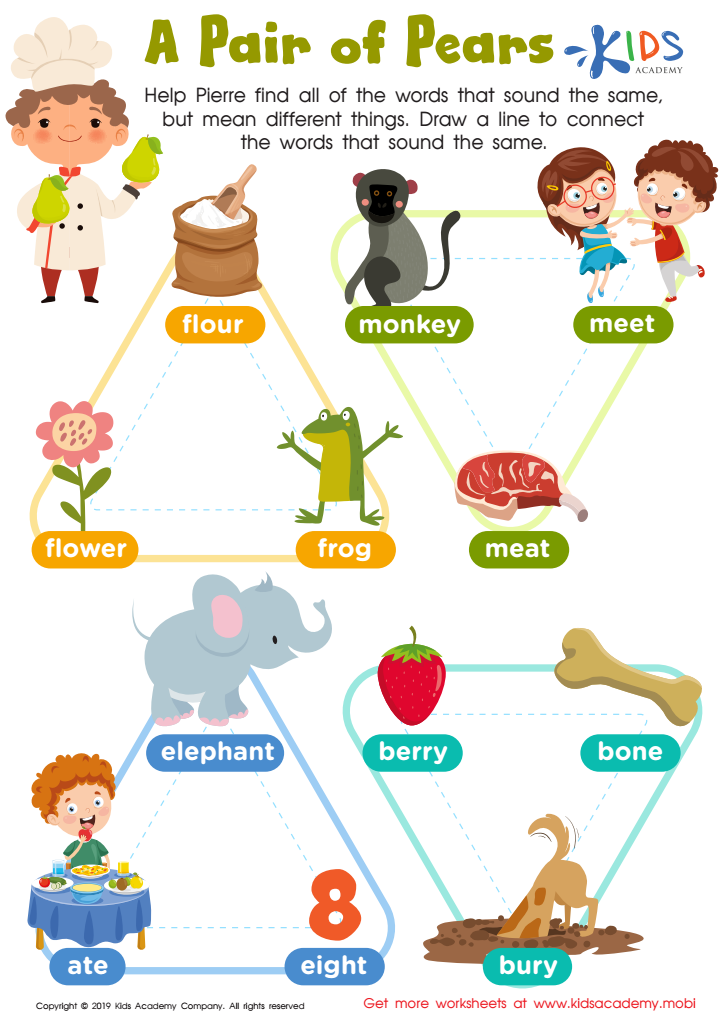
Young readers can have difficulty knowing when to use the right homophone. This free worksheet helps them use familiar imagery to understand better by connecting words that sound similar but are spelled and mean different things. Students will trace the lines to form a picture and have a reference image to differentiate between the different homophones.
Pair Pears Worksheet
Worksheet
Greek and Latin Roots Worksheet

Greek and Latin Roots Worksheet

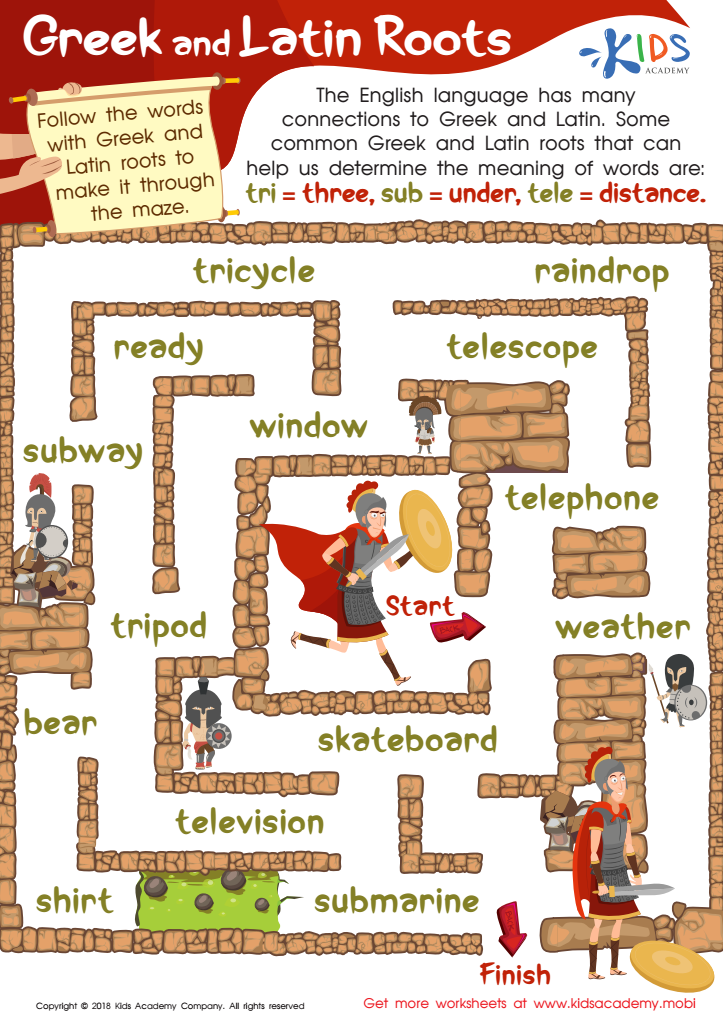
English borrows lots of words from other languages, and it has many ties to Greek and Latin. For example, 'tri', 'sub' and 'tele' (all from Greek and Latin) mean 'three', 'under' and 'distance' respectively. Help your child understand the meanings of words by having them work through a maze with words from these languages.
Greek and Latin Roots Worksheet
Worksheet
Tasty Verbs Worksheet

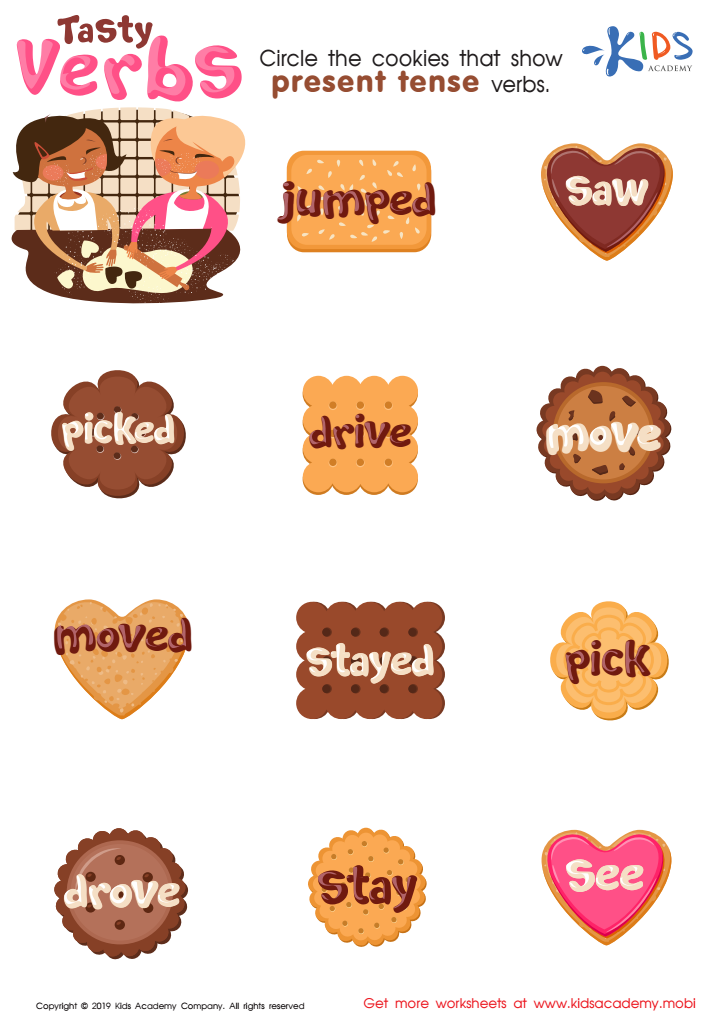
Tasty Verbs Worksheet

Verbs can show actions, past events, and future happenings. Master present tense verbs with this cookie-themed worksheet! Read the verbs on each cookie and help kids form sentences using the word in present tense. Circle the correct answers for each cookie. Give them a tasty treat while learning something new!
Tasty Verbs Worksheet
Worksheet
Sight Words Worksheet: B Words

"B" Words Printable Sight Words Worksheet
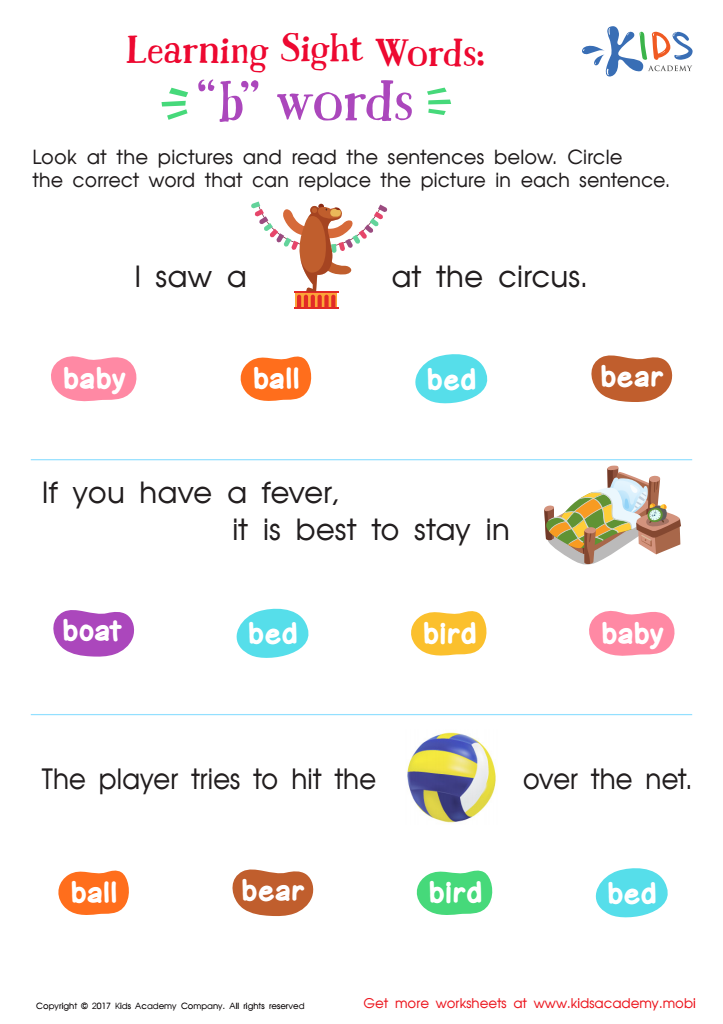
Kids will learn sight words quickly with this fun worksheet! "B" Words offers guided practice with simple sentences and pictures. Build your child's reading confidence with this helpful worksheet and watch them become a master!
"B" Words Printable Sight Words Worksheet
Worksheet
Puss in Boots Vocabulary Worksheet

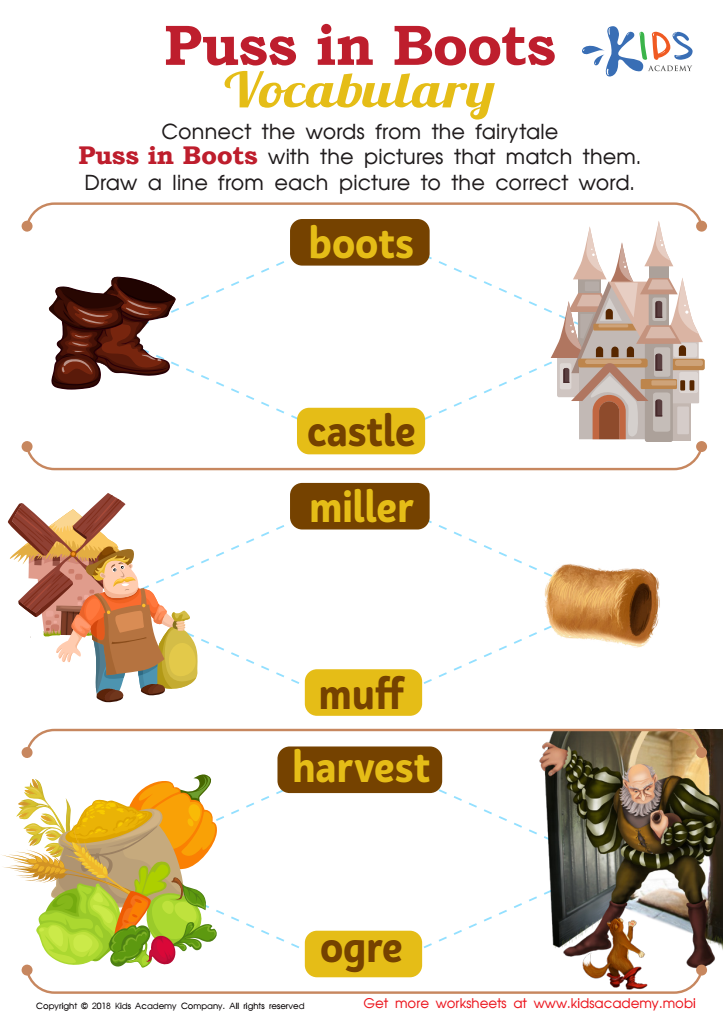
Puss in Boots Vocabulary Worksheet

Let your kids enjoy story-telling while learning at the same time. Help them learn from the fairytale, Puss in Boots, by connecting words from the worksheet with the matching pictures. Ask them to draw a line between each picture and corresponding word to build their vocabulary.
Puss in Boots Vocabulary Worksheet
Worksheet
Rabbit Facts Worksheet

Rabbit Facts Worksheet

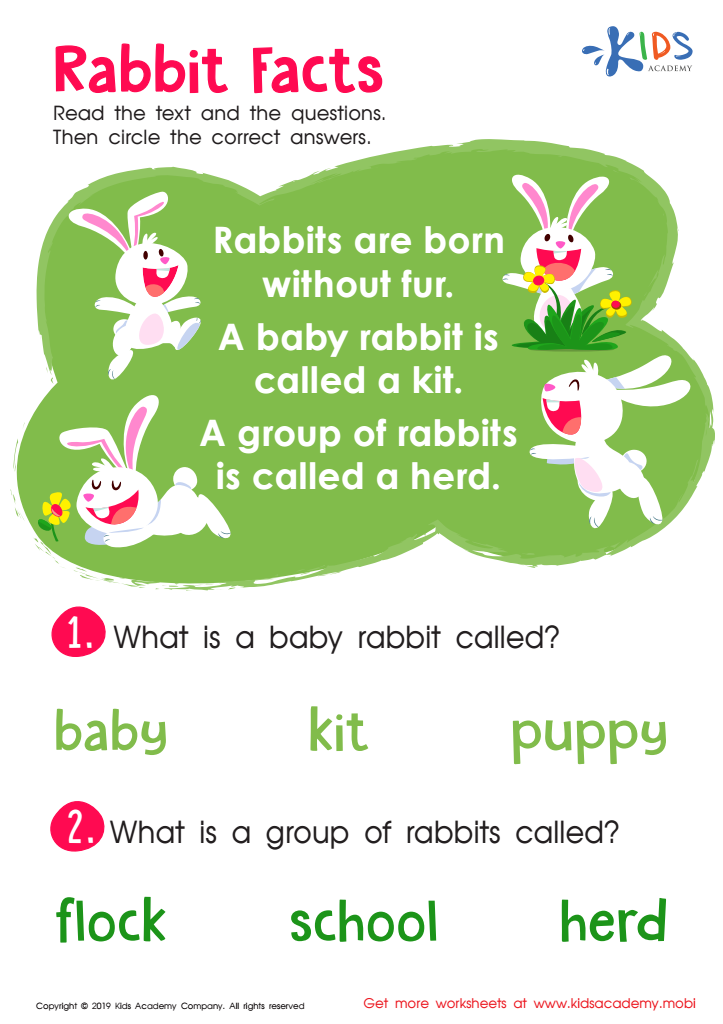
Reading comprehension skills can be strengthened with this fun PDF about fluffy rabbits. It helps kids recall and retell details from the text while engaging them in the topic. This encourages success in reading comprehension.
Rabbit Facts Worksheet
Worksheet
Sensory Words Worksheet

Sensory Words Worksheet

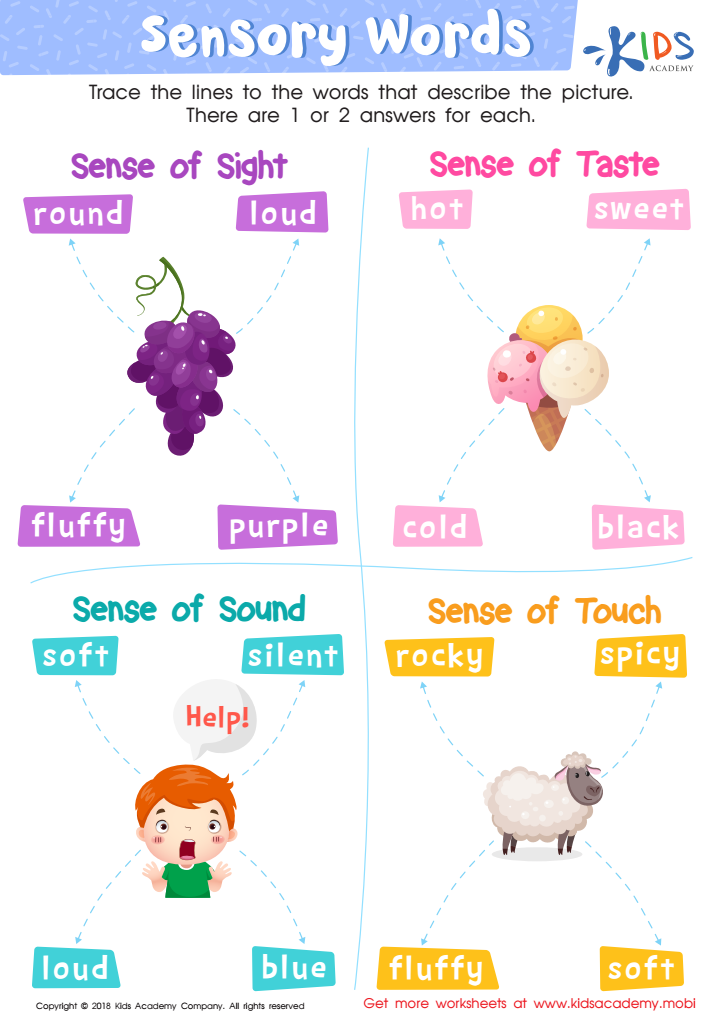
This worksheet helps students explore sensory words by looking at pictures and selecting one or two words to describe how it looks, feels, tastes, smells or sounds. Adding sensory words to texts makes them more interesting and helps students comprehend stories and articles better.
Sensory Words Worksheet
Worksheet
Food Chain Cause Worksheet

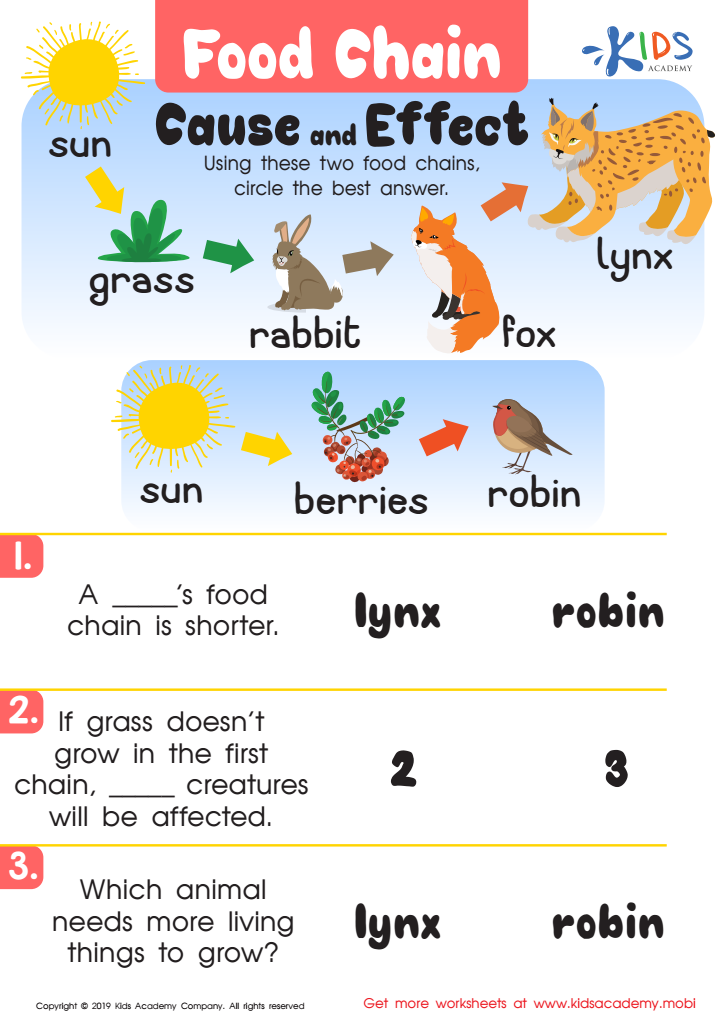
Food Chain Cause Worksheet

Help your little learner analyze ecosystems and compare food chains with this Kids Academy worksheet! Kids will compare a carnivore's and herbivore's food chain; which is longer and why? Questions at the bottom of the page will help them compare and circle the best answers. A great way to understand animal food chains!
Food Chain Cause Worksheet
Worksheet
Princess and the Pea Questions Worksheet

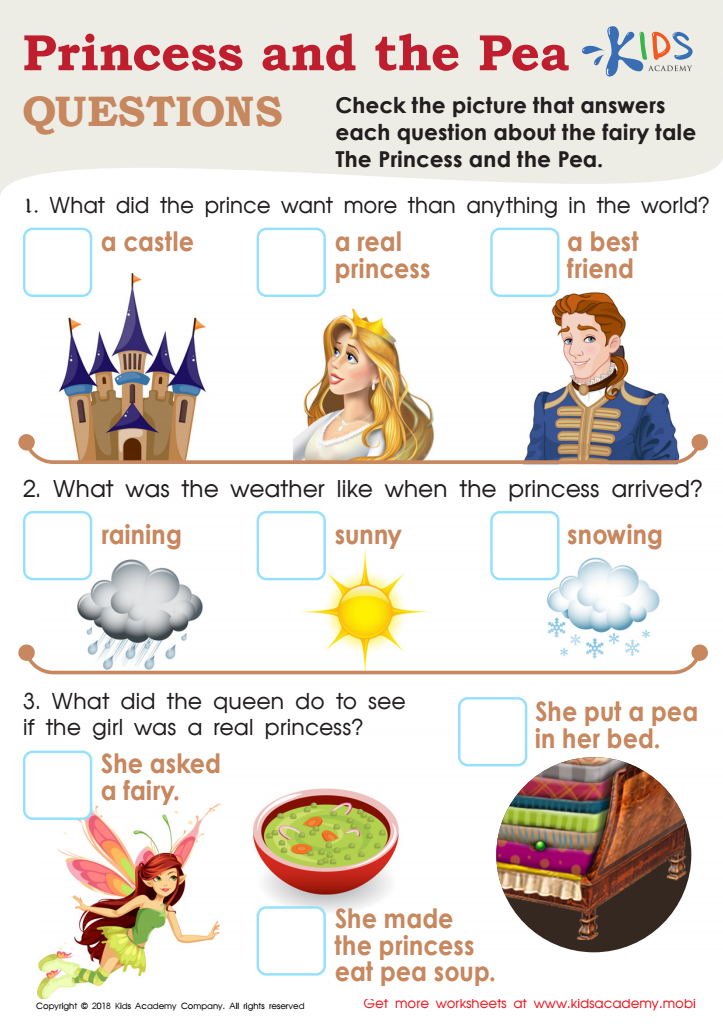
Princess and the Pea Questions Worksheet

Your kid knows The Princess and the Pea inside-out? Test their knowledge with this worksheet. Ask your little one to read the questions and match each one to the picture. It's a fun way to see just how much attention they've paid to their bedtime story.
Princess and the Pea Questions Worksheet
Worksheet
The Boy Who Cried Wolf Part 2 Worksheet

The Boy Who Cried Wolf Part 2 Worksheet

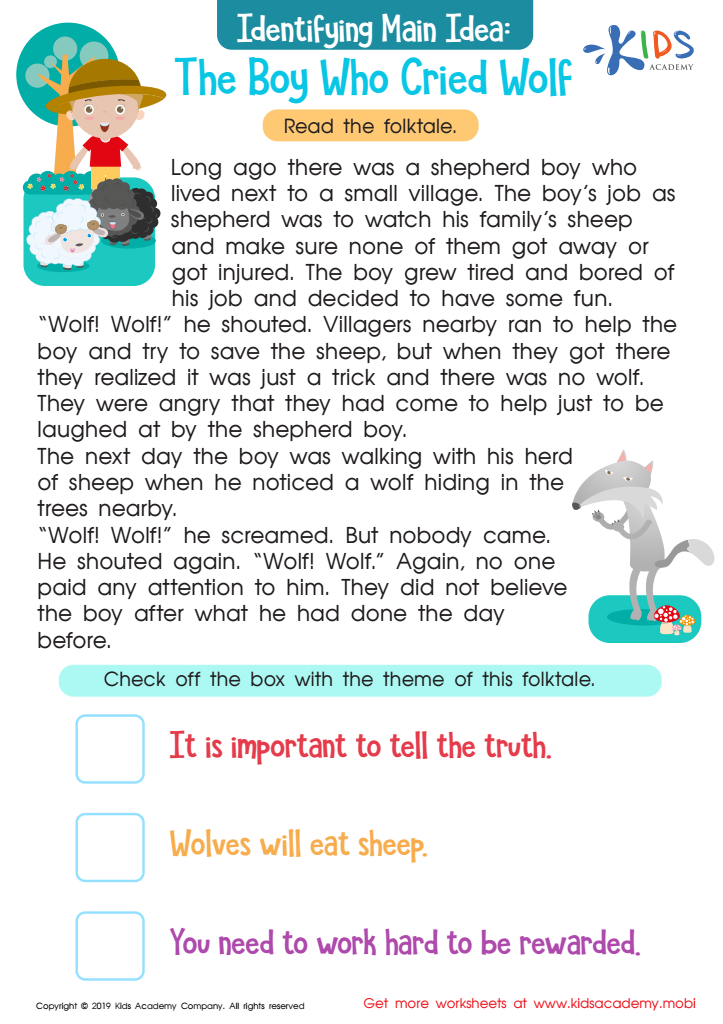
Kids love story time - no doubt they know their favorites! This worksheet tells a story with a theme or main idea. Read it carefully with your kids and ensure they understand every word. Then, help them answer the simple questions at the bottom of the page.
The Boy Who Cried Wolf Part 2 Worksheet
Worksheet
Sight Words Worksheet: Hold, Bring, Carry, Brother

Hold, Bring, Carry, Brother Sight Words Worksheet
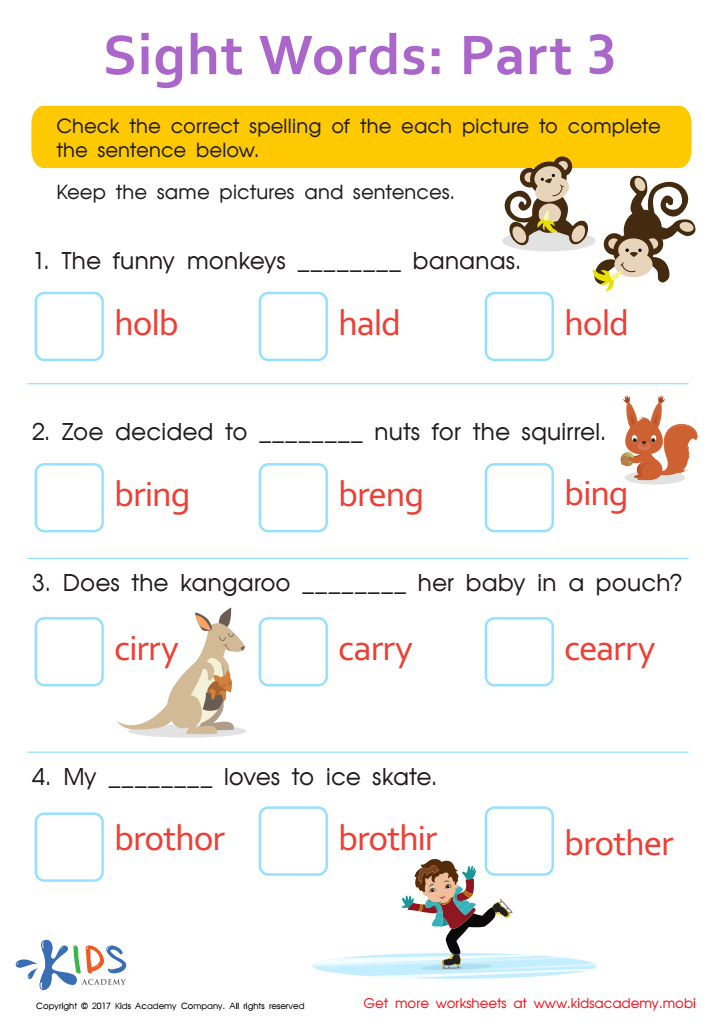
This sight words worksheet has fun illustrations to engage kids. They must read each sentence, then fill in the missing word, selecting from: hold, bring, carry, brother!
Hold, Bring, Carry, Brother Sight Words Worksheet
Worksheet
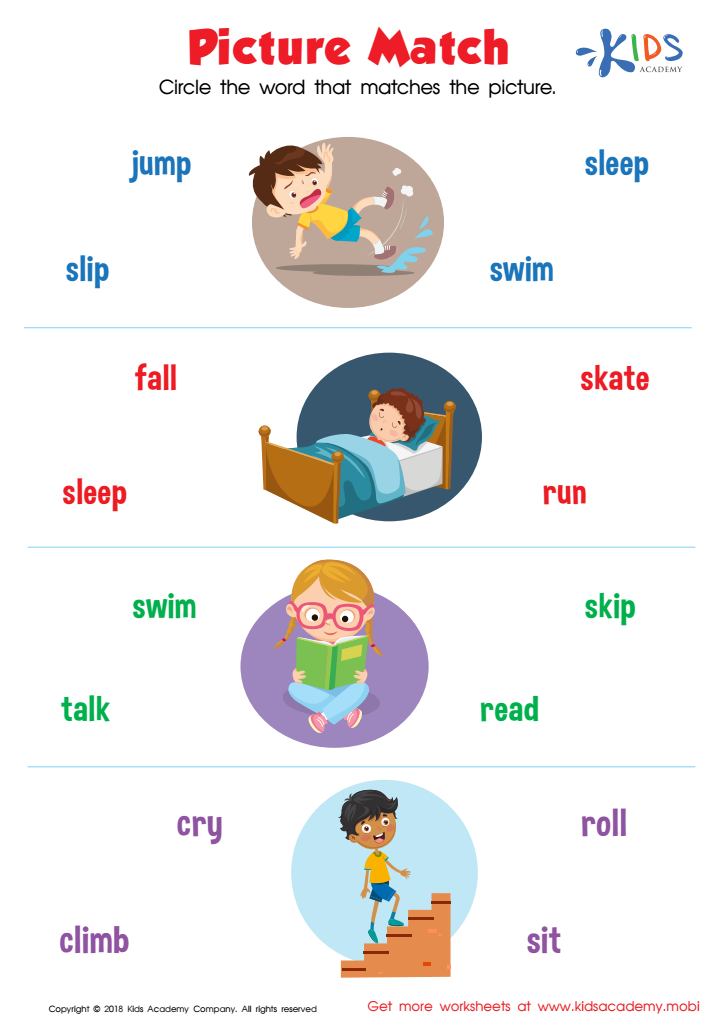
Picture Match Worksheet

Picture Match Worksheet

If your kids can read, this exercise will be a breeze. Show the pictures and ask them what's happening. Read the words and see if they can identify any of them and help them circle the word that matches the picture. Simple!
Picture Match Worksheet
Worksheet
Trace Read You Like Worksheet


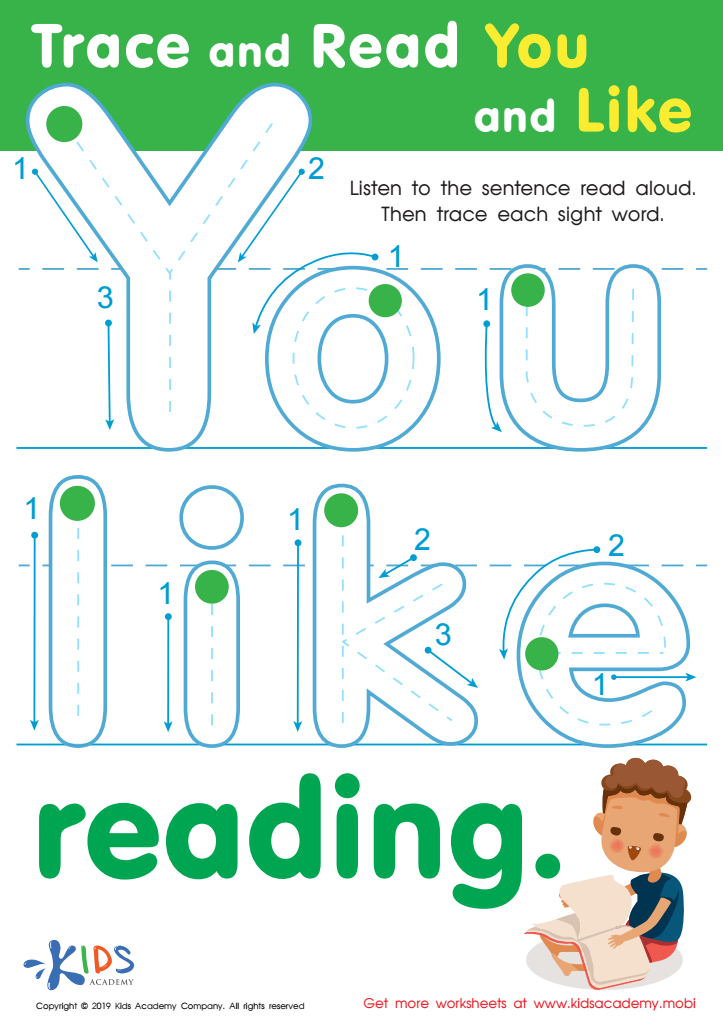
Trace Read You Like Worksheet

Sight words help children become confident and fluent readers. This free worksheet encourages success with basic 'you' and 'like' words. Writing them with traceable lines and green dots shows motion and builds sight word vocabulary. Help your child master the basics and boost their reading progress!
Trace Read You Like Worksheet
Worksheet


... 6 7

Building vocabulary in children aged 6-8 is crucial for several reasons that impact their overall academic and social development. During these formative years, children are in a critical period for language acquisition, meaning their ability to learn and retain new words is exceptionally high. A strong vocabulary lays the foundation for effective communication skills, which are essential for success in both school and later life.

Firstly, a robust vocabulary enhances reading comprehension. When children encounter new words while reading, understanding them without relying on contextual clues can prevent misunderstandings and keep their comprehension levels high. This, in turn, fosters a love for reading, which is a gateway to lifelong learning.

Secondly, a varied vocabulary improves writing skills. When children have a rich reservoir of words to draw from, their writing becomes more precise and expressive. This is not only beneficial for academic assignments but also for personal expression and creativity.

Thirdly, communication is key in developing social skills. Children with a strong vocabulary can express their thoughts and feelings more clearly, leading to better peer interactions and reduced frustrations.

Overall, focusing on building vocabulary for ages 6-8 not only equips children with essential academic tools but also supports their emotional and social development, setting the stage for long-term success.