
Normal Missing Letters Worksheets for Ages 6-9
5 filtered results
Difficulty Level
Grade
Age
-
From - To
Subject
Activity
Standards
Discover our engaging Normal Missing Letters Worksheets designed specifically for children aged 6-9! These fun and educational resources help young learners enhance their letter recognition and vocabulary skills. Each worksheet encourages kids to fill in the blanks with the missing letters, promoting critical thinking and creativity while solidifying their understanding of the alphabet. Perfect for homework or supplementary practice, these worksheets cater to various learning styles. Whether in the classroom or at home, these activities create a fun and interactive learning environment. Start your child's literacy journey today with our enjoyable and effective missing letters worksheets!
Favorites
With answer key
Interactive
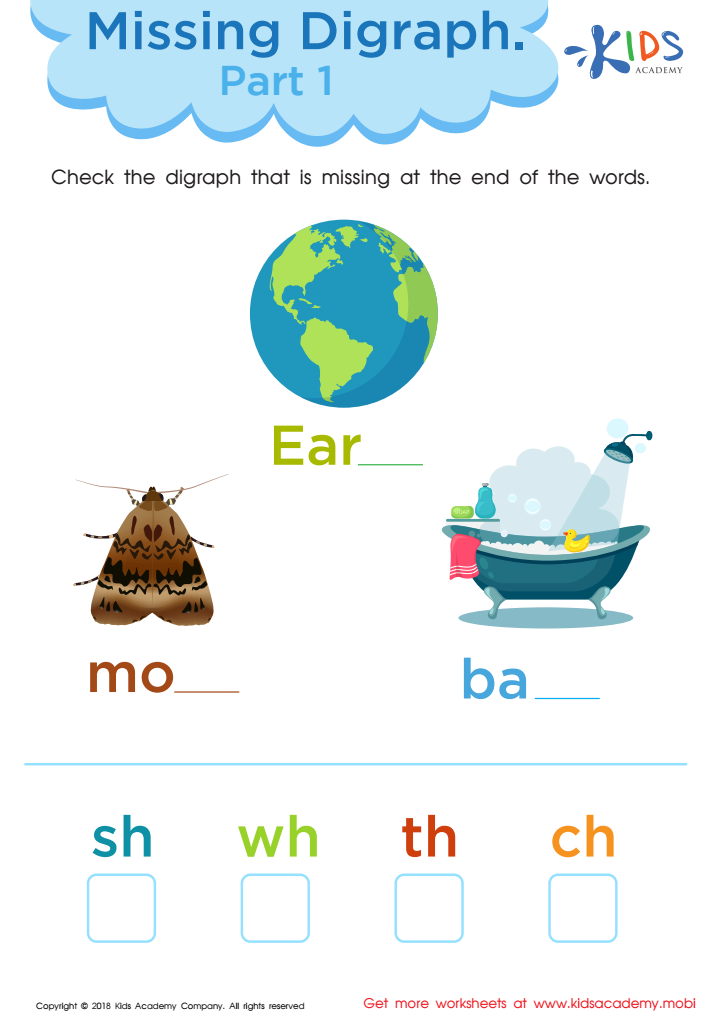
Missing Digraph: Part 1 Worksheet
Practice the 'th' digraph with this worksheet! Ask kids to say the words shown and sound out the letters below each image. Check the box with the correct digraph to complete. Examples include 'earth', 'bath' and 'moth', all ending with the same two letters. Phonics teaches that digraphs are two letters that make one sound.
 Assign to My Students
Missing Digraph: Part 1 Worksheet
Worksheet
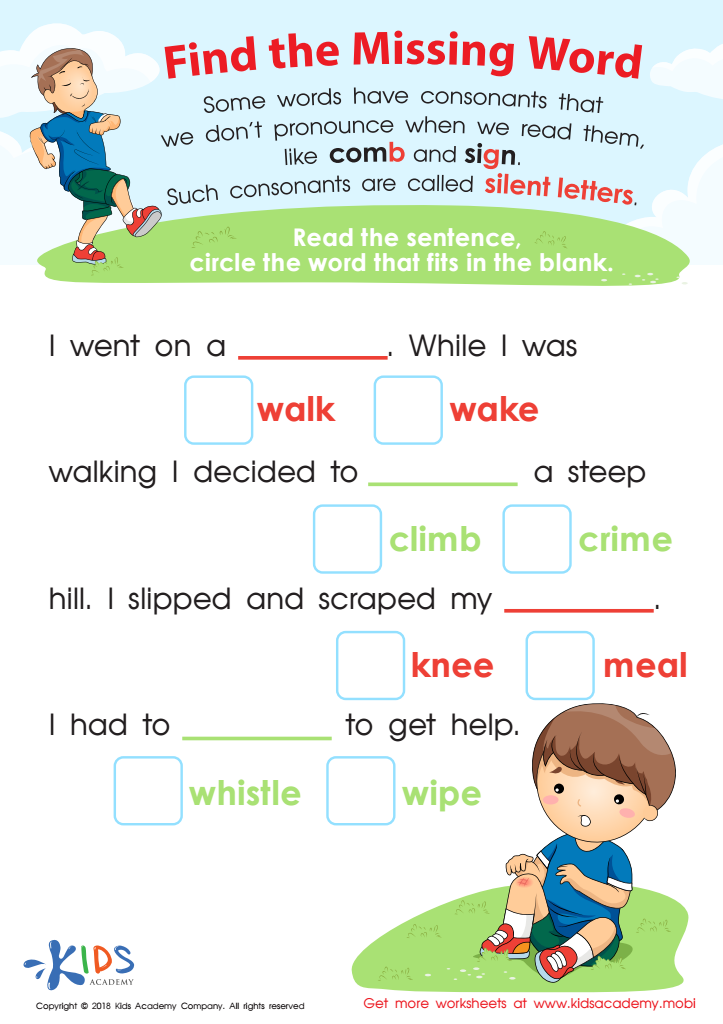
Find The Missing Word Worksheet
Master silent letters like "b" and "k" with this illustrated worksheet! Read the sentences and fill in the blanks with the correct word, checking the box. Read all the way to the bottom and review words containing silent letters. A great way to help your little learner tackle a tough topic!
Find The Missing Word Worksheet
Worksheet
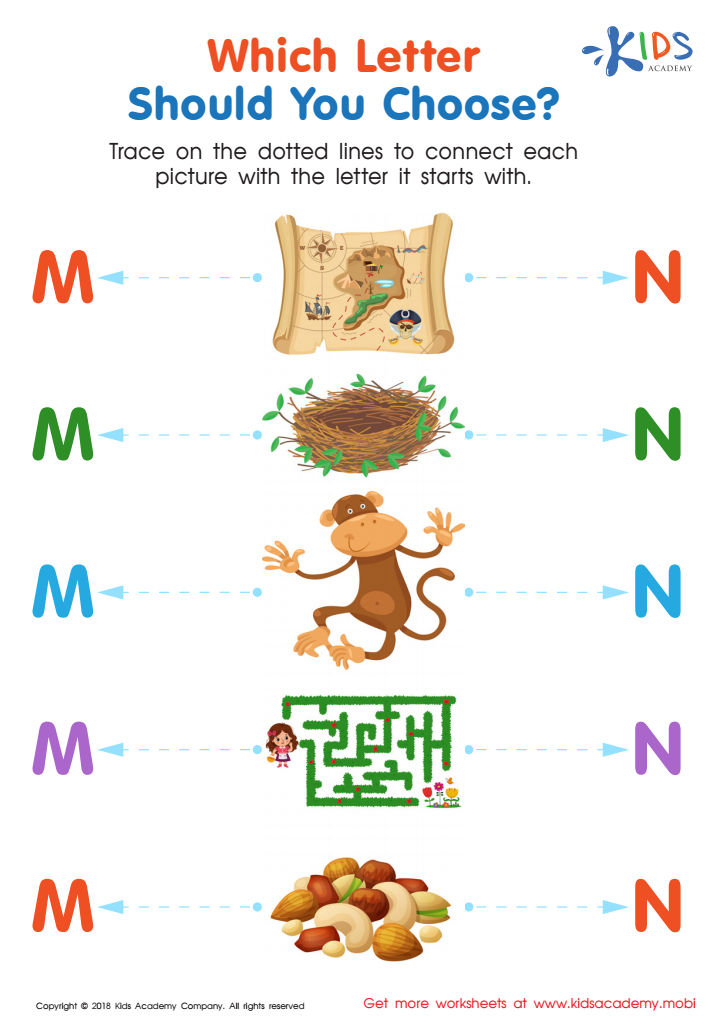
Which Letter Should you Choose? Worksheet
Trace the dotted lines to connect images with their first letter: "n" or "m." Challenge your child to name each picture, then identify the first letter and trace to the right letter! Five images in total.
Which Letter Should you Choose? Worksheet
Worksheet
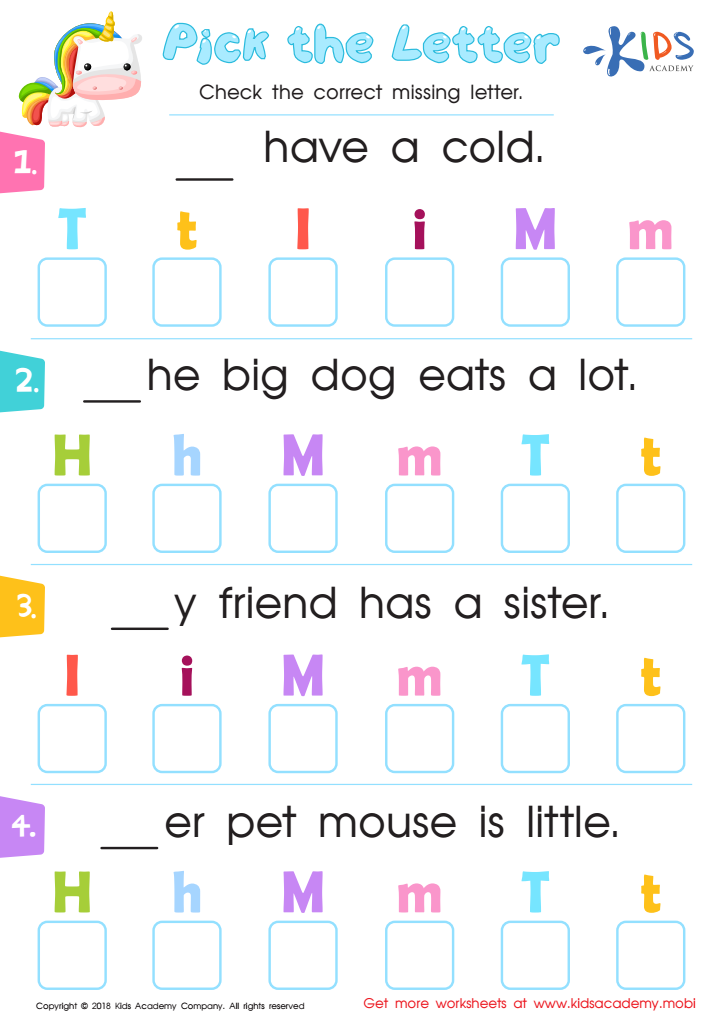
Pick the Letter Worksheet
Put your child's capitalization and reading skills to the test with this missing letter worksheet! Have them look at each sentence, note the blank and review the letters below. Find the uppercase letter that should start each sentence and check the boxes to complete. Fun and colorful, this worksheet is sure to keep your child engaged!
Pick the Letter Worksheet
Worksheet
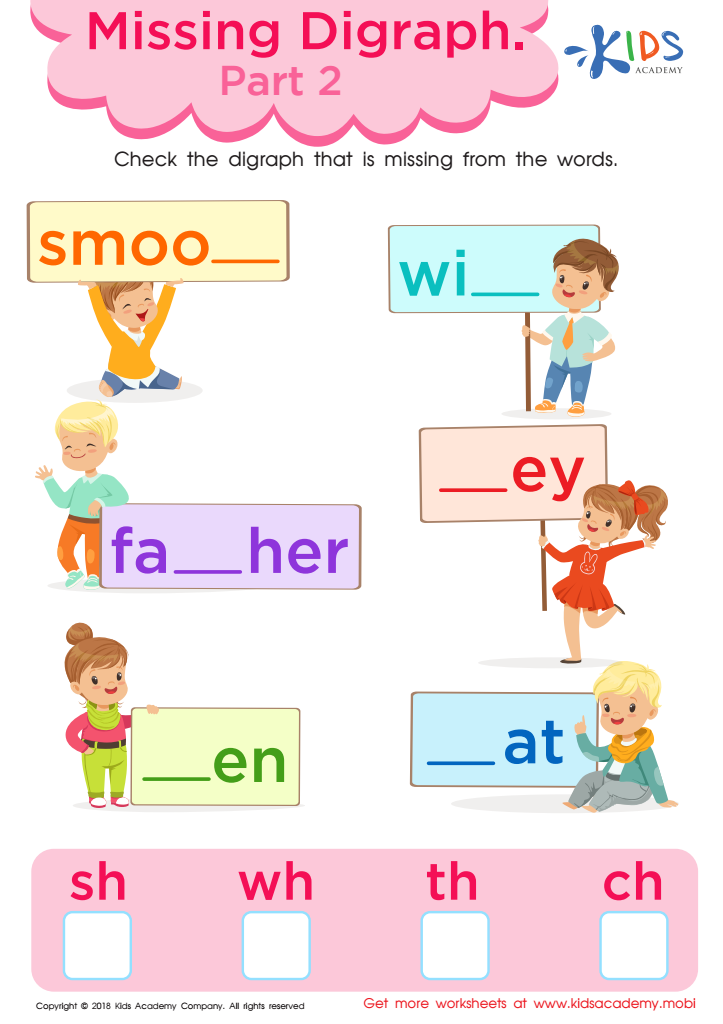
Missing Digraph: Part 2 Worksheet
Practice the "th" digraph with this fun worksheet from Kids Academy! See how it appears at the beginning, middle, or end of words and help learners fill in the blanks. Check if they got it right by finding the th digraph at the bottom!
Missing Digraph: Part 2 Worksheet
Worksheet
Join Kids Academy for Free
Who is primarily going to use this learning content?



Understanding Normal Missing Letters for ages 6-9 is crucial for parents and teachers as it directly impacts children's literacy development. At this age, children are refining their reading and writing skills, and missing letters can be a common occurrence. Recognizing and addressing this skill gap is essential for enhancing vocabulary and spelling proficiency.
By focusing on Normal Missing Letters, caregivers can help children develop phonemic awareness—the ability to hear and manipulate sounds within words. This skill is foundational in helping young learners improve their decoding abilities and comprehension skills. Furthermore, when children practice identifying and inserting missing letters, they gain confidence in their writing, fostering a love for literacy that can last a lifetime.
Moreover, encouraging exploration through games and engaging activities centered around word puzzles cultivates a fun learning atmosphere, making education enjoyable. Parents and teachers play a pivotal role in this process; they should provide guidance, encouragement, and essential tools, such as worksheets and educational resources. Investing time and effort in addressing Normal Missing Letters will not only aid children's immediate literacy needs but also lay a strong educational foundation for their future academic endeavors.







