Normal 2D Shapes Worksheets for Ages 6-9 - Page 2
26 filtered results
-
From - To
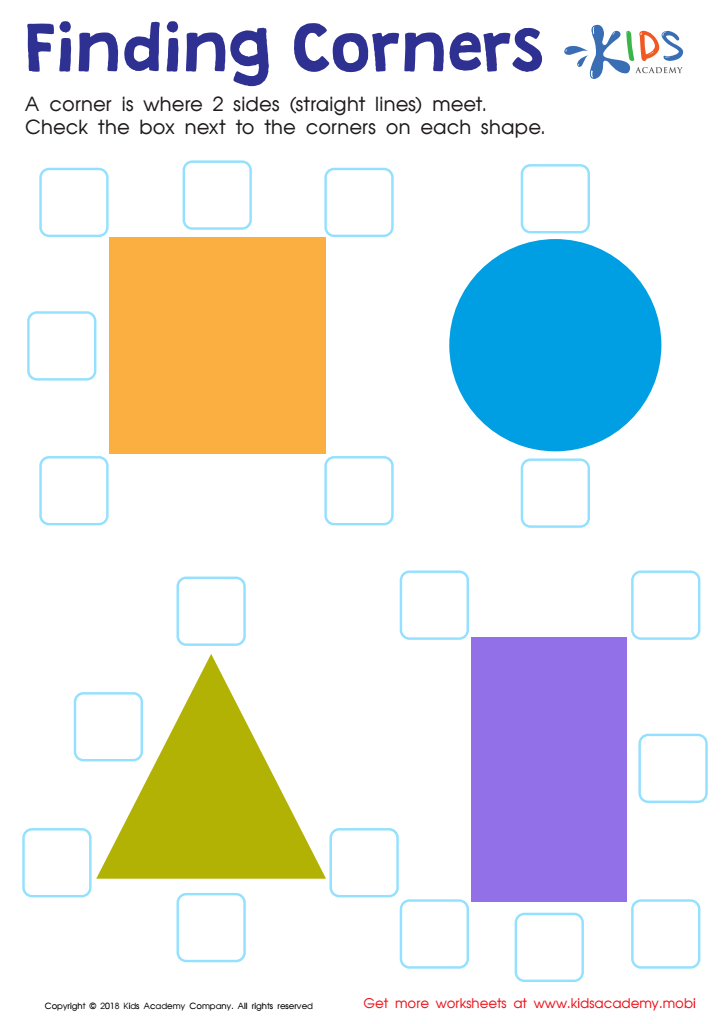
Finding Corners Worksheet
 Assign to My Students


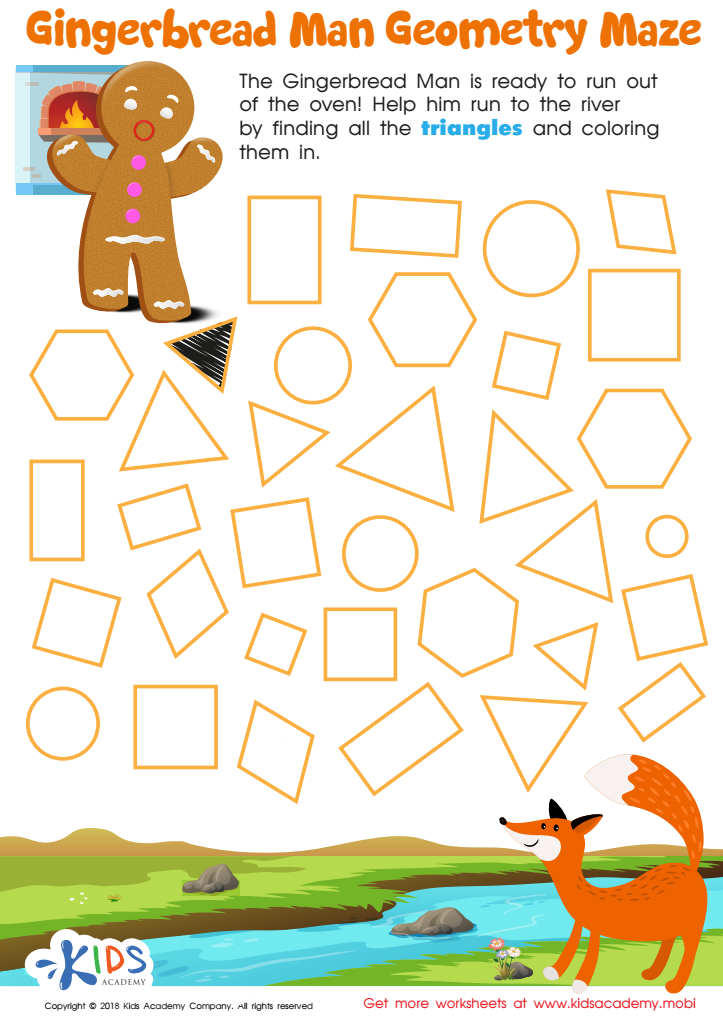
Gingerbread Man Geometry Maze Worksheet








Parents and teachers should pay attention to normal 2D shapes for children aged 6-9 because this foundational knowledge is crucial for developing essential math skills and cognitive abilities. During this age range, children begin to grasp concepts of geometry, and understanding 2D shapes, such as squares, circles, triangles, and rectangles, helps improve their spatial awareness.
Recognizing and identifying shapes enhances critical thinking and problem-solving skills as children learn to categorize objects based on their properties, such as sides and angles. This shapes recognition is not only vital in mathematics but also plays an important role in everyday life, from art and design to architecture and even sports.
Moreover, incorporating shape-related activities, such as drawing, crafting, and puzzles, can make learning enjoyable and engaging, fostering a love for learning in children. Additionally, these activities promote fine motor skills and creativity. By emphasizing 2D shapes, parents and teachers can empower children with the confidence to explore more complex mathematical concepts in the future, laying the groundwork for their academic success. Ultimately, understanding normal 2D shapes supports holistic development, integrating cognitive growth with practical life skills.