Critical Thinking Chess Worksheets
4 filtered results
-
From - To
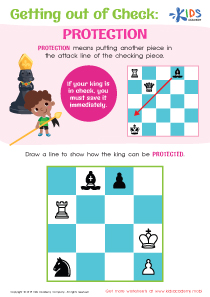
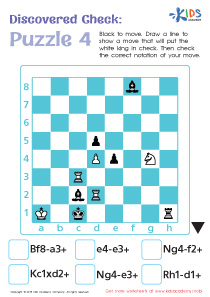
Unlock your child's potential with our "Critical Thinking Chess Worksheets"! Designed to blend the timeless strategy of chess with essential critical thinking skills, these worksheets offer engaging activities to enhance logic, problem-solving, and decision-making abilities. Perfect for young minds, each worksheet presents tailored challenges that stimulate intellectual growth while making learning fun. Whether your child is a beginner or an advanced player, our chess worksheets cater to all skill levels, fostering cognitive development in an enjoyable way. Develop your child's strategic thinking and sharpen their minds with our expertly crafted "Critical Thinking Chess Worksheets."
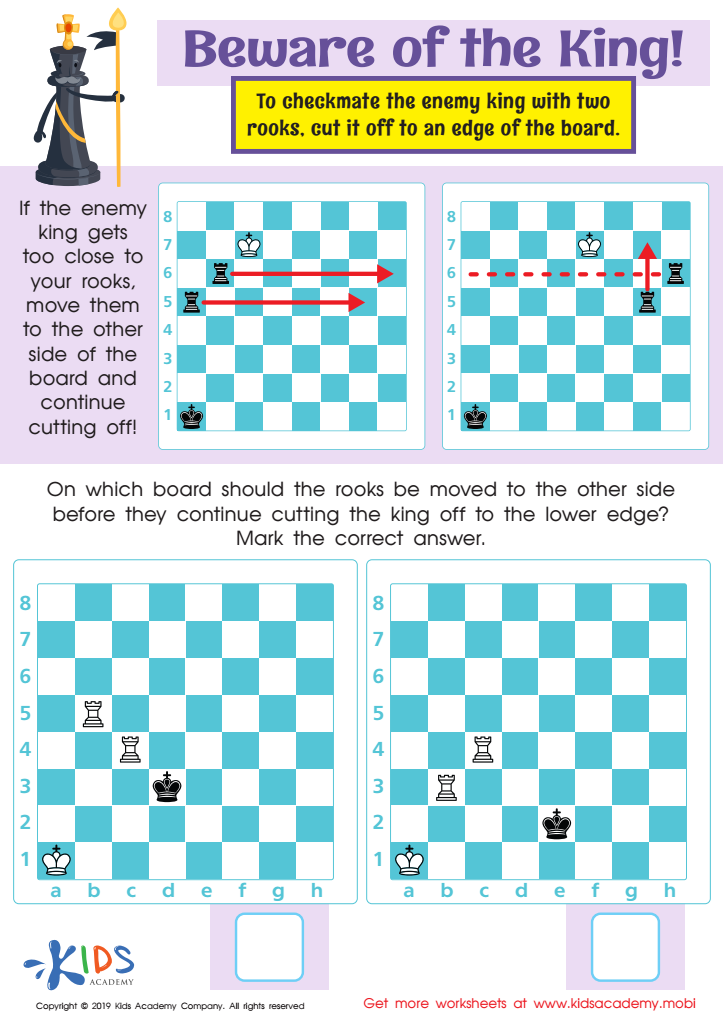
Beware of the King! Worksheet
 Assign to My Students
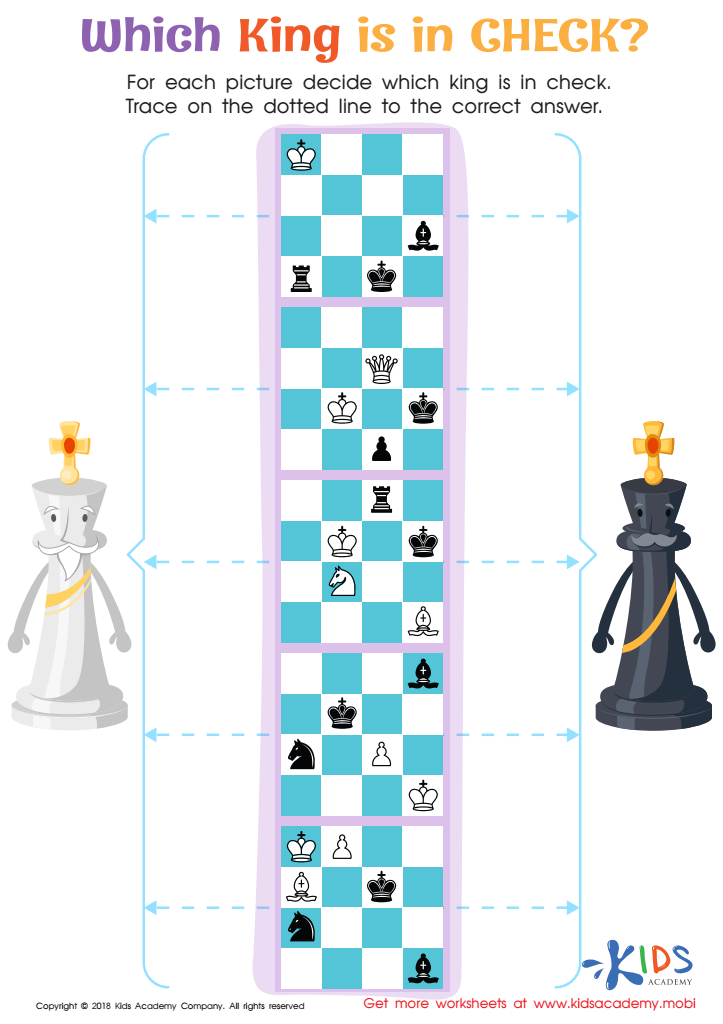
Which King is in Check? Worksheet
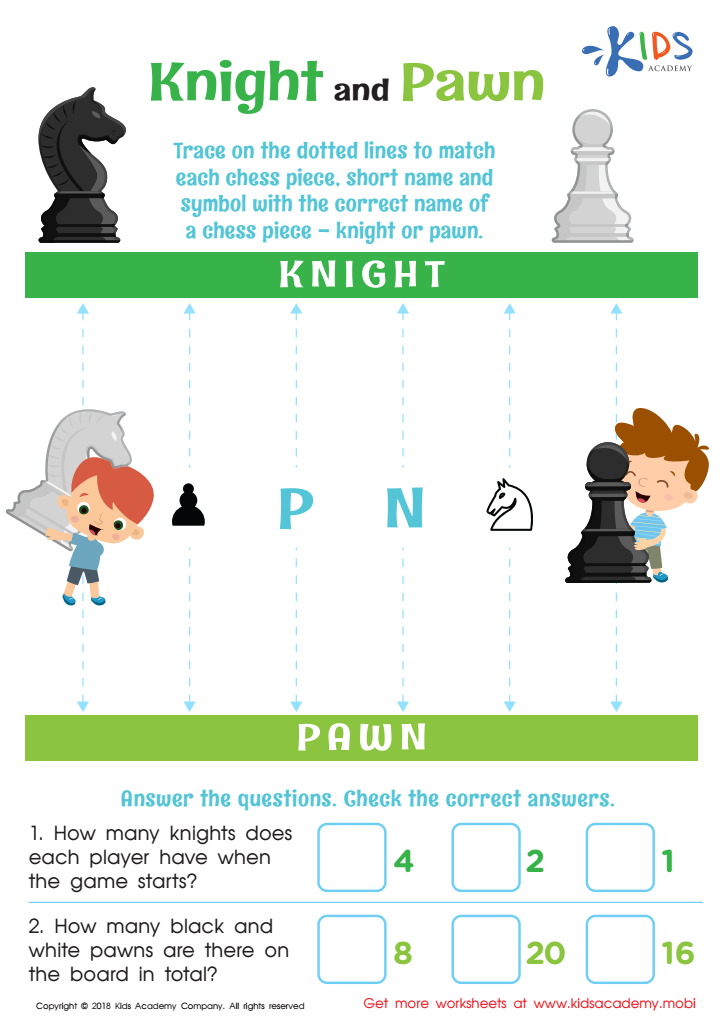
Knight and Pawn Worksheet
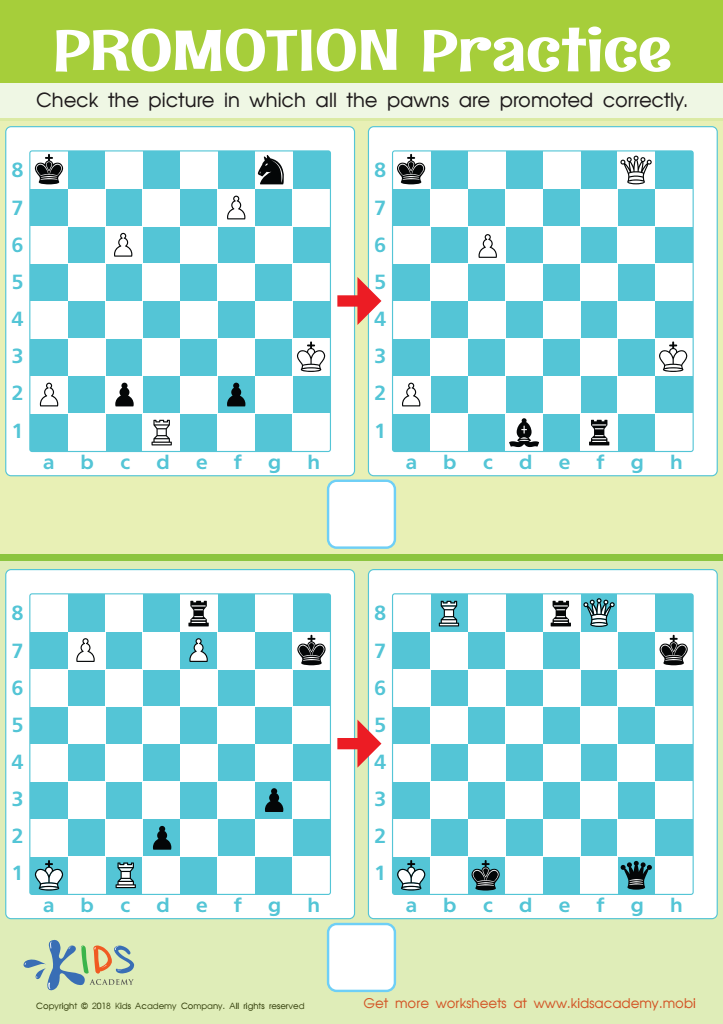
Promotion Practice Worksheet





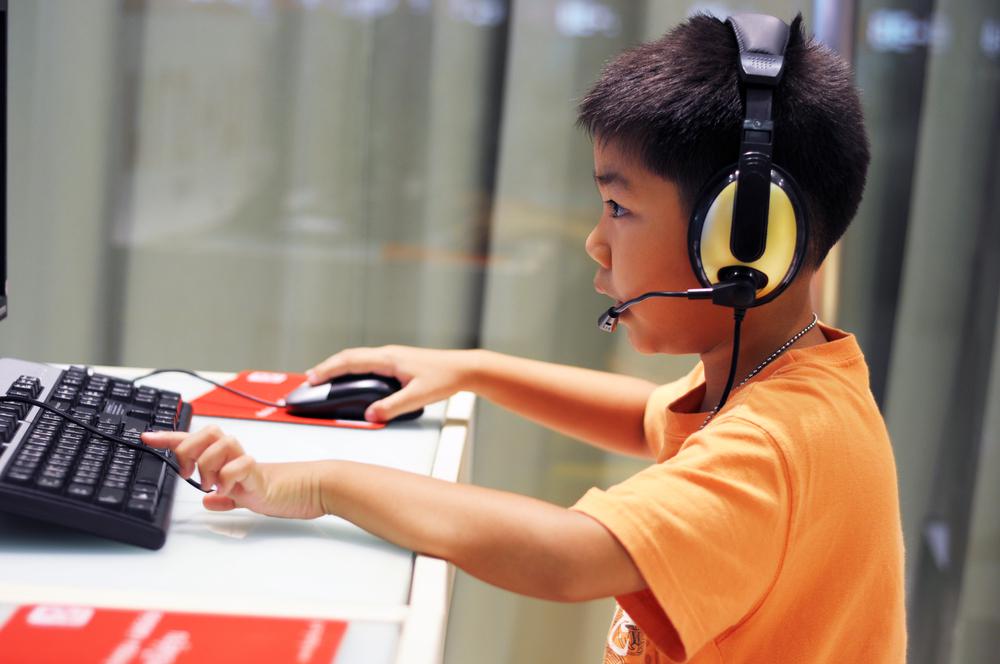

Critical Thinking Chess is an invaluable tool for both parents and teachers to consider for their children’s cognitive and emotional development. This strategic game fosters critical thinking skills, problem-solving abilities, and intellectual rigor in a fun and engaging manner. By analyzing moves and foreseeing consequences, children learn to approach problems methodically and to anticipate the ramifications of their actions. This kind of structured thinking is not only applicable to chess but extends to academic subjects like mathematics, science, and reading comprehension.
Moreover, chess nurtures patience, concentration, and focus—skills that are crucial in today’s fast-paced, distraction-heavy world. As children grapple with complex positions on the board, they also develop emotional resilience, learning to handle victories humbly and defeats graciously. Chess promotes a growth mindset, teaching kids that persistence and practice can lead to improvement.
Parental involvement in chess can deepen familial bonds and provide opportunities for meaningful interaction. Similarly, teachers implementing Chess Clubs or incorporating it into the curriculum can create a rich learning environment where students collaboratively hone their skills.
Overall, Critical Thinking Chess acts as a powerful catalyst for nurturing balanced intellectual and emotional growth, making it an essential consideration for parents and teachers devoted to their children’s holistic development.