Enhancing problem-solving skills Chess Worksheets
3 filtered results
-
From - To
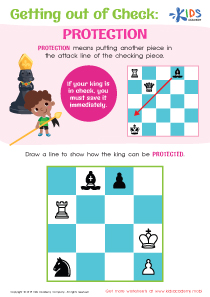
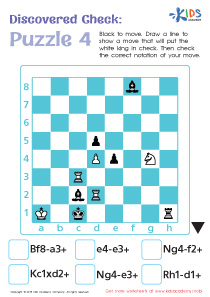
Enhance your child's problem-solving skills with our engaging Chess Worksheets! Designed for early learners, these interactive printables combine the excitement of chess with valuable critical thinking exercises. Through a series of fun and challenging activities, children will learn to strategize, analyze patterns, and make decisions effectively. Perfect for young minds ready to explore new ways of thinking, our worksheets transform traditional learning into an adventurous journey. Whether your child is a budding chess enthusiast or new to the game, these printables offer a fantastic way to sharpen cognitive skills in an enjoyable, hands-on manner. Explore our worksheet library and boost your child’s problem-solving abilities today!
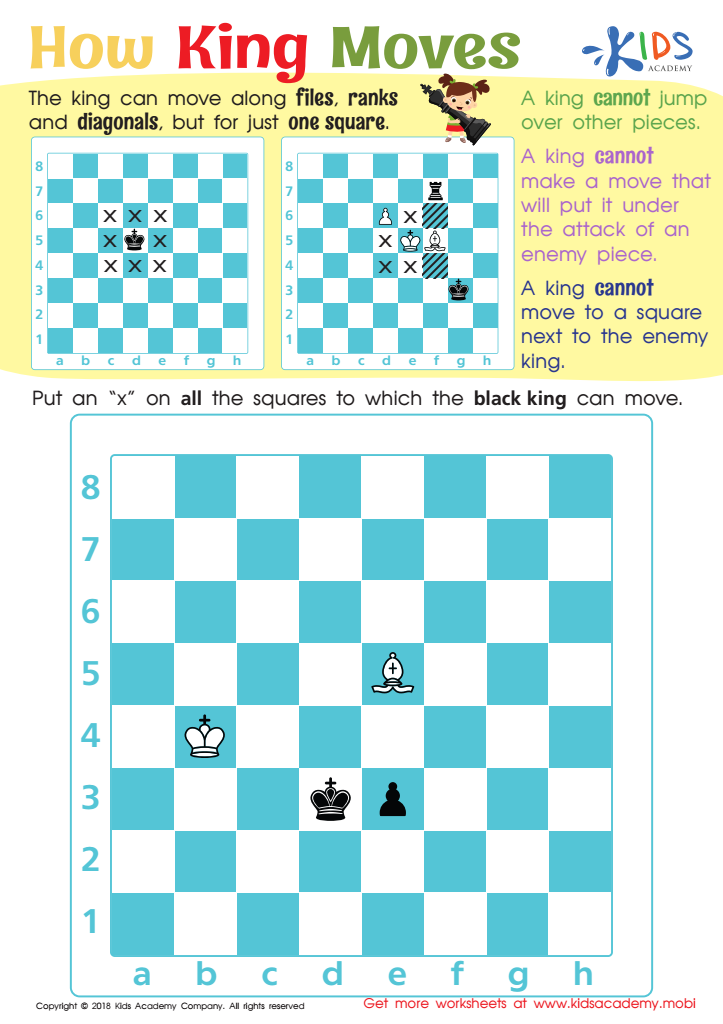
How King Moves Worksheet
 Assign to My Students
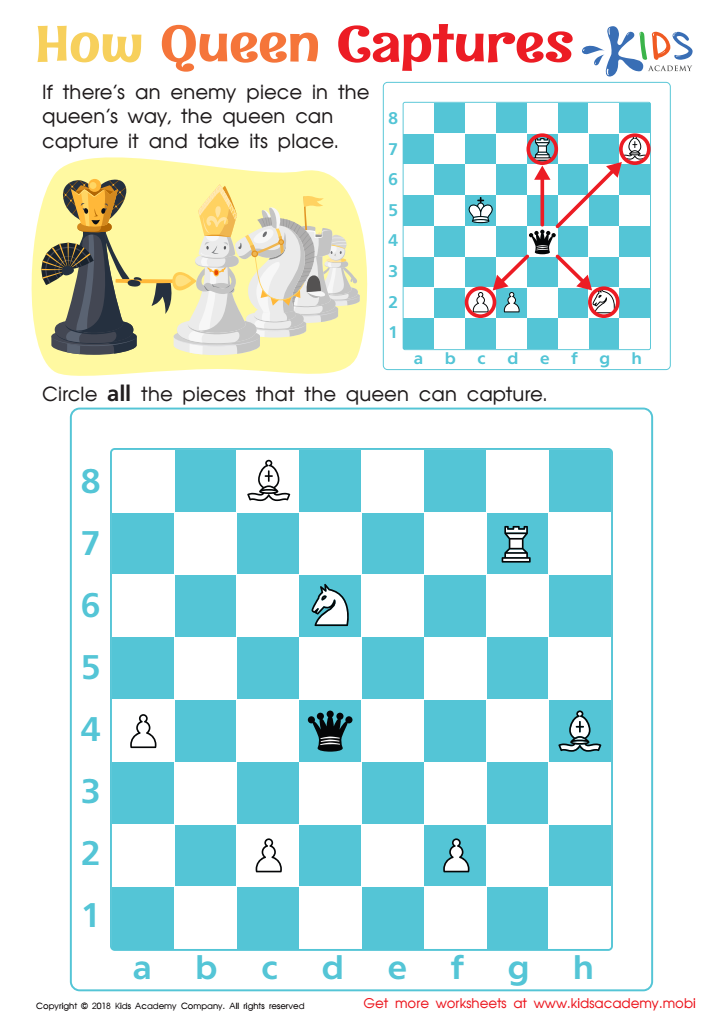
How Queen Captures Worksheet
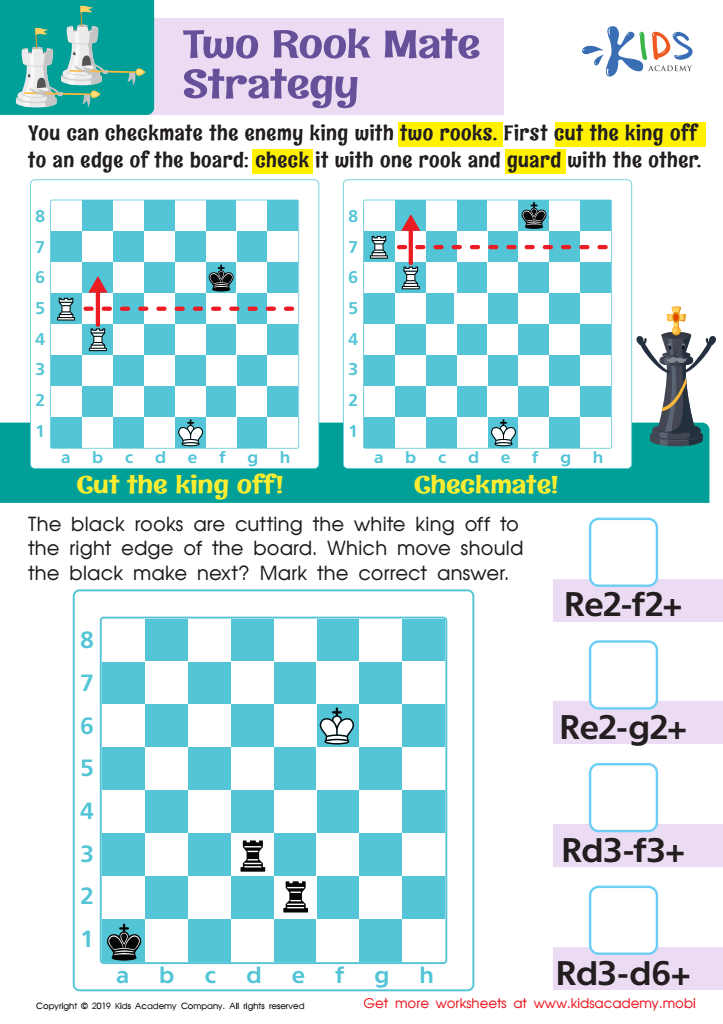
Two Rook Mate Strategy Worksheet






Enhancing problem-solving skills through chess is incredibly valuable for children's cognitive development and academic growth. Chess is a strategic game that encourages critical thinking, foresight, and patience. When children engage in chess, they learn to analyze situations, evaluate various outcomes, and adjust their strategies accordingly. This active problem-solving process helps to strengthen their executive functions, including working memory, flexible thinking, and self-control.
For teachers, promoting chess in the classroom can translate to better academic performance. Numerous studies have shown that students who play chess exhibit improvement in subjects like math and reading. This is because chess teaches kids to recognize patterns and plan multiple steps ahead, skills that are transferable to mathematical problem-solving and comprehension of complex texts.
For parents, fostering chess at home provides a valuable developmental tool in a fun and engaging format. Beyond academics, chess offers social and emotional benefits. Children learn sportsmanship, patience, and resilience as they face wins and losses—qualities essential for personal growth.
By integrating chess into regular activities, both parents and teachers can help build a solid foundation for children, equipping them with important life skills that extend well beyond the chessboard.