Memory enhancement Chess Worksheets
3 filtered results
Difficulty Level
Grade
Age
-
From - To
Subject
Activity
Standards
Boost your child's cognitive skills with our engaging Memory Enhancement Chess Worksheets! Specifically designed for early learners, these worksheets combine fun chess activities with memory-boosting exercises to enhance concentration and recall. Children will explore essential chess concepts, improve their problem-solving abilities, and cultivate critical thinking while enjoying puzzles and challenges. Each worksheet promotes a deeper understanding of chess gameplay, reinforcing strategies in a playful and interactive manner. Whether at home or in the classroom, our printable resources are ideal for supporting memory improvement and enriching learning experiences. Unlock your child's potential in a playful way with our Memory Enhancement Chess Worksheets today!
Favorites
With answer key
Interactive
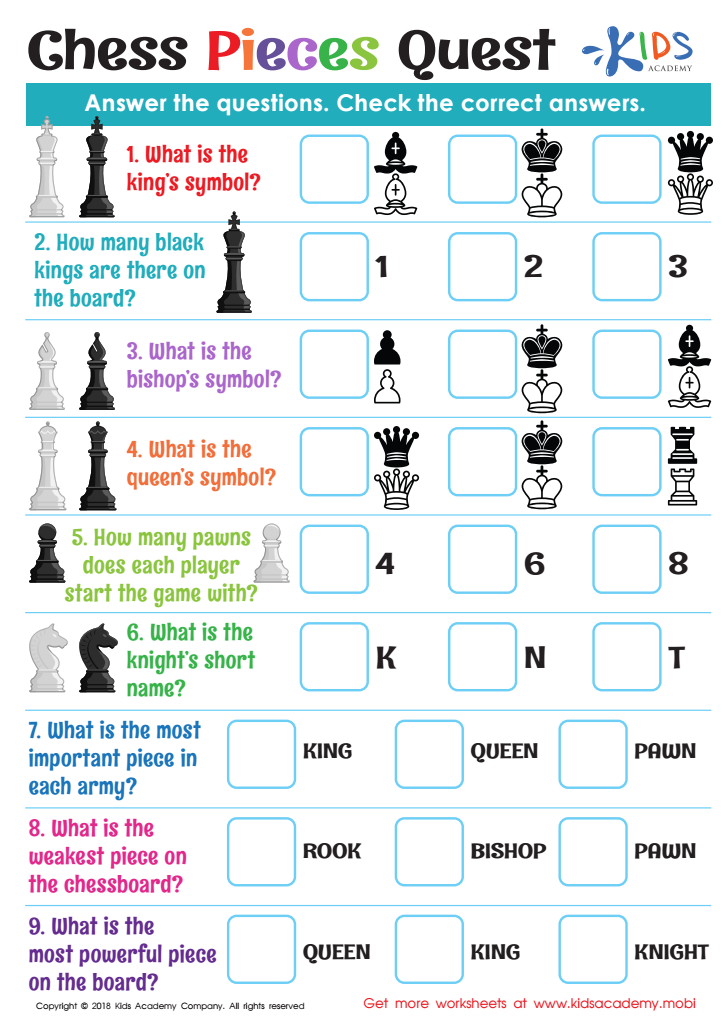
Chess Pieces Quest Worksheet
Help your child prepare for the chess quest by refreshing their knowledge of the symbols and characteristics of each chess piece. Then, have them try the 9 questions on this worksheet. These questions will assess their understanding of the symbols and how many pieces each player starts with.
 Assign to My Students
Chess Pieces Quest Worksheet
Worksheet
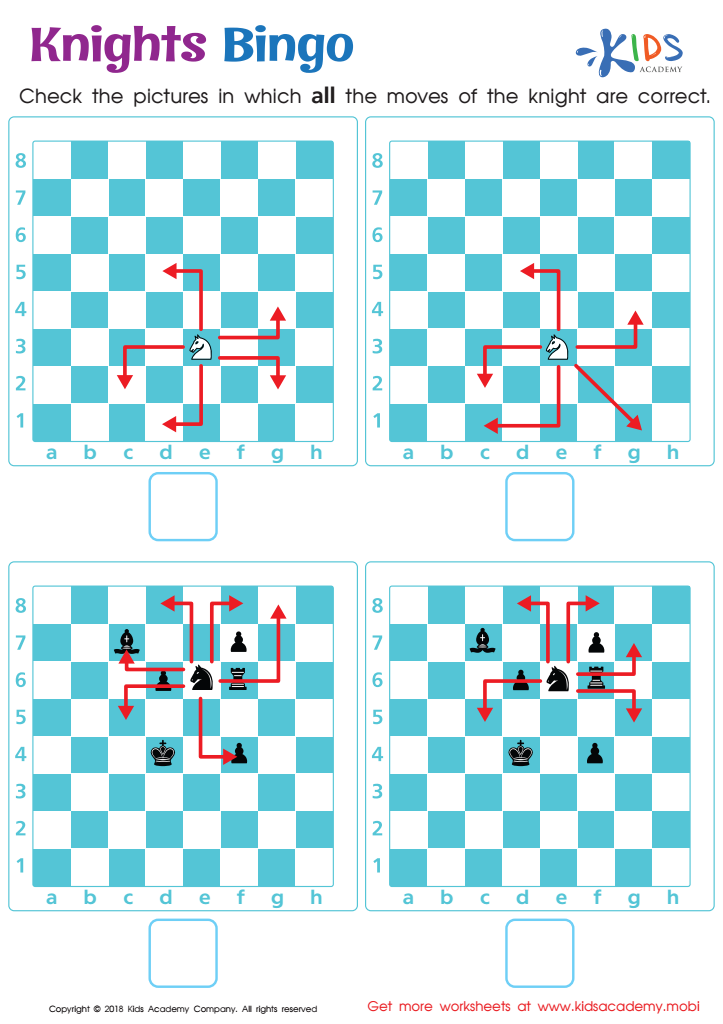
Knights Bingo Worksheet
Help your child identify legal knight moves in this easy worksheet. Review each picture with them, questioning if the knight moves are correct. Then have them verify pictures with correct moves.
Knights Bingo Worksheet
Worksheet
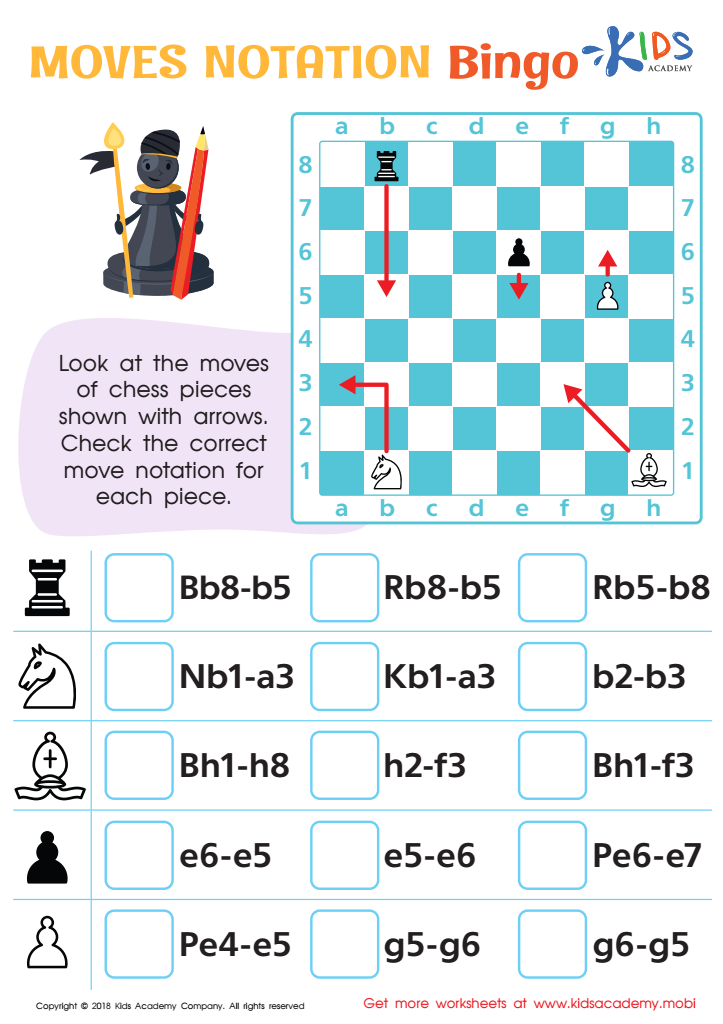
Moves Notation Bingo Worksheet
Test your child's chess notation skills with this simple worksheet. Download the PDF which shows a chess board and arrows pointing to pieces. Ask your child to identify the moves and note them down correctly. The notations needed are for bishop, pawn, rook and knight. Up to 80 words.
Moves Notation Bingo Worksheet
Worksheet
Join Kids Academy for Free
Who is primarily going to use this learning content?







Memory enhancement chess is a powerful tool that benefits both children and educators in significant ways. First and foremost, engaging in chess helps improve cognitive skills, especially memory, critical thinking, and problem-solving abilities. As students learn to remember moves, strategies, and opponents’ tactics, they exercise their working memory, which can enhance overall academic performance.
Chess also promotes discipline and patience, essential traits for lifelong learning. As students spend time contemplating their next move, they learn to focus amid distractions, honing their attention span. This skill transcends the chessboard, enabling better concentration in classroom settings and during homework.
For parents and teachers, fostering an environment that appreciates cognitive skill-building activities like memory enhancement chess translates to a more engaged and capable student. By introducing chess in educational contexts, educators not only make learning fun but also support the development of critical life skills. Moreover, teachers can utilize chess as a tool for social interaction fostering teamwork, sportsmanship, and empathy.
In summary, memory enhancement chess builds a solid foundation for children’s academic and personal growth; thus, it deserves the attention of both parents and educators seeking to cultivate well-rounded learners.