
Basic Arithmetic Easy Worksheets for Ages 3-4
5 filtered results
Difficulty Level
Grade
Age
-
From - To
Subject
Activity
Standards
Welcome to our "Basic Arithmetic Easy Worksheets for Ages 3-4" page! Here, you’ll find a vibrant collection of printable worksheets designed to introduce your little ones to the fundamentals of arithmetic. Tailored specifically for preschoolers, these engaging activities facilitate early math skills through fun exercises like counting, number recognition, and simple addition and subtraction concepts. Our worksheets encourage hands-on learning to enhance cognitive development, making math enjoyable right from the start. Perfect for parents and educators alike, these worksheets offer a fantastic way to foster a love for learning in young children. Get started today and watch them thrive!
Favorites
With answer key
Interactive
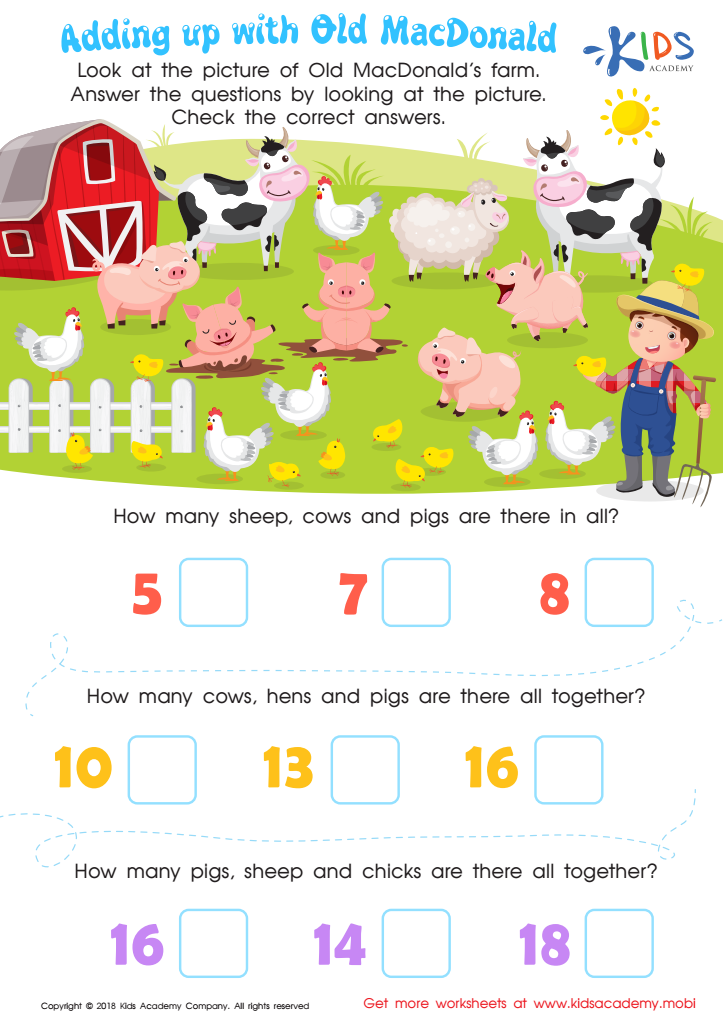
Adding Up with Old MacDonald Worksheet
Old MacDonald needs help counting his animals! Give your little math whiz a fun challenge with a free PDF worksheet. They'll love counting the animals and doing basic addition with two or three addends. Who knew math could be so much fun on the farm?
 Assign to My Students
Adding Up with Old MacDonald Worksheet
Worksheet
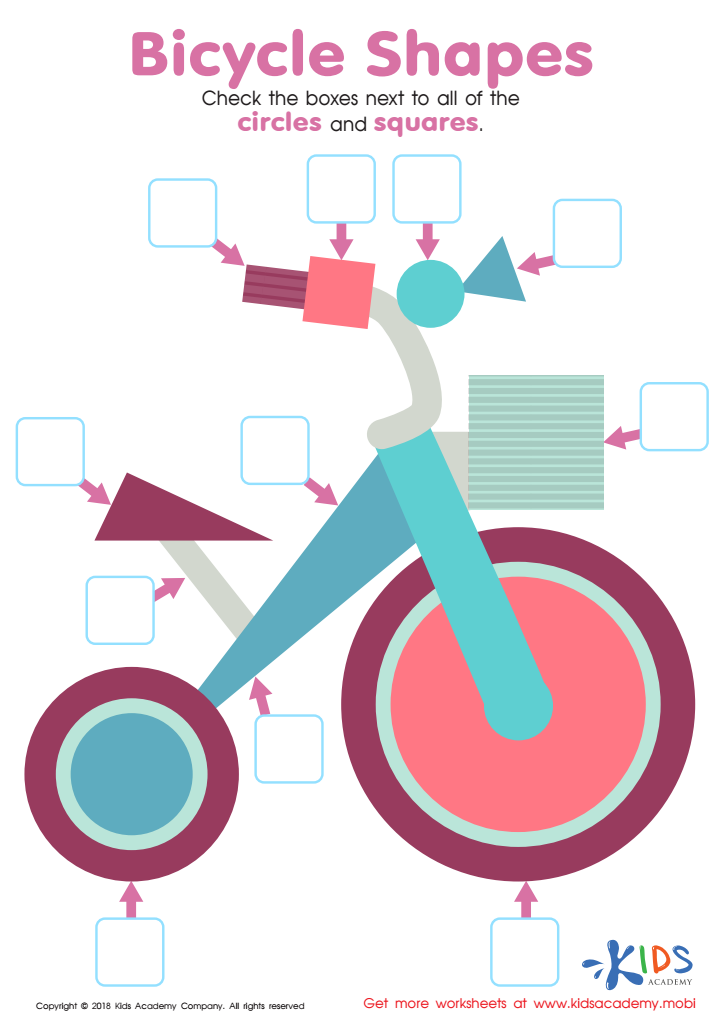
Bicycle Shapes Worksheet
This fun geometry worksheet for preschoolers asks the child to spot hidden shapes (circles, squares) in a colorful bicycle. Each shape varies in size and the child checks the box when it's found. It's a visual way to teach shapes.
Bicycle Shapes Worksheet
Worksheet
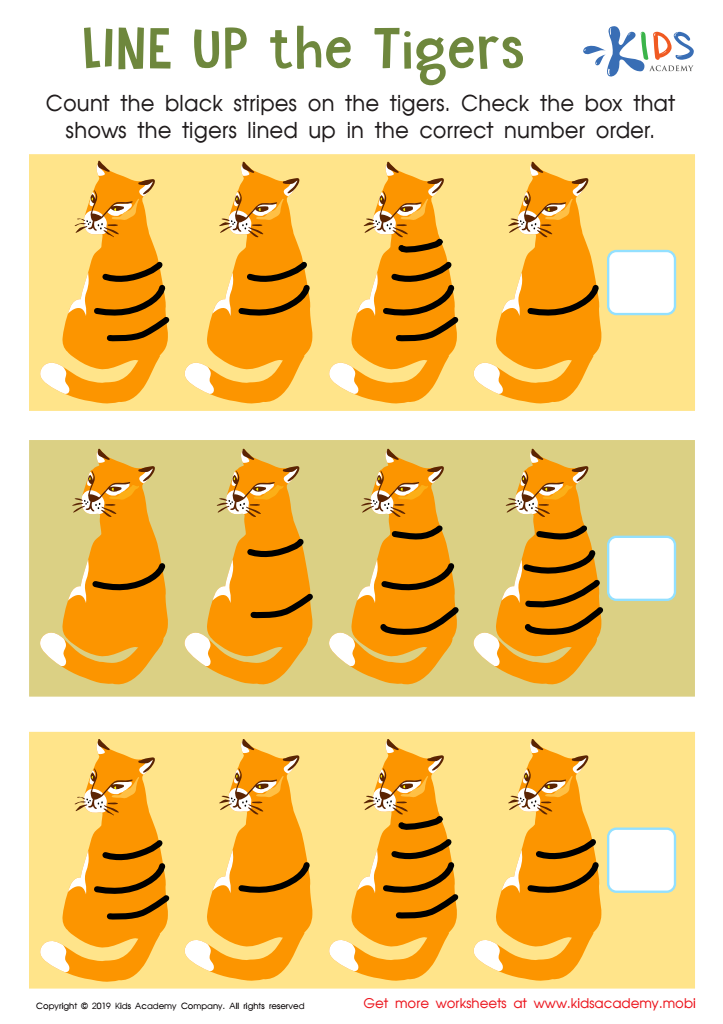
Line up the Tigers Worksheet
Give your preschoolers the right tools to succeed in math. Show them pictures of animals, then have them count the stripes and check the box that shows the tigers lined up in the right order. This will help them understand and make their journey easier.
Line up the Tigers Worksheet
Worksheet
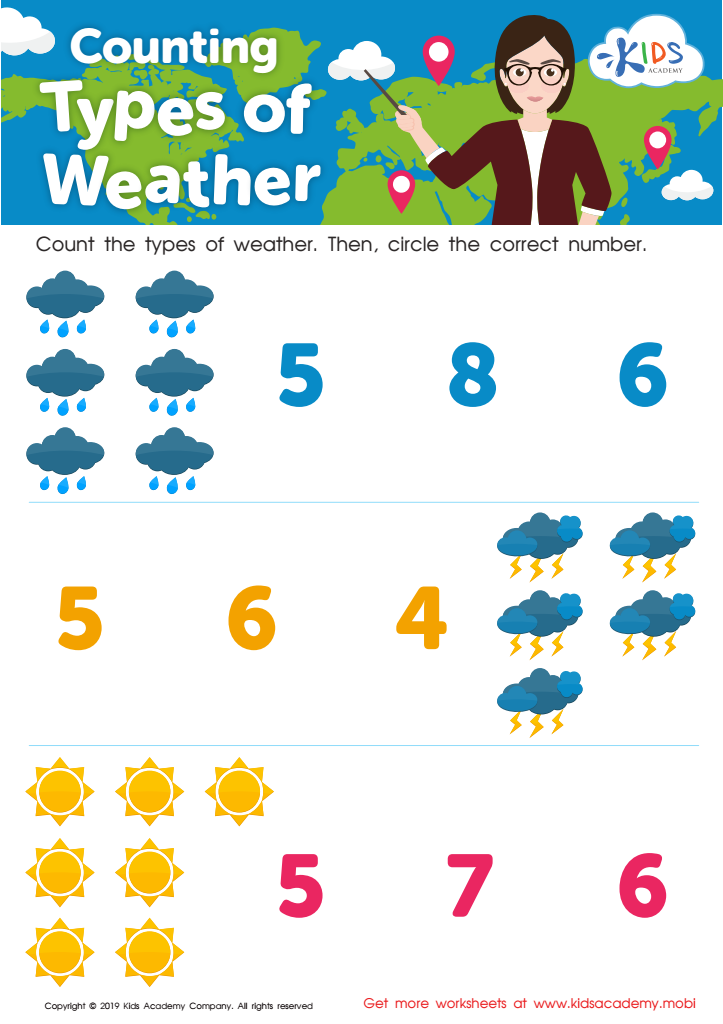
Counting Types of Weather Worksheet
Have your students look outside and tell you the weather today. Get kindergartners thinking by asking them to name different types of weather. Point to each one in the picture and get them to tell you what it is. Then, have them count the types and circle the number.
Counting Types of Weather Worksheet
Worksheet
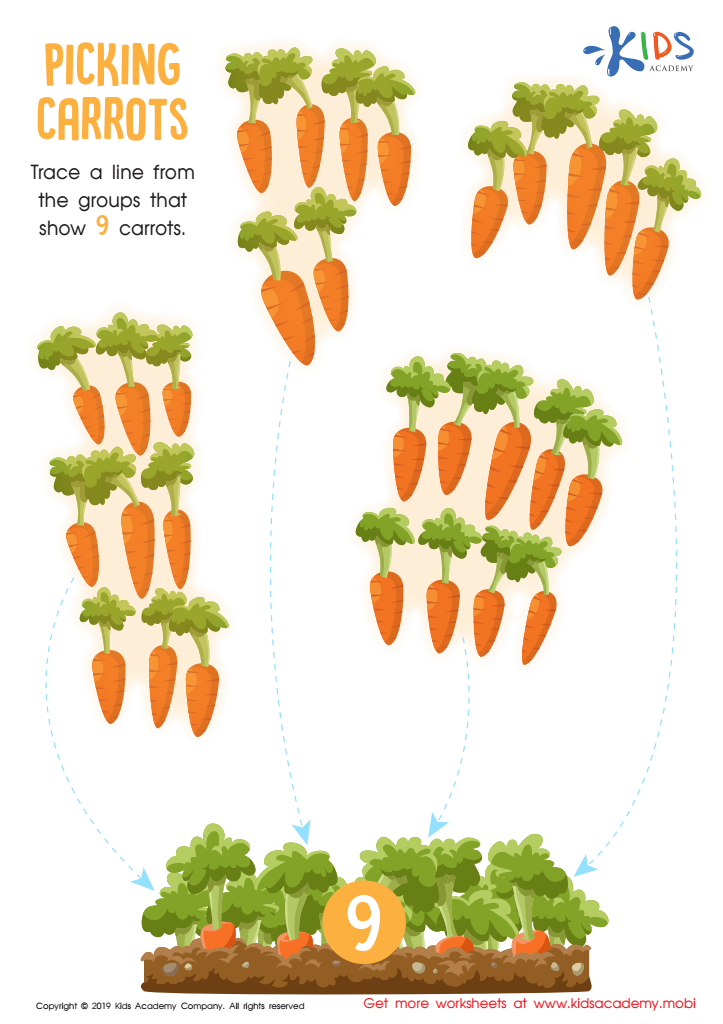
Picking Carrots Worksheet
Do your kids know what carrots are? They're nutritious veggies we should eat. Look at the worksheet with them; can they spot the carrots? It's an exercise to practice counting. Show them how to count all the carrots in the groups and trace the line to the groups with 9 carrots.
Picking Carrots Worksheet
Worksheet
Join Kids Academy for Free
Who is primarily going to use this learning content?








Basic arithmetic is crucial for children aged 3-4 as it lays the foundation for their future mathematical understanding and problem-solving skills. At this age, children are naturally curious and eager to explore numbers and patterns. Introducing basic arithmetic concepts like counting, simple addition and subtraction, and number recognition helps nurture their cognitive development and prepares them for more complex mathematical ideas.
Parents and teachers should prioritize engaging arithmetic activities that are fun and relevant to everyday life, such as counting toys, sharing snacks, or singing songs with numbers. These activities not only enhance mathematical skills but also promote language development, critical thinking, and social interaction.
Additionally, early experiences with arithmetic can foster a positive attitude toward math. Children who feel comfortable with numbers at a young age are more likely to develop confidence in their abilities, reducing the anxiety often associated with math later in their education. By incorporating basic arithmetic into daily routines, parents and teachers can help create a supportive environment that encourages exploration and fosters a love for learning. This early engagement is essential, as it empowers children with the skills necessary to succeed academically while instilling a strong foundational understanding of mathematics.








