Phonics Skills Easy Worksheets for Ages 3-4
5 filtered results
-
From - To
Discover our engaging "Phonics Skills Easy Worksheets for Ages 3-4," designed to introduce young learners to the fundamentals of phonics in a fun and accessible way. These printable worksheets feature vibrant illustrations and simple exercises that help children develop essential reading skills, such as letter recognition, sound matching, and word building. Perfect for home or classroom use, our worksheets promote early literacy and encourage children's love for learning. With a variety of activities suited for preschoolers, your little ones will enjoy mastering phonics while enhancing their language skills. Start their educational journey with enjoyable and effective phonics practice today!
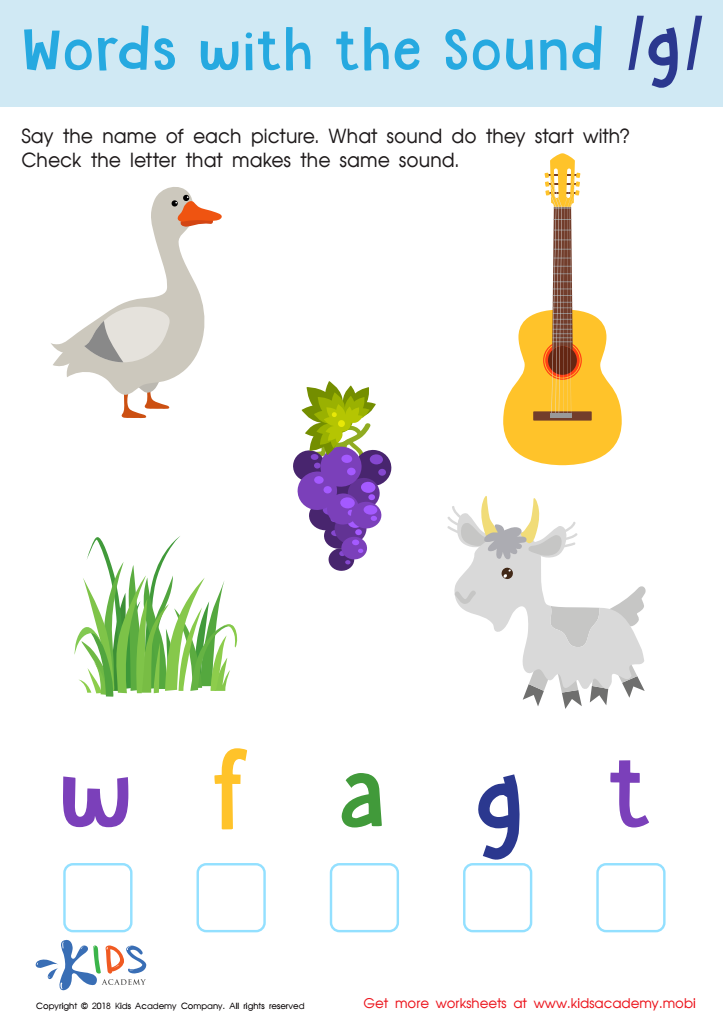
Words with sound g Reading Worksheet
 Assign to My Students
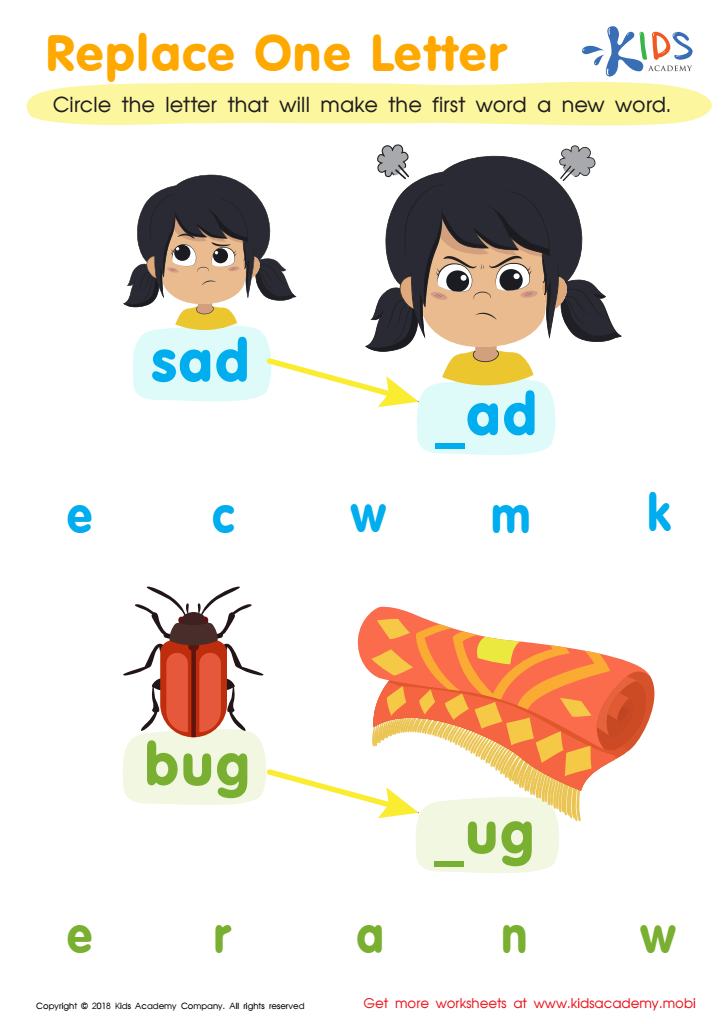
Replace One Letter Worksheet
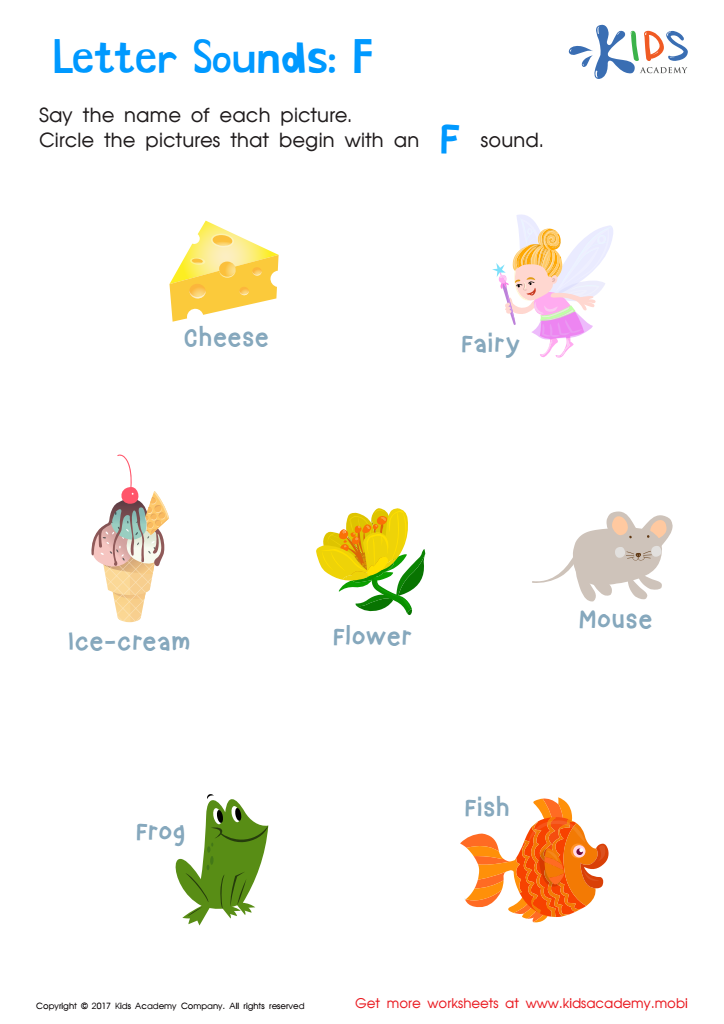
Letter F Sounds Worksheet
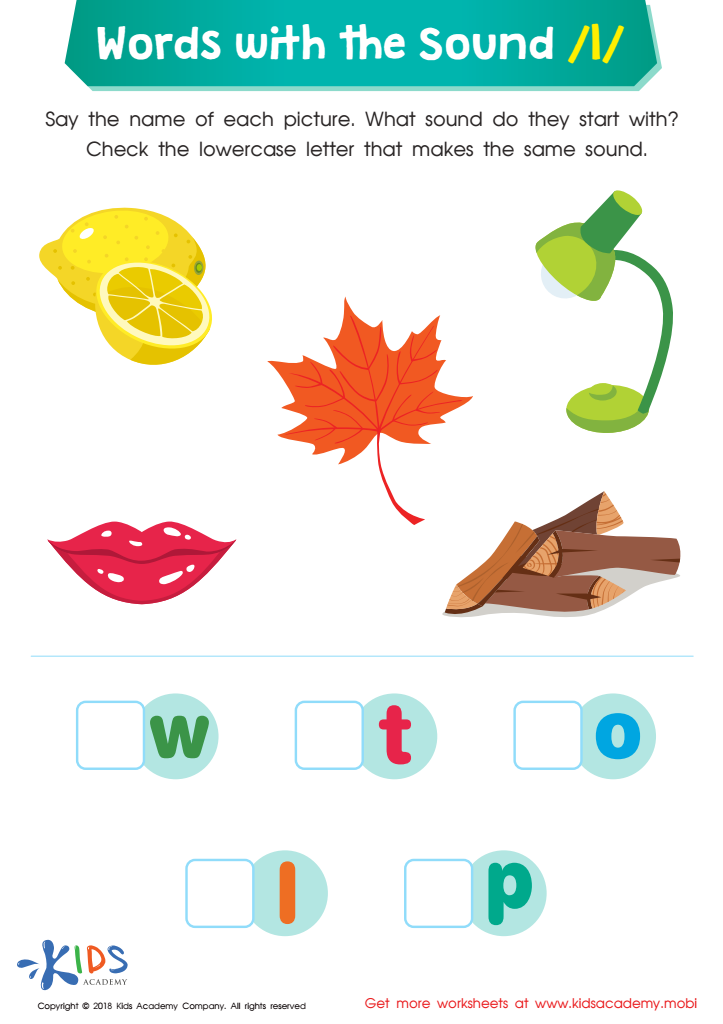
Words with Sound L Reading Worksheet
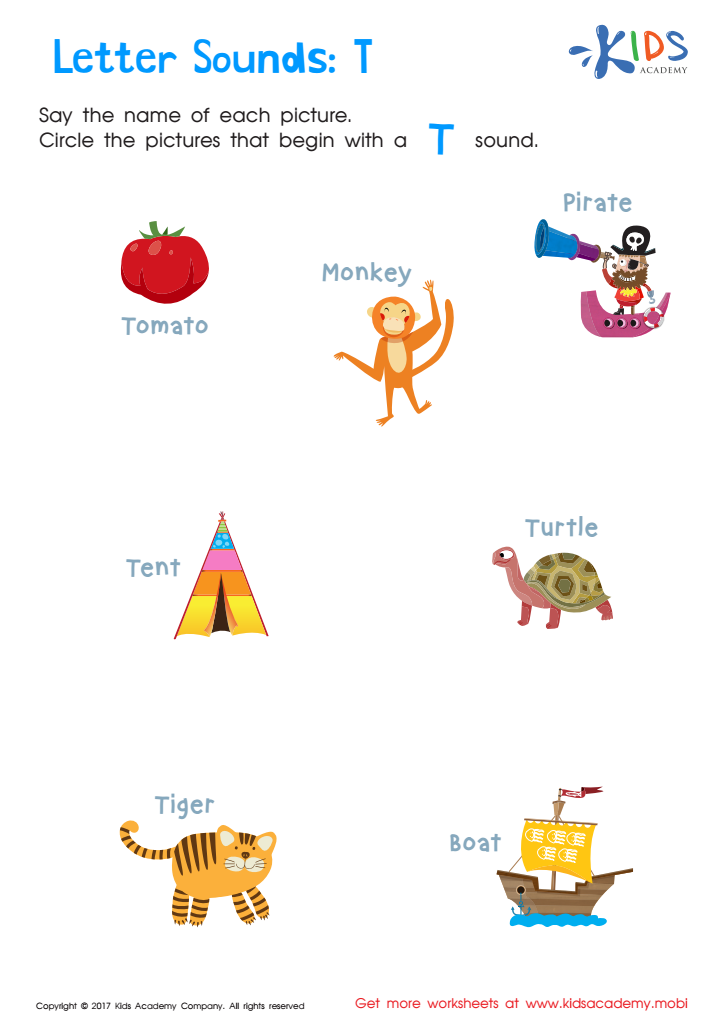
Letter T Sounds Worksheet




%20(1).jpg)
.jpg)

Phonics skills are crucial for laying the foundation of reading and writing, especially for children aged 3-4. At this early age, children are like sponges, eagerly absorbing language and sound patterns. Phonics helps them understand how letters form sounds, which is essential for decoding words. By paying attention to phonics skills, parents and teachers can foster literacy development, as these skills enhance children's ability to recognize letters and associate them with sounds.
Developing phonics skills early can lead to greater confidence in reading as children progress through the grades. It empowers them to read simple words independently, ultimately encouraging a lifelong love for learning and literature. Furthermore, solid phonetic knowledge helps in preventing future reading difficulties, as children equipped with these skills are less likely to struggle with more complex reading tasks later on.
Integrating phonics-focused activities—such as rhyming games, singing songs, or engaging in storytelling—into daily routines can make learning enjoyable. When parents and teachers prioritize phonics skills, they are not only supporting early literacy but also fostering critical thinking and cognitive development. In short, nurturing phonics abilities in young children is a vital step in helping them become confident, capable readers.








