Story sequencing Easy Worksheets for Ages 3-4
3 filtered results
-
From - To
Introduce young learners to the foundational skill of story sequencing with our easy worksheets designed specifically for ages 3-4. These engaging printables from Kids Academy help children develop vital early literacy and cognitive abilities by arranging images in the correct sequence. Tailored for preschoolers, the worksheets feature simple and visually appealing illustrations that capture children's attention and make learning fun. Perfect for both classroom and home use, our story sequencing worksheets foster understanding of narrative structure and enhance memory skills. Set your child on the path to reading success with activities that provide a perfect blend of education and entertainment!
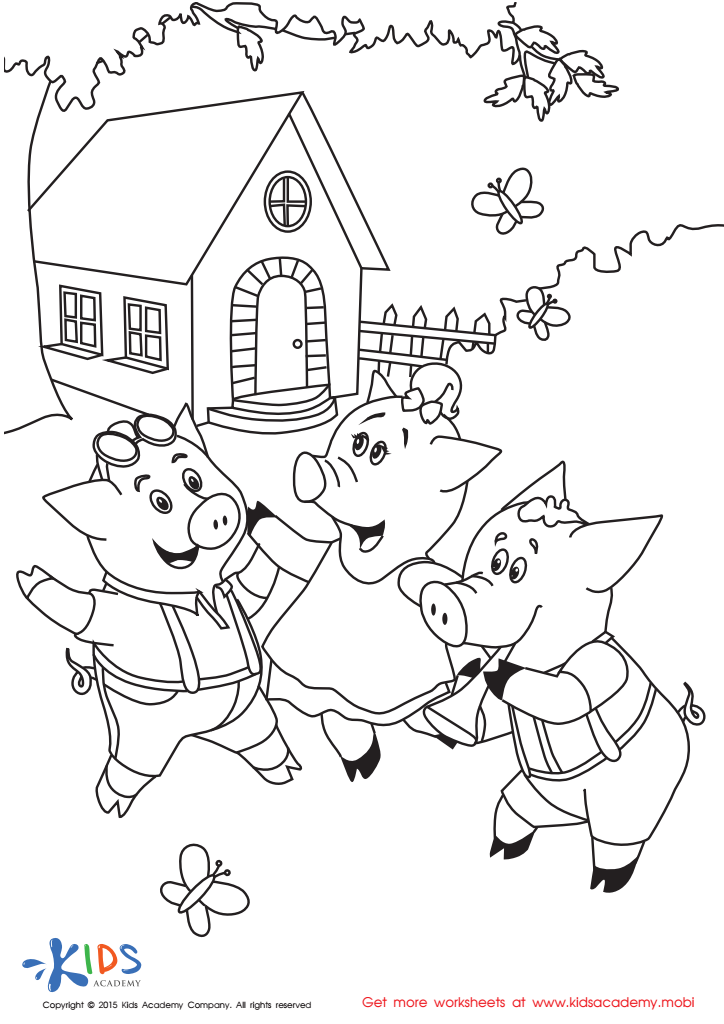
Folktales Printable PDF Worksheet: The 3 Little Pigs
 Assign to My Students
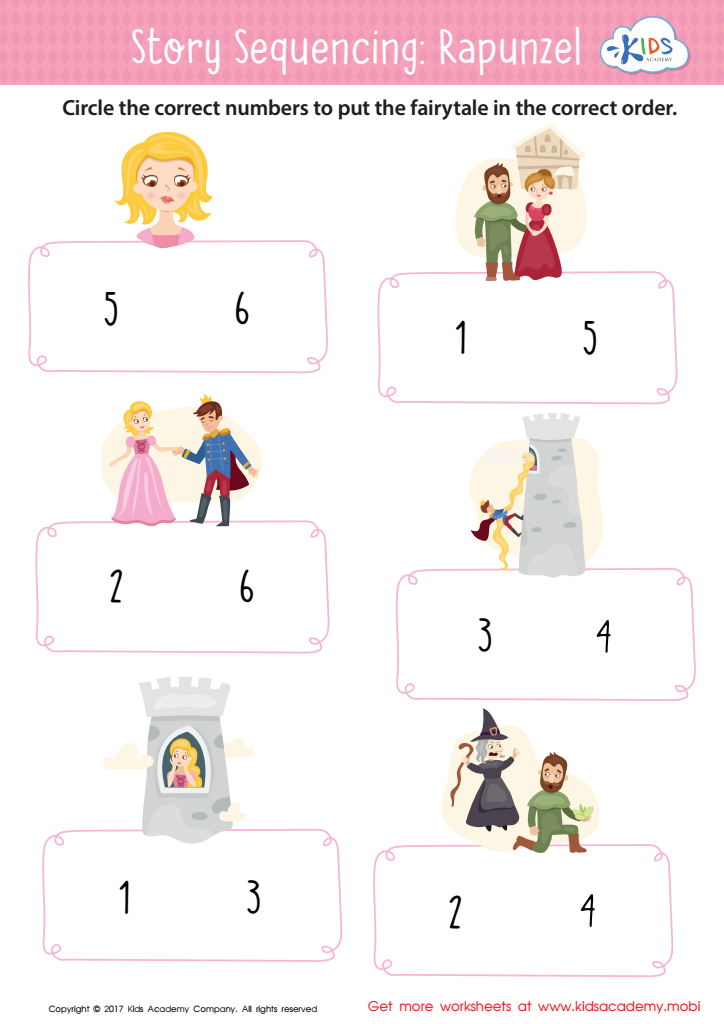
Rapunzel Story Sequencing Worksheet
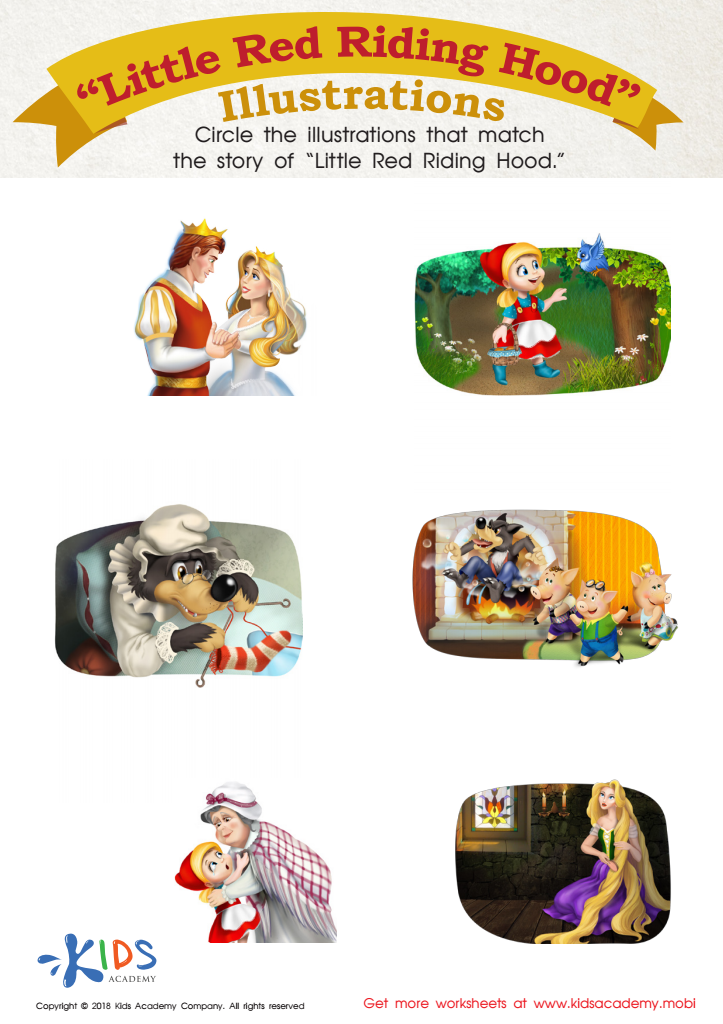
Little Red Riding Hood: Illustrations Worksheet




.jpg)



Story sequencing is a crucial skill for young children, especially those aged 3-4. For parents and teachers, understanding its importance can enhance early learning experiences and developmental milestones.
Firstly, story sequencing helps in building cognitive skills. Children learn to recognize patterns and predict outcomes as they piece together the beginning, middle, and end of narratives. This not only strengthens memory but also aids in understanding cause and effect, laying the groundwork for logical reasoning.
Secondly, it fosters language development. As children retell stories in sequence, they practice vocabulary, sentence structure, and grammatical rules. This verbal rehearsal reinforces language skills, making kids more proficient communicators.
Moreover, sequencing nurtures emotional intelligence. Stories often contain characters and scenarios that evoke emotions. Understanding and explaining these sequences can help children identify feelings, enhancing empathy and emotional awareness.
Lastly, it's a stepping stone for reading comprehension. Recognizing a story’s flow prepares young minds for more complex texts in the future, cultivating lifelong reading habits.
In brief, attention to story sequencing for 3-4-year-olds equips them with cognitive, linguistic, and emotional tools, setting a solid foundation for future academic and social success.








