Understanding opposites Easy Worksheets for Ages 3-4
4 filtered results
-
From - To
Welcome to our "Understanding Opposites Easy Worksheets" designed for children aged 3-4! These engaging worksheets help young learners grasp the concept of opposites in a fun and interactive way. Filled with bright illustrations and simple activities, kids will explore pairs like hot/cold, big/small, and happy/sad through tracing, matching, and coloring exercises. Perfect for preschool settings or at-home learning, these worksheets foster cognitive development and expand vocabulary skills. Empower your child’s learning journey by introducing them to the joy of understanding opposites cohesively and creatively. Let’s make learning exciting and meaningful with our specially crafted resources! Download now and watch them grow!
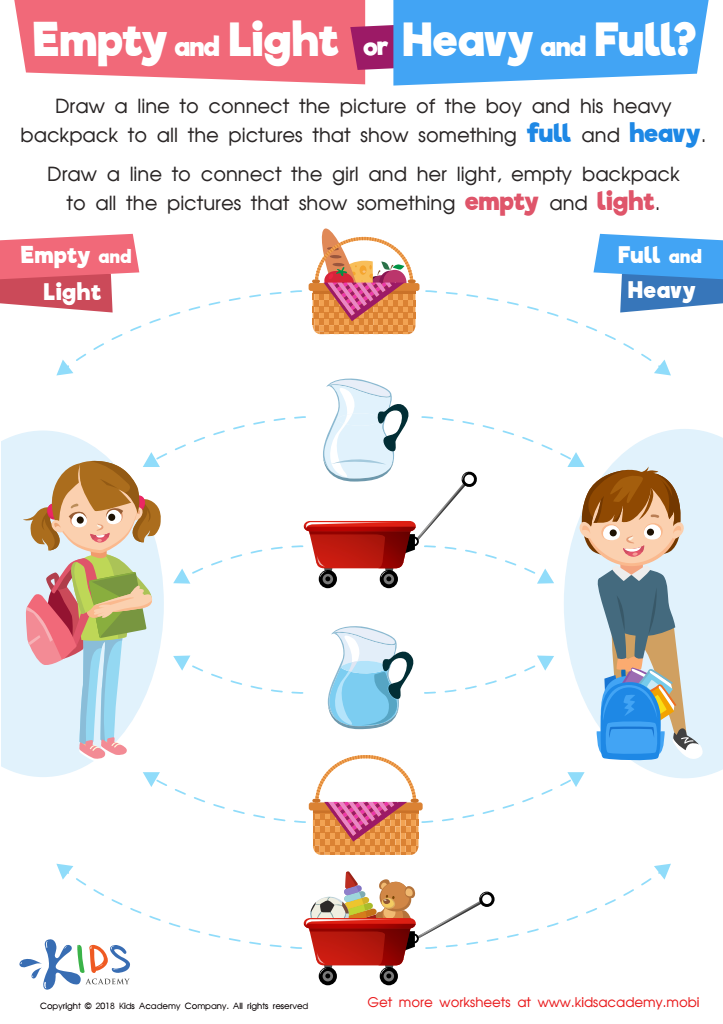
Empty and Light or Heavy and Full? Worksheet
 Assign to My Students
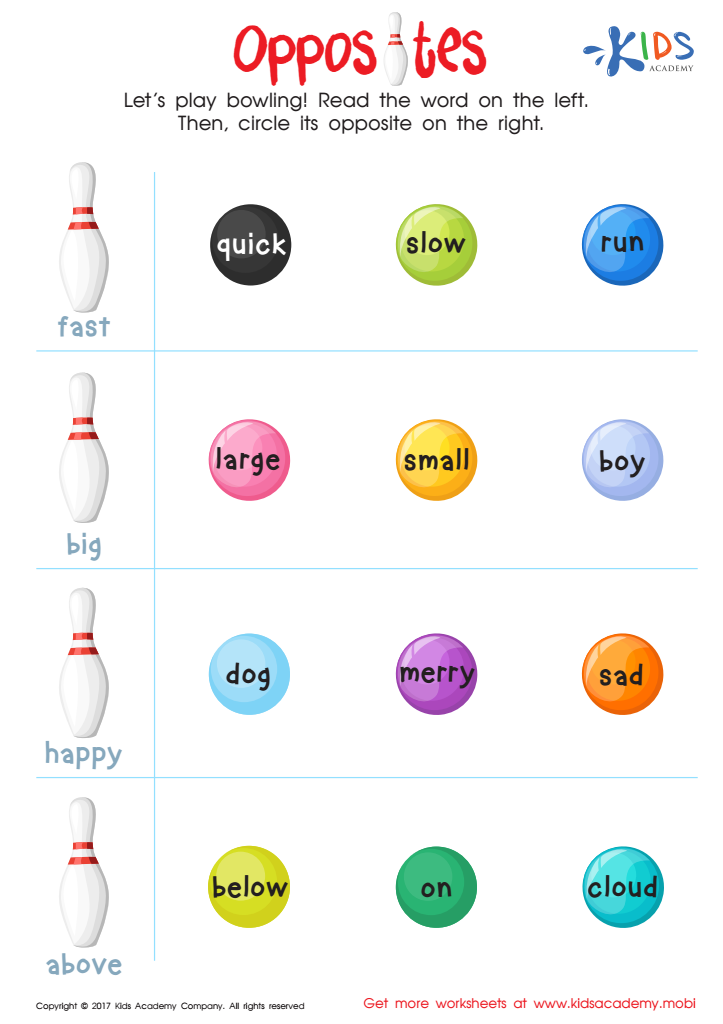
Opposites Worksheet
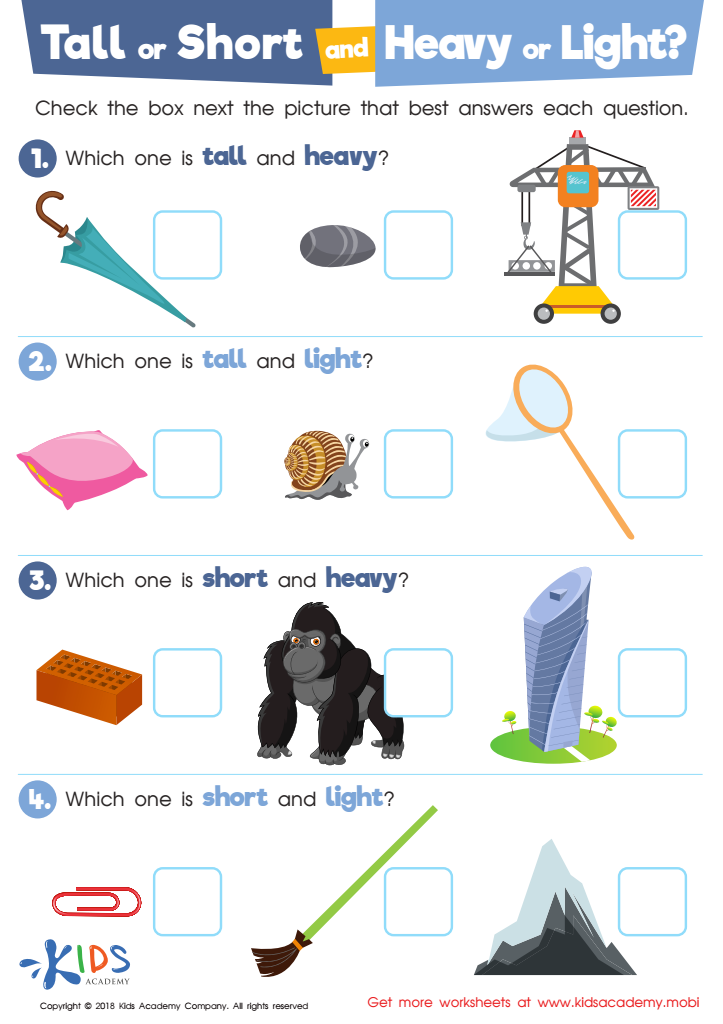
Tall or Short and Heavy or Light? Worksheet
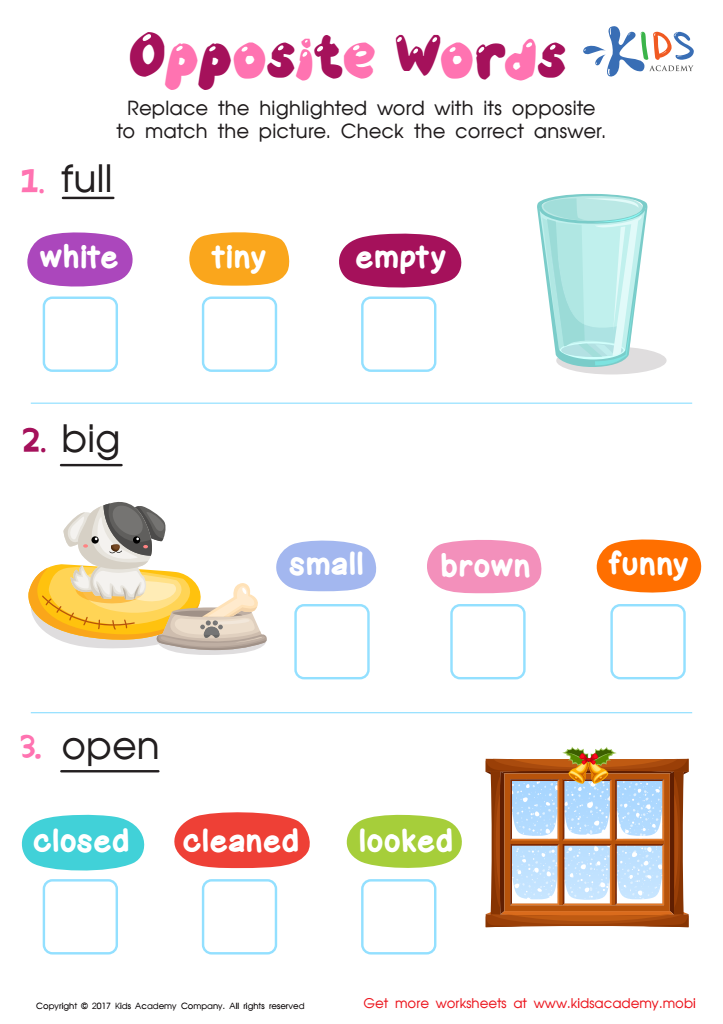
Opposite Words Worksheet






Understanding opposites is a fundamental concept for children aged 3-4, and it's vital for both parents and teachers to prioritize this. Learning about opposites helps young children develop their cognitive abilities and language skills. By grasping the differences between concepts like "hot" and "cold," "big" and "small," or "happy" and "sad," children enrich their vocabulary and improve their ability to articulate their thoughts and feelings.
Moreover, mastering opposites enhances critical thinking. When children compare and contrast different ideas, they learn to analyze and categorize information, skills that are essential as they progress in their education. This understanding also supports social-emotional development, enabling children to recognize and express emotions—an important part of their interpersonal relationships.
Additionally, engaging with opposites can make learning fun and interactive. Parents and teachers can use games, stories, and creative activities, turning abstract concepts into hands-on experiences. This not only fosters a love for learning but also creates bonding moments between adults and children.
In summary, emphasizing the learning of opposites at this formative age is crucial for developing essential life skills, laying a solid foundation for future learning, and encouraging open communication.








