Counting practice Easy Addition Worksheets for Ages 3-4
5 filtered results
-
From - To
Welcome to our "Counting Practice Easy Addition Worksheets" designed specifically for children aged 3-4. These engaging worksheets offer a fun and interactive way for young learners to develop essential counting and addition skills. Each activity is thoughtfully crafted to boost confidence and promote early math comprehension, featuring colorful illustrations and simple instructions. Kids will enjoy counting objects and solving basic addition problems, making learning enjoyable and effective. Perfect for parents and educators seeking to enhance early childhood education, our worksheets are easy to print and ideal for at-home learning or classroom use. Start nurturing your child's math journey today!
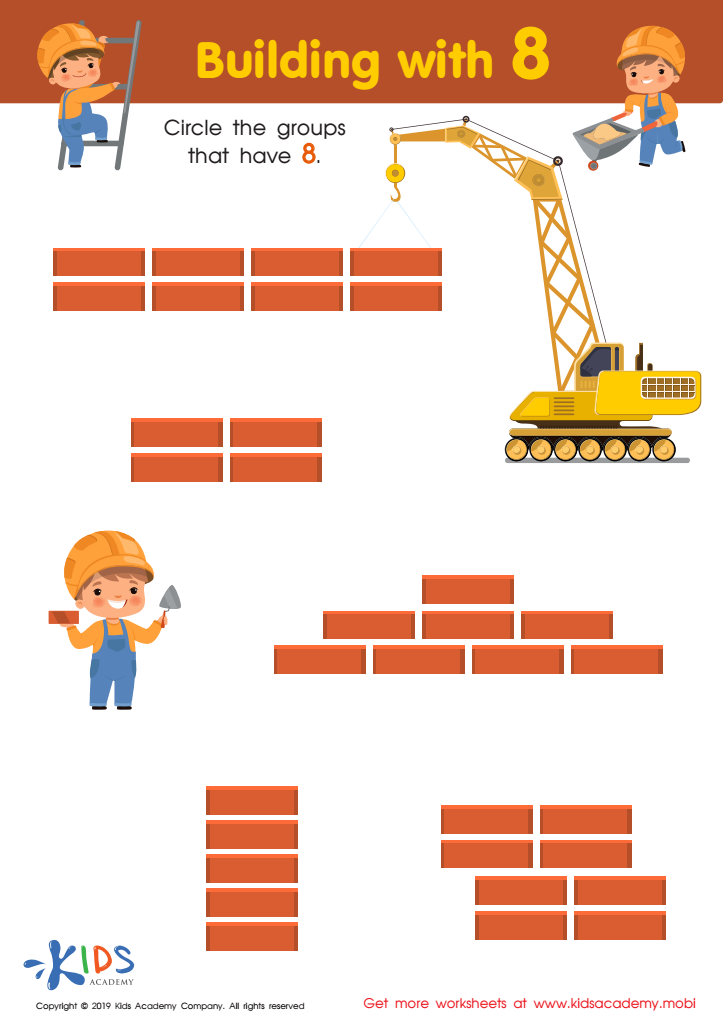
Building with 8 Worksheet
 Assign to My Students
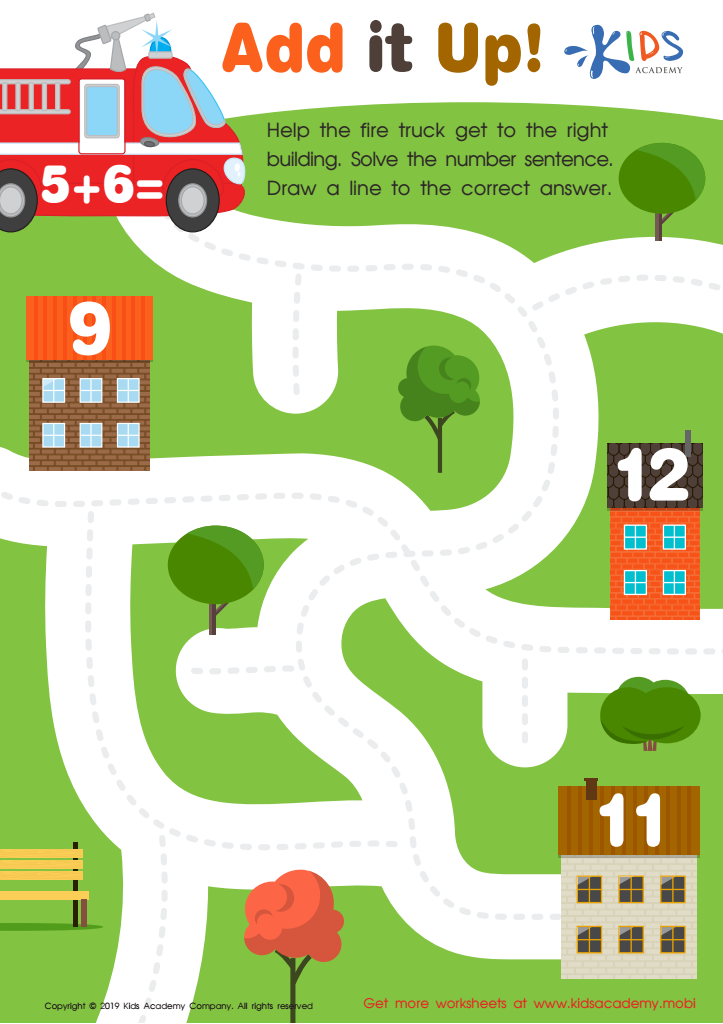
Add it Up Worksheet
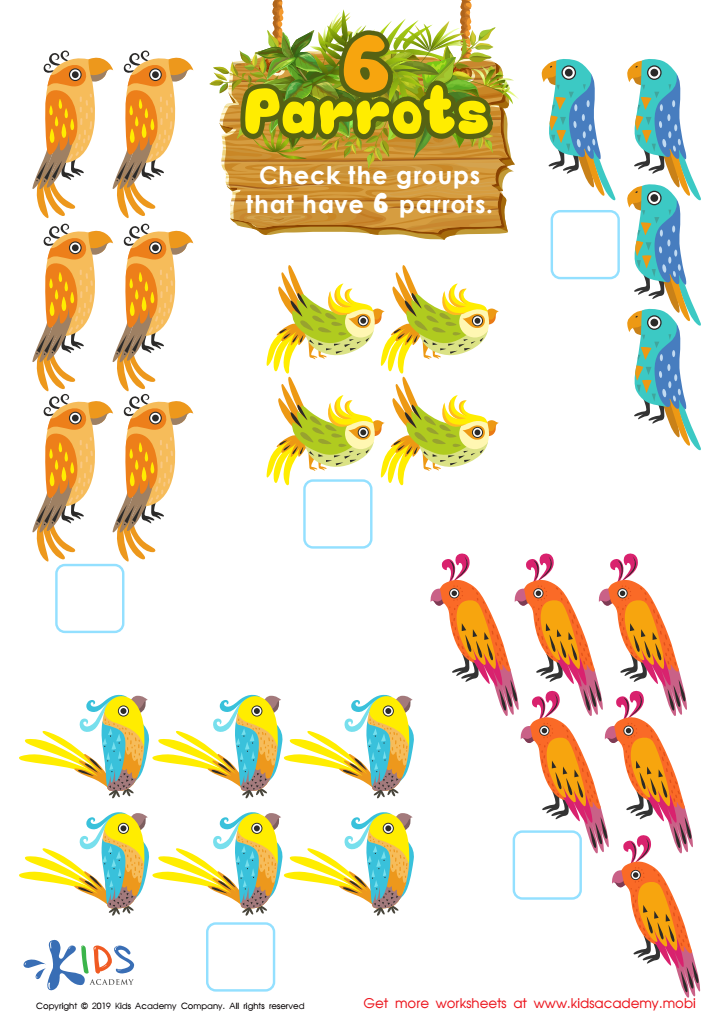
6 Parrots Worksheet
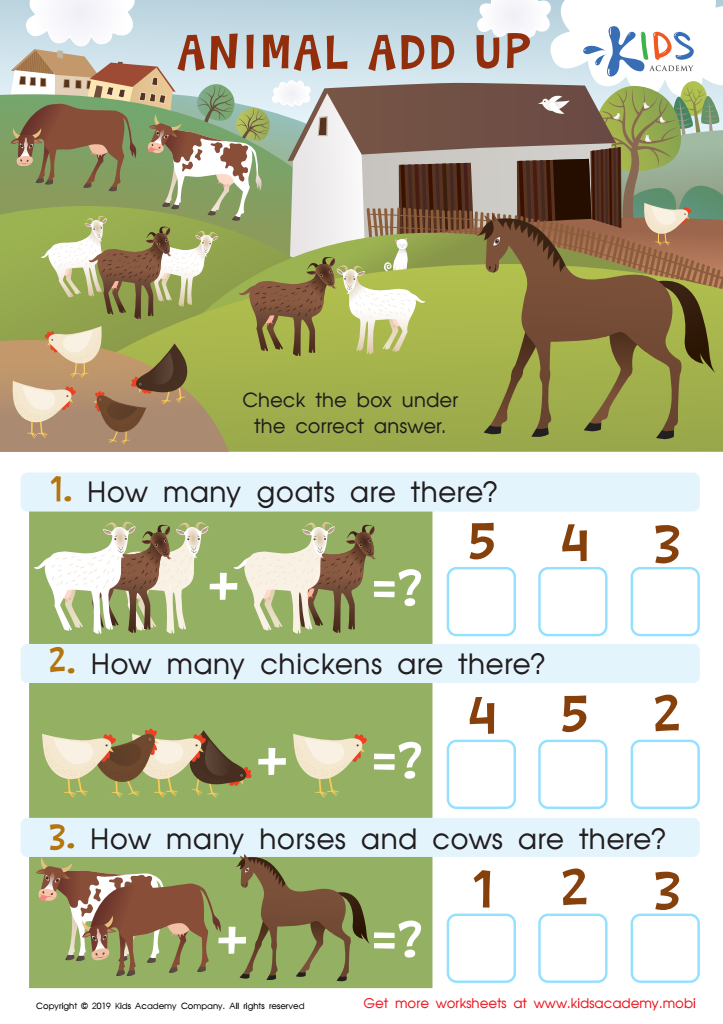
Animal Add Up Worksheet
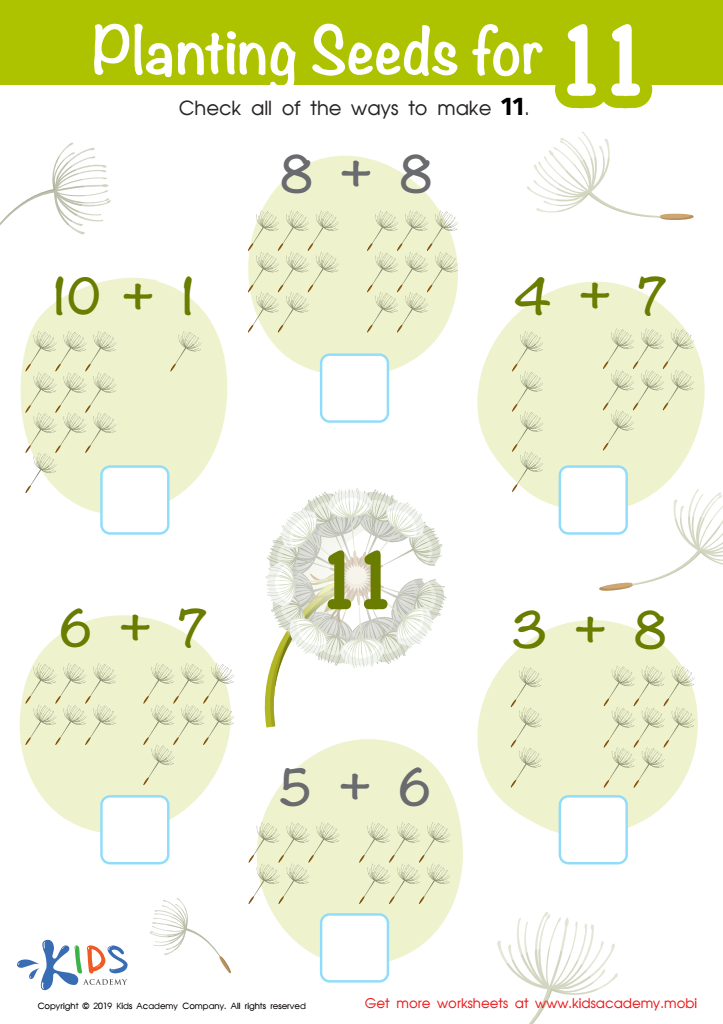
Planting Seeds for 11 Worksheet








Counting practice and easy addition are essential skills for children aged 3-4, making it crucial for parents and teachers to prioritize them. At this early stage, children are in a critical phase of cognitive development, where they begin to understand the concept of numbers and their relationships. Engaging in counting activities lays a solid foundation for numeracy skills, which are vital for future math success.
Parents and teachers can facilitate a love of math through playful and interactive counting exercises. By incorporating fun activities, such as counting toys, singing songs with numbers, or using everyday objects, children can develop a strong sense of number recognition and counting sequences. This hands-on learning enhances their ability to grasp more complex mathematical concepts as they progress in school.
Moreover, counting and easy addition contribute to a child's problem-solving abilities and critical thinking skills. They help children make sense of their environment and understand patterns, contributing to holistic cognitive development. Supporting counting practice also fosters confidence, as children experience the joy of mastering new skills. In short, investing time in these activities will not only prepare young learners for academic success but also enrich their early educational experiences, nurturing a lifelong love for learning.








