Story sequencing Easy Reading Worksheets for Ages 3-4
3 filtered results
Difficulty Level
Grade
Age
-
From - To
Subject
Activity
Standards
Discover our collection of Story Sequencing Easy Reading Worksheets designed specifically for ages 3-4! Engage young minds by helping them understand the order of events in a story. These colorful, fun worksheets are built to develop early reading and cognitive skills. Each activity aids in recognizing patterns and establishing logical sequences, setting a strong foundation for future reading comprehension. Perfect for home or classroom use, our worksheets encourage curiosity and joy in reading. Visit Kids Academy and provide your toddlers with an exciting learning journey through storytelling!
Favorites
With answer key
Interactive
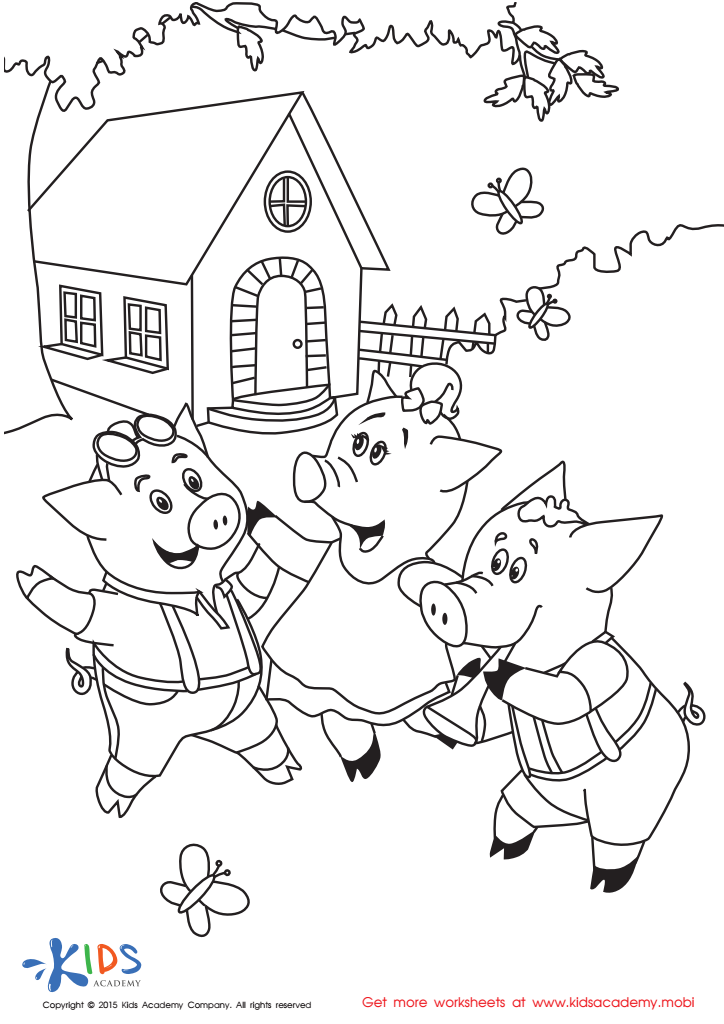
Folktales Printable PDF Worksheet: The 3 Little Pigs
Then, help your child to color the scene with pink piglets, blue sky and green grass. Make the brick house bright and vivid. Enjoy!
Download (PDF)
 Assign to My Students
Assign to My Students
Folktales Printable PDF Worksheet: The 3 Little Pigs
Worksheet
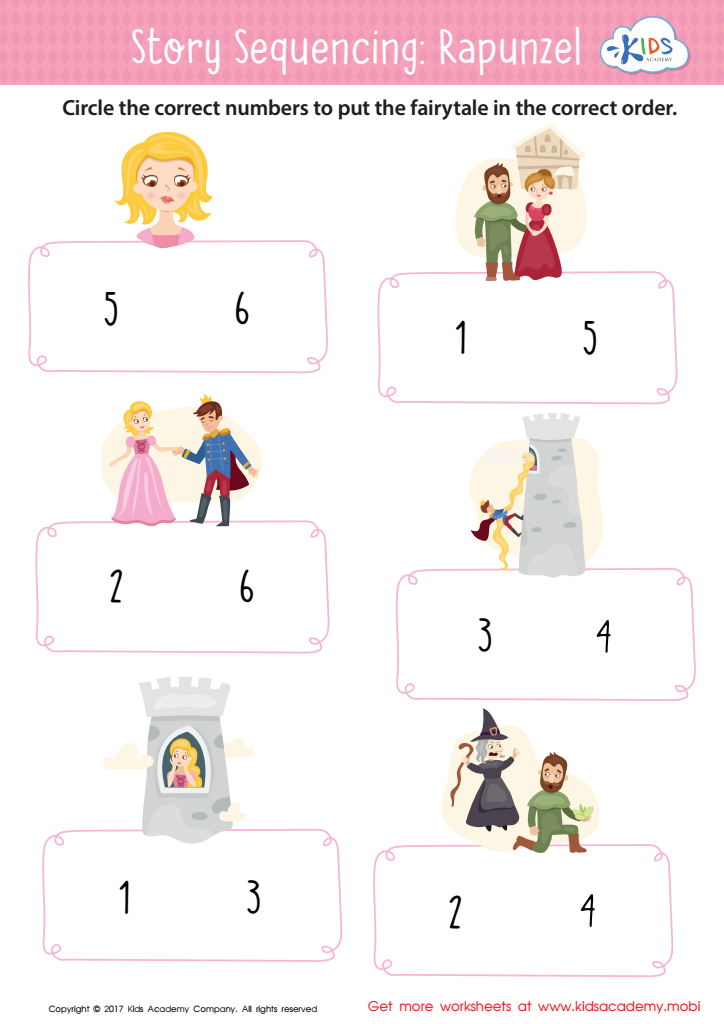
Rapunzel Story Sequencing Worksheet
Enhance your child's reading comprehension and help them sequence story events with this Rapunzel worksheet – it's thrilling and educational! Max 80 words.
Help your child develop their reading comprehension with this exciting Rapunzel story sequencing worksheet! Kids view pictures from the classic fairytale and number them in the right order, reinforcing their understanding of story events. Educational and entertaining!
Rapunzel Story Sequencing Worksheet
Worksheet
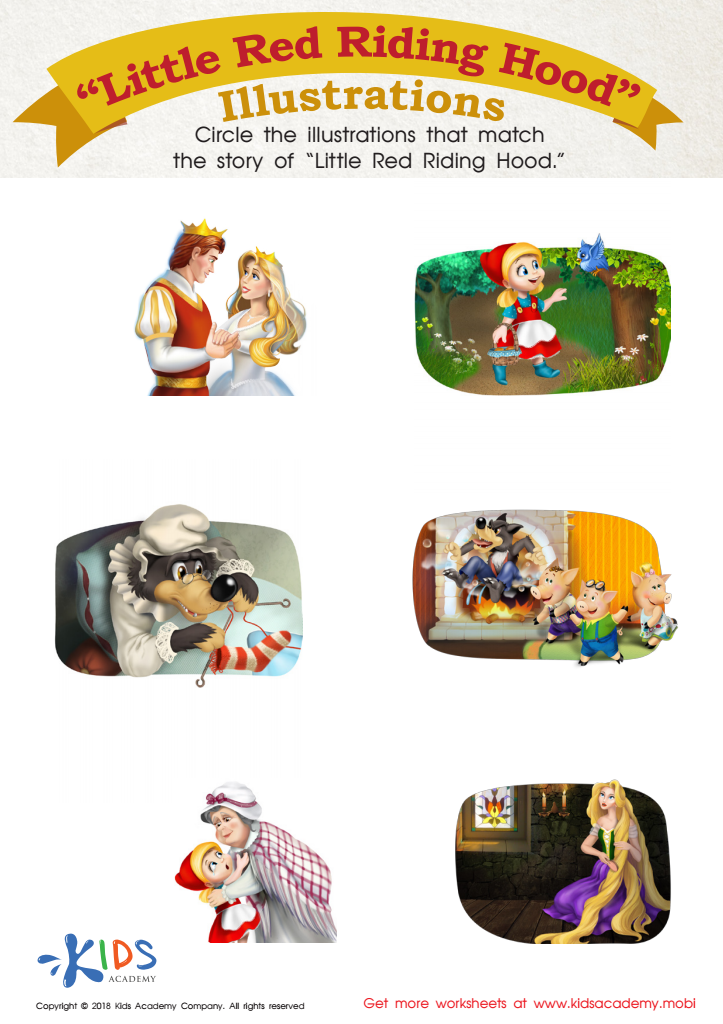
Little Red Riding Hood: Illustrations Worksheet
This worksheet encourages children to analyze illustrations from familiar fairy tales, such as Little Red Riding Hood, and decide which ones match the story and which don't. It's a great way to help them recall and retell stories they've heard or read. Illustrations are important elements that help children comprehend advanced readings.
Little Red Riding Hood: Illustrations Worksheet
Worksheet
Join Kids Academy for Free
Who is primarily going to use this learning content?





.jpg)


Parents and teachers should prioritize story sequencing in early reading for children ages 3-4, as it forms a critical foundation for their cognitive, linguistic, and social development. At this crucial age, children are rapidly expanding their abilities to understand and organize information. Story sequencing helps them grasp the concept of order by following the beginning, middle, and end of a narrative. This insight is vital not only for reading comprehension but also for everyday activities, ensuring children can understand sequences and causality, which impact decision-making and problem-solving.
Moreover, story sequencing enhances language proficiency, boosting vocabulary and grammatical understanding. It encourages children to articulate thoughts sequentially, improving their ability to recount events and express ideas clearly. This skill is fundamental in developing effective communication, both verbally and in writing.
Socially, engaging with story sequences fosters empathy and emotional insight. By identifying with characters’ journeys and emotions, children learn to mirror feelings and actions. This empathetic understanding is crucial in nurturing cooperation and conflict resolution skills.
Investing in story sequencing resources ensures young learners establish robust academic and life skills, paving the way for success in school and beyond. It equips them with the critical capabilities to interact meaningfully and navigate the complexities of their world.