Cognitive Development Easy Reading Comprehension Worksheets for Ages 3-4
3 filtered results
-
From - To
Boost your child's cognitive development with our easy reading comprehension worksheets designed for ages 3-4. These printable activities are crafted to enhance early learning skills by engaging young minds in fun, interactive ways. Through colorful illustrations and simple texts, kids develop critical thinking, improve vocabulary, and cultivate a love for reading. Each worksheet is tailored to promote understanding, memory, and concentration while making learning enjoyable. Perfect for parents and educators looking to provide a strong foundation for lifelong educational success, our worksheets are an invaluable resource on kidsacademy.mobi. Start your child's cognitive journey today!
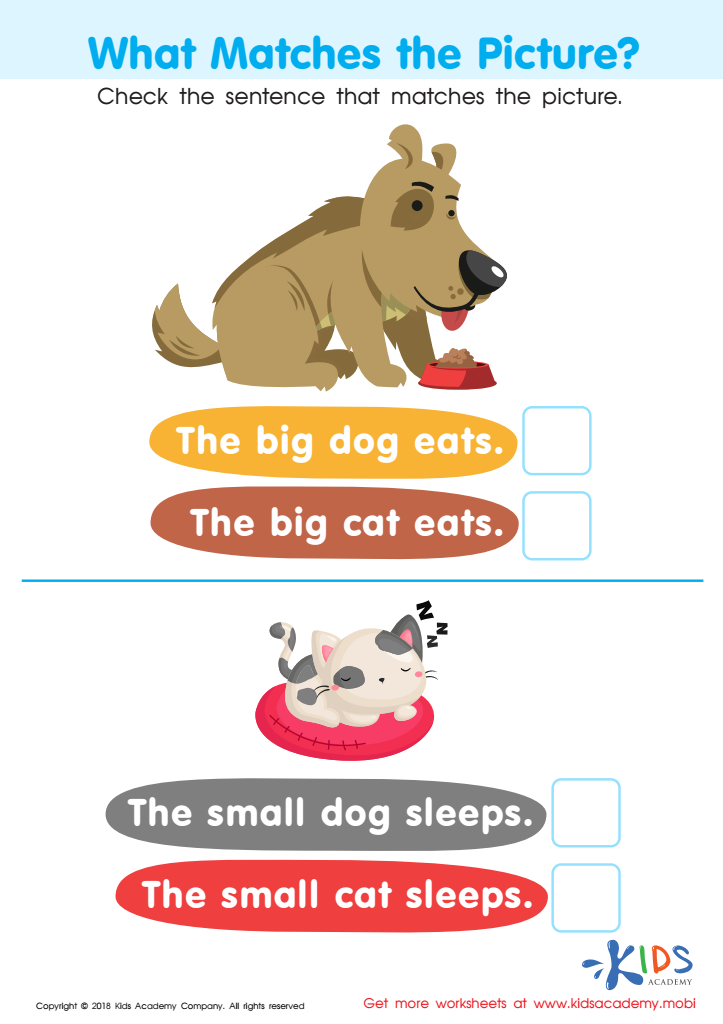
What Matches the Picture? Worksheet
 Assign to My Students
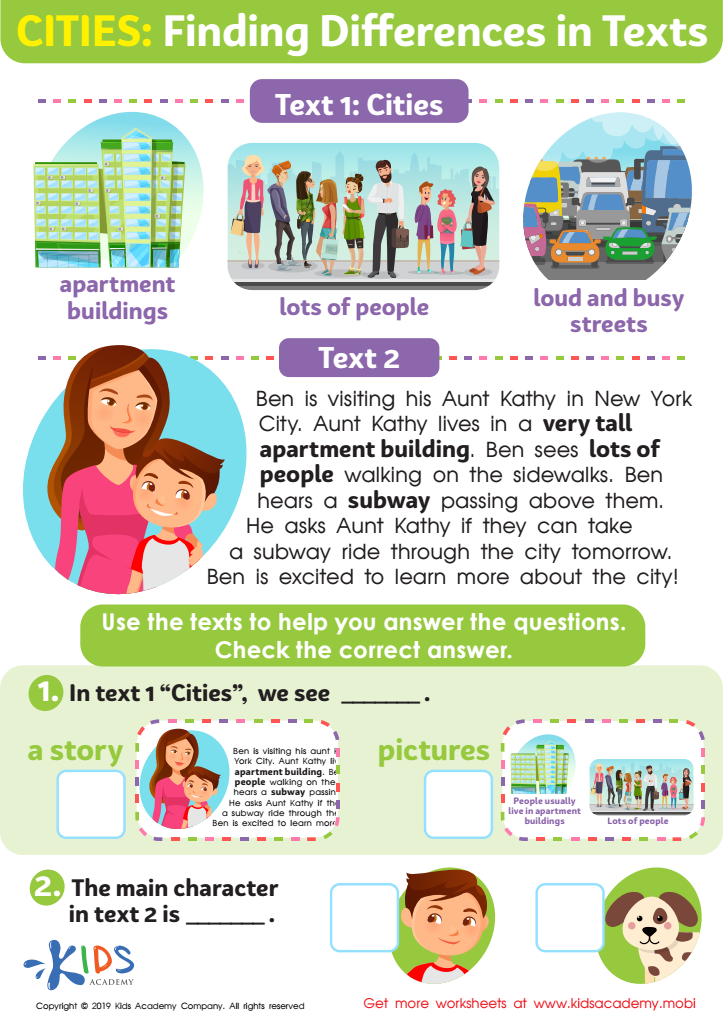
Cities: Finding Differences Worksheet
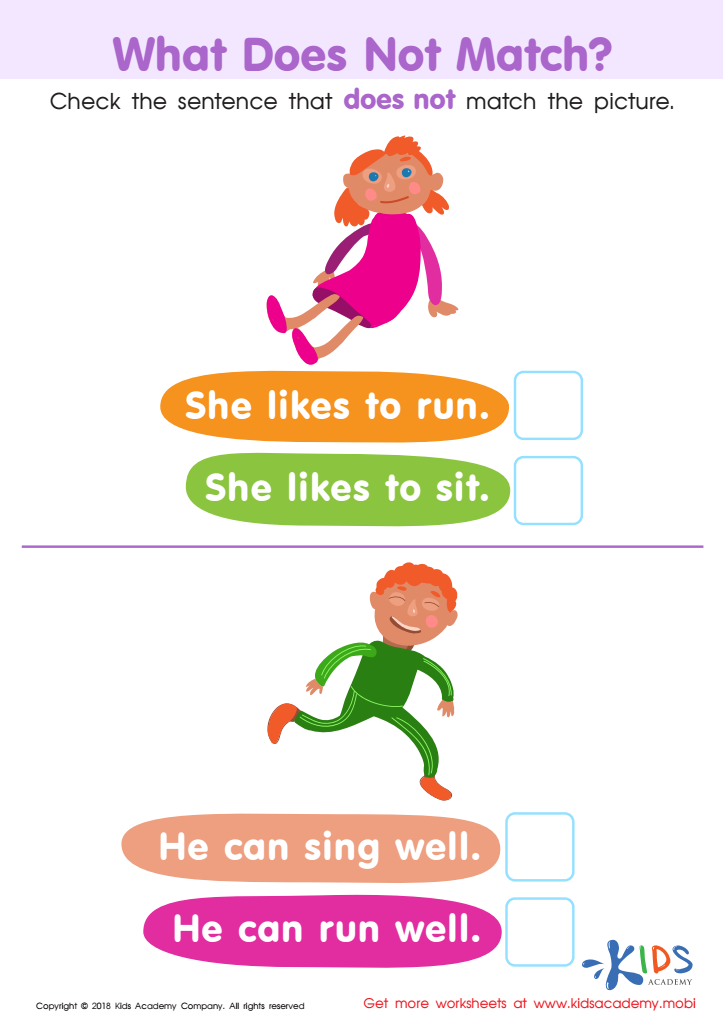
What Does Not Match? Worksheet





.jpg)


Cognitive development in the early years lays the groundwork for a child's future learning and intellectual growth. At ages 3-4, children's brains are rapidly developing, making the timing crucial for introducing easy reading comprehension exercises. Engaging with simple texts can significantly boost their cognitive abilities in multiple ways.
When young children interact with easy-to-read books, they sharpen their ability to recognize letters and sounds, foundational skills critical for reading. This practice also enhances their vocabulary, expanding their understanding of language and its nuances. As they follow stories, they're building memory and sequencing skills, learning to predict outcomes, and starting to understand cause and effect.
Parents and teachers who emphasize reading comprehension for young children foster a love for reading early on, establishing a positive relationship with learning. Furthermore, easy reading comprehension nurtures attention span and concentration. Interactive storytime activities, such as asking questions and discussing the plot, encourage critical thinking and conversational skills.
Supporting cognitive development through reading enriches a child's overall school readiness, contributing to their success in more advanced educational tasks as they grow. By nurturing these abilities early, educators and caregivers invest in a child's academic foundation, social competence, and lifelong learning journey.