Vocabulary enhancement Easy Phonics Worksheets for Ages 3-5
7 filtered results
-
From - To
Fuel your child's language development with our "Vocabulary Enhancement Easy Phonics Worksheets for Ages 3-5." Designed to spark young minds, these interactive worksheets combine fun and learning, to make phonics enjoyable. Each activity helps children recognize letters, sounds, and basic words while expanding their vocabulary seamlessly. Perfect for at-home practice or in the classroom, these worksheets help develop critical reading and phonetic skills early on. Engage your 3 to 5-year-old with colorful exercises that promote confidence and enthusiasm in their literacy journey. Discover a world where learning feels like play! Download now and see the difference.
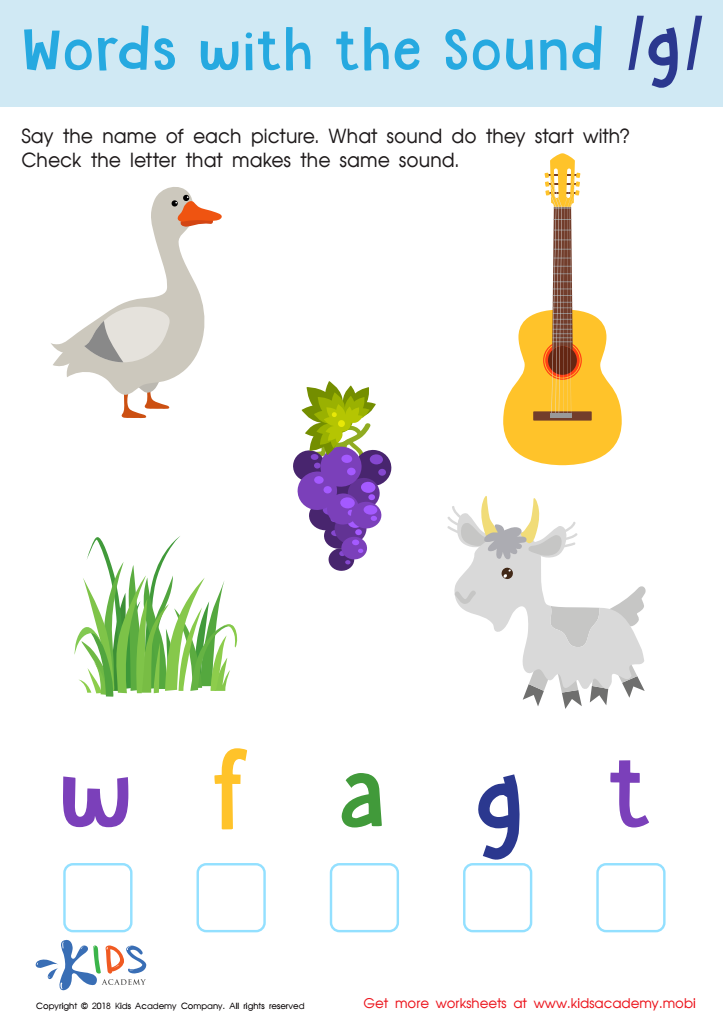
Words with sound g Reading Worksheet
 Assign to My Students
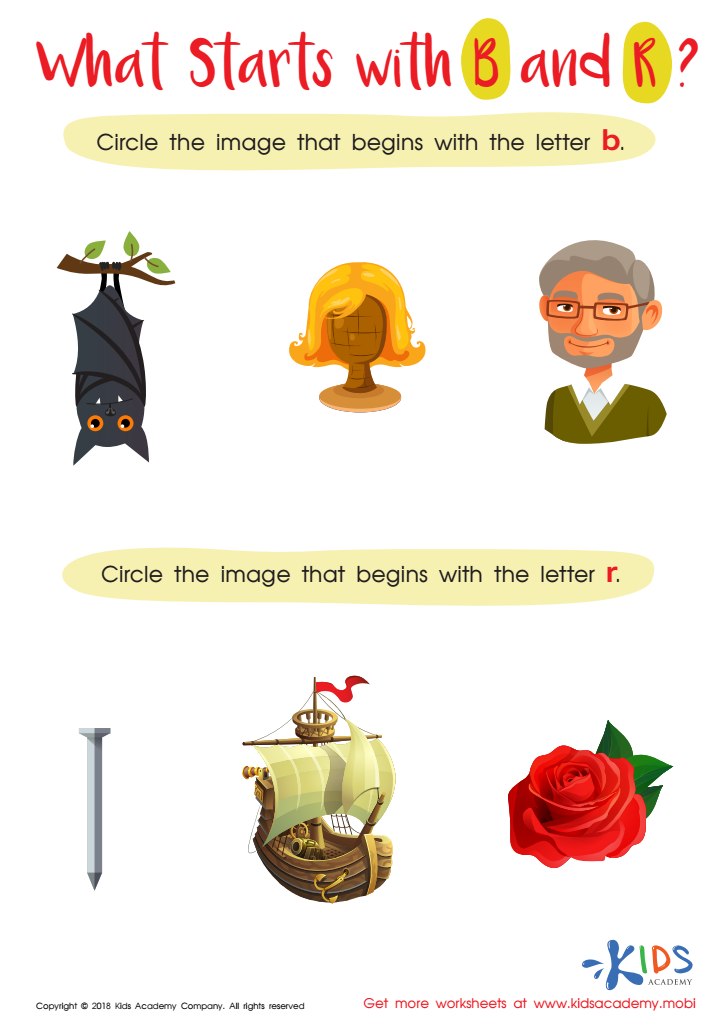
What Starts with B and R? Worksheet
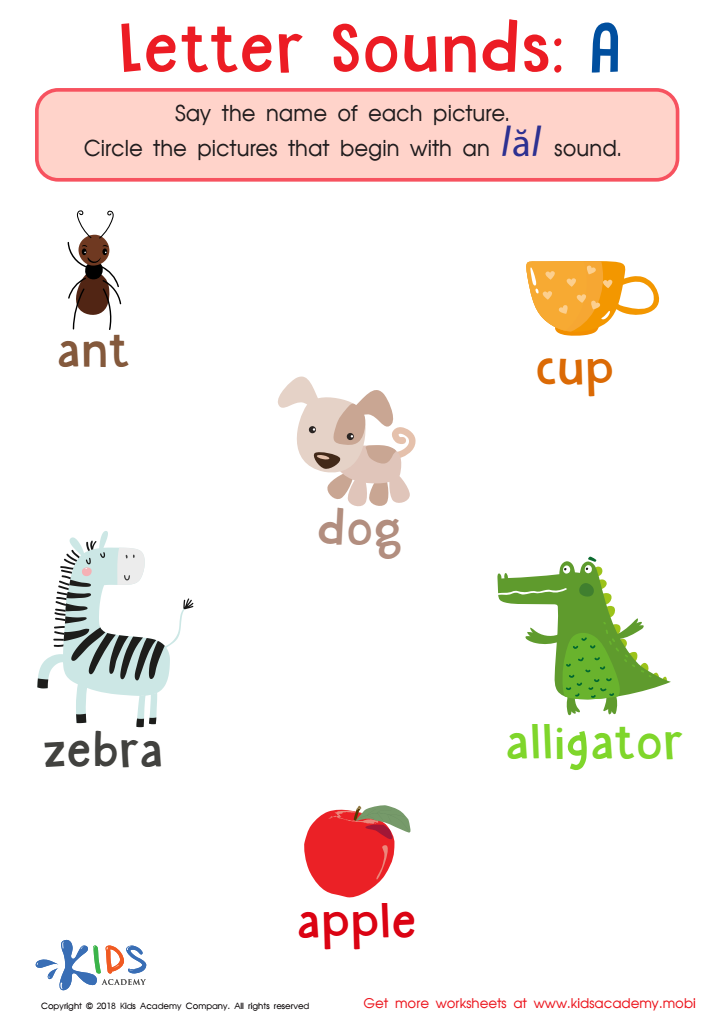
Letter A Sounds Worksheet
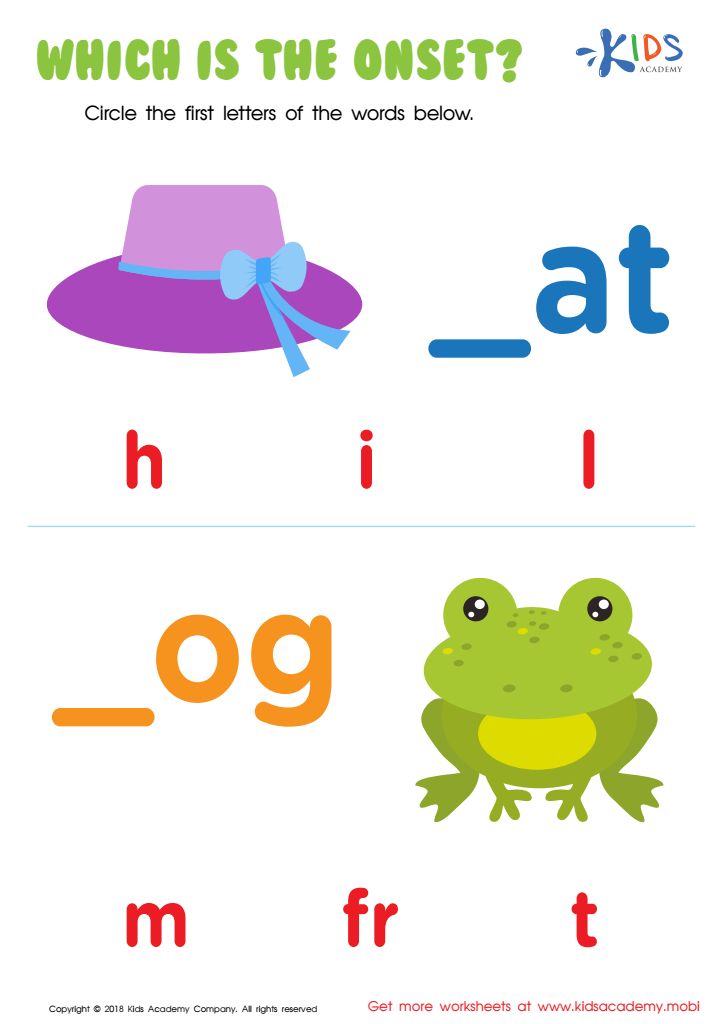
Which Is the Onset? Worksheet
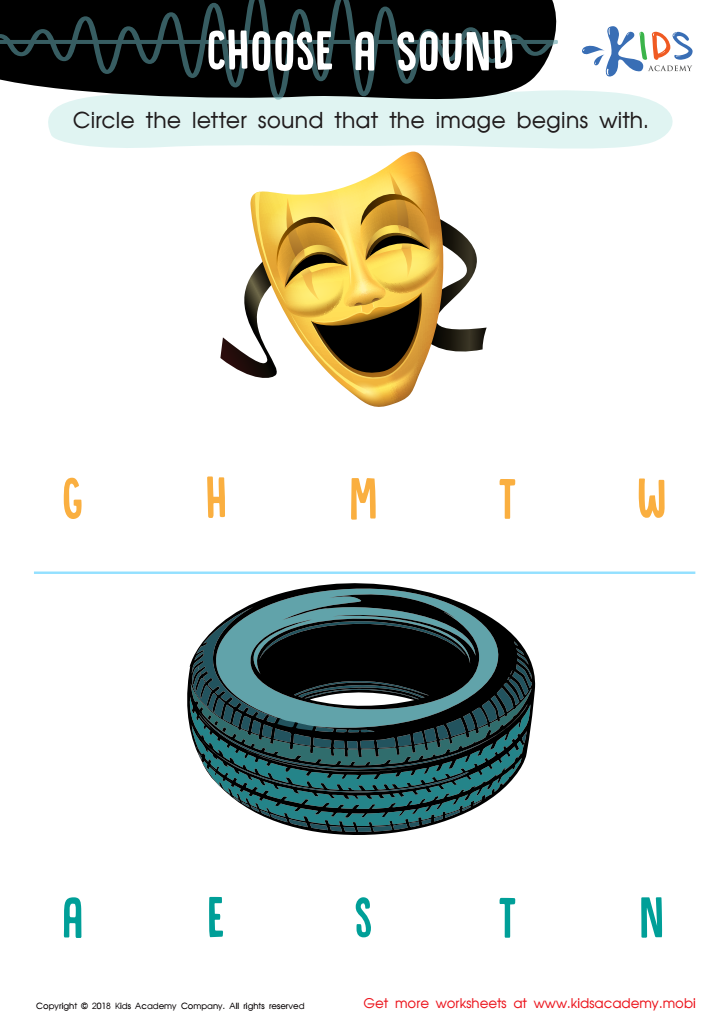
Choose a Sound Worksheet
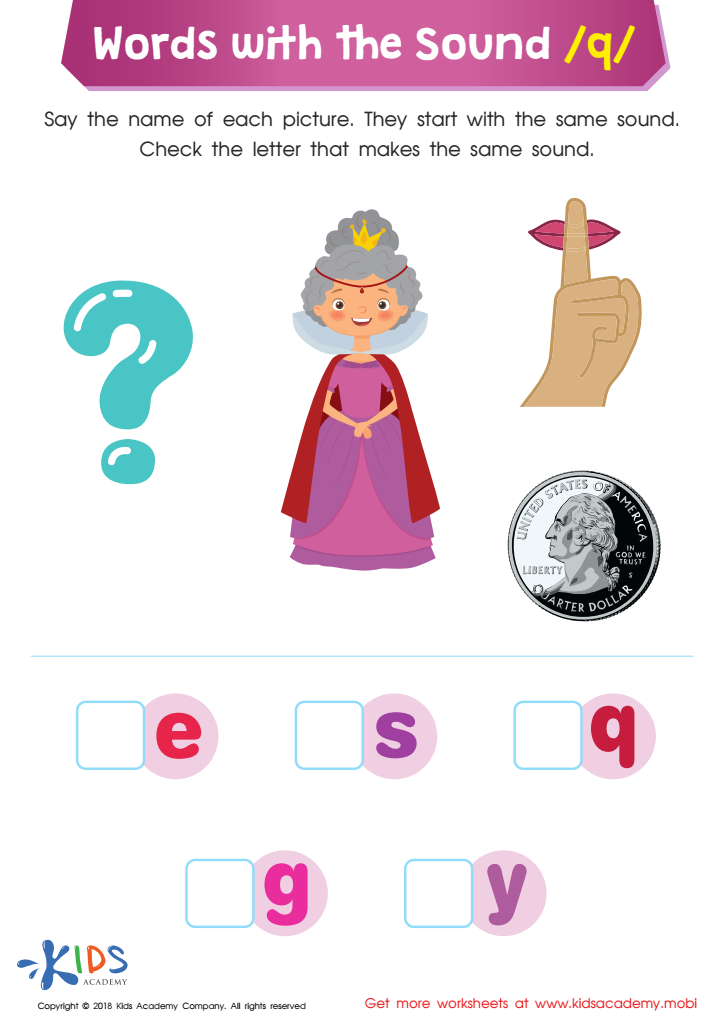
Words with Sound Q Reading Worksheet
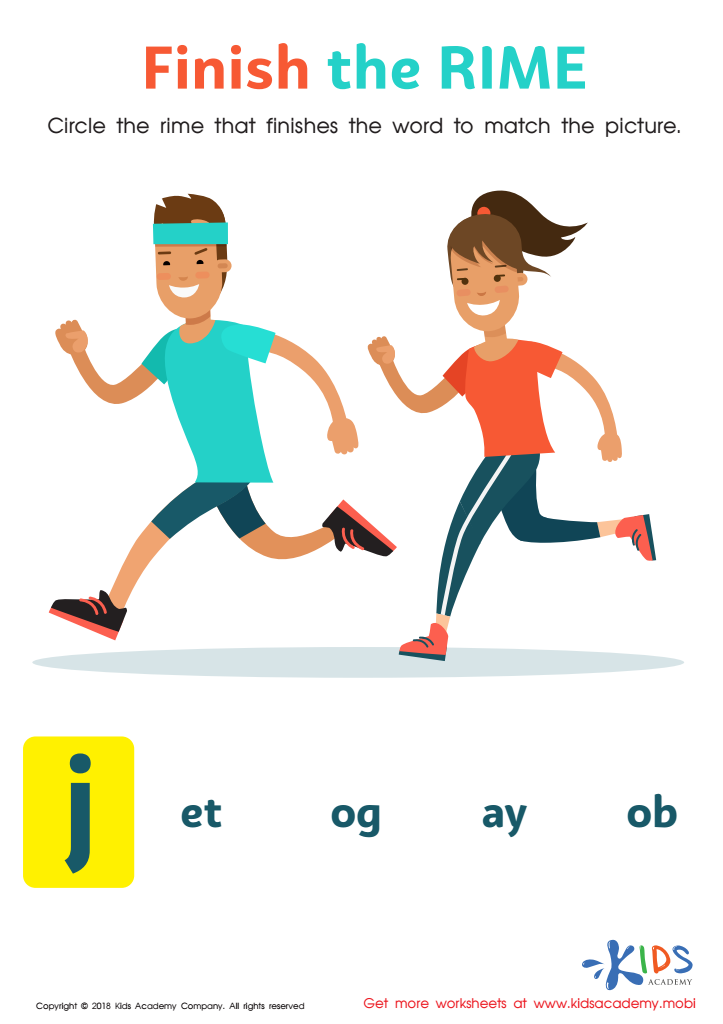
Finish the Rime Worksheet








Parents and teachers should prioritize vocabulary enhancement and easy phonics for children ages 3-5 because these crucial early years are a foundational period for language development. At this stage, children are rapidly acquiring new words and beginning to understand how sounds form words. Enhancing vocabulary skills helps in expanding their ability to express themselves clearly and understand others, thereby boosting overall communication abilities.
Introducing easy phonics early on lays the groundwork for effective reading skills. Phonics teaches children the relationship between sounds and letters, helping them decode new words as they grow older. This foundational skill can significantly impact future reading proficiency, making it easier for children to comprehend more complex texts and boosting their academic success.
Moreover, a strong vocabulary and phonics comprehension enhance cognitive development by fostering critical thinking, improving memory, and aiding in problem-solving. Socially, a well-developed vocabulary allows children to interact more effectively with their peers and teachers, promoting better relationships and confidence.
Ultimately, investing time in vocabulary enhancement and easy phonics benefits children’s linguistic and cognitive development, paving the way for lifelong learning and academic achievement. Early intervention in these areas equips children with the essential tools they need to succeed both inside and outside the classroom.