Counting skills Easy Addition and Subtraction Word Problems Worksheets for Ages 3-5
6 filtered results
-
From - To
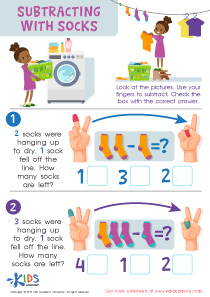
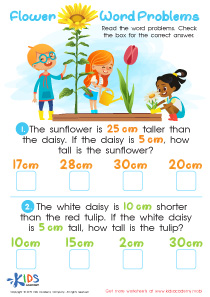
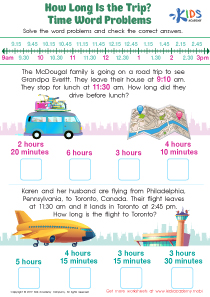
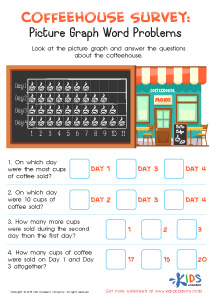
Introducing our "Counting Skills: Easy Addition and Subtraction Word Problems Worksheets" designed for kids ages 3-5! These engaging worksheets make learning foundational math concepts fun and interactive. Children will explore simple addition and subtraction through relatable word problems, enhancing their counting skills and number recognition. Each worksheet features colorful illustrations and easy-to-understand scenarios, making it perfect for early learners. Help your little ones develop critical thinking and problem-solving abilities while fostering a love for math. Whether at home or in the classroom, our worksheets provide a delightful way to strengthen counting skills and build confidence in young mathematicians!
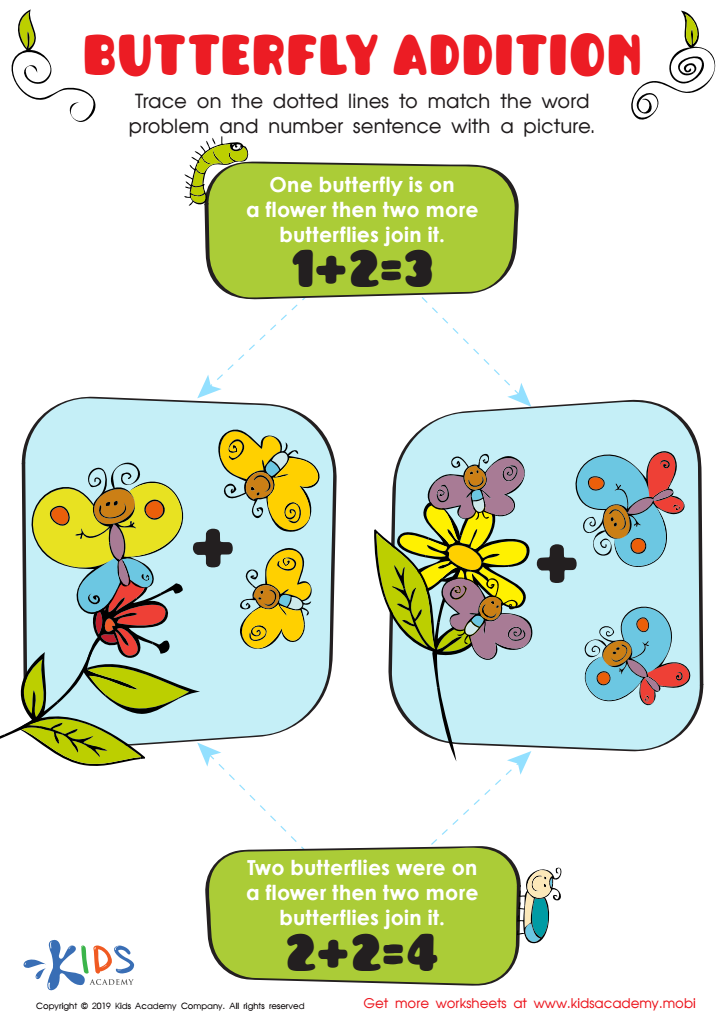
Butterfly Addition Worksheet
 Assign to My Students
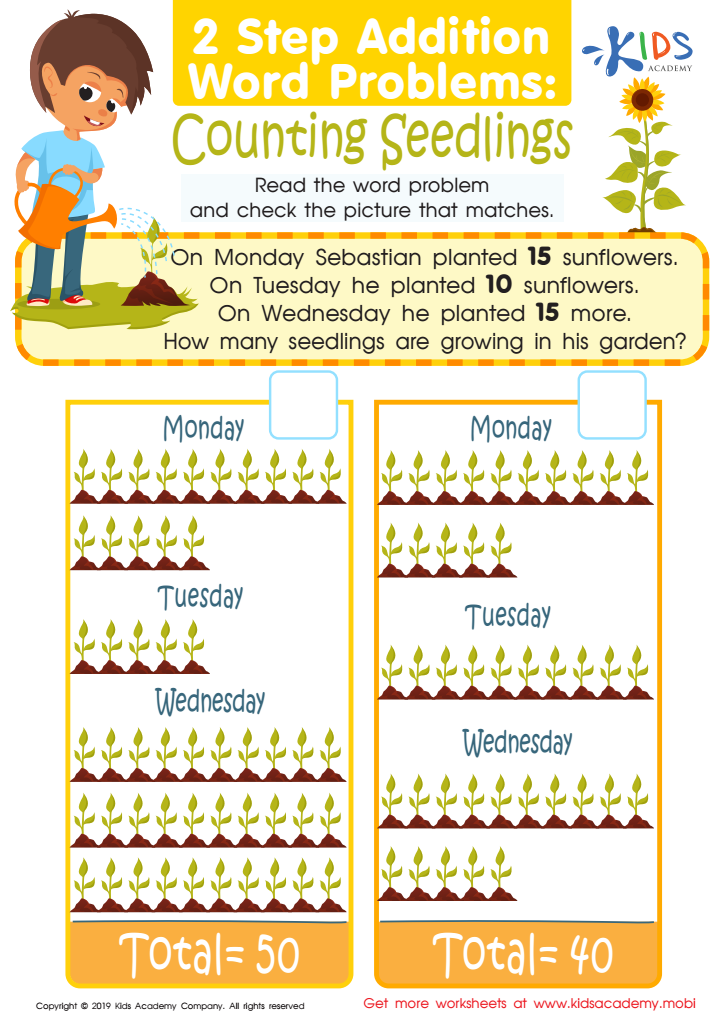
Counting Seedlings Worksheet
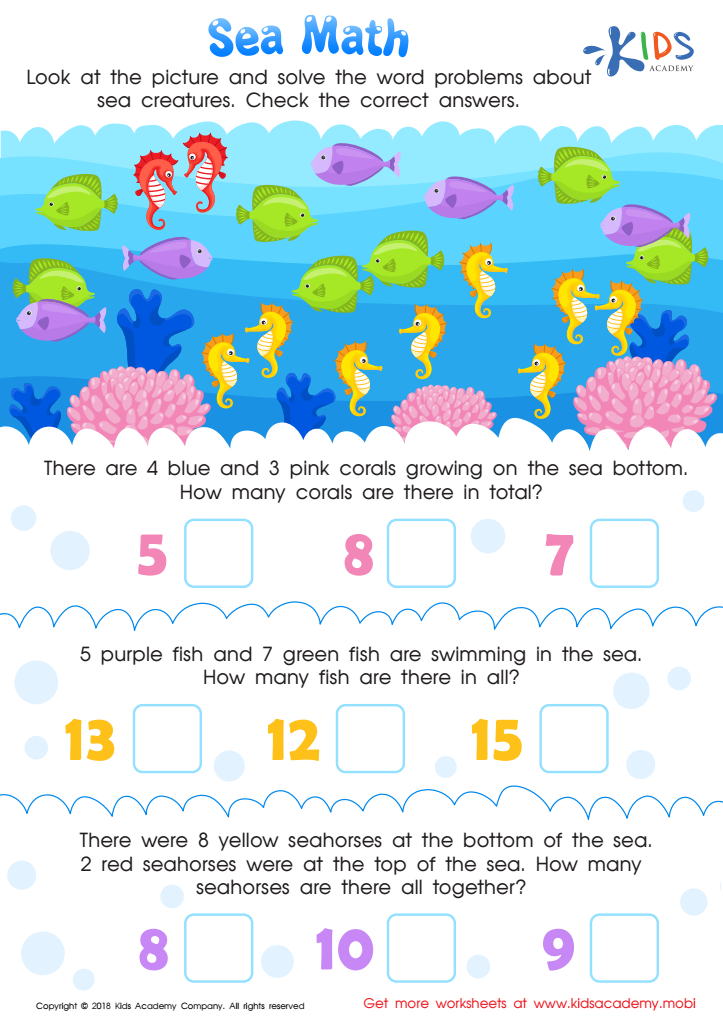
Sea Math Worksheet
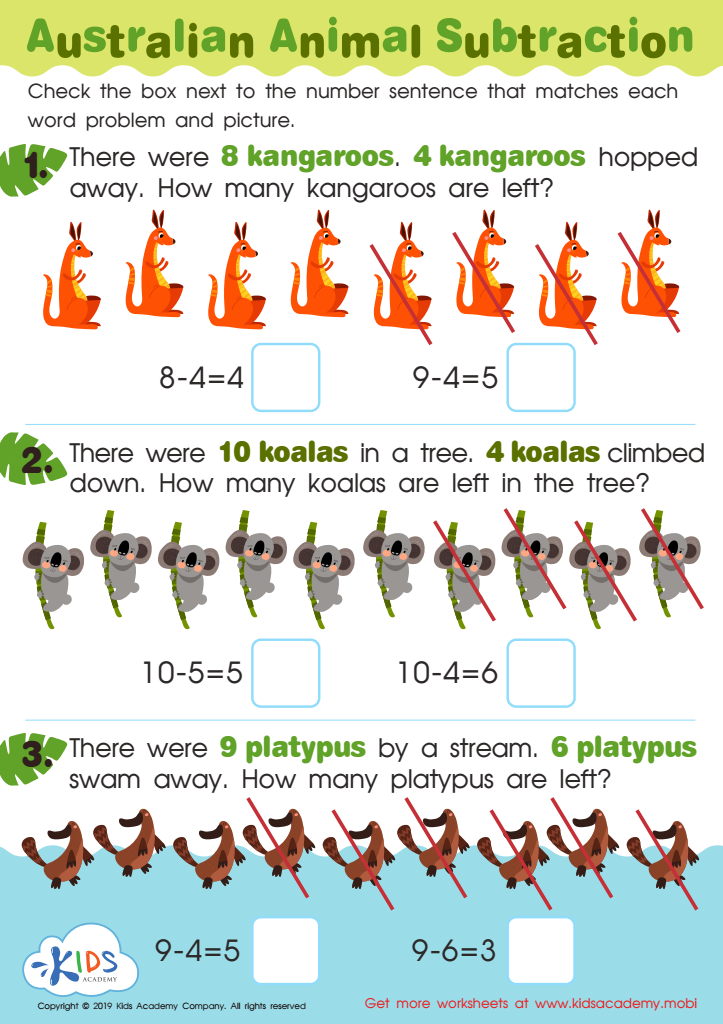
Australian Animal Subtraction Worksheet
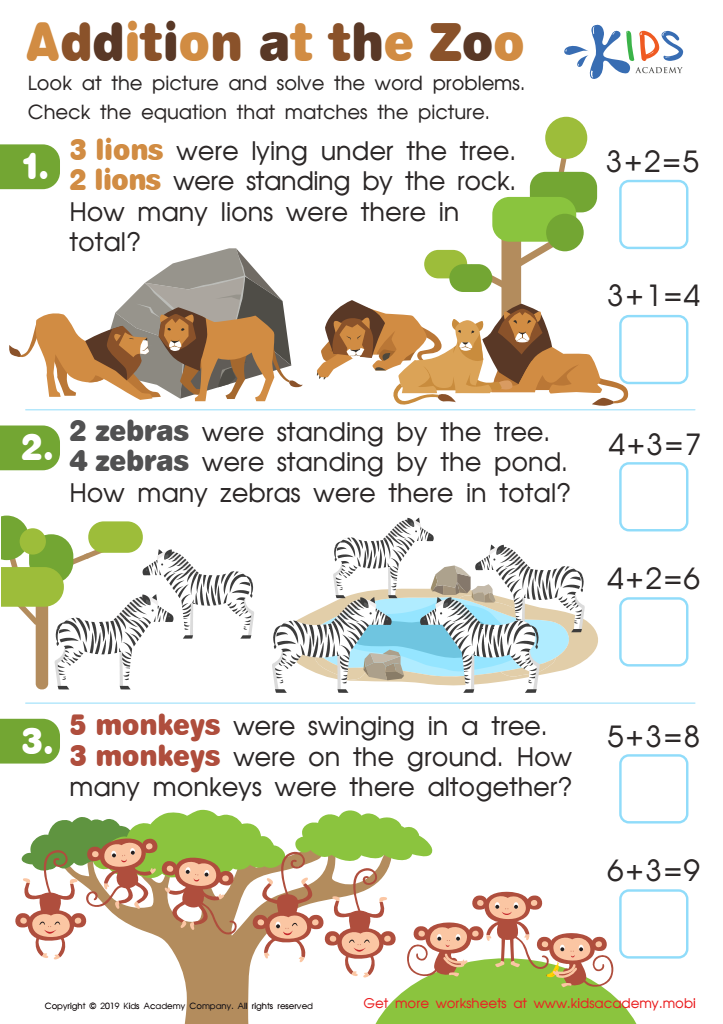
Addition at the Zoo Worksheet
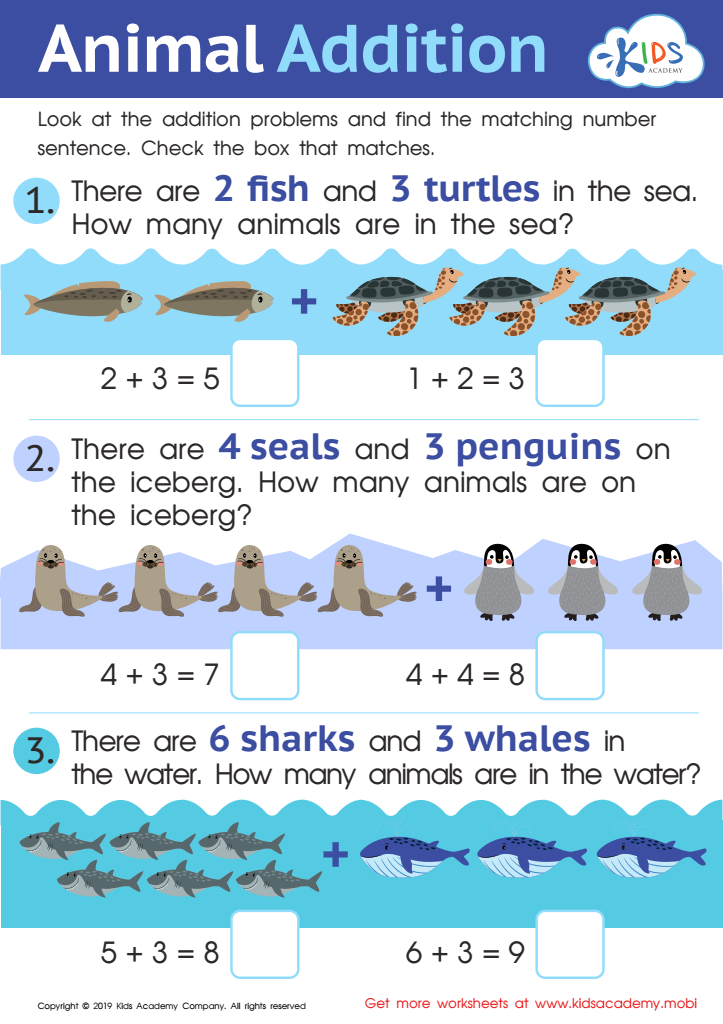
Animal Addition Worksheet








Counting skills and basic addition and subtraction word problems are foundational to a child's mathematical education, particularly for ages 3-5, a critical period for cognitive development. Parents and teachers should prioritize these skills for several reasons.
Firstly, early mathematical skills promote overall cognitive development and logical thinking. Engaging children in counting and simple arithmetic helps them develop critical problem-solving abilities and reasoning skills that will serve them throughout their educational journey.
Secondly, these skills improve language development. Word problems provide opportunities for children to enhance their vocabulary, comprehension, and communication skills as they learn to interpret and solve problems.
Additionally, early counting and math skills foster a positive attitude towards mathematics. When children feel confident in their abilities, they are more likely to engage in math-related activities, reducing math anxiety in later years.
Furthermore, counting and simple operations support their understanding of everyday concepts, such as quantity, measurement, and relationship-based reasoning. These concepts are essential not only in math but also in daily life scenarios, helping children make informed decisions.
In conclusion, prioritizing early counting skills and easy word problems lays a strong foundation for lifelong learning and success in mathematics, making it an essential focus for parents and educators alike.