Sorting skills Easy Numbers Worksheets for Ages 3-5
3 filtered results
-
From - To
Boost your child's early math abilities with our "Sorting Skills Easy Numbers Worksheets for Ages 3-5." These engaging, printable worksheets are designed to enhance your little one's sorting and number recognition skills in a fun and interactive way. Ideal for preschoolers, each worksheet features activities like matching, counting, and color sorting, which build a strong foundation for future math learning. Perfect for both classroom and home settings, these worksheets make learning enjoyable and effective. Help your child develop essential skills today with our thoughtfully crafted, kid-friendly resources. Download now for free at Kids Academy!
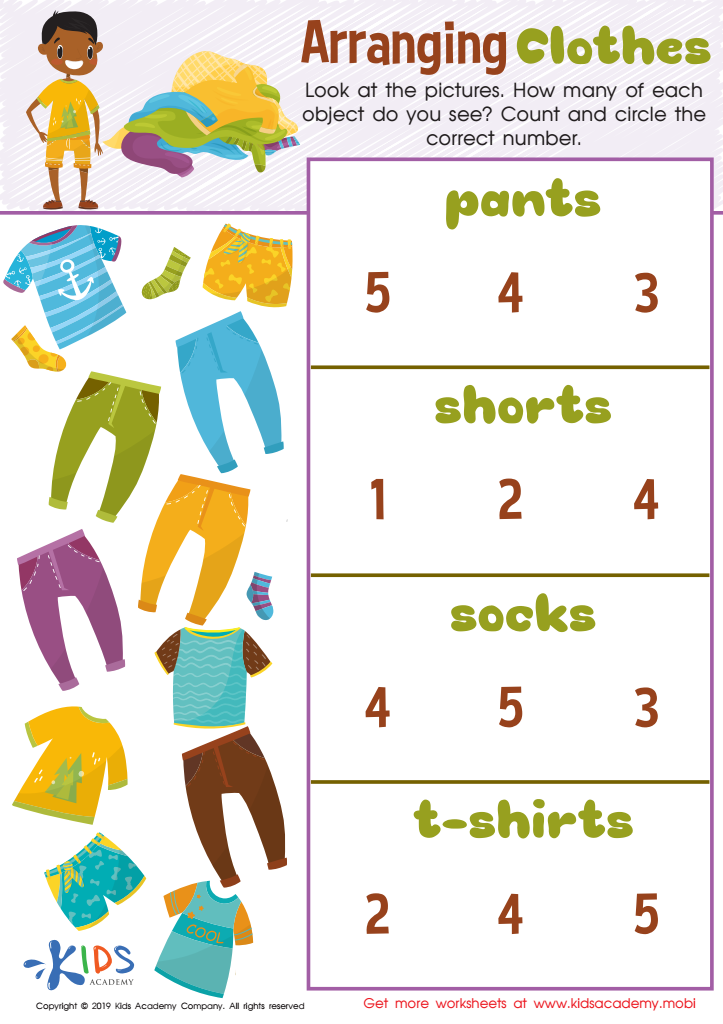
Arranging Clothes Worksheet
 Assign to My Students
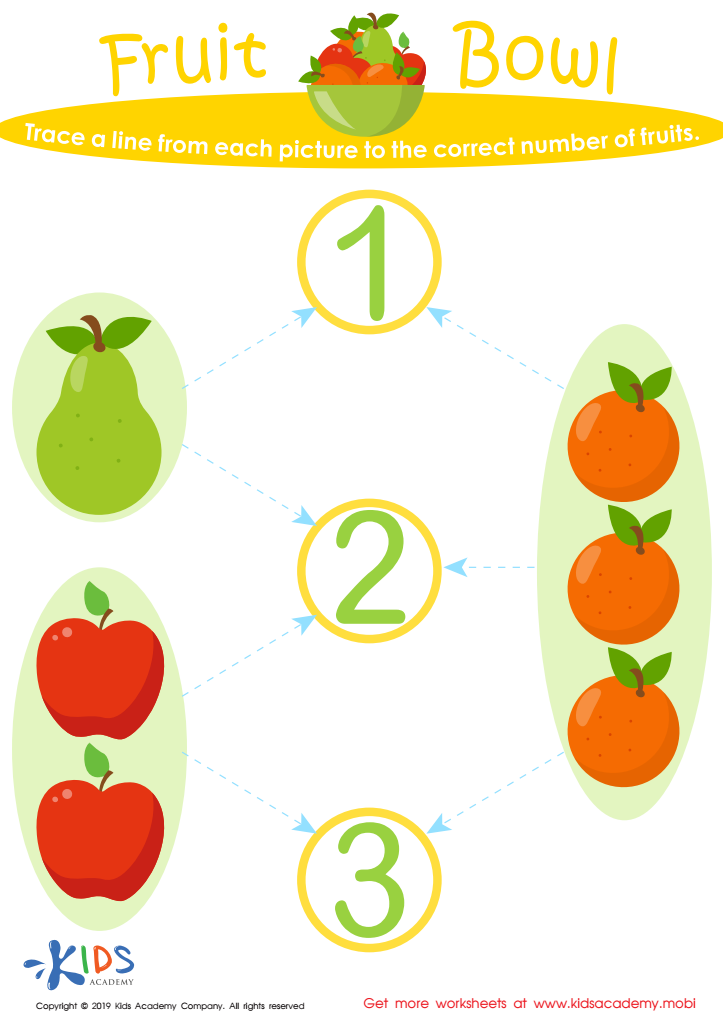
Fruit Bowl Worksheet
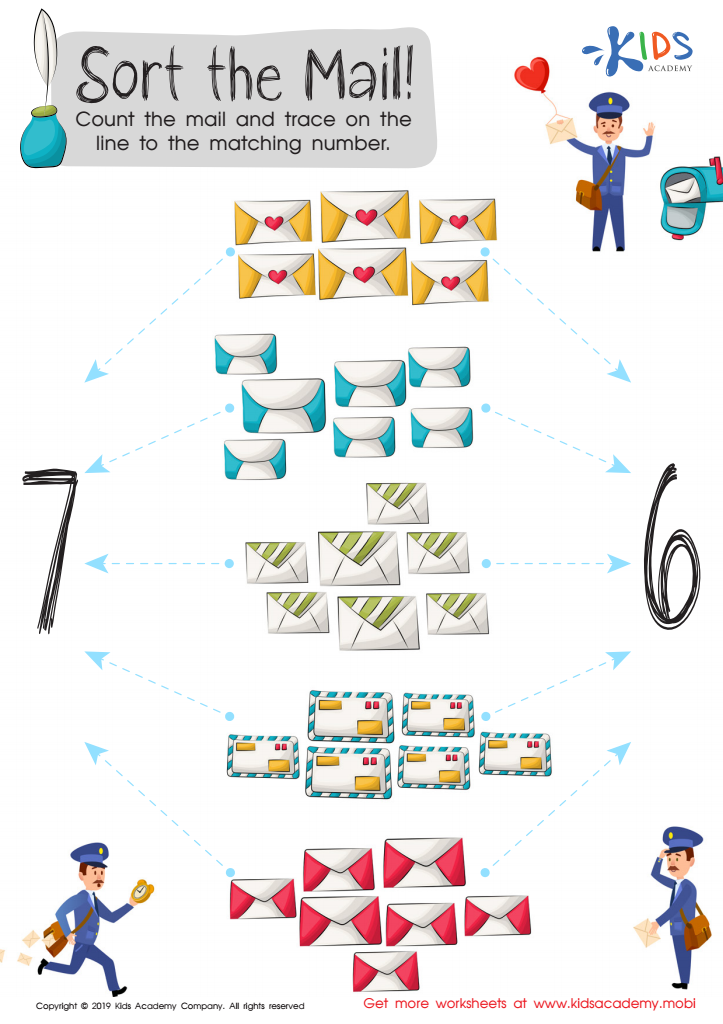
Sort the Mail Worksheet







.jpg)
Sorting skills are foundational for young children (ages 3-5) as they play a crucial role in cognitive development and lay the groundwork for later academic success. Parents and teachers should prioritize these activities because they enhance essential, fundamental skills in a fun and engaging manner.
Firstly, sorting helps children develop critical thinking and problem-solving abilities. By recognizing patterns and categorizing objects, children learn to make sense of the world and organize information efficiently. These capabilities are critical for mathematical thinking, where grouping and classification come into play in future concepts like addition, subtraction, and understanding number sequences.
Secondly, sorting nurtures language development. As children sort items by different attributes (such as color, size, or shape), they learn new vocabulary and descriptive terms. Discussing characteristics and making comparisons enriches their language skills, fostering better communication.
Lastly, sorting supports fine motor development. Activities such as picking up and placing objects help children refine their hand-eye coordination and dexterity. These skills are fundamental for tasks ranging from writing to buttoning a shirt.
Engaging in sorting activities also builds confidence as children see tangible results of their efforts. By incorporating sorting into daily routines, parents and teachers can create positive, educational experiences that support well-rounded development in young learners.








