Comparing quantities Easy Math Worksheets for Ages 3-5
3 filtered results
-
From - To
Introduce your young learners to the fundamentals of mathematics with our "Comparing Quantities Easy Math Worksheets for Ages 3-5". Designed to captivate and educate, these worksheets help children grasp the basics of comparing different quantities through fun and engaging activities. With vibrant illustrations and simple exercises, kids will enjoy learning skills such as counting, understanding more than/less than concepts, and recognizing equal quantities. These worksheets are perfect for both at-home practice and classroom learning, providing a strong foundation in early math that supports cognitive development and problem-solving abilities. Get started today to inspire a love for math in your child!
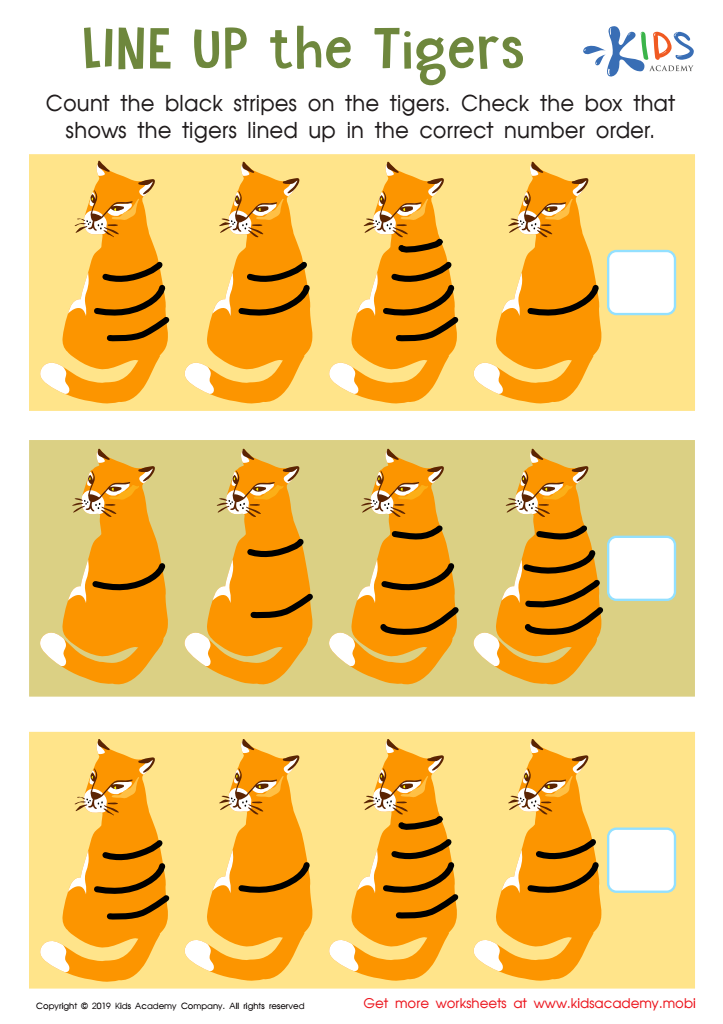
Line up the Tigers Worksheet
 Assign to My Students
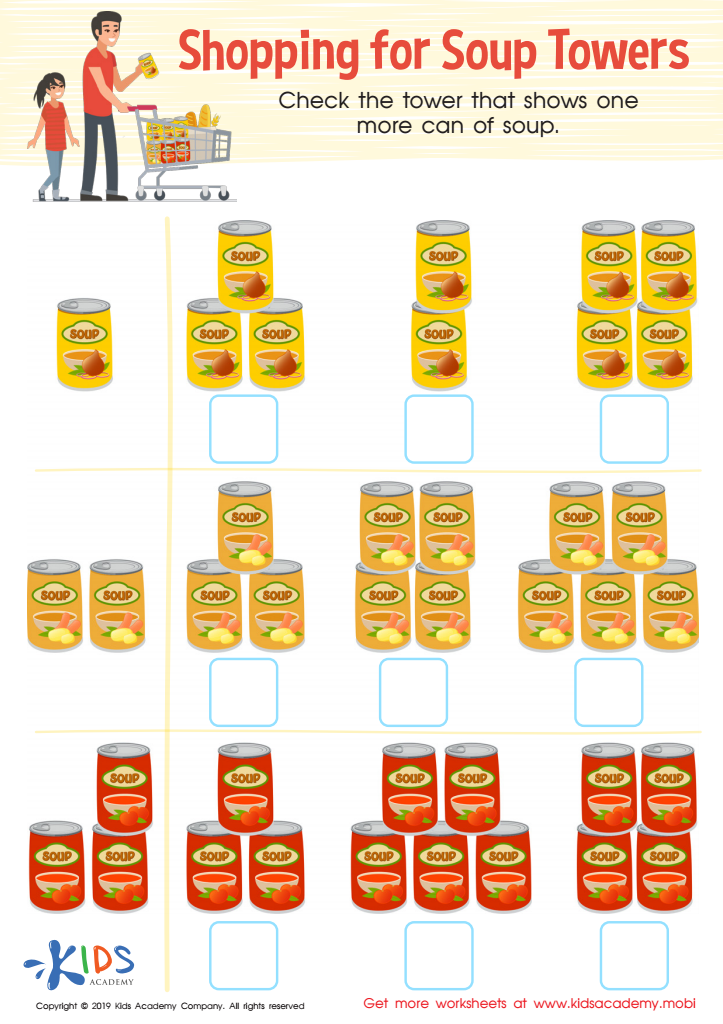
Soup Towers Worksheet
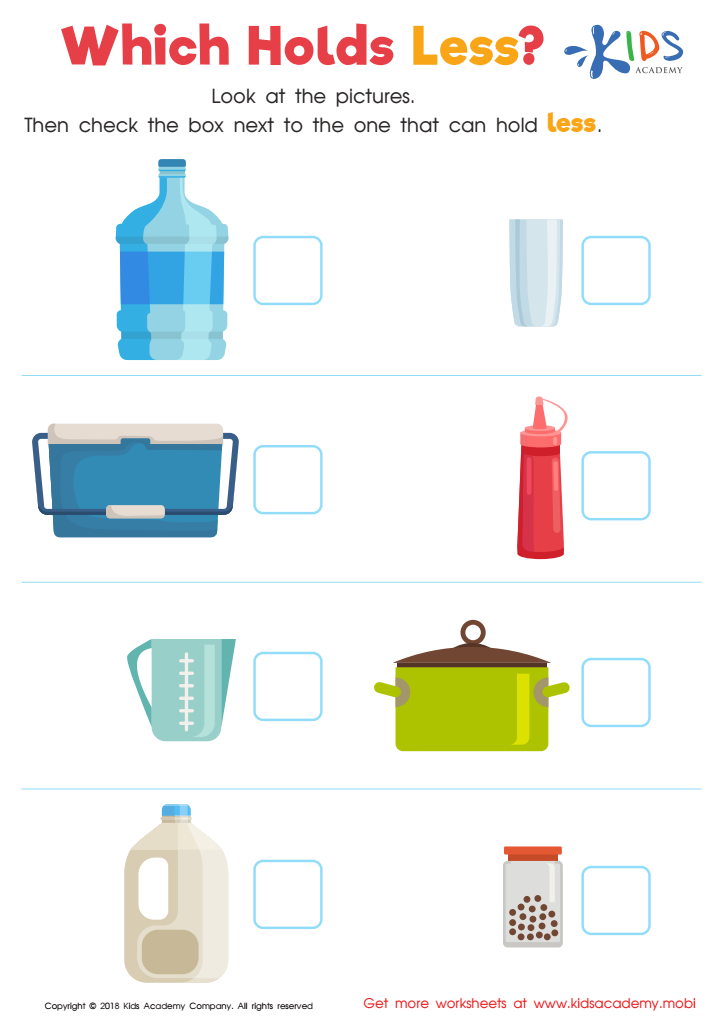
Which Holds Less? Worksheet








Parents and teachers should care immensely about introducing easy math concepts such as comparing quantities to children aged 3-5, as it lays a crucial foundation for their future learning. At this developmental stage, children's brains are exceptionally receptive to new ideas and skills. Engaging them in activities that involve comparing quantities helps them grasp a fundamental mathematical concept: understanding relationships between numbers and amounts.
When children compare quantities, they develop critical thinking and problem-solving skills. For instance, by determining which group of objects is larger or smaller, they learn basic arithmetic principles like counting and measurement. Additionally, these activities enhance cognitive development in areas such as attention to detail, pattern recognition, and decision-making.
Moreover, early exposure to math fosters a positive attitude toward the subject. Children who find math enjoyable and understandable at an early age are more likely to continue to perform well as they grow older, setting them up for academic success. It also builds their confidence: mastering simple tasks encourages persistence and a readiness to tackle more complex challenges.
Incorporating comparing quantities into everyday activities makes math fun and relevant, thereby fostering not just mathematical skills but also a lifelong love for learning. This foundational step is crucial for their overall development and future educational journey.








