Understanding quantity Easy Math Worksheets for Ages 3-5
3 filtered results
-
From - To
Discover our "Understanding Quantity" Easy Math Worksheets tailored specifically for ages 3-5! Leverage interactive, fun activities to help your young learner grasp basic counting concepts and differentiate between quantities. Our printable worksheets are designed to strengthen foundational math skills, fostering early numeracy through engaging puzzles and thoughtful exercises. Perfect for both teachers and parents, these resources will make learning an enjoyable experience, laying the groundwork for future mathematical success. Download today and watch your little one’s confidence in math bloom!
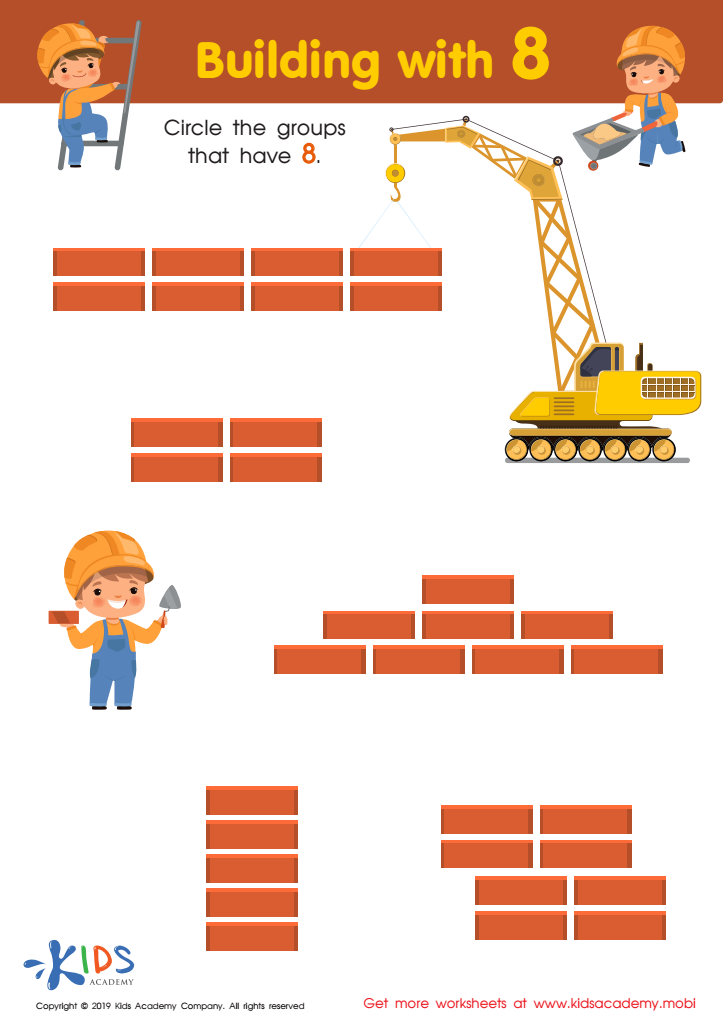
Building with 8 Worksheet
 Assign to My Students
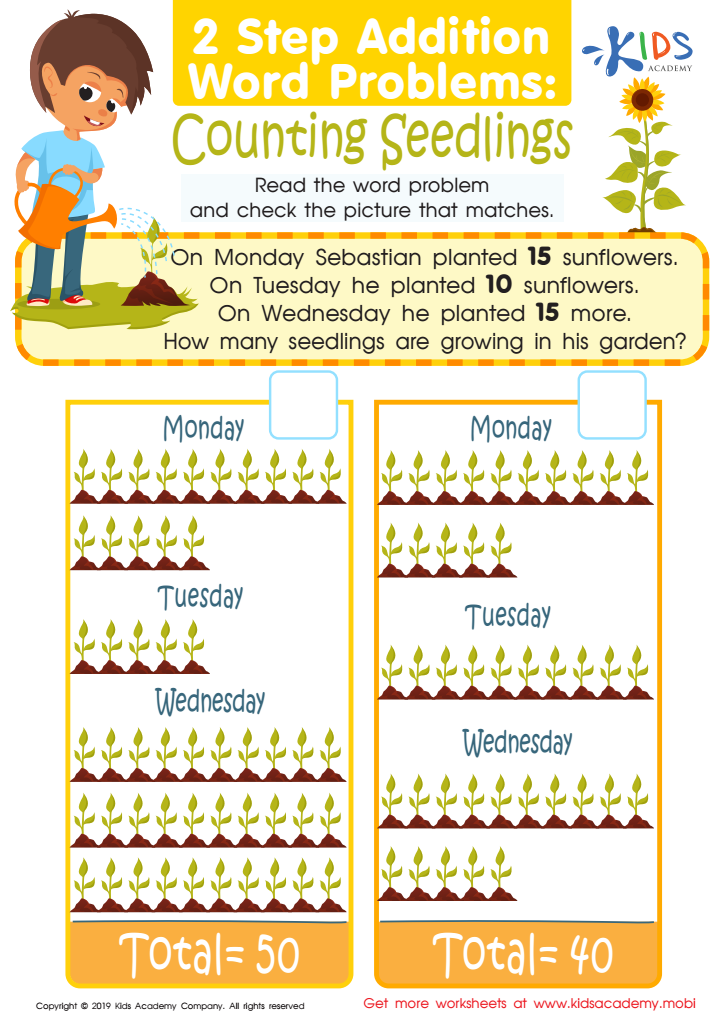
Counting Seedlings Worksheet
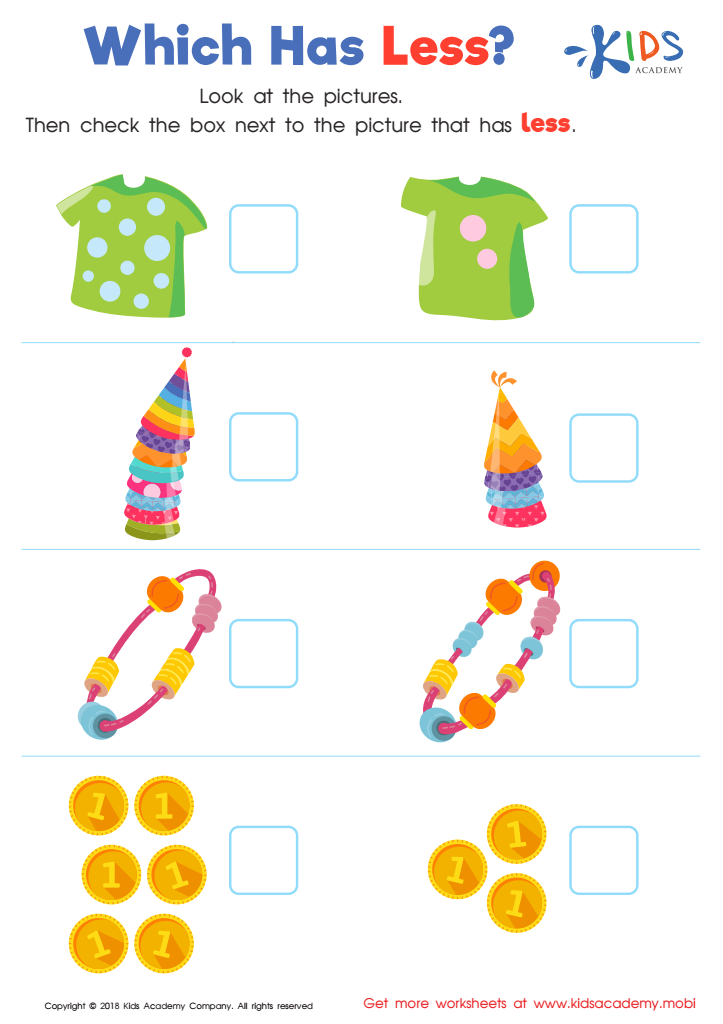
Which Has Less? Worksheet






.jpg)

Understanding quantity and basic math for children ages 3-5 is foundational for their future academic success and everyday life skills. Early exposure to these concepts helps young learners develop critical cognitive abilities, such as problem-solving, logical thinking, and spatial awareness. Research indicates that early math competence is a strong predictor of later academic achievement, not just in mathematics, but across other school subjects as well.
When children grasp the concept of quantity, they begin to understand relationships between numbers, which is crucial for more advanced mathematical concepts they will encounter later. For example, knowing that five is more than three and three is more than one helps children understand addition and subtraction intuitively. These early experiences with numbers and quantity also improve their ability to make comparisons, recognize patterns, and comprehend the idea of more, less, and equal.
For parents and teachers, instilling these basics doesn’t require complex or formal lessons. Everyday activities, such as counting toys, dividing snacks, or playing simple number games, turn learning into an enjoyable experience. The goal is to integrate these activities naturally into the child's daily routine, making learning both effective and fun. By supporting children at this crucial developmental stage, parents and teachers can ensure a solid foundation for future mathematical learning and beyond.








