Cognitive Development Easy Reading Fiction Worksheets for Ages 3-5
2 filtered results
-
From - To
Unlock your child’s potential with our Cognitive Development Easy Reading Fiction Worksheets designed specifically for ages 3-5! These engaging worksheets help nurture essential cognitive skills through fun, age-appropriate stories and activities. Each worksheet combines colorful illustrations and simple narratives that pique curiosity and foster imagination. As children interact with the material, they enhance their comprehension, critical thinking, and problem-solving abilities. Our resources promote early literacy while encouraging creativity and expression. Perfect for home or classroom use, these worksheets serve as a wonderful tool to lay the foundation for lifelong learning and empower young minds on their educational journey.
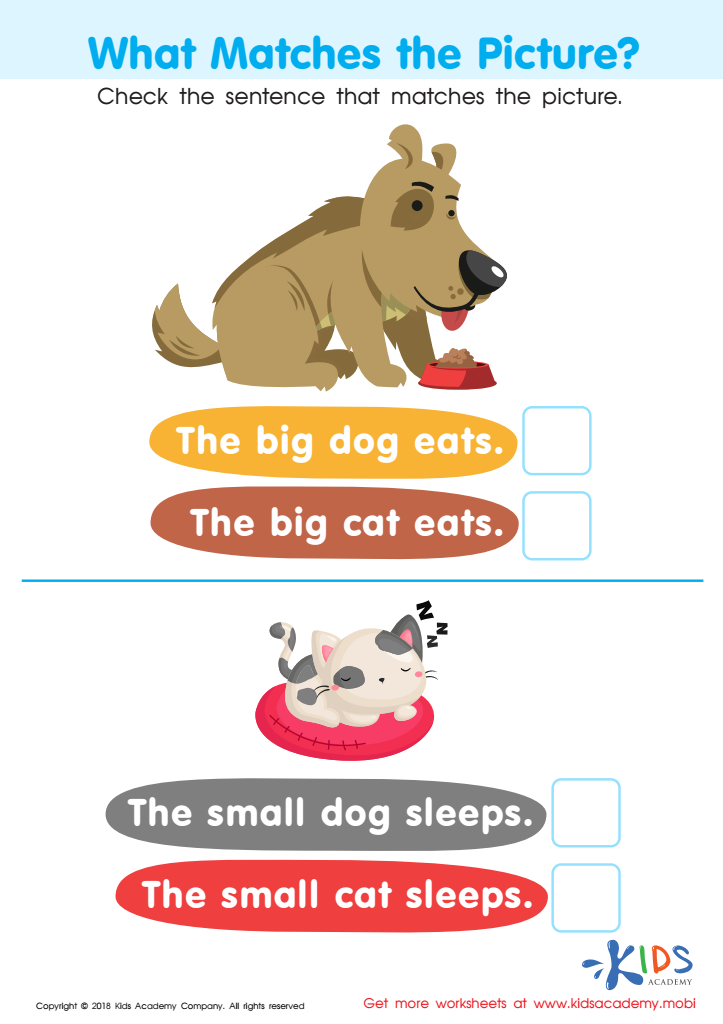
What Matches the Picture? Worksheet
 Assign to My Students
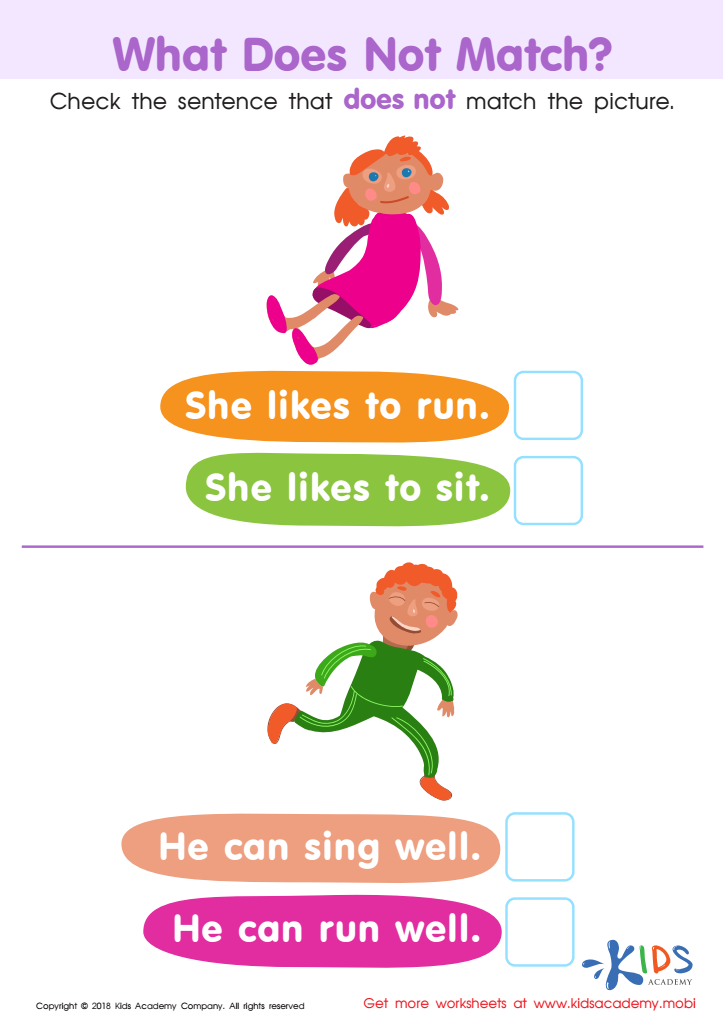
What Does Not Match? Worksheet







.jpg)
Cognitive development is crucial for young children, particularly through the ages of 3 to 5, as this is a formative period in which they develop essential thinking, problem-solving, and language skills. Easy reading fiction plays a vital role in supporting this development. When parents or teachers introduce engaging stories suited for young readers, they not only stimulate children's imagination but also enhance their vocabulary and comprehension skills.
Fictional stories, with their relatable characters and simple plots, encourage children to make connections and understand diverse perspectives, fostering empathy and social skills. As they follow along with characters on their adventures, children's ability to visualize and predict outcomes is enriched, encouraging critical thinking. Sharing these stories together prompts meaningful discussions, which are essential for language development and emotional understanding.
Moreover, the rhythmic and repetitive elements often found in easy fiction help in language acquisition, making it easier for young minds to grasp new concepts. Additionally, reading together instills a love for books early on, creating habits that support lifelong learning. Therefore, incorporating easy reading fiction into daily routines is not just a delightful pastime; it's a foundational step in promoting a child's cognitive abilities and overall development.