Addition Practice Easy Worksheets for Ages 3-6 - Page 2
26 filtered results
-
From - To
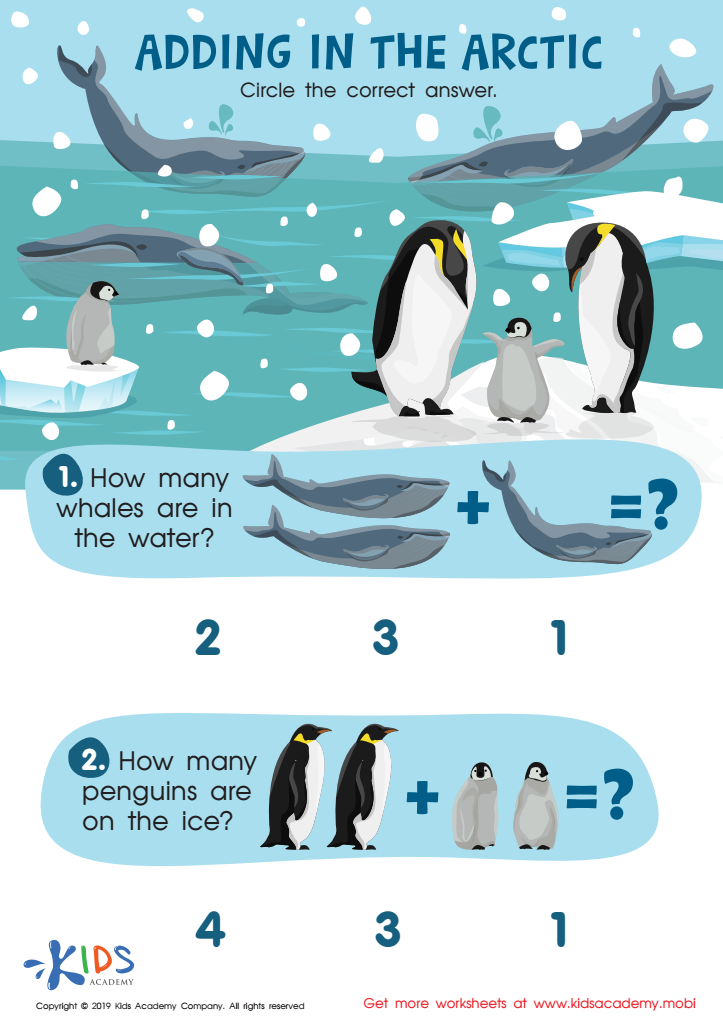
Adding in the Arctic Worksheet
 Assign to My Students
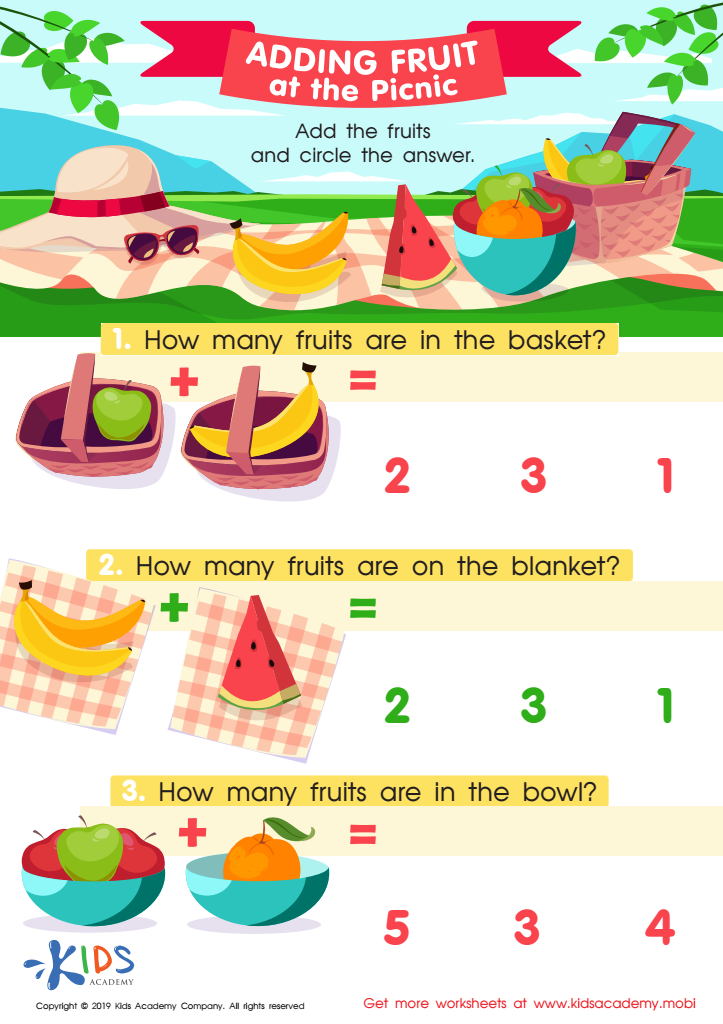
Adding Fruit at the Picnic Worksheet








Addition Practice Easy for Ages 3-6 is crucial for developing foundational math skills in young children. At this age, children are naturally curious and absorb new information quickly. Introducing addition concepts early helps build confidence and a positive attitude towards math. Engaging in simple addition activities encourages critical thinking, problem-solving, and analytical skills, which are vital not just in math but across all subjects.
Furthermore, practicing addition at an early age lays the groundwork for more complex mathematical concepts in later years. Children who master basic addition are often better prepared for challenges like subtraction, multiplication, and division. Additionally, encouraging math practice fosters perseverance and resilience, teaching children how to approach challenges thoughtfully.
Involving parents and teachers in addition practice creates a supportive learning environment. It allows parents to reinforce skills at home, while teachers can integrate fun and interactive activities in the classroom that cater to various learning styles. Ultimately, by prioritizing addition practice for young learners, parents and teachers are helping children develop essential skills that will benefit their academic journey and overall cognitive development, promoting lifelong learning and success in all areas of life.








