Basic Math Skills Easy Worksheets for Ages 3-6 - Page 2
25 filtered results
-
From - To
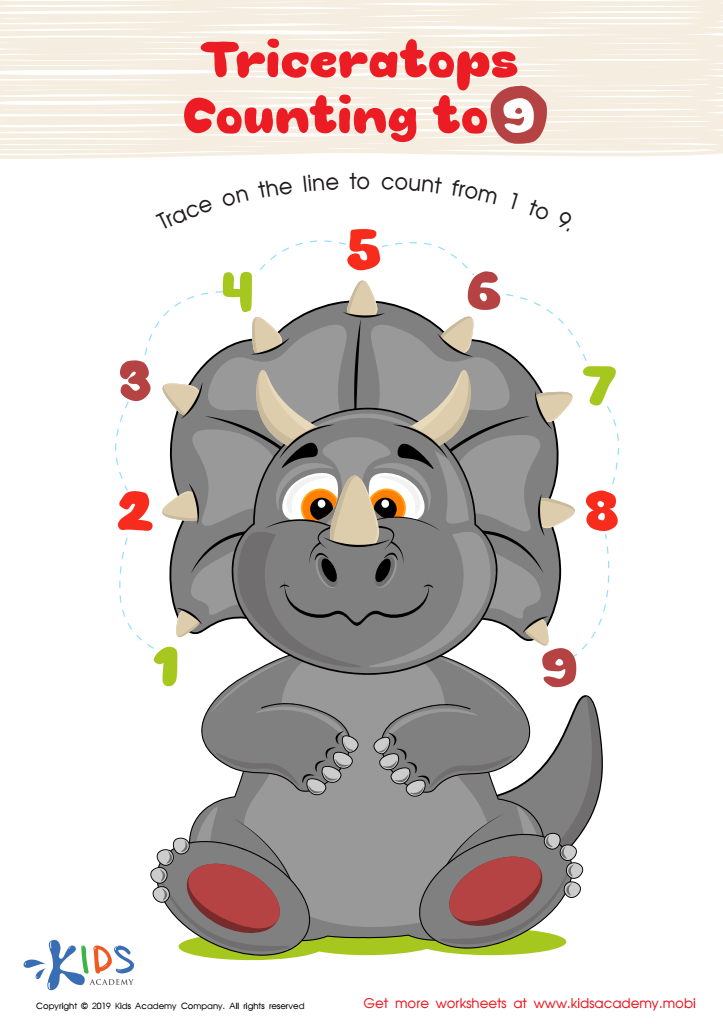
Triceratops Counting to 9 Worksheet
 Assign to My Students


.jpg)




Basic math skills form the cornerstone of a child's education, particularly for ages 3-6, which is a critical period for cognitive development. During these early years, children are highly receptive to new information and are developing foundational skills that will support their academic growth. Focusing on basic math skills, such as counting, recognizing numbers, and understanding simple concepts like more or less, sets the stage for more complex math learning in the future.
Parents and teachers should care about these skills for several reasons. First, mastering basic math helps children build confidence and a positive attitude toward learning. Success in early math can create a sense of accomplishment, encouraging a lifelong enthusiasm for education. Additionally, early math skills are strong predictors of later academic achievement, not just in math but across other subjects since math encourages logical thinking and problem-solving abilities.
Furthermore, integrating math into everyday activities can stimulate a child’s natural curiosity and make learning feel like a game, rather than a chore. This approach can forge an early love of learning and enable children to see the relevance of math in their daily lives, paving the way for future intellectual engagement.
Thus, ensuring that children aged 3-6 develop basic math skills is essential for their overall educational trajectory and lays the groundwork for their lifelong learning and intellectual development.








