Basic subtraction Easy Worksheets for Ages 3-6
3 filtered results
-
From - To
Help your child master the basics of subtraction with our "Basic Subtraction Easy Worksheets for Ages 3-6.” These engaging, colorful worksheets are designed to make subtraction fun and understandable. Ideal for preschoolers and kindergarteners, each exercise includes simple problems that build a strong foundation in early math skills. Our worksheets feature kid-friendly themes and illustrations to capture young learners' interest, while promoting critical thinking and problem-solving abilities. Perfect for home or classroom use, these printables are a great resource for parents and educators looking to enhance their child's arithmetic skills effortlessly. Start subtracting today!
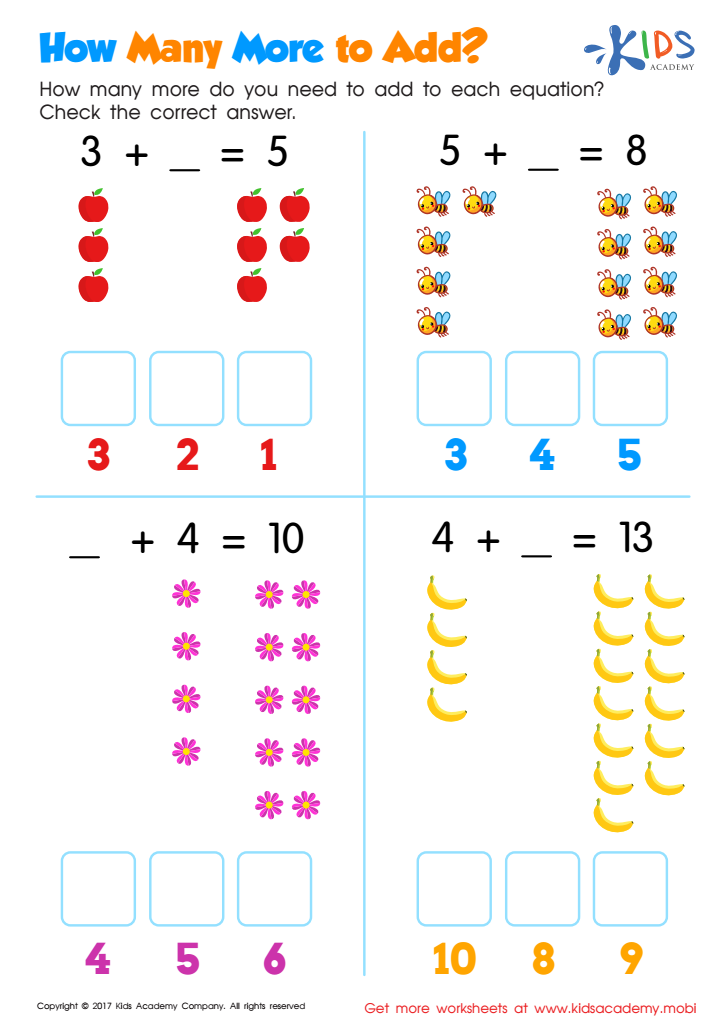
How Many More to Add Worksheet
 Assign to My Students
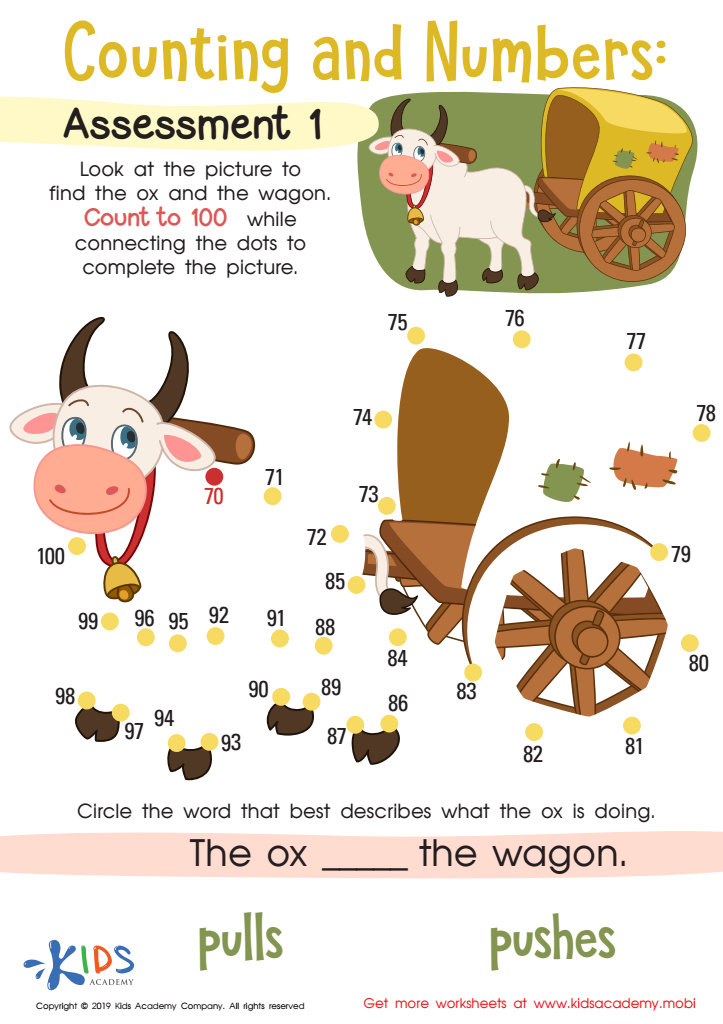
Counting and Numbers: Assessment 1 Worksheet
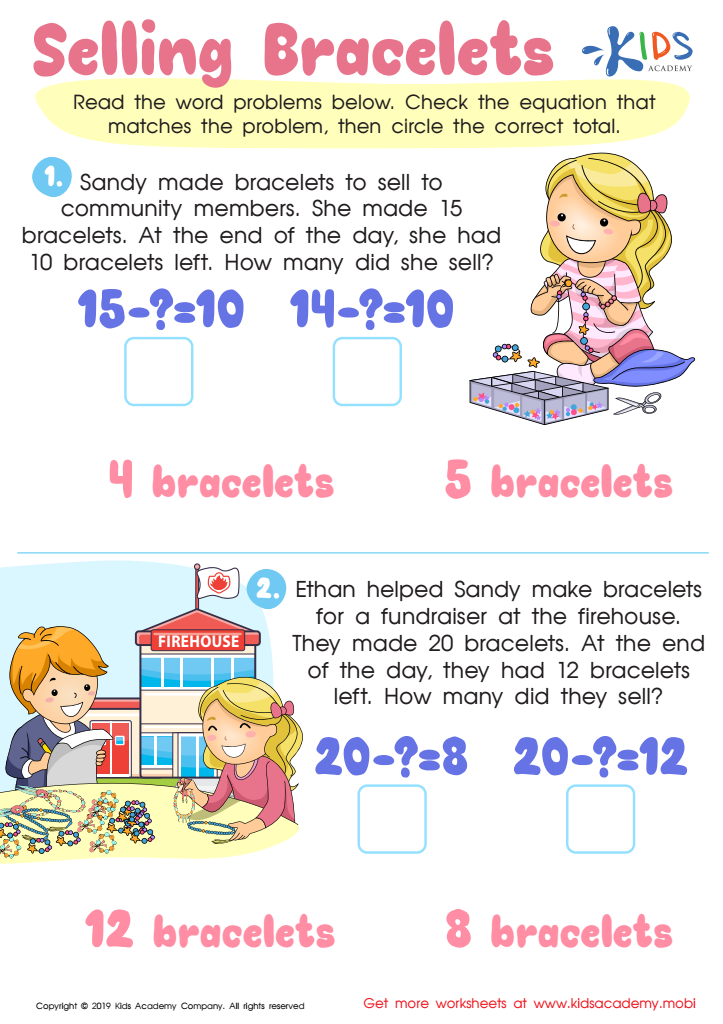
Selling the Bracelets Worksheet







.jpg)
Basic subtraction skills are crucial for young children ages 3-6 as they lay the foundation for their overall mathematical understanding and cognitive development. For one, grasping basic subtraction enhances a child's problem-solving abilities, enabling them to tackle more complex mathematical operations in the future with greater confidence.
Parents and teachers should care about teaching basic subtraction because it supports the development of critical thinking skills. When children learn to subtract, they're also practicing counting, recognizing numbers, and understanding the relationship between quantities. This helps them to grasp primary concepts that are essential in everyday life, such as knowing how much of something remains or understanding simple transactions.
Moreover, mastering subtraction can build a child's self-confidence and motivate a deeper interest in learning. When children succeed in early mathematical tasks, they feel accomplished and are more likely to adopt a positive attitude towards education in general.
Parents and teachers play significant roles as guides and motivators. By encouraging young learners in basic subtraction, they're setting the stage for lifelong learning and academic success. It's in these early years that fostering a curious, proactive approach to problem-solving can impact a child’s intellectual growth far beyond mathematics.








