
Comparing Fractions Easy Worksheets for Ages 3-6
3 filtered results
Difficulty Level
Grade
Age
-
From - To
Subject
Activity
Standards
Discover an engaging way to introduce young learners aged 3-6 to the concept of comparing fractions with our easy worksheets. Designed to make math fun and accessible, these worksheets feature colorful visuals and simple exercises that capture children’s attention. Parents and teachers will appreciate the user-friendly format that encourages independent learning. With activities and illustrations tailored to early math skills, children will confidently explore concepts of greater than, less than, and equal fractions. Start building a solid foundation in fractions and foster a love for learning with our thoughtfully crafted resources. Transform math time into playtime today!
Favorites
With answer key
Interactive
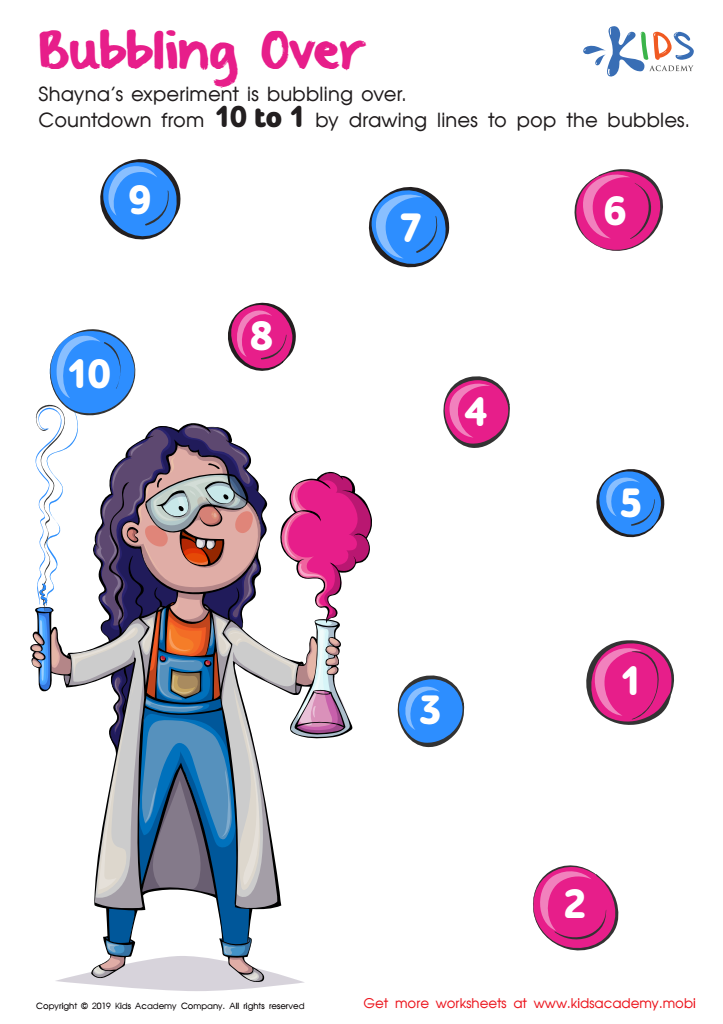
Bubbling Over Worksheet
Students love science experiments at the lab! They get to practice their counting skills while creating a masterpiece or an unexpected catastrophe! Ask them to count down from 10 to 1 by drawing lines to 'pop' the bubbles coming out of Shayna's experiment in the worksheet.
 Assign to My Students
Bubbling Over Worksheet
Worksheet
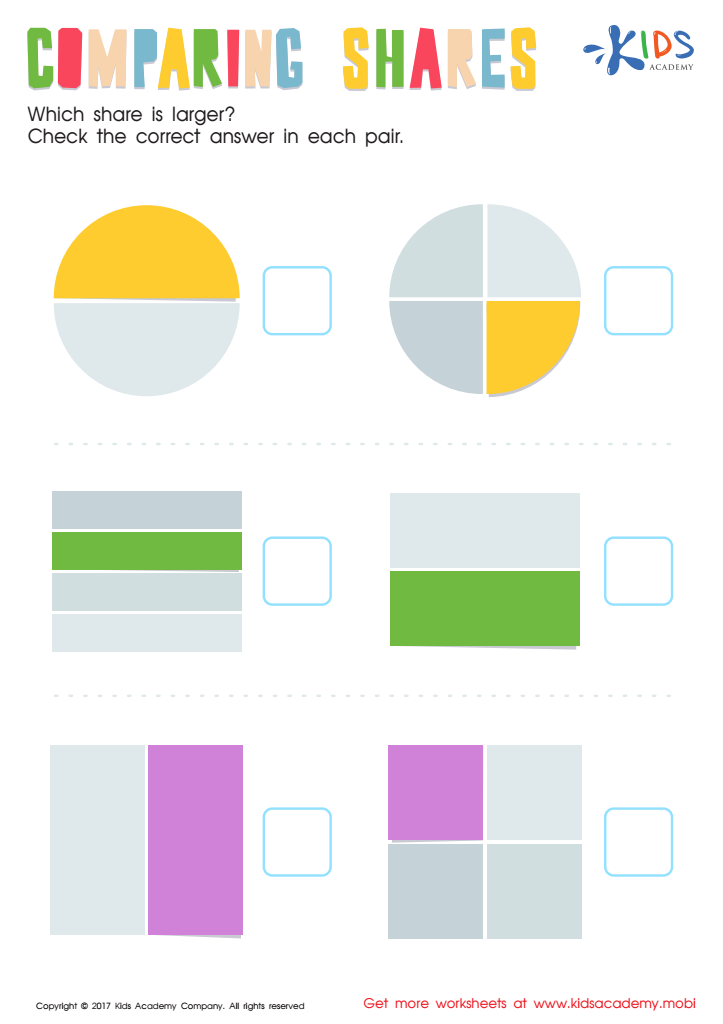
Comparing Shares Worksheet
Can your students identify and draw shapes correctly? If so, this exercise may be too easy. For those who are still learning, extra help may be needed. The worksheet requires students to select which shape is larger in each pair; circles and squares are included.
Comparing Shares Worksheet
Worksheet
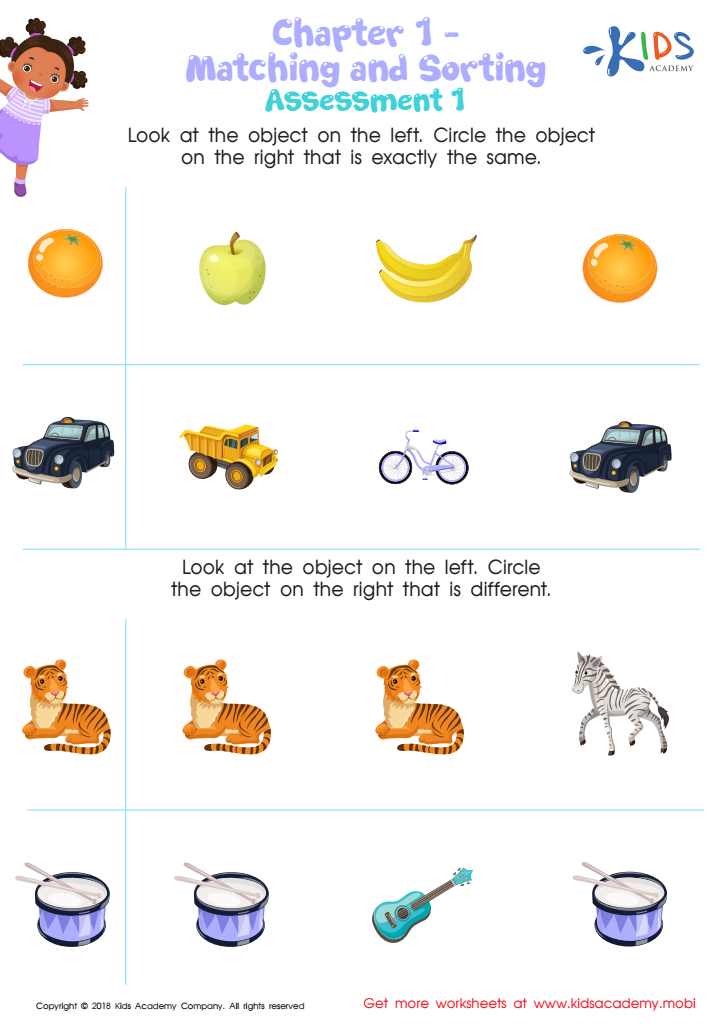
Matching and Sorting for Preschool: Assessment 1 Worksheet
Test your child's matching skills with this worksheet! Ask them to name each of the objects pictured, then circle the ones that are the same. Repeat for the second task. It's a great way to assess their skills and have fun at the same time!
Matching and Sorting for Preschool: Assessment 1 Worksheet
Worksheet
Join Kids Academy for Free
Who is primarily going to use this learning content?







Teaching young children to compare fractions is crucial for laying a solid mathematical foundation. At ages 3-6, children's cognitive skills are rapidly developing, and introducing concepts like fractions can enhance their critical thinking and problem-solving abilities. Understanding how to compare fractions helps kids grasp the idea of part-to-whole relationships, aiding in their overall number sense.
By engaging with fraction games and activities, young learners become more comfortable with mathematical language and concepts. This early exposure fosters a positive attitude towards math, making it less intimidating as they progress through their education. Furthermore, comparing fractions can be made enjoyable through visual aids like pie charts or pizza slices, capturing children's interest and encouraging participation.
Beyond academics, these skills support real-life decision-making, such as sharing snacks or understanding portion sizes, creating practical contexts for learning. When parents and teachers work together to emphasize the importance of comparing fractions, they equip children with essential tools for their future education. Ultimately, nurturing a strong mathematical foundation at a young age ensures that children are well-prepared for more complex math topics in later years, promoting lifelong learning and confidence in their abilities.








