Counting practice Easy Worksheets for Ages 3-6 - Page 2
27 filtered results
-
From - To
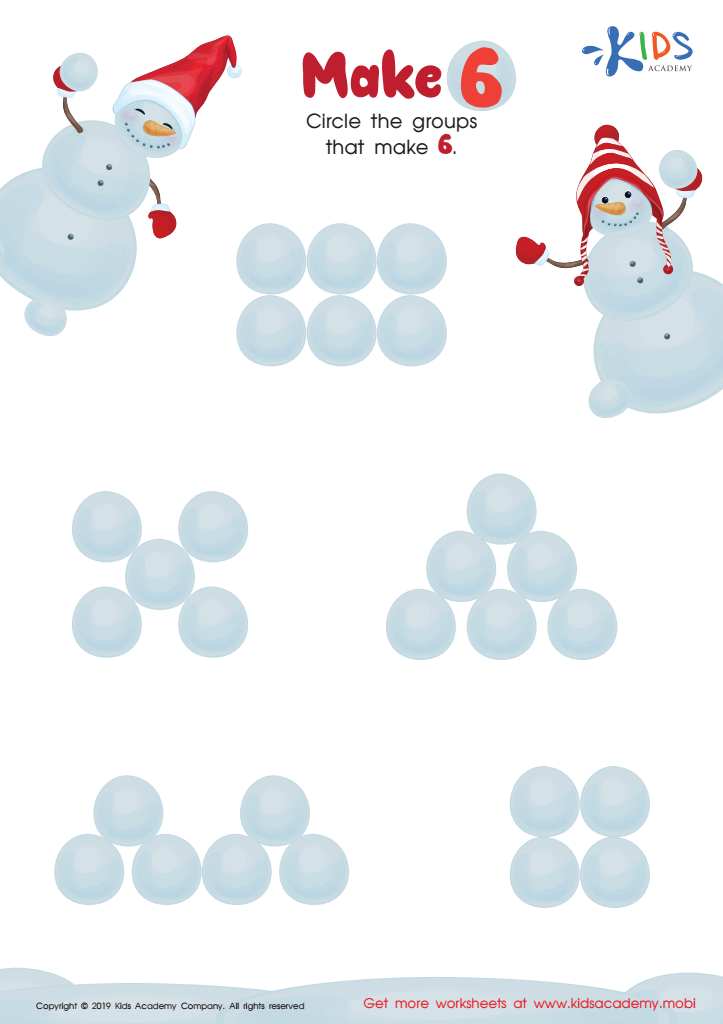
Make 6 Worksheet
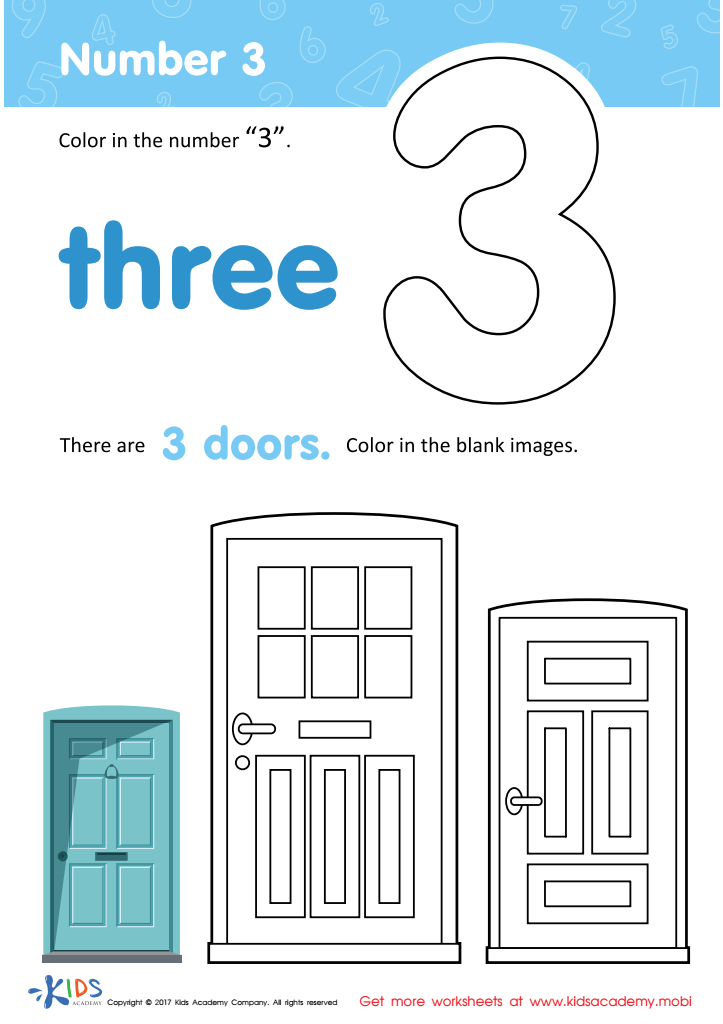
Number 3 Worksheet
 Assign to My Students

Counting on the City Skyline: Dot-to-Dot Worksheet





%20(1).jpg)

Counting practice for children aged 3-6 is crucial for several reasons that parents and teachers should prioritize. First, it's foundational for early mathematics. Understanding numbers and counting sets the stage for more complex mathematical concepts later on, such as addition, subtraction, and problem-solving skills. Engaging in counting helps young learners recognize patterns and develop a sense of number fluency.
Additionally, counting practice nurtures critical cognitive development. As children count, they develop fine motor skills, enhance memory, and improve language abilities through number vocabulary. It encourages them to engage in interactive play, fostering social skills as they work with peers or family members.
Moreover, counting activities can be integrated into everyday life, making learning fun and relatable. Whether it’s counting fruits during a grocery run or tallying toys, these simple interactions apply mathematical thinking to real-world contexts.
Lastly, building a strong numeric foundation in these early years boosts children’s confidence in their math abilities. When children feel secure in their counting skills, they are more likely to approach more complex mathematical tasks with enthusiasm and perseverance. Thus, making counting practice a focus during these formative years is essential for overall academic success and a positive attitude toward learning.








