
Logical thinking development Easy Worksheets for Ages 3-6
3 filtered results
Difficulty Level
Grade
Age
-
From - To
Subject
Activity
Standards
Discover our fun and engaging "Logical Thinking Development Easy Worksheets for Ages 3-6" designed to enhance your child's cognitive skills. These beautifully illustrated worksheets offer a variety of activities, including matching games, pattern recognition, and sequencing tasks, all tailored to foster essential critical thinking and problem-solving abilities. Perfect for young learners, these printable resources provide a strong foundation for future academic success while keeping children entertained and motivated. Ideal for both at-home and classroom use, our worksheets are crafted to boost confidence and nurture a love for learning from an early age. Unlock your child's potential today!
Favorites
With answer key
Interactive
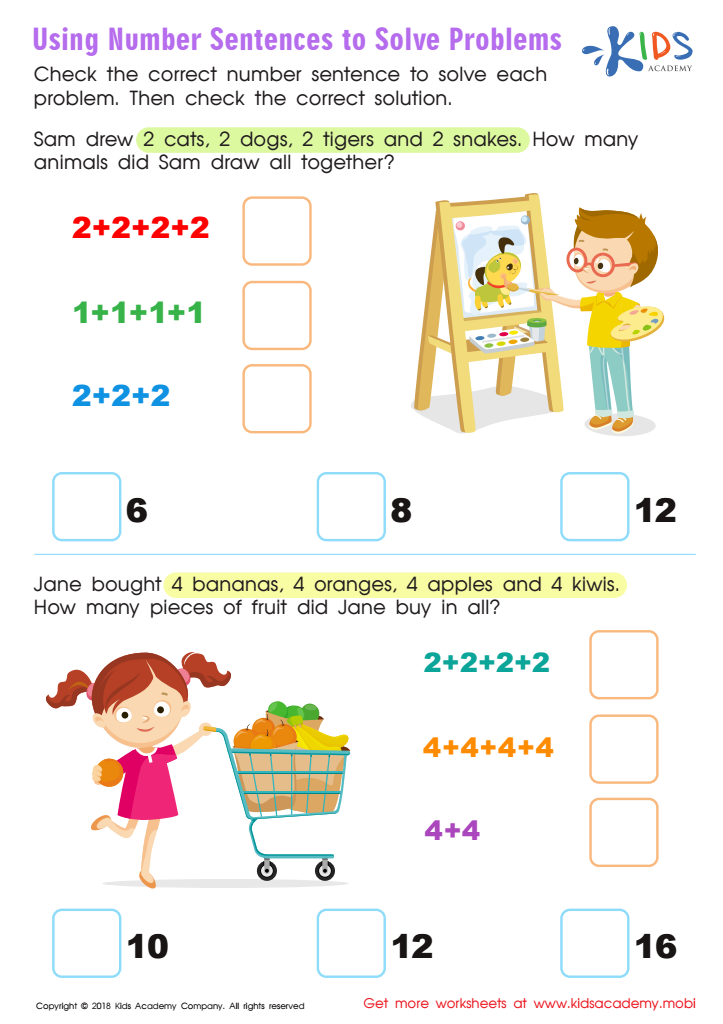
Using Number Sentences to Solve Problems Worksheet
Solving math problems requires an efficient strategy. Picture representation can help young mathematicians with basic addition problems, especially when it involves repeated addends. As they gain confidence, they'll be able to apply their number sentence solving abilities to more complex equations.
 Assign to My Students
Using Number Sentences to Solve Problems Worksheet
Worksheet
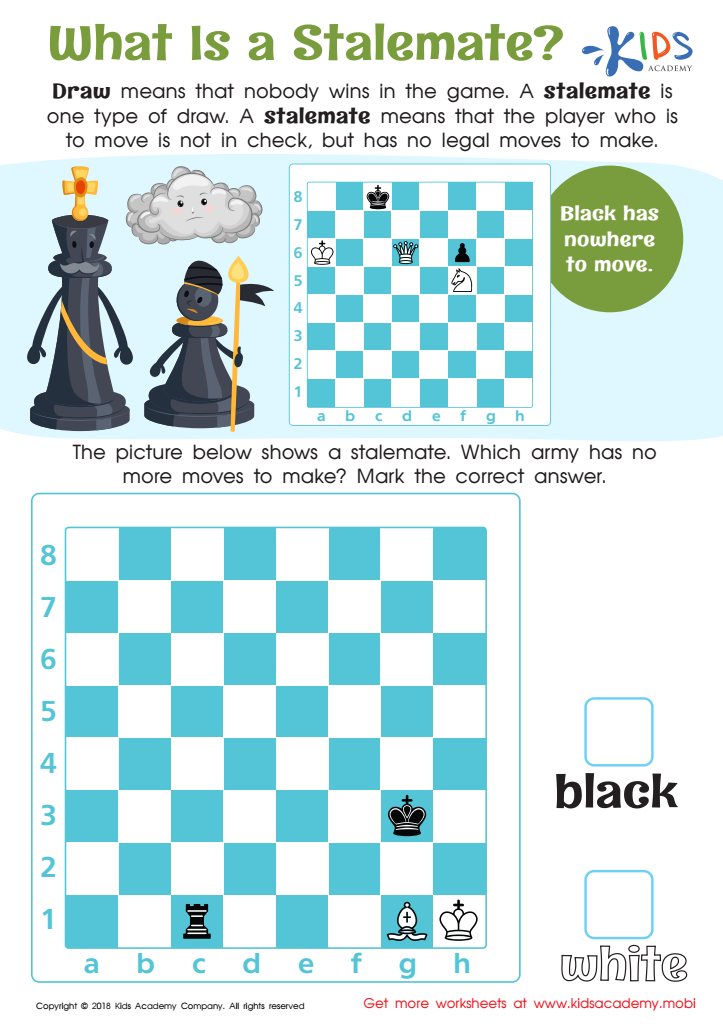
What Is a Stalemate? Worksheet
Chess is an ideal way to develop logic, strategizing, problem-solving and more! Even kids can learn it. With this worksheet, children can learn about draws and stalemates. Sample boards will help them decide which team, black or white, is at a stalemate.
What Is a Stalemate? Worksheet
Worksheet
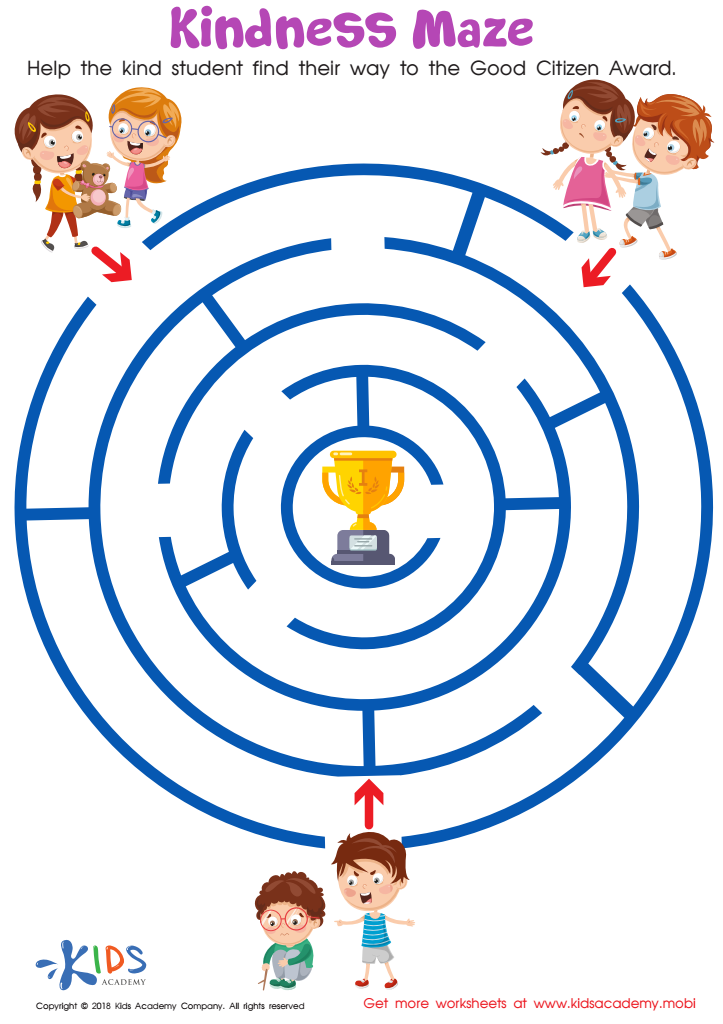
Kindness Maze Worksheet
Rewards come in many forms for kind deeds. When your children do good, you can choose to reward them with a gift or compliment. The students in this worksheet have been awarded the Good Citizen Award for kindness. Let your kids help the students find their way to the award - at the center of the maze. Guide them through to get their prize.
Kindness Maze Worksheet
Worksheet
Join Kids Academy for Free
Who is primarily going to use this learning content?








Logical thinking is a foundational skill that enhances problem-solving and reasoning abilities, making it crucial for the development of children ages 3-6. At this critical early stage, their brains are rapidly developing, and engaging in activities that stimulate logical thinking can have long-lasting positive effects.
Firstly, teaching logical thinking helps children understand cause-and-effect relationships, which is essential for everyday decision-making and the overall learning process. For example, understanding that flipping a light switch makes a room bright helps them grasp more complex ideas later.
Moreover, logical thinking boosts mathematical skills. Identifying patterns, solving puzzles, and understanding sequences are essential precursors to mastering math concepts. Early encouragement in these areas lays a strong foundation for academic achievement.
It also fosters language development. By engaging in storytelling or logical sequencing activities, children improve their vocabulary and comprehension, aiding their overall communication skills.
In social settings, logical thinking assists children in navigating relationships and resolving conflicts. Understanding the perspectives of others and realizing that their actions have consequences makes them more empathetic and socially adept.
Lastly, it enhances critical thinking and creativity. As children learn to formulate hypotheses and explore various outcomes, they become more innovative and curious, qualities that are invaluable throughout life.
In summary, nurturing logical thinking from an early age can profoundly impact a child's cognitive, academic, social, and emotional development.








