Fine Motor Skills Easy Numbers Worksheets for Ages 3-6 - Page 2
26 filtered results
-
From - To
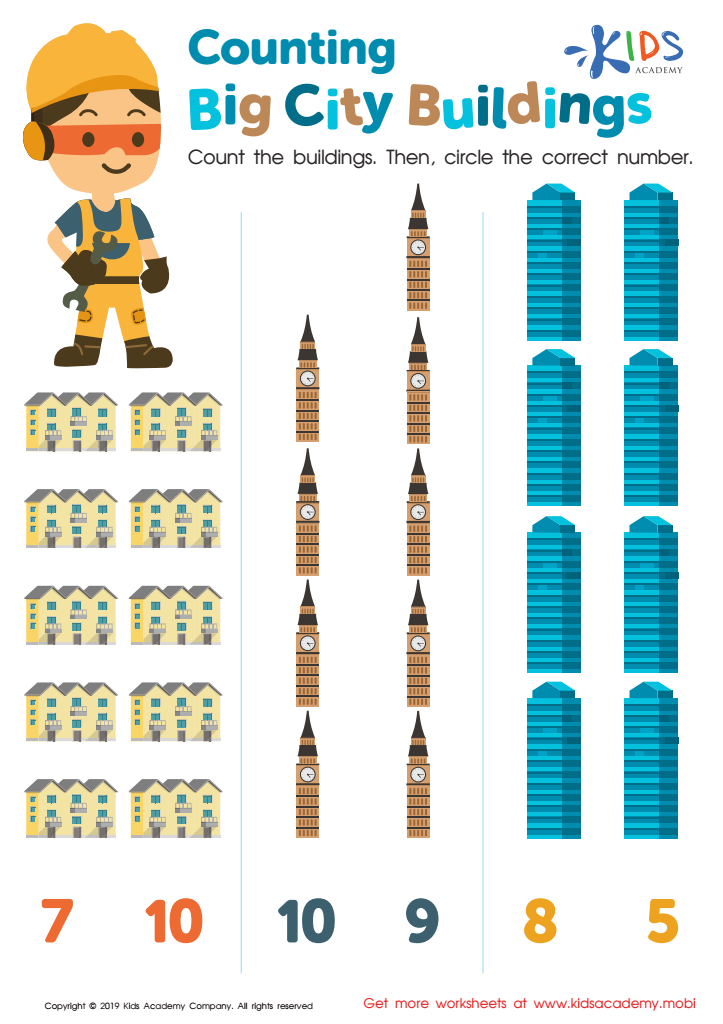
Counting Big City Buildings Worksheet
 Assign to My Students

Night Sky Numbers Worksheet








Fine motor skills are essential for young children's development, particularly for those aged 3-6. These skills involve the coordination of small muscles in the hands, fingers, and wrists and are crucial for performing everyday tasks. Developing fine motor skills helps children master activities such as writing, cutting, buttoning, and grasping smaller objects, laying the groundwork for academic and life skills.
By focusing on fine motor skills at an early age, parents and teachers can significantly support children's cognitive, social, and emotional growth. These skills enhance children's hand-eye coordination, which is vital for various educational activities, including drawing and using scissors. Furthermore, aiding the development of fine motor skills boosts children's confidence as they achieve new tasks independently.
Participating in activities such as coloring, crafting, building with blocks, or manipulating playdough prepares children for more complex tasks in the future. Additionally, these experiences often promote shared play and teamwork, strengthening social connections. By recognizing the importance of fine motor skill development, parents and teachers can create engaging and supportive environments that foster children's overall learning and growth, ensuring they are ready for the demands of school and beyond.








